
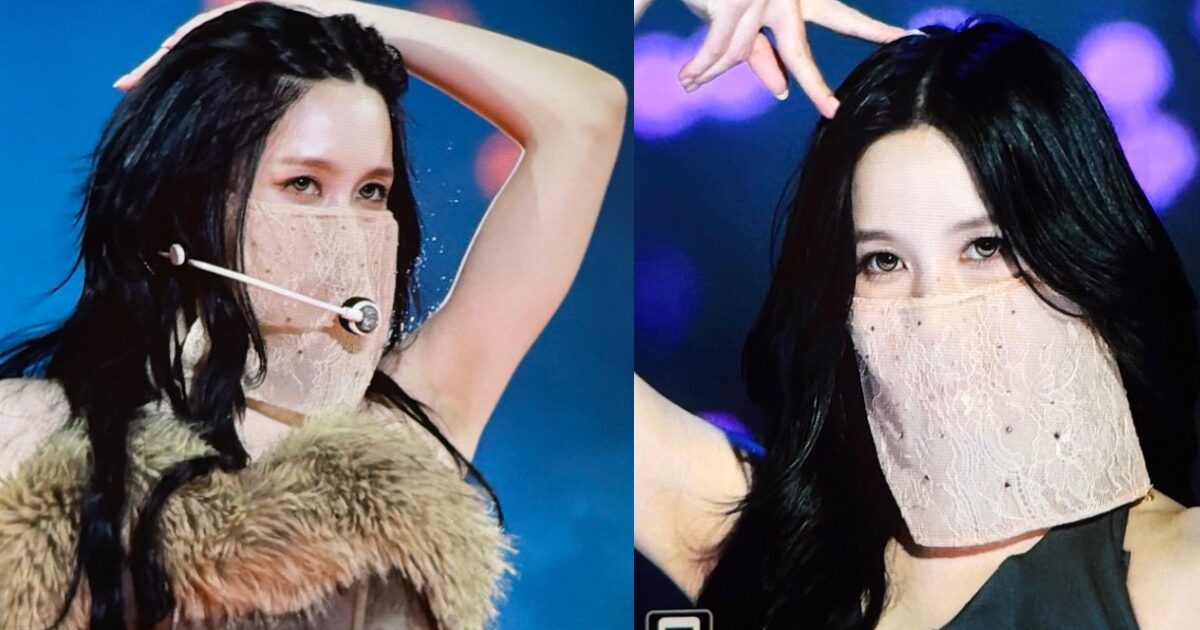
The roar of a stadium crowd is a physical force, a wave of sound and light meant to lift performers to new heights. For the millions who attend K-Pop concerts, it's a sacred exchange: boundless energy given in return for flawless, connection-filled performances. But what happens when an artist, standing in that blinding spotlight, makes a subtle choice for personal comfort that diverges from the unspoken script of fan service? This is the question at the heart of the discourse surrounding TWICE member Mina, whose decision to perform segments of the group's ongoing 'READY TO BE' world tour wearing a delicate, decorative face veil has ignited a firestorm of debate far exceeding the accessory itself.
Initially reported by outlets like Koreaboo as a point of criticism, the narrative has rapidly evolved into a multifaceted examination of privacy, artistic expression, and the well-being of idols in the hyper-scrutinized world of K-Pop. What some dismissed as a mere fashion choice or a barrier to connection has been passionately defended by others as a legitimate tool for managing the intense pressures of global fame. This incident is not an isolated one; it is a symptom of a larger, industry-wide conversation about the boundaries between the idol as a public product and the individual as a private person.
The Artist: Mina's Journey in the Spotlight
To understand the weight of this moment, one must understand Mina Sharon Myoui. Debuting in 2015 as a member of JYP Entertainment's powerhouse girl group TWICE, Mina was quickly beloved for her elegant, ballet-trained aura, her soft-spoken demeanor, and her role as a main dancer. Her nickname, "Black Swan," coined by fans, perfectly captured her graceful and sometimes mysteriously distant stage presence. However, Mina's path has been uniquely marked by a very public struggle with the pressures of her profession.
In 2019, at the height of TWICE's relentless promotional schedule, JYP Entertainment released a statement that sent shockwaves through the ONCE fandom. Mina would be halting all activities due to sudden extreme anxiety and insecurity towards performing on stage. The diagnosis was specific and serious: an anxiety disorder. For months, she was absent from concerts, music shows, and variety appearances, leaving a palpable gap in the group's lineup and in fans' hearts. Her eventual return was a carefully managed, emotional process, met with overwhelming support but also a new layer of protective concern from the fanbase.
Since that period, Mina has navigated her career with a quiet strength, gradually returning to full participation but often being open about the ongoing process of managing her mental health. This history is crucial context. It establishes that for Mina, the act of performing is not just a job but a conquered frontier, a space she has had to reclaim on her own terms. Her journey mirrors a broader, if slower, shift in the industry's approach to mental health, a topic we've seen intersect with public systems in surprising ways, such as in the discourse around emergency alerts and fan fervor.
The "Elegant Shield": What the Veil Actually Is
Contrary to some initial reports that conjured images of a full medical or cloth mask, the item in question is a piece of stunning stage costume. During specific performances, notably for songs like "Cry For Me," Mina has worn a black, lace-trimmed veil attached to a headpiece. It covers the lower half of her face, reminiscent of a flamenco dancer's accessory or a haute couture runway piece. It is transparent enough to see her expressions and mouth movements, yet it creates a literal filter between her and the tens of thousands of eyes upon her.
"It's not a mask of fear, it's a veil of artistry. You see her eyes telling the story even more powerfully. It's a choice, and in an industry where choices are rare for idols, it feels significant." - @MINAsGuardian, a fan account on Twitter.
This distinction is vital. This was not a decision made in haste or for medical necessity in the traditional sense. It was an integrated, deliberate element of her stage persona for particular performances, blending fashion with function. As seen on our comprehensive Artists page, idols often use costume to convey concepts, but rarely does an accessory become so personally symbolic.
Unpacking the "Criticism": A Spectrum of Reactions
The term "criticized" in the original headline paints with a broad brush. The reality, as evidenced by diving into online communities, news comment sections, and fan forums, reveals a complex spectrum of opinion that often broke along cultural and generational lines.

The Case of the Critics
A segment of fans and netizens expressed genuine disappointment. Their argument centered on the core tenant of idol-fan interaction: the "eye contact" fantasy. For these individuals, part of the concert experience is the perceived intimate connection, the feeling that the idol is performing directly for them. A veil, however sheer, was seen as a physical and symbolic barrier to that connection. Some comments framed it as a professional issue, questioning if an idol who needs such a barrier is truly "ready to be" on a world tour stage—a harsh interpretation that ignores her proven track record of powerful performances since her return.
"I saved for months to see her smile. I feel like I was given a half-performance," wrote one disgruntled concertgoer on an online board. This perspective, while difficult for many to sympathize with, underscores the intense, sometimes transactional expectations built into fan culture.
The Overwhelming Tide of Support
Far louder and more pervasive was the rallying cry of support. For millions of ONCEs and casual observers alike, Mina's veil became a badge of courage, a public declaration of self-care. Fans flooded social media with hashtags like #RespectMina and #MinaKnowsBest, sharing clips of her powerful dancing and emotive eyes behind the lace. They argued that her performance quality—the sharp dance moves, the expressive gestures—remained impeccable, proving the accessory did not hinder her artistry but perhaps facilitated it.
This defense often linked directly to her past anxiety. Supporters framed the veil as a reasonable "accommodation," no different than a singer using in-ear monitors to manage auditory overload. They celebrated her agency in using a tool that allowed her to deliver the show fans paid to see, on her terms. This proactive, protective fan reaction reflects a maturation in fandom, similar to how armies mobilized around systemic issues during BTS's enlistment announcements, showing a shift from pure adoration to advocacy.
"We love Mina as she is. If a piece of lace makes her feel strong enough to command a stadium, then we love the lace too. End of story." - Comment from a viral TikTok video compilation.
Industry in Reflection: A Watershed Moment for Idol Agency?
The Mina veil discourse transcends a single idol's choice. It acts as a prism, refracting several key issues currently shaping the K-Pop industry.
1. Mental Health From Taboo to Talking Point: Just a few years ago, an idol's anxiety disorder might have been hidden or led to a quiet, permanent departure. Today, while stigma persists, there is growing space for acknowledgment and accommodation. Mina's situation, very public in its origin and now in its management, sets a precedent. It asks the industry: can we not only allow idols to take breaks but also allow them to return with the tools they need to thrive? This move from silence to managed visibility marks significant progress.
2. The Evolving "Fan Service" Contract: The traditional model relies on an idol's constant accessibility—real smiles, visible effort, and the illusion of unfiltered interaction. Mina's veil challenges that model subtly but profoundly. It suggests that an idol's performance can still be valuable, authentic, and worthy of the ticket price even with a degree of curated separation. It renegotiates the terms, placing the artist's sustainable performance longevity above the momentary satisfaction of a fully visible face. This tension between fan expectation and artist comfort is a tightrope all acts must walk, as seen when other artists engage with traditionally risky formats, much like the debates sparked by BTS's "ARIRANG" album which blended idol pop with national heritage.
3. Fashion as Functional Armor: K-Pop has always used fashion as spectacle. Now, we see it being used as infrastructure. The veil is stagecraft, but it is also personal technology—a tool for emotional regulation. This opens a new creative avenue for stylists and idols to collaborate on looks that serve both the concept and the individual's well-being, a far cry from the one-size-fits-all, often uncomfortable costumes of previous generations.
This incident also intersects with broader societal debates in Korea about performance, critique, and public life. While not as overtly political as a presidential rebuke of a variety show, it similarly questions who gets to control a narrative in the public eye. It also contrasts with the type of criticism levied in spaces like hip-hop, where authenticity is paramount, as seen in G-Sik's fiery critique of sex education. In idol culture, the debate is about a different kind of authenticity: the authenticity of self-preservation.
Looking Ahead: The New Normal for TWICE and Beyond
As the 'READY TO BE' tour continues and TWICE cements its legacy as a top-tier global act, the conversation around Mina will likely evolve. JYP Entertainment has remained characteristically silent on the specific detail, a strategy that both avoids fueling the fire and tacitly acknowledges Mina's personal autonomy in this matter. The focus, rightly, has remained on the group's stellar performances and record-breaking ticket sales, which can be tracked on our Charts page.
For Mina, the path forward is likely one of continued, confident self-definition. She has established a boundary in the most public way possible, not with a statement, but with an accessory. It is a powerful non-verbal communication that fans and the industry are now deciphering. Will she continue to use the veil for specific performances? Will it inspire other idols with similar anxieties to find their own unique tools? The answer could redefine backstage norms.
For the industry, the lesson is clear: the new generation of fans, while passionate, increasingly values the long-term health and happiness of their idols. They are willing to accept new formats of connection if it means their favorite artists can have sustainable careers. The veil incident proves that fan loyalty is not brittle; it can adapt and grow to encompass an idol's humanity, including their vulnerabilities.
In the end, the story of Mina's veil is not about a piece of lace. It is about a young woman who faced the abyss of anxiety, stepped back, healed, and returned to the stage on her own terms. It is about a fandom that chose understanding over entitlement. And it is about an industry at a crossroads, learning that sometimes, protecting the artist is the best way to serve the art. As TWICE continues to break barriers and set new standards, this moment will be looked back on not as a controversy, but as a quiet, elegant step forward in the ongoing journey to harmonize unparalleled performance with profound personal well-being. For all the latest on this evolving story and more, stay tuned to our News page.