
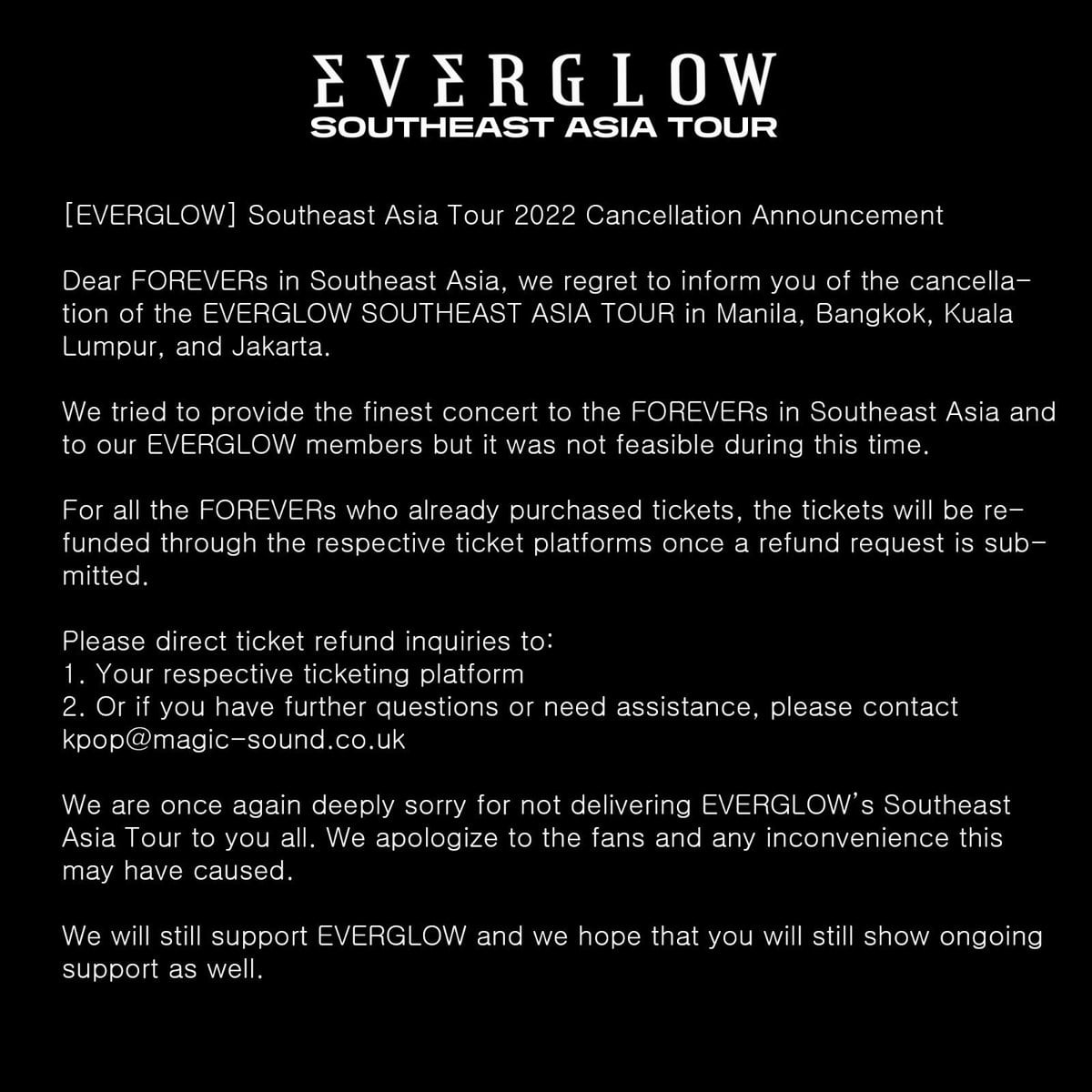
The sudden, unexplained cancellation of rising 4th-gen powerhouse MAVEN's entire "Eclipse World Tour" by their agency, Starline Entertainment, represents more than a logistical failure. It is a watershed moment highlighting systemic cracks in K-Pop's rapid global expansion, where fan investment—emotional and financial—is increasingly jeopardized by opaque corporate decisions. The fact that fans discovered the collapse via Ticketmaster notifications, not official communication, has shattered industry norms and sparked justifiable fury.
- The Ticketmaster Shock: What Exactly Happened?
- Beyond Disappointment: The Anatomy of Fan Fury
- Decoding the Deafening Agency Silence
- A Trend, Not an Anomaly: K-Pop's Growing Tour Crisis
- Do Fans Have Legal Recourse? Understanding Refund Rights
- What Does This Mean for the Future of 4th Gen Tours?
- MAVEN Tour Cancellation: Your Questions Answered
The Ticketmaster Shock: What Exactly Happened?
Unlike typical postponements or venue changes announced with cautious press releases, the demise of the "Eclipse World Tour" was marked by a stunning lack of official discourse. The story broke not through news outlets, but in the inboxes and app notifications of thousands of fans.
The Timeline of a Communication Breakdown
According to fan forums and compiled social media reports, the sequence was as follows. On Monday, select ticketholders for the tour's planned Los Angeles stop received an automated email from Ticketmaster stating the event was "canceled by the organizer." Panic spread rapidly across platforms like X and TikTok. Within hours, similar reports flooded in from London, Berlin, Tokyo, and Bangkok.
By Tuesday morning, it was confirmed: all 32 dates across three continents were listed as canceled on the ticketing platforms. Starline Entertainment’s official social media channels, however, remained actively posting promotional content for MAVEN’s latest music video, utterly silent on the tour.
Initial Agency Response (Or Lack Thereof)
Starline’s first acknowledgment came nearly 36 hours after the Ticketmaster leak, in the form of a terse, three-sentence statement on their fan community platform. It confirmed the cancellation "due to internal circumstances" and promised a detailed refund process through ticket vendors. The statement offered no apology to the fans, no explanation for the members, and no timeline for future plans.
"This isn't just about a canceled show. It's about being treated as a transaction, not a community. We planned trips, took time off work, and invested in this group. To find out via a faceless email is the ultimate disrespect." – @MavenUltimate, fan club president.
Beyond Disappointment: The Anatomy of Fan Fury
The anger is multifaceted, extending far beyond the loss of a concert experience. This incident has become a flashpoint for long-simmering frustrations within the 4th generation fandom experience.
Financial and Emotional Investment Squandered
Modern K-Pop tours are global events requiring significant fan commitment. This isn't merely a lost ticket price. Fans invested in:
- Non-refundable travel: International flights and hotel bookings.
- VIP packages: High-tier tickets promising meet-and-greets, soundcheck access, and exclusive merchandise, often costing thousands.
- Pre-concert rituals: Custom outfit creation, fan project materials, and gift preparations for the idols.
The financial loss is tangible, but the emotional whiplash—from excited anticipation to abrupt cancellation without context—is profound.

The Breach of the "Family" Illusion
Agencies meticulously cultivate a narrative of mutual care and family between idols and fans. Starline’s handling of this crisis violently punctured that illusion. The lack of a direct, empathetic, and timely communication feels like a betrayal of the very relationship that drives the industry's economy. It reduces fans to mere revenue streams, a dangerous perception for an industry built on parasocial loyalty. This echoes themes we explored in Unpacking the Human Toll, where external family pressures spill over and rupture the carefully maintained idol-fan dynamic.
Decoding the Deafening Agency Silence
In crisis PR, silence is rarely neutral. Starline’s reticence to provide a clear reason is, in itself, a loud message that industry insiders are parsing carefully.
Speculation on the "Internal Circumstances"
While purely speculative without official confirmation, industry sources point to several plausible scenarios that would force a full tour cancellation:
- Critical Health Issues: Physical or mental health crises affecting one or more core members, deemed too private or severe to disclose.
- Major Internal Conflict: A rift between members, or between the group and agency management, making a prolonged tour untenable.
- Logistical & Financial Failure: Poor advance ticket sales for certain legs, coupled with unsustainable production costs, leading to massive projected losses. This connects to broader financial anxieties, similar to those highlighted in The Menu Sticker Shock article, where the economic realities behind the glamour are becoming untenable.
- Legal or Visa Complications: Unforeseen immigration or contractual issues for key staff or members in specific regions.
The High-Stakes Calculus of Disclosure
Why not just tell the truth? The calculus is brutal. Citing health issues invites relentless scrutiny and speculation. Admitting financial failure damages brand value and future negotiating power. Revealing internal conflict could permanently fracture the group's image. In the short term, silence might seem like the least damaging path, but as this backlash proves, it permanently erodes trust.
A Trend, Not an Anomaly: K-Pop's Growing Tour Crisis
MAVEN’s situation, while severe, is part of a disturbing pattern of instability in K-Pop's global touring circuit, particularly for groups in the hyper-competitive 4th and emerging 5th generations.
Comparative Analysis: Recent Major Tour Disruptions
Group (Generation) Incident Stated Reason Communication Method Fan Backlash Level MAVEN (4th) Entire world tour canceled "Internal Circumstances" Ticketmaster leak, then brief statement Extreme (Ongoing) ATEEZ (4th) Multiple member hiatuses mid-tour (2023) Health (Anxiety symptoms, injury) Proactive agency announcements High but sympathetic aespa (4th) Key member absence for U.S. shows (2022) Health (COVID-19) Proactive, clear announcements Moderate (Understood) LOONA (3rd/4th) Tour dates canceled amid member lawsuits Legal conflicts with agency Chaotic, mixed messages from parties Severe (Directed at agency)As the table shows, the method and transparency of communication are the primary factors determining fan reaction. Proactive, health-related announcements, while disappointing, are often met with support. Opaque, last-minute cancellations spark outrage.
The Unsustainable Pace and Pressure
The 4th gen model demands constant content, rapid comebacks, and aggressive global touring—often on top of rigorous domestic schedules. This "always-on" pace, combined with the pressure to instantly succeed internationally, creates a brittle system. Tours are planned as markers of success, not necessarily as sustainable logistical endeavors, putting immense strain on young idols. The physical and mental toll is a recurring shadow, much like the intense scrutiny on appearance discussed in Beyond The Selfie.
Do Fans Have Legal Recourse? Understanding Refund Rights
The immediate practical concern for fans is financial recovery. The legal and practical pathways are complex and vary by jurisdiction.
Refund Policies: Ticketmaster vs. Agency Responsibility
According to ticketing terms of service, refunds for canceled events are typically automatic within 30 days to the original payment method. The primary legal obligation lies with the ticketing platform and the event organizer (Starline/their local promoter) to facilitate this. The current fan anger stems from the lack of clarity on ancillary costs and the insult of the discovery process.
The Uphill Battle for Recovering Ancillary Costs
Fans have little legal footing to recover costs for flights, hotels, or time off work. Travel insurance is the only reliable safeguard, and many standard policies have exclusions for "event cancellation" unless a specific "cancel for any reason" upgrade was purchased. This incident serves as a harsh lesson for the fandom: insuring K-Pop travel investments is now a necessity, not a luxury.
What Does This Mean for the Future of 4th Gen Tours?
The MAVEN debacle will have a chilling effect, recalibrating the relationship between fans, agencies, and the concert industry.
Increased Fan Skepticism and "Wait-and-See" Approaches
Trust, once broken, is hard to rebuild. Fans may become reluctant to book travel or make non-refundable commitments for first-tour announcements. A "wait-and-see" attitude could depress early ticket sales, creating a self-fulfilling prophecy that makes tours less financially viable—a vicious cycle for agencies.
Agency Reckoning on Communication Protocols
Progressive agencies will likely establish new, clearer crisis communication blueprints. This includes predefined levels of disclosure for common issues (health, logistics) and a commitment to fan-first announcements. Those who don't adapt risk permanent brand damage. For the latest on how agencies are managing their artists, keep an eye on our Artists page for updates and profiles.
The Potential Rise of Regional "Soft Launch" Tours
To mitigate risk, we may see a shift away from ambitious, simultaneous world tours. Instead, agencies might opt for phased regional tours—starting securely in Asia, then moving to select North American/European cities—to test logistics and demand before full commitments. This is a return to a more conservative, albeit potentially less exciting, expansion model.
MAVEN Tour Cancellation: Your Questions Answered
Q: Will MAVEN disband because of this?
A: There is no indication of imminent disbandment. Tour cancellations, while severe, are typically a management failure, not necessarily a group failure. The group's future hinges on Starline's next steps: a credible explanation, a viable plan to rebuild fan trust, and visible support for the members.
Q: How long will refunds take?
A: Ticketmaster and other primary vendors state refunds can take 7-30 business days to process after the cancellation is formally posted. Fans should monitor their original payment method and contact the ticket vendor directly if funds are not received within that window. Do not rely on the agency for refund timelines.
Q: Should I boycott Starline Entertainment artists?
A: That is a personal fan decision. The boycott is a powerful tool to demand corporate accountability. However, it's crucial to distinguish between the corporate decisions of Starline's management and the artists under their care, like MAVEN, who are likely also victims of this poor planning and communication.
Q: Could this have been a publicity stunt?
A: Virtually impossible. The financial penalties, brand damage, and legal liabilities from canceling a contracted world tour are catastrophic. No reputable agency would engineer this level of reputational and financial harm as a stunt. The silence suggests a deeply problematic, unforeseen crisis.
Q: Where can I see official updates on K-Pop touring schedules?
A: For confirmed schedules and announcements, always cross-reference official agency SNS and verified fan community notices. For industry-wide tracking and analysis of comebacks and tours, you can follow our Charts and Schedules page.
Conclusion: A Line in the Sand
The MAVEN tour cancellation is a line in the sand for the K-Pop industry. It has exposed the perilous gap between the breakneck speed of global ambition and the sustainable, respectful management of artists and fans. The fury is not just about lost money or concerts; it's about a broken promise and a toxic power dynamic where the fan's voice is an afterthought.
For the industry to heal, Starline Entertainment must break its silence with a full, honest accounting and a concrete plan to make amends. For fans, this is a moment to demand better—through organized feedback, selective support, and a refusal to accept opaque treatment. The era of blind trust is over. The future of K-Pop touring must be built on transparency, realistic scheduling, and respect for the immense investment of its global community. The next move belongs to the agencies. For continued in-depth reporting on industry shifts and scandals, stay tuned to our News page.