
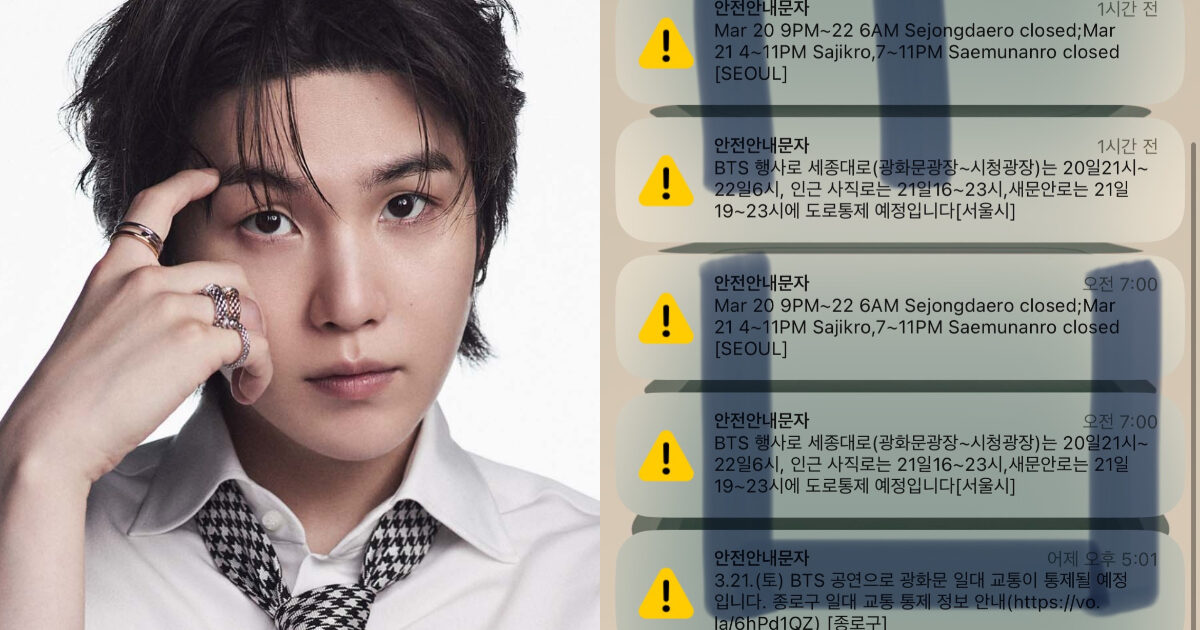

On a quiet Thursday morning, the familiar, jarring emergency tone shattered the silence of millions of smartphones across South Korea. For a split second, hearts raced—was it a national security threat? A natural disaster? The message that followed, however, was of a decidedly different nature: an update on the military service discharge of global superstars BTS. This was not an isolated incident. Over recent weeks, a cascade of similar "emergency alert" messages, typically reserved for imminent public safety threats, has been deployed to broadcast the mundane administrative details of the members' enlistment phases. The result has been a seismic and deeply polarized reaction, laying bare the tension between the group's unprecedented cultural status and the sanctity of the nation's public warning systems. What began as an overzealous dissemination of fan service has escalated into a heated national conversation about protocol, propriety, and the very fabric of Korea's relationship with its most famous sons.
The Unparalleled Ascent: Understanding BTS's National Symbol Status
To comprehend the scale of this controversy, one must first grasp the unique position BTS occupies. They are not merely a successful pop group; they are a cultural institution, a diplomatic soft-power asset, and an economic powerhouse. Their journey from underdog trainees at Big Hit Entertainment (now HYBE) to global icons has been meticulously documented, a narrative of artistry and authenticity that resonates deeply with their fanbase, ARMY. This connection has been explored in our analysis of their latest work, "Riding the Tide: How BTS’s 'Swim' Navigates the Depths of Longing and Collective Return", which details the emotional landscape the group inhabits even during their hiatus.
From Music Charts to National Interest
The group's impact transcends the music charts. They have addressed the United Nations, received the Order of Cultural Merit from the South Korean government, and are credited with generating billions in economic value. This elevation to a matter of national interest fundamentally altered the discourse around their mandatory military service—a rite of passage for all able-bodied Korean men. The debate over whether they should be exempted, a privilege granted to elite classical musicians and athletes, was a years-long saga in the National Assembly and media, underscoring their symbolic weight. Their eventual decision to enlist, one by one, was framed as a dignified acceptance of duty, turning each step of the process into a moment of national significance.
The HYBE Ecosystem and Information Flow
This context exists within the hyper-efficient media ecosystem cultivated by HYBE. Through the fan community platform Weverse, updates are instantaneous and direct. This system has fostered an incredible intimacy between artists and fans but has also conditioned a demand for real-time, official information to combat rampant speculation. As we've seen in cases like "The Unshakeable Bond: How ARMYs Are Dismantling the Latest 'BTS Discord' Narrative", the fandom is fiercely protective and relies on authoritative sources. The stage was thus set for any official communication regarding the members' service to be treated with the highest priority.
The Alert Storm: A Detailed Breakdown of the Incident
The controversy centers on the misuse of the Emergency Alert System, known as the "Emergency Disaster Text." This system, managed by the Ministry of the Interior and Safety, is designed for imminent threats like typhoons, floods, missing children (AMBER alerts), and military crises from North Korea. The distinctive, blaring siren tone is engineered to provoke immediate attention and action.
Sequence of Events
The alerts began in late 2023 and intensified in 2024. They were not sent by HYBE or the military directly, but by certain local district offices—notably Yongsan-gu, where the Army Headquarters is located, and other districts with large military bases. The messages covered events such as:
- Jin's completion of basic training and assignment to a front-line unit.
- Updates on J-Hope and SUGA's enlistment procedures.
- Most pivotally, the countdown and final discharge of Jin from active duty.
Each event triggered the full emergency broadcast protocol. For the discharge, some citizens reported receiving multiple alerts in a single day: a pre-alert, a discharge confirmation alert, and follow-up messages about expected fan gatherings and traffic control around the base.
"This is the most over-the-top nonsense I’ve ever experienced in my life. I was having lunch with my elderly mother, the emergency siren went off, and we both panicked, thinking it was a missile warning. To read that it was about a singer finishing his army service... it feels like a parody of public administration," said Kim Jae-ho, a 42-year-old office worker from Seoul, in a statement echoed by thousands online.
The Official Justification and Immediate Backlash
The districts involved defended their actions, citing the need for public safety. They argued that anticipating large-scale fan congregations—potentially thousands of ARMYs gathering at base gates—constituted a public order and traffic management issue akin to a festival or protest, thus justifying the emergency alerts. Critics, however, have blasted this reasoning as a post-hoc rationalization. They point out that countless large-scale events, from political rallies to K-pop fan meetings, are managed without co-opting the nation's top-tier emergency warning system. The backlash was swift and furious, flooding online forums, news comment sections, and the presidential petition board with complaints.

A Nation Divided: The Roaring Chorus of Fan Joy and Public Fury
The reaction to these alerts has created two starkly opposed camps, revealing a fascinating social fissure.
The ARMY Perspective: Gratification and Vindication
For a segment of the fandom, particularly international ARMYs or younger fans, the alerts were a thrilling, if startling, affirmation of their idols' importance. On platforms like X (formerly Twitter) and Weverse, celebratory messages trended: "Only BTS could make the government send a national alert for their comeback!" and "The whole country is celebrating with us!" For them, it was a unique, real-time participation in a historic moment, a digital ticker-tape parade. This sentiment ties into the fandom's documented resilience, as seen in their ability to mobilize and contextualize information to support the group's unity.
The Public Outcry: "Crying Wolf" with National Security
The overwhelming response from the general public and media commentators, however, has been one of profound dismay and anger. The core argument is one of proportionality and safety. Citizens have expressed deep anxiety about the "cry wolf" effect—if people begin to ignore the emergency tone because it's used for celebrity news, they may disregard a genuine, life-threatening alert in the future. Editorials in major newspapers like The Korea Herald and The Chosun Ilbo have labeled it an "abuse of power" and a "trivialization of a vital public resource."
Furthermore, many see it as a stark example of special treatment, asking why other soldiers' comings and goings don't merit a national broadcast. The resentment isn't directed at BTS themselves, who are fulfilling their duty quietly, but at the bureaucrats perceived to be fawning over celebrity. "It creates a societal dissonance," said culture critic Park Ji-won. "On one hand, we praise BTS for serving like everyone else. On the other, the system treats their service as an exceptional national event, undermining that very message of equality."
Industry Analysis: Precedent, Power, and the Pandora's Box
This incident is not happening in a vacuum. It is a symptom of the K-pop industry's growing, and sometimes awkward, integration into the broader mechanisms of Korean society and governance.
A Dangerous Precedent?
While unprecedented in scale, the use of public systems for K-pop is not entirely new. Local governments have long sponsored concerts and used idol images for tourism campaigns. However, commandeering the emergency alert system crosses a bright red line. Industry insiders worry this sets a dangerous precedent. If a district office can do this for BTS, what stops another from doing it for the next mega-star's album release or drama premiere under the guise of "crowd control"? It blurs the line between public service and corporate PR, risking the credibility of state infrastructure. This mirrors strategic shifts seen elsewhere in the industry, like the move towards maximizing content from every album track, as analyzed in "Beyond the Title Track: How P1Harmony's 'L.O.Y.L.' Video Release Signals a Strategic Shift"—a push for total saturation that, in this case, has spilled into the civic domain.
Corporate Responsibility and Back-Channel Pressures
A critical question is: what was HYBE's role? Officially, the corporation has remained silent, likely to avoid the perception of wielding undue influence. However, analysts speculate that the intense, symbiotic relationship between the company, the fandom, and certain public entities creates an environment where lower-level officials might act on perceived expectations. "There's an unspoken pressure to 'get it right' and be seen as facilitating this national moment smoothly," a former government public relations officer told K-Beats on condition of anonymity. "No one wants to be the district that messed up the BTS discharge logistics and faced the wrath of ARMY. Using the emergency system is a guaranteed way to get everyone's attention."
The Legal and Ethical Grey Zone
Legally, the situation is murky. The Emergency Disaster Text guidelines are broad, allowing for alerts regarding "incidents that threaten public safety." A district head has significant discretion. Ethically, it's far clearer. Media ethics professors have slammed the move as a failure of judgment, prioritizing fan service—or bureaucratic vanity—over the public trust. It highlights a need for clearer, stricter guidelines on the system's use, potentially requiring higher-level approval for non-life-threatening alerts.
Resolution and Repercussions: What Comes After the Siren Fades?
With several BTS members still serving, the immediate concern is preventing a repeat. The Ministry of the Interior and Safety has announced a "review" of the incident and plans to issue stricter guidance to local governments. Expect future military updates for the remaining members to be communicated through standard press releases and fan channels, not the emergency broadcast system. The public outcry has likely ensured that.
Long-Term Impact on BTS and HYBE
For BTS and HYBE, the long-term impact is nuanced. The group's members, diligently serving, are insulated from direct blame. However, the incident risks fueling a latent "BTS fatigue" among some segments of the public—a sense that they are inescapable, even in the most unlikely places. HYBE must navigate this carefully, ensuring their unparalleled promotional machine does not appear to overreach into public infrastructure. Their focus will likely shift to monumental, but appropriately channeled, celebrations for the full group's expected reunion in 2025.
A Broader Cultural Reckoning
Ultimately, this saga is a mirror held up to modern Korean society. It reflects the immense power of Hallyu, the passion of fandom culture, and the sometimes-clumsy attempts by institutions to engage with both. It asks where the boundary lies between celebrating national achievements and preserving the impartial functioning of state systems. Just as artists like Latency are forging new, raw paths from idol foundations, as seen in "The Reinvention Ritual", or Hyunjin of Stray Kids explores intimate artistry, the industry's relationship with the public sphere is also being renegotiated.
The "alert storm" will eventually subside, but the questions it raised will linger. It serves as a cautionary tale about the limits of celebrity saturation and a reminder that even in a world where K-pop is king, some systems must remain sacred, reserved for true moments of collective need, not collective fandom. The path forward requires a recalibration—one that honors the artists and their fans without compromising the public trust that holds far greater consequence than any single news cycle or album release. For all the latest on this evolving story and more from the world of K-pop, stay tuned to our News page.