
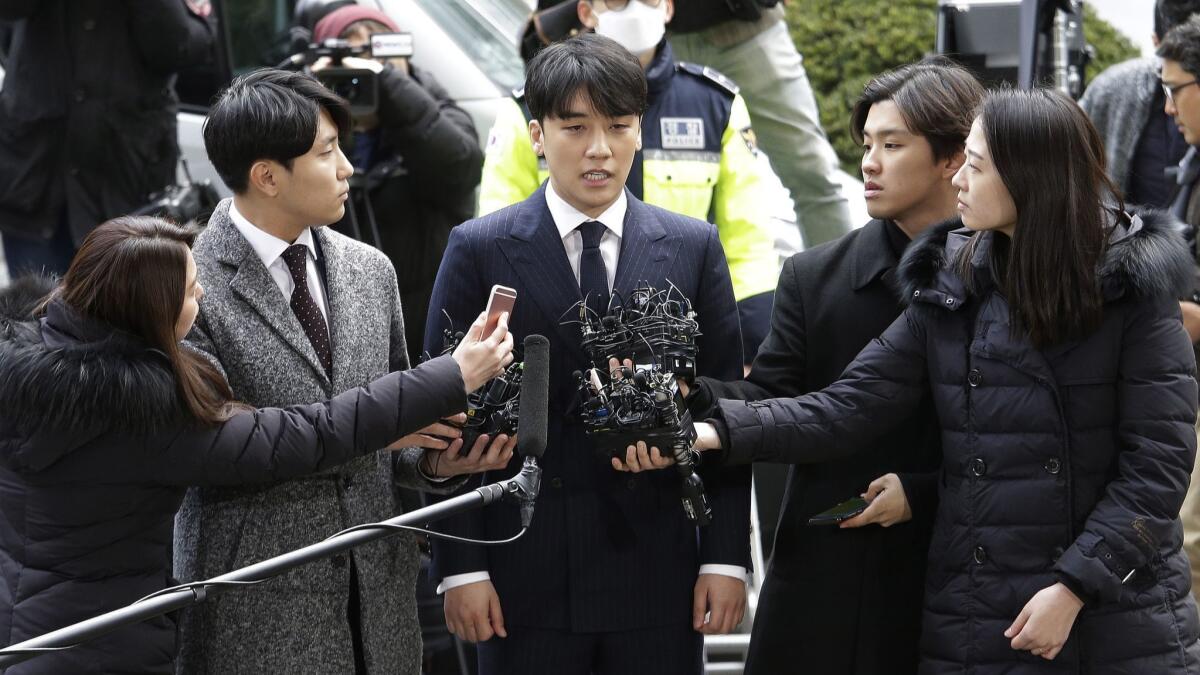
In the meticulously choreographed world of K-Pop, controversy usually revolves around chart positions, fashion choices, or dating rumors. This week, however, the industry found itself at the center of a firestorm emanating from an entirely different arena: the office of the South Korean presidency. A major television network’s unprecedented, on-air apology—issued not for an idol’s slip of the tongue, but for a satirical sketch about the nation’s leader—has sent shockwaves through the entertainment ecosystem. The incident has torn back the curtain on the complex, often precarious relationship between Korea’s vibrant pop culture machine and the political power structures it sometimes seeks to critique, placing every agency, writer, and idol on notice.
For fans, the message is a jarring one: the worlds they consume are not separate. The variety shows that provide beloved behind-the-scenes access, the comedians who playfully roast top-tier idols, and the broadcast standards that govern it all exist within a broader societal framework where certain lines, once crossed, carry consequences powerful enough to halt a multi-camera production in its tracks. This isn't just a news story about a TV show; it's a case study in the limits of creative expression in an industry built on global appeal and domestic sensitivity.
Stage and State: The Long, Complicated History of K-Entertainment and Politics
To understand the gravity of a presidential office directly calling out an entertainment program, one must look back at the historically arms-length, yet deeply interconnected, relationship between Korean pop culture and politics. For decades, K-Pop and its adjacent industries have functioned as a potent form of soft power, a gleaming export championed by successive governments. Idols are routinely invited to perform at state dinners and national celebrations, their global success framed as a point of patriotic pride. Yet, the industry has also been a subtle, and sometimes not-so-subtle, site for social commentary.
From the thinly-veiled critiques in the lyrics of early hip-hop groups to the hallyu wave's role in shaping Korea's international image, entertainment has never existed in a vacuum. Variety and comedy shows, in particular, have walked a tightrope. Shows like SNL Korea and Gag Concert built reputations on political and celebrity satire, but often within understood boundaries. Idols appearing on these programs engage in self-deprecating humor and playful sketches, but direct engagement with overtly political material is exceedingly rare, often filtered through the lens of parodying "characters" rather than real, sitting officials.
This careful dance is managed by broadcasting standards and, more importantly, an ingrained sense of self-censorship within networks. As one veteran variety show PD (Producer-Director) anonymously told K-Beats in a past interview, "The calculus is always about risk. An idol mocking a fellow celebrity is good fun. An idol, or a comedian playing an idol, mocking a figure with institutional power? That's a different equation entirely." This incident proves that calculus correct, revealing the potential price of miscalculation.
The Show in Question: A Platform for Stars and Satire
The program at the heart of the storm, Saturday Night Live Korea (SNL Korea) on Coupang Play, is no stranger to edgy content. Since its revival on the streaming platform, it has leveraged the less restrictive environment compared to terrestrial TV to push comedic boundaries. Its format, which includes celebrity hosts—often top actors or, crucially, K-Pop idols—participating in live sketches, makes it a coveted and high-profile gig. For an idol, hosting SNL Korea signals a move into a more mature, versatile entertainer sphere, a chance to show comedic chops beyond the idol variety circuit.
This very appeal is what makes the current controversy so sensitive. The show is a gateway for idols to expand their brand, but it is now also the site of a major diplomatic-adjacent incident. The network's apology directly implicates the creative environment these stars willingly step into, forcing agencies to re-evaluate the risks associated with what was once considered a prestige booking. Will top-tier idols be as eager to host if the show's content can trigger a response from the highest office in the land? The calculation for our Artists and their management teams has undeniably shifted.
A Sketch, a Statement, and a Stunning Apology: The Timeline of a Firestorm
The controversial episode aired two weekends ago, featuring a popular comedic actor as host. In a segment titled "The President's Day Off," a cast member portrayed President Yoon Suk Yeol in a manner the presidential office later deemed "malicious distortion" and "insulting to the office." Details from the sketch, which has since been made private on the platform, suggest it depicted the president as obsessed with petty matters and disconnected from the public, using exaggerated physical comedy and dialogue.

Initial audience reaction was mixed—some found it boldly humorous, others in poor taste—but the real earthquake came days later. The Office of the President did not issue a standard press release. Instead, it made a formal, on-the-record statement to multiple media outlets, an unusually direct intervention. A senior presidential official stated,
"This was not satire. It was a deliberate character assassination that crosses the line of what is acceptable in public discourse. The program abused the concept of comedic freedom to spread a false and disrespectful narrative."
The response from Coupang Play and the show's production company, Studio Sam, was swift and seismic. In a move virtually unseen in modern Korean broadcasting, the network dedicated airtime at the beginning of the following week's live episode to a solemn, verbal apology delivered by the show's head producer. Bowing deeply, the producer stated,
"We express our deep regret for causing discomfort and concern with the content of our previous broadcast. We failed to properly consider the weight and responsibility that comes with portraying a national figure. We will undertake a thorough internal review of our content production processes to ensure such an oversight does not occur again."
Furthermore, the network confirmed the controversial sketch had been permanently removed from all streaming and VOD platforms. This act of digital erasure, a complete surrender to the pressure, underscored the total victory of the presidential rebuke and set a daunting new precedent for content removal.
Fandom on the Frontlines: Defending Idols, Debating Principles
The reaction from the K-Pop community has been fractured and fervent, playing out across Twitter, Instagram, TikTok, and fan community forums like Daum Cafe and Weverse. The discourse splits into several distinct camps, reflecting the multifaceted identity of modern K-Pop fandom.
One significant faction, particularly those whose biases have hosted or guested on SNL Korea, is dominated by concern and a defensive posture. Their primary worry is collateral damage. "I'm just terrified this is going to backfire on the idols who have nothing to do with this," wrote one fan on X (formerly Twitter), echoing a common sentiment. "Will our faves now be blacklisted from shows for just being associated with the network?" This anxiety mirrors the protective instincts seen in other high-stakes situations, such as when fans rally to dismantle negative narratives about group dynamics.
Another camp is engaged in a heated debate about creative freedom and power. Many international fans, in particular, have expressed alarm at the precedent. "This feels like a stark warning to the entire industry," commented a Reddit user on the r/kpop subreddit. "If a streaming show can be forced into this level of apology, what does that mean for lyrics about social issues, for concepts that challenge norms?" This group often draws parallels to moments where K-Pop has engaged with social commentary, viewing the incident as a potential chilling effect.
Conversely, a portion of the domestic fanbase agrees with the presidential office's stance. "There's a difference between satire and disrespect," argued a comment on a Naver News article. "The president is the representative of our country, and the show, which idols participate in, should uphold a basic level of decorum." This perspective highlights the cultural and generational divides within fandom itself, where national pride and respect for institutions can outweigh commitments to unfettered satire.
The incident has also sparked a meta-discussion about the role of fans in political-adjacent controversies. Unlike a comeback or a scandal, this isn't territory where mass streaming or hashtag campaigns are an appropriate or effective tool. Fans are largely relegated to the role of commentator and spectator, a unusual position for communities accustomed to direct action, much like the strategic shifts seen in how fans engage with album content and video releases.
Industry Tremors: Risk, Regulation, and the Future of Edgy Content
Behind the scenes, the apology has triggered urgent meetings at every major agency and network. The implications for the K-Pop industry are profound and multi-layered.
1. The Risk Assessment Overhaul: Variety show appearances are a core pillar of idol promotion. Bookings are evaluated based on exposure, audience demographics, and brand alignment. Overnight, a new, paramount criterion has been forcefully added: political liability. Agency officials who spoke to K-Beats on condition of anonymity confirmed that vetting processes for shows involving sketch comedy or political parody will become "infinitely more rigorous." The question is no longer just "Is this good for my artist's image?" but "Could this sketch, even one my artist isn't in, trigger a crisis that engulfs them by association?"
2. The Chilling Effect on Creatives: Writers and PDs for comedy and variety shows are now operating under a glaring, high-profile warning. The message is clear: certain subjects are surrounded by electrified fences. This may lead to safer, more anodyne content, potentially stifling the creative evolution of non-music programming that idols rely on. "The space for intelligent, biting satire in mainstream K-entertainment was already small," a freelance variety writer shared. "This feels like they've put a lock on that door and thrown away the key."
3. The Streaming Platform Paradox: Coupang Play, as a streaming service, was theoretically insulated from the advertising pressures that constrain terrestrial broadcasters. This incident proves that there are forces more powerful than advertiser boycotts. The assumption that streaming equals creative freedom has been fundamentally challenged. This could influence where agencies place their idols for "edgier" content, potentially cooling relationships with platforms that suddenly seem vulnerable.
4. The Idol as a Shield (or a Target): There is now a palpable fear that the immense, sensitive power of fandom could be inadvertently weaponized. If a sketch featuring an idol, even tangentially, drew similar ire, the resulting conflict between a passionate fanbase and a powerful institution could be catastrophic for the artist's career. This reinforces a trend toward artistic caution in directly addressing political themes, even as groups explore more personal and sometimes socially-aware concepts in their music, akin to the intimate revolution in a solo track like 'Lover' or the raw introspection of a debut like Latency's rock-fueled single.
Navigating the New Normal: What Comes After the Apology?
In the immediate wake of the storm, the path forward is one of extreme caution. Expect SNL Korea and similar programs to engage in a period of overtly safe, celebrity-focused comedy. The first episodes following the apology will be scrutinized under a microscope, not just by viewers but by network executives and government monitors alike. The presidency has demonstrated its willingness to engage directly with entertainment media, and no network will be eager to test its limits again soon.
For K-Pop idols, the guidance from their agencies will likely emphasize neutrality more than ever. Participation in politically-adjacent humor, even of the most benign sort, may be contractually discouraged. The focus will remain on music, performance, and "safe" variety content—travel shows, cooking segments, and dance challenges. The era of the idol as a satirical commentator, always a rare breed, may be completely over.
Long-term, this incident may accelerate a existing trend: idols and their companies creating their own controlled content on platforms like YouTube and Weverse. In these walled gardens, they control the narrative completely. Why risk the unpredictable terrain of external sketch comedy when you can produce your own variety content, chart-topping music videos, and behind-the-scenes documentaries in a secure, fan-focused environment? This move toward self-contained ecosystems offers both creative control and insulation from external controversies.
Ultimately, the unprecedented apology serves as a stark landmark in the landscape of K-Pop culture. It is a reminder that for all its global reach and cultural dominance, the industry operates with permission—a permission that can be challenged from the highest levels. As fans continue to debate and the industry recalibrates, one thing is certain: the next time a writer pitches a sketch involving a public figure, the ghost of this apology will be in the room, a silent but powerful deterrent. The dance between stage and state has just become more intricate, and the steps more dangerous for everyone involved. For the latest on how the industry adapts, stay tuned to our News page.