
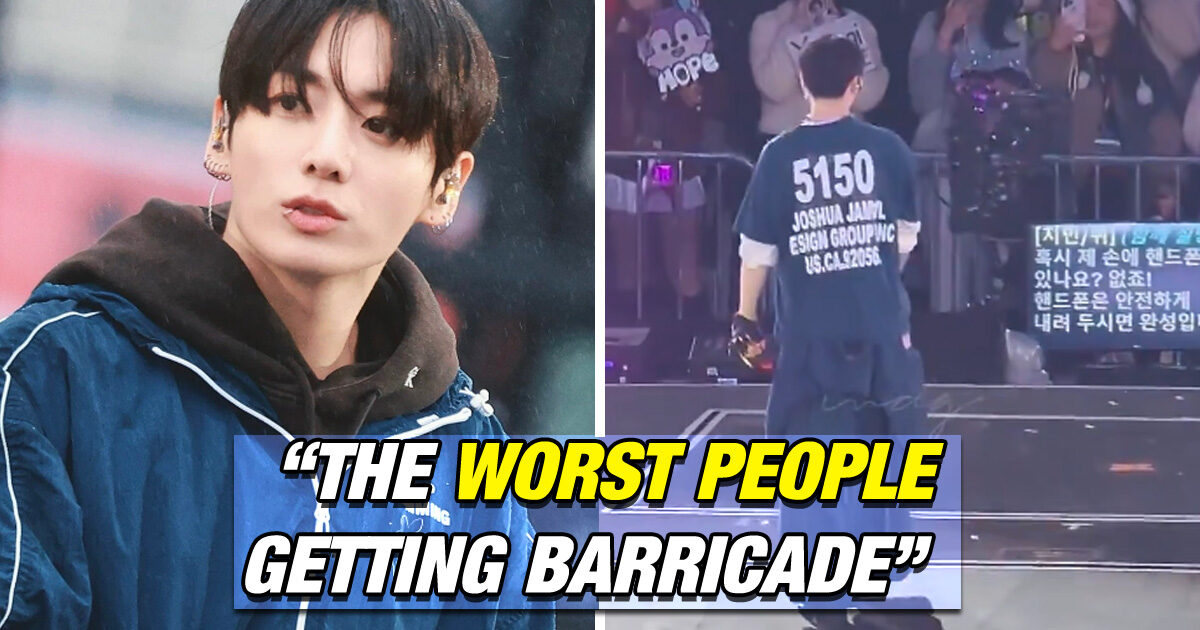
The recent "ARIRANG" gala concert, a prestigious state-sponsored event attended by cultural dignitaries and global stars like BTS's Jungkook, became the unlikely stage for a viral discourse on fandom respect. A clip of fans engaging in loud, disruptive behavior directly in Jungkook's sightline, followed by his visibly unimpressed reaction, ignited a firestorm online. This article analyzes the incident not as mere gossip, but as a critical lens into the evolving, high-stakes social contract between K-Pop idols and their audiences, revealing why the outcry of "none of you deserve it" resonated so powerfully.
- What Actually Happened at the ARIRANG Concert?
- Why Was the Online Reaction So Fierce and Unanimous?
- What Unwritten Rules of K-Pop Fandom Were Broken?
- Why Does Jungkook's Specific Reaction Matter So Much? Comparative Analysis: Supportive vs. Disruptive Fan Behavior
- The Bigger Picture: What Does This Say About the K-Pop Industry?
- Frequently Asked Questions (FAQ)
What Actually Happened at the ARIRANG Concert?
The "ARIRANG" concert is a high-profile Korean cultural showcase, not a typical fan-meet. It's an event where decorum and respect for the performers and the cultural context are paramount. Attendees often include government officials, diplomats, and industry elders alongside artists.
The Viral Moment: A Clash of Contexts
Amidst this formal setting, a group of fans, reportedly seated in a privileged section, began loudly chanting and calling out during a performance that was not by BTS or Jungkook. Their actions were captured on video, which also clearly showed Jungkook—seated as a distinguished guest—turning to look at the commotion. His expression, a blend of scrutiny, surprise, and subtle disapproval, was immediately dissected online.
The Aftermath: A Social Media Tribunal
The clip spread like wildfire across platforms like Twitter, TikTok, and Korean community forums. The overwhelming consensus was not defense of the fans, but severe criticism. Comments flooded in accusing them of embarrassing themselves, the artist they claimed to support, and the overall fandom. The phrase "none of you deserve it," sourced from online commentary, became the battle cry of those arguing the behavior disrespected the concert's purpose and Jungkook's position as an attendee.
Why Was the Online Reaction So Fierce and Unanimous?
Unlike typical fan disputes, this incident saw near-universal agreement across different fanbases and casual observers. This unanimity points to a shared understanding of deeper cultural and social boundaries being crossed.
Defense of the Artist's Space and Time
Jungkook was present not as a performer, but as a guest honoring a cultural event. Fans argued that the disruptive behavior invaded his personal time and forced him into an "idol" role during a moment meant for him to appreciate other artists. It demonstrated a lack of respect for his multifaceted identity beyond being an idol on stage.
Collective Fandom Face and "Secondhand Embarrassment"
In the hyper-conscious world of K-Pop, a fandom's public behavior directly reflects on the idol. This incident caused intense "secondhand embarrassment" (공분) among the broader ARMY and general K-Pop community. The fear was that such actions would paint all fans as inconsiderate and unruly, potentially affecting how artists and industry insiders view fan interactions at formal events. For more on how fan behavior shapes perception, see our analysis on BIGBANG's 2026 Coachella crowd dynamics.
What Unwritten Rules of K-Pop Fandom Were Broken?
This incident violated several core, tacit tenets of engaged K-Pop fandom. These rules are rarely written down but are enforced by community consensus.

Rule 1: Respect the Context of the Event
Behavior appropriate for a BTS stadium concert is utterly inappropriate for a formal gala. Fans are expected to read the room. The ARIRANG concert was a solemn cultural presentation, demanding a different level of conduct focused on appreciation rather than hype.
Rule 2: Do Not Distract From the Performers On Stage
The loud chanting occurred during another artist's performance. This is considered a cardinal sin, as it disrespects the hard work of that performer and the audience who came to see them. It shifts the spotlight selfishly.
Rule 3: Do Not Force an Interaction
An idol in a non-work setting is off-duty. Trying to forcibly grab their attention—especially in a way that causes a scene—is seen as intrusive and entitled, breaking the fragile boundary that allows idols to have some semblance of a private public life.
Why Does Jungkook's Specific Reaction Matter So Much?
Jungkook's non-verbal response was the catalyst for the viral storm. His authenticity in these moments carries immense weight and provides a rare, unfiltered glimpse into an idol's perspective.
The Power of the "Jungkook Stare"
Jungkook is known for his expressive, often brutally honest face. His lack of a performative smile or wave in that moment was interpreted as genuine feedback. It wasn't anger, but a clear, silent communication of "this is not the time or place," which fans found more powerful than any official statement.
Authenticity in an Age of Perfection
In a industry where idols are meticulously curated, a moment of real, unguarded reaction is priceless. It validated the feelings of the critical fans, proving that their concern for respect was shared by the idol himself. This connects to broader trends of audiences craving authenticity, as discussed in our piece on evolving idol image and fan service.
Comparative Analysis: Supportive vs. Disruptive Fan Behavior
The table below contrasts the types of fan conduct, highlighting why the ARIRANG incident was perceived so negatively.
Context Supportive/Appropriate Behavior Disruptive/Inappropriate Behavior Perceived Impact on Artist Formal Cultural Event (e.g., ARIRANG) Quiet appreciation, applause at correct times, respectful attention to all performers. Loud fan chants for non-performing artists, causing a scene to get attention. Embarrassment, discomfort, pressure to manage a situation off-stage. Artist's Own Concert Energetic fan chants, synchronized lightstick waves, loud cheers during appropriate breaks. Violent pushing, throwing objects on stage, screaming during quiet moments. Can break performance concentration, cause physical danger, or emotional distress. Airport Encounter Keeping a safe distance, using quiet voices, following security guidance. Shoving, blocking pathways, using intrusive camera equipment. Invasion of privacy, stress, physical safety concerns. Online / Social Media Positive trending of projects, respectful critique, defending against malicious attacks. Trending hate hashtags, invading private accounts, fan wars in comment sections. Mental health strain, creating public relations issues, fostering a negative environment.The Bigger Picture: What Does This Say About the K-Pop Industry?
This micro-event reflects macro-tensions within K-Pop's globalized ecosystem. It's a signpost for the industry's growing pains.
The Maturation of Fan Culture and Self-Policing
The vehement backlash signifies a segment of the fandom actively self-policing to uphold a standard of respectability. This is a natural evolution as fandoms age and seek legitimacy beyond being seen as hysterical fanatics. They understand that to be taken seriously, their collective conduct must mature.
The Blurred Lines of Access and Entitlement
The incident underscores the confusing signals in modern K-Pop. While agencies sell intimacy via bubble messages and reality shows, real-life boundaries remain essential. Fans who feel a parasocial "closeness" may misapply that to all settings. Navigating this is one of the industry's greatest challenges. For a look at how elite events shape perception, read our exclusive breakdown of the ARIRANG concert's attendee list.
A Cultural Power Shift in Real-Time
Jungkook, a K-Pop idol, sitting as a revered guest at a state function is itself a testament to the genre's cultural capital. The incident, however, shows that with that power comes complex responsibility for both artists and fans. It mirrors the global cultural shift where K-Pop is now under a microscope, its every interaction laden with meaning, much like the analysis we presented in Taemin vs. Bieber: K-Pop’s Cultural Power Shift.
Frequently Asked Questions (FAQ)
Q: Did Jungkook or HYBE make an official statement about the incident?
A: No. Neither Jungkook nor HYBE has publicly addressed the specific behavior at the ARIRANG concert. The entire discourse has been driven by fan-captured video and community reaction, making the non-verbal exchange all the more significant.
Q: Were the fans removed from the concert?
A: There are no verified reports of removal. The consequence was primarily social, in the form of massive online criticism and the viral dissemination of their actions coupled with Jungkook's reaction.
Q: Is this type of fan behavior common at formal events?
A> It is considered rare and a major faux pas. Most fans attending such high-profile, non-ticketed events understand the required decorum. This incident stood out precisely because it was so out of place.
Q: Could this affect how idols interact with fans in public in the future?
A> Potentially. While most fans are respectful, such incidents may make artists and their security teams more cautious in mixed settings. It reinforces the need for clear boundaries, even as the industry promotes accessibility.
Q: Where can I find more balanced news on K-Pop culture and events?
A> For ongoing, in-depth analysis of events, chart performance, and cultural trends, keep exploring our News page and our Charts page for data-driven insights.
Conclusion & The Path Forward for Fandom
The "ARIRANG incident" was more than a viral blip; it was a community-led referendum on fandom maturity. It proved that the collective K-Pop audience holds itself—and its peers—to a high standard of conduct, especially when their idols' reputation and comfort are on the line. The lesson is clear: true support is contextual. It means knowing when to erupt with energy and when to exhibit quiet respect.
The path forward requires a continued shared understanding that an idol's presence is a privilege, not an invitation for entitlement. As K-Pop continues to command global stages and prestigious forums, the behavior of its fans will inevitably be part of the narrative. By choosing respect over disruption, fans don't just avoid an "embarrassing" viral moment—they actively build a more sustainable, respected environment that allows their favorite artists to thrive in all spaces. For more thought-provoking analysis on the forces shaping K-Pop, explore our featured articles or dive into profiles on our Artists page.