
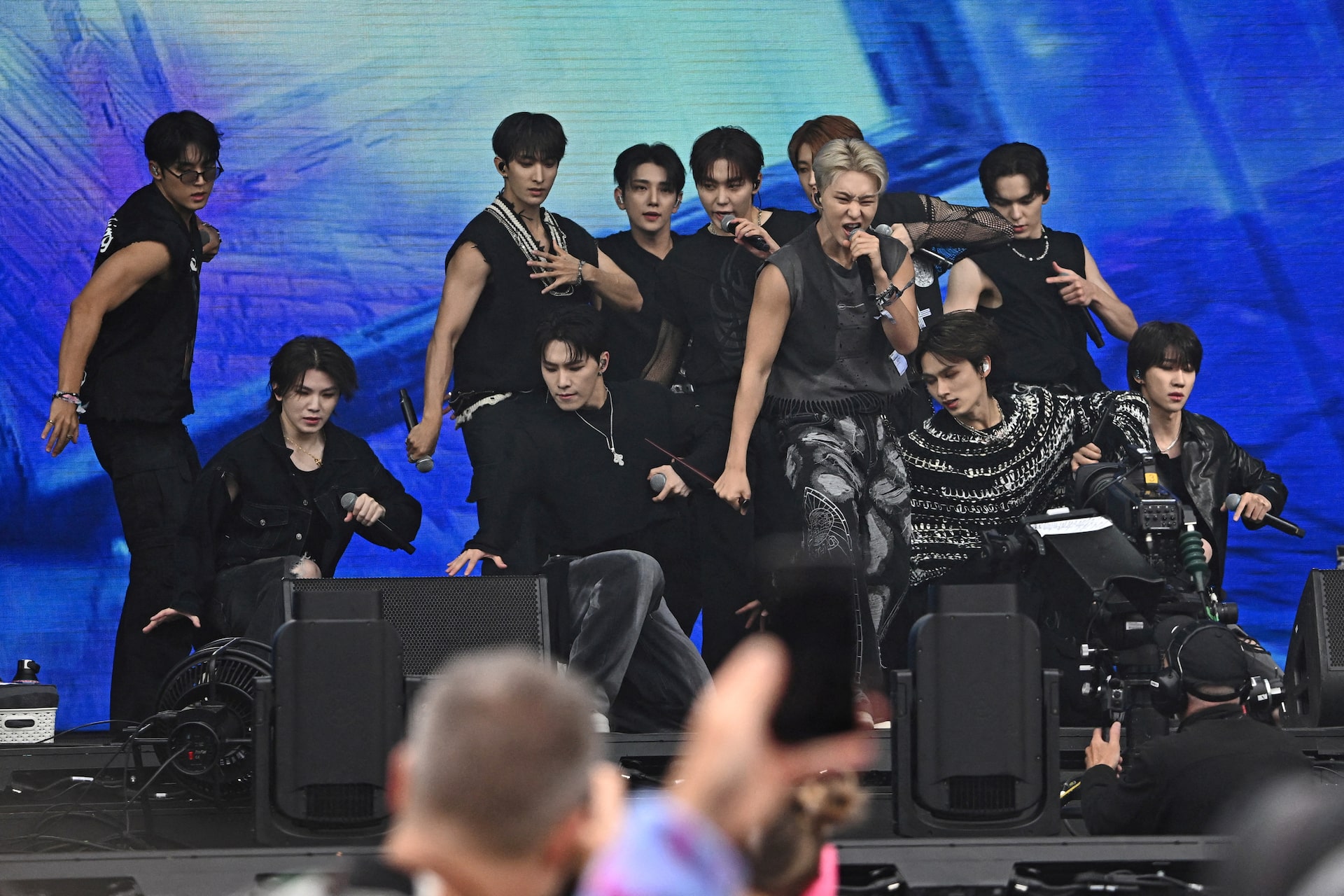
What began as a simple night of music has spiraled into one of 2026's most significant K-Pop controversies, revealing fissures within HYBE's empire and the volatile nature of multi-fandom dynamics. An interaction involving several SEVENTEEN members at a BTS member's solo concert—perceived by a vocal segment of ARMY as disrespectful—triggered a coordinated online backlash so severe it prompted official statements, internal meetings, and sparked a debate about idol agency, corporate stewardship, and the health of fan culture itself. This incident is not an isolated fanwar; it is a symptom of the complex challenges facing super-labels.
Table of Contents
- What Actually Happened at the Concert?
- Why Did This Spark a Nuclear-Level Backlash?
- What is HYBE's Role in This Mess?
- What Does This Reveal About Modern K-Pop Fan Culture?
- How Does This Impact SEVENTEEN and BTS Moving Forward?
- The Bigger Picture: Is the "HYBE Family" Narrative Sustainable?
- Your Questions, Answered (FAQ)
What Actually Happened at the Concert?
The facts, as pieced together from multiple fan recordings and eyewitness accounts, are specific. During a solo concert by BTS's Jungkook in late March 2026, several SEVENTEEN members were in attendance as audience members. During a particularly emotional ballad segment, cameras briefly cut to the VIP section where the idols were seated.
The "Incident" Moment: A Breakdown
In the crucial 15-second clip, SEVENTEEN's Hoshi and DK are seen leaning toward each other, seemingly sharing a comment or laugh. The timing, juxtaposed with Jungkook's heartfelt performance, was labeled "inappropriate" and "disrespectful" by critics. It's critical to note: they were not laughing *at* the performance. Context suggests they were likely reacting to an inside moment or a fan interaction, a common occurrence in any concert audience.
The Immediate Aftermath and Narrative Formation
Within an hour, clipped videos devoid of broader context trended on Twitter and Korean forums. The narrative solidified not from the full experience, but from a fragmented visual. Hashtags accusing the SEVENTEEN members of mockery began to trend globally. This demonstrates the terrifying speed at which a benign moment can be weaponized in the digital age.
Official Responses: Damage Control Mode
Pledis Entertainment, SEVENTEEN's label under HYBE, issued a rare and swift statement clarifying the members' "deep respect" for BTS and Jungkook, stating the moment was a misunderstanding taken out of context. Notably, no apology was issued, a strategic move interpreted as defending their artists without conceding to false allegations. HYBE itself remained conspicuously silent, a point of major contention for all involved fandoms.
Why Did This Spark a Nuclear-Level Backlash?
This wasn't just a minor fan spat. The scale and venom were unprecedented for an inter-group HYBE incident. Several combustible factors were already in place.
The Pre-Existing Tinder: Fandom Economics and Perceived Competition
Despite being label-mates, SEVENTEEN and BTS operate in a perceived state of commercial and critical competition. From chart positions to year-end awards, comparisons are inevitable.
- Resource Allocation: A persistent narrative among some ARMY is that HYBE diverts attention and resources to SEVENTEEN, especially during BTS's enlistment period.
- "Golden Goose" Syndrome: Some believe HYBE takes BTS's foundational success for granted while aggressively promoting newer groups.

The Catalyst: The Psychology of Protective Fandom
With BTS members completing mandatory service, the fandom is in a heightened state of protective sensitivity. Jungkook's solo concerts are monumental events after a long separation. Any perceived slight, however minor, is magnified through this lens of fierce guardianship. The backlash was less about the action itself and more about a perceived violation of a sacred, emotional space for ARMY.
Amplification by Bad Actors and Algorithms
As with any online storm, bad-faith actors—including anti-fans of both groups and general chaos agents—seized the moment to inflame tensions. Social media algorithms, designed to prioritize engagement, relentlessly promoted the most incendiary posts and clips, creating a feedback loop of outrage that far exceeded the initial viewer base.
What is HYBE's Role in This Mess?
HYBE's corporate strategy is central to understanding this crisis. The conglomerate's public-facing "One HYBE" family narrative clashed violently with the reality of its internal and fandom dynamics.
The "Hands-Off" Label Strategy: A Double-Edged Sword
HYBE's acquisition model allows labels like Pledis (SEVENTEEN) and Big Hit Music (BTS) significant autonomy. This preserves artistic identity but creates disjointed PR and crisis management. Pledis acted to defend SEVENTEEN, but without a coordinated HYBE-wide statement affirming mutual respect between artists, a vacuum of authority was left for fans to fill with speculation and anger.
Historical Precedent: A Pattern of Crisis Management?
This incident raises questions about HYBE's overarching governance in an era of hyper-scrutiny. It echoes concerns raised in our deep-dive analysis, "Beyond the Poll: The Legal & Ethical Storm Around Bang Si-Hyuk", which examines leadership accountability. While not of the same legal magnitude, this controversy touches on similar themes of corporate oversight and the consequences of decentralized control in a connected fan ecosystem.
Comparative HYBE Incident Response Table
Incident Groups/Labels Involved HYBE-Level Response Outcome 2026 Concert Interaction BTS (BigHit Music) & SEVENTEEN (Pledis) None. Left to subsidiary labels. Major inter-fandom rift, sustained negative trending. 2025 LE SSERAFIM - PUREFLOW pt.1: What Just Landed" rel="internal">LE SSERAFIM/NewJeans Chart Competition LE SSERAFIM (Source) & NewJeans (ADOR) Internal memo urging "healthy competition" leaked. Temporary calm, but underlying label rivalry intensified. 2024 In-House Producer Dispute Multiple HYBE artists Centralized statement affirming collaborative culture. Issue resolved quickly with minimal fan involvement.What Does This Reveal About Modern K-Pop Fan Culture?
Beyond HYBE, this event is a case study in 4th/5th generation K-Pop fan behavior, where loyalty is intense and boundaries are digitally enforced.
The Death of Nuance and the Court of Public Opinion
The incident underscores a shift towards instant judgment based on visual snippets, bypassing any need for context, intent, or human reaction. The audience space, once a shared experience, becomes a panopticon where every attendee's reaction is subject to forensic-level scrutiny. This creates a chilling effect, potentially making idols hesitant to attend peers' events publicly.
From Support to Sovereignty: Fandom as Digital Nation-States
Major fandoms like ARMY and CARAT function as powerful digital entities with their own norms, diplomatic relations, and territorial disputes. This incident was treated not as a minor interpersonal issue, but as a diplomatic affront requiring a unified national response—hashtags as sanctions, trending topics as shows of force. For more on the positive power of this dynamic, see "Beyond the Milestone: How 'Do It' Exposes Stray Kids' Blueprint", which details strategic fandom mobilization.
How Does This Impact SEVENTEEN and BTS Moving Forward?
The professional and personal ramifications for the artists involved are the most poignant element of this saga.
For SEVENTEEN: Navigating Unwanted Notoriety
The members, particularly Hoshi and DK, are now unfairly saddled with a "disrespectful" label in certain circles, a stain that can persist regardless of truth. It may create anxiety around future public interactions and force them into a more guarded, less spontaneous public persona—a loss for the industry known for its genuine moments. Follow their journey on our Artists page.
For BTS and Jungkook: An Uncomfortable Position
The BTS members, who have consistently shown support for juniors across the industry, are now caught in a conflict where their own fandom is attacking their colleagues. This places them in an impossible position—publicly defending SEVENTEEN could be seen as dismissing their fans' feelings, while silence condones the toxicity. It alienates them from their peers within their own company.
The Personal Relationship Fracture
While idols are often closer than fans realize, such large-scale conflict creates undeniable awkwardness. What might have been a friendly, supportive concert attendance is now a source of potential strain. The pressure to manage public perception can damage genuine private relationships, a tragic collateral damage of fan warfare.
The Bigger Picture: Is the "HYBE Family" Narrative Sustainable?
This is the billion-dollar question. HYBE has aggressively marketed its labels and artists as a harmonious ecosystem. This incident proves that narrative is fragile.
The Illusion of the "Company Stan"
HYBE benefits from "company stans" who support multiple groups under its umbrella. However, this controversy reveals the limits of that loyalty. When push comes to shove, primary fandom allegiance (ARMY, CARAT) overwhelmingly trumps any corporate brand loyalty. The "family" breaks down along pre-existing tribal lines.
A Blueprint for Other Conglomerates
SM, JYP, and YG are watching closely. HYBE's struggle is a cautionary tale for the entire industry as it consolidates. It highlights the need for clear, central communication strategies for inter-artist relations and proactive fandom diplomacy, rather than reactive label-specific damage control. For evolving narratives on artist lives beyond the stage, our piece on "Heechul's New Chapter" offers insight.
The Path Forward: Acknowledgement and Structural Change
To heal the rift, HYBE may need to:
- Issue a careful, unifying statement that validates fan feelings while firmly defending the character of its artists.
- Re-evaluate how it presents inter-label collaboration to manage fan expectations.
- Create more organic, controlled opportunities for positive interactions between artist fandoms to rebuild burnt bridges.
Your Questions, Answered (FAQ)
Q: Did SEVENTEEN ever apologize?
A: No official apology was issued. Pledis Entertainment released a statement clarifying the members' respect for BTS and calling the situation a misunderstanding, but did not offer an apology for the specific actions, as they maintained no wrongdoing occurred.
Q: How have other idols reacted to this situation?
A: Most industry figures have stayed publicly silent, likely to avoid fueling the fire. However, a few non-HYBE senior idols have posted vague messages on Bubble or Instagram about "kindness" and "understanding context," which are widely interpreted as quiet support for the SEVENTEEN members caught in the storm.
Q: Could this affect HYBE's stock price or business?
A: Short-term, direct impact is likely minimal. However, sustained internal fandom conflict damages the cohesive "HYBE brand" image marketed to investors. It exposes a key risk factor: that the value of its multi-group portfolio is vulnerable to inter-fandom warfare, which is bad for long-term stability narratives.
Q: Has anything like this happened before in K-Pop?
A> Yes, but rarely within a single conglomerate. Historical precedents involve idols from different companies, like moments misconstrued at award shows. The intensity here is amplified by the corporate family tie, which raised expectations of harmony. For a positive example of cross-group admiration, read about "How THIS Soloist Became K-Pop's Ultimate BTS Fanboy."
Q: What can normal fans do to help de-escalate?
A> Focus on supporting your artists positively, refuse to share out-of-context clips, and report clear hate speech and harassment. Remember that idols are real people with complex relationships fans don't see. Championing understanding over condemnation is the most powerful tool.
Conclusion: A Watershed Moment for the Industry
The SEVENTEEN and BTS concert backlash is more than a week-long trending topic. It is a watershed moment that exposes the inherent tensions in K-Pop's super-conglomerate era. It challenges the viability of the "big happy family" corporate marketing strategy when pitted against the deep-seated, singular loyalty of modern fandoms. The incident underscores that in today's landscape, an idol's every public moment is a potential diplomatic incident, requiring a level of performative perfection that is ultimately unsustainable and unhealthy for the artists themselves.
The path forward requires a recalibration from all parties: from HYBE in managing its ecosystem, from fandoms in practicing grace and critical thinking, and from the media in refusing to amplify chaos without context. The health of the industry depends not on eliminating all friction, but on developing mature mechanisms to handle it without resorting to digital wildfires. For continued analysis on how the industry navigates these complex dynamics, stay tuned to our News page and explore the latest chart data that reflects fan support beyond controversy on our Charts page.