
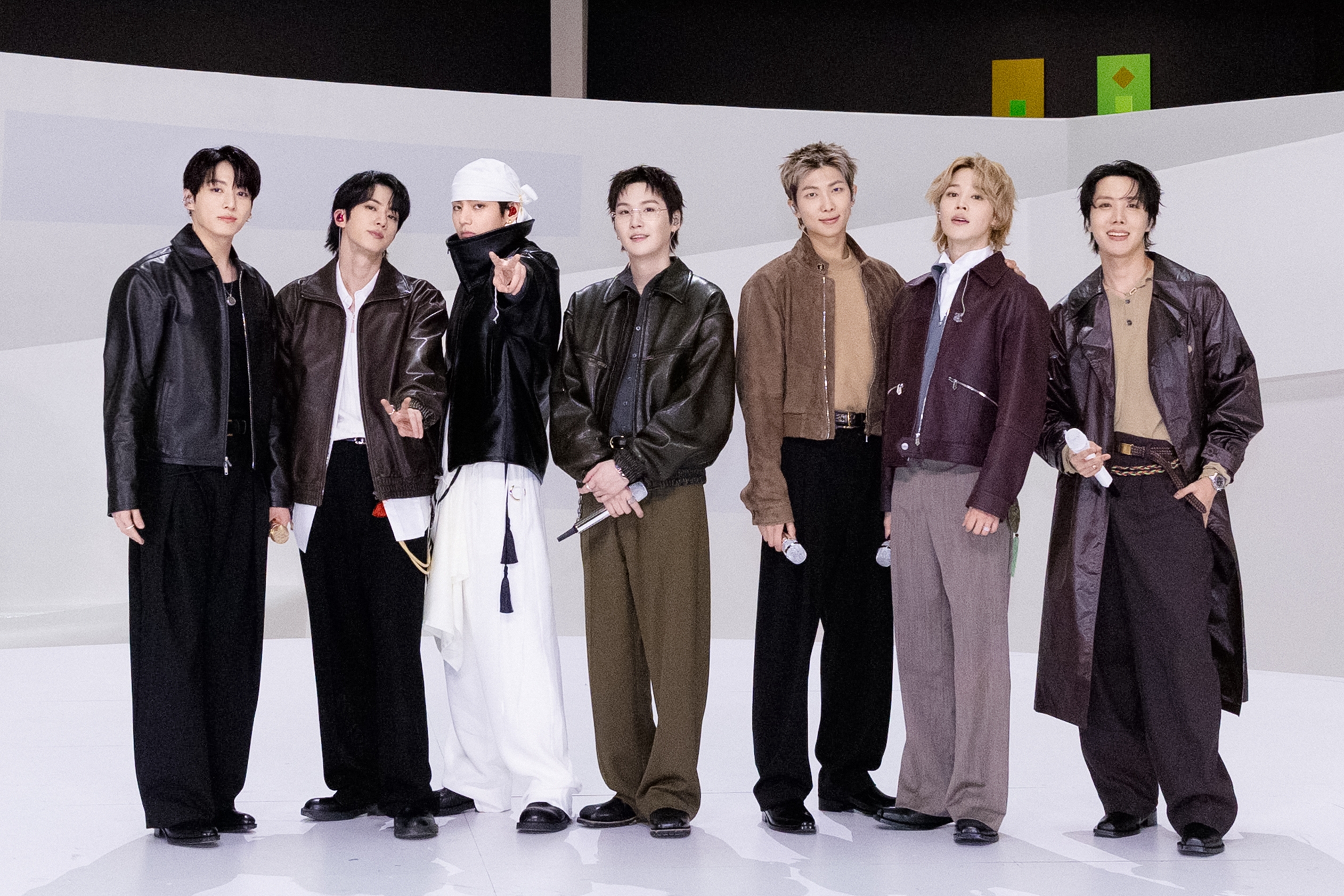

The digital counter on the "Inkigayo" screen flashed with finality: 11,452 points. In that moment, a week of breathless anticipation, fervent streaming, and collective hope crystallized into history. BTS’s "SWIM" had just secured its ninth music show trophy, completing a rare and coveted "Perfect Week" Grand Slam—winning every single major music broadcast program in one promotional cycle. The broadcast on April 5th wasn't just another victory; it was the ceremonial capstone on a campaign that has redefined what is possible for artists in the group's ambitious "Chapter 3." The stage, however, belonged to more than just the septet. It served as a powerful snapshot of the current K-Pop landscape, featuring the long-awaited solo return of Irene, the charismatic comeback of ITZY’s Yuna, and a cohort of performers proving the industry's vibrant future is in relentless motion.
From Hiatus to History: The "Chapter 3" Context
To understand the magnitude of this Grand Slam, one must look beyond the trophy count. BTS's current era, dubbed "Chapter 3," was initiated following the group's announcement of a temporary focus on individual activities, a move that led to groundbreaking solo projects from RM, Jin, SUGA, j-hope, Jimin, V, and Jung Kook. This period, while celebrating individual artistry, left a palpable silence on the group performance front. The release of "SWIM"—a synth-pop anthem exploring themes of perseverance, connection, and moving through emotional currents—marked the first full-group promotional activity in nearly two years. The song arrived not as a standalone single, but as the lead track for a special anniversary project, laden with the weight of expectation and the pent-up devotion of ARMY worldwide.
The strategy was distinct. Unlike prior eras defined by intensive, months-long global campaigns, "SWIM" was presented as a focused, one-week celebration—a gift to fans and a reassertion of their unified musical identity. This made the pursuit of a "Perfect Week" not just a fan-driven goal, but a symbolic mission. Achieving it required mobilizing a global fandom in a precise, time-sensitive manner, battling strong contenders from across the industry. As we explored in our analysis of industry shifts in "Beyond the Seven-Year Itch", longevity in K-Pop is increasingly defined by strategic evolution. BTS's "Chapter 3" Grand Slam demonstrates a masterclass in this very principle: leveraging individual growth to fortify the group's core impact, creating a comeback that feels both fresh and foundational.
The Anatomy of "SWIM": More Than a Song
"SWIM" itself is a nuanced piece of work. Produced with a blend of resonant 80s-inspired basslines and crisp, modern percussion, the track serves as a metaphorical lifeline. Lyrically, it moves away from the overt societal commentary of earlier hits like "ON" or "No More Dream," delving instead into a more intimate, universally relatable space. It speaks of the struggle to stay afloat, the importance of reaching out, and the shared strength found in not swimming alone. This thematic pivot resonated deeply. The choreography, characterized by flowing, wave-like group movements and moments of powerful, synchronized propulsion, visually translated the song's message into a breathtaking performance art piece. Each music show stage was slightly reinterpreted, showcasing the group's legendary live stamina and attention to detail, keeping fans engaged throughout the week-long campaign.
The "Inkigayo" Climax: A Grand Slam Sealed
The April 5th episode of SBS's "Inkigayo" was charged with a palpable electricity. The candidate field was formidable, including a top-tier soloist and a rising fourth-generation boy group. When the MCs announced the finalists, the tension in the broadcast studio was mirrored in livestream chats worldwide. The criteria breakdown—digital sales, physical sales, SNS points, broadcast scores, and live voting—highlighted the multifaceted nature of a modern K-Pop win. "SWIM" dominated digitally and, in a testament to the enduring power of BTS's physical releases, scored highly in album sales despite the single's standalone nature. Its social media virality was unmatched, and while broadcast points were competitive, the live vote, conducted during the show, became the decisive battleground.
"We prepared this stage thinking only of ARMY who have been waiting with us," said Jung Kook in a brief pre-recorded acceptance speech aired after the win. "This song, 'SWIM,' is about us holding onto each other. Every trophy this week feels like proof of that connection. Thank you for making this unforgettable memory with us."
The final score revealed a decisive victory, cementing the Grand Slam. The win on "Inkigayo" is particularly significant as the program is historically one of the most competitive, often considered the crown jewel of the weekly music show circuit. This ninth trophy added to wins from Mnet's M Countdown, KBS's Music Bank, MBC's Show! Music Core, and SBS's The Show, completing an immaculate sweep. The achievement places BTS in an elite stratum of artists who have accomplished a perfect week, a feat made even more remarkable given the condensed promotion period and the current fragmented media landscape.
A Stage Shared: Irene, Yuna, and the New Guard
While BTS's victory was the headline, the "Inkigayo" stage was a showcase of K-Pop's diverse brilliance. Red Velvet's Irene made a stunning solo return with "Silver Line," a sophisticated, performance-heavy track that highlighted her legendary precision and commanding stage presence. Her comeback, after focused activities in subunit IRENE & SEULGI, was a reminder of her status as a top-tier performer and a trending moment in its own right, sparking discussions across our News page.
Similarly, ITZY’s Yuna brought an explosion of youthful energy with her solo debut "MIRROR," a pop-dance track celebrating self-identity. Her confident performance, full of her signature charisma, showcased the new generation of solo stars emerging from powerhouse groups. The episode also featured compelling stages from rising boy groups and soloists, each contributing to the rich tapestry of the broadcast. This juxtaposition—the historic achievement of an iconic group alongside the powerful statements of established and emerging solo artists—perfectly encapsulated the dynamic, multi-layered state of the industry today.

ARMY's Ocean: Fan Reaction and the Digital Celebration
In the immediate aftermath, the digital world erupted. The hashtag #BTS_SWIM_GrandSlam trended globally within minutes, accompanied by celebratory memes, emotional video compilations of the week's wins, and detailed infographics breaking down the score totals. On platforms like Weverse and Twitter, fans shared stories of organizing collective streaming sessions, coordinating voting efforts, and the emotional payoff of the final win.
"Watching them complete the grand slam felt like a shared victory," tweeted @BTS_today, a fan account with over a million followers. "This week wasn't just about numbers; it was about everyone who loves BTS moving together in one rhythm. 'SWIM' was the anthem, and we were the current." This sentiment of collective action was pervasive. Fans also created stunning visual art inspired by the song's aquatic theme, flooding social media with animations and illustrations of the members "swimming" through a sea of fan light sticks.
The reaction also extended to acknowledging the other performers. Many ARMY posts praised Irene's powerful stage and welcomed Yuna's solo debut, reflecting a mature and supportive fandom culture that can celebrate its own group's success while appreciating the broader ecosystem. This community cohesion is a powerful asset, and its role in driving the practical metrics behind a Grand Slam cannot be overstated. For a deeper dive into how fan engagement shapes musical trends, check out our weekly feature on The Week in K-Pop Soundscapes.
Industry Ripples: Analyzing the Impact of the Grand Slam
Beyond the celebration, BTS's Perfect Week sends significant ripples through the K-Pop industry. Firstly, it revalidates the music show system's relevance in the age of global streaming and TikTok hits. It demonstrates that these weekly broadcasts remain a potent cultural touchstone and a meaningful arena for fan engagement and competition. Secondly, it sets a new benchmark for "special" or "anniversary" comebacks. No longer are such releases seen as mere fan-service; they can be full-scale, record-breaking events that command the industry's attention.
Most profoundly, it underscores the viability and strength of the "solo-to-group" model BTS is pioneering in "Chapter 3." Unlike the traditional group hiatus, which often leads to diminished momentum, BTS's members have used their solo periods to amplify their individual brands, explore new genres, and attract new audiences—all of which funneled back into the group's collective power for "SWIM." This strategic approach to long-term career management echoes the landmark stability seen in groups like SEVENTEEN, whose own commitment to the group unit, as detailed in our report on their historic contract renewal, is reshaping industry standards for longevity.
Conversely, this event also highlights the intense competitive pressure within the industry. For other artists promoting simultaneously, facing a BTS comeback campaign is a monumental challenge. It forces agencies to strategize release timing, marketing angles, and fan engagement with even greater nuance. It also sparks healthy debate about chart metrics and the balance between domestic and global fan power. This Grand Slam is a case study in total fandom mobilization, a playbook that other groups and agencies will undoubtedly analyze closely.
Looking Ahead: What Follows a Perfect Week?
With the "SWIM" promotions concluding on this historic high, the question turns to the future. BTS has confirmed that "Chapter 3" will continue to unfold with a mixture of unit and solo projects. Rumors are already swirling about a potential hip-hop unit track featuring RM, SUGA, and j-hope, and continued solo album rollouts. The success of this Grand Slam ensures that any future group activity, even if brief, will be met with colossal anticipation and will be positioned as a major industry event.
For the wider K-Pop scene, the spotlight now shifts to the ongoing cycle of comebacks. Irene's solo will be closely watched for its chart performance, while Yuna's debut sets the stage for potential solo ventures from other ITZY members. The coming months promise a packed schedule, with new groups debuting and established acts returning. Fans can track all these movements on our comprehensive Charts page.
The end of this promotional cycle also brings a moment of reflection. In an industry sometimes marked by abrupt conclusions, as witnessed in the recent, somber news of LUMINA's disbandment, BTS's sustained, evolving success story offers a counter-narrative of growth, adaptation, and enduring bond. Their "Perfect Week" with "SWIM" is not an ending, but a powerful waypoint—proof that even as they navigate individual currents, their synchronized strength as a group can still create waves that wash over the entire landscape of pop music. The chapter continues, and the industry is watching, learning, and swimming forward alongside them.