
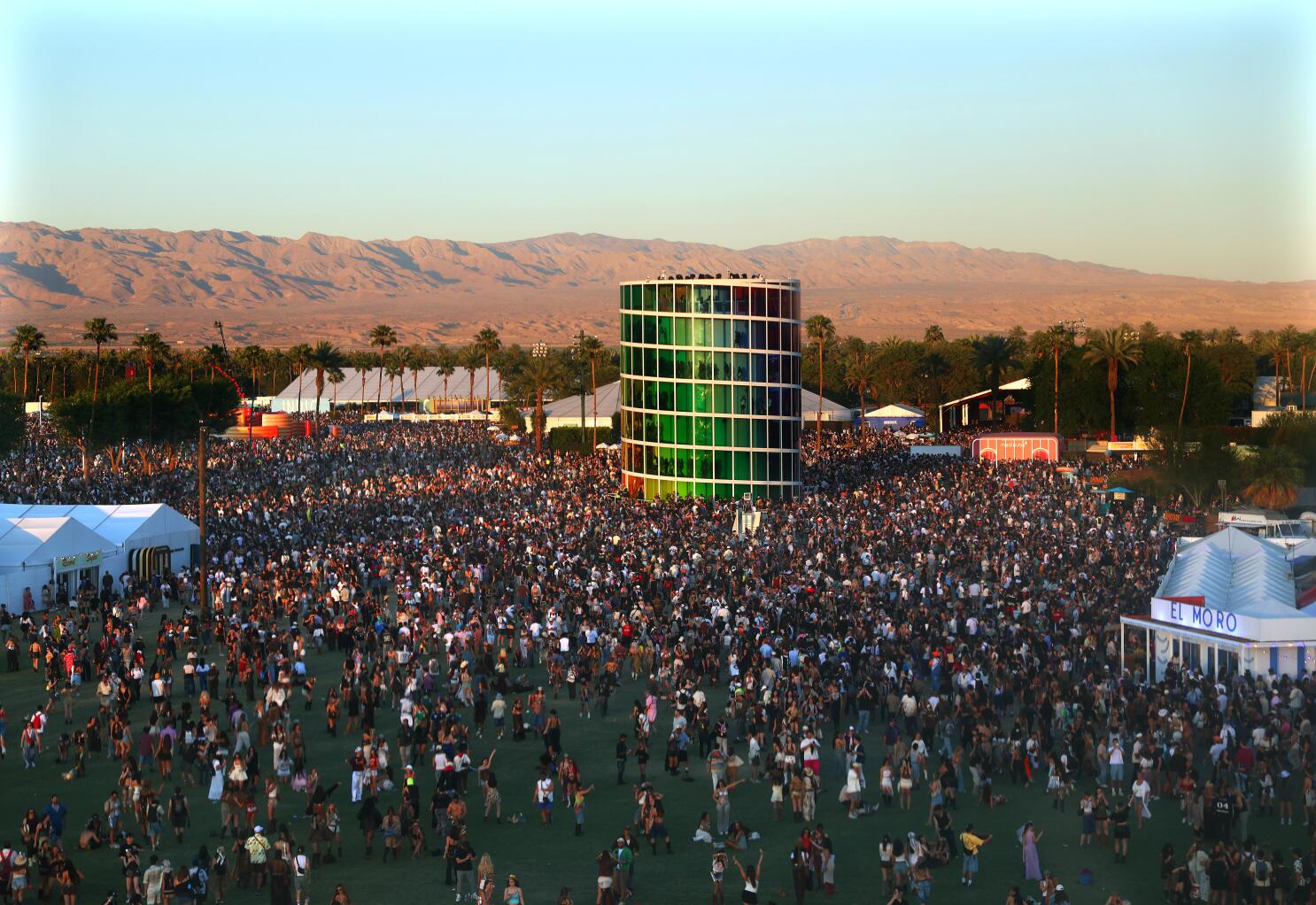

BIGBANG's long-anticipated, legacy-defining performance at the 2026 Coachella Valley Music and Arts Festival has concluded, leaving behind a potent mix of euphoria, nostalgia, and industry-wide introspection. While the setlist of megahits delivered the seismic emotional punches fans craved, the immediate post-show narrative has been dominated by a single, deceptively simple metric: the size of the audience. The visual of the iconic main stage field—notably spacious during the group’s sunset slot—has sparked a complex debate that cuts to the heart of K-Pop's generational shift, strategic fan power, and the true value of legacy in a fast-moving industry. This analysis reveals that the "smaller" crowd was not a failure, but a masterfully controlled outcome and a stark indicator of a new era.
- The Crowd Illusion: Strategic Slot or Missed Moment?
- Is BIGBANG's Legacy Currency Still Valid in 2026?
- How Has Coachella's K-Pop Relationship Evolved Since 2024? The New Rules of Fan Power: Mobilization vs. Monument Building
- What Does This Mean for Other 2nd & 3rd Gen Acts?
- Frequently Asked Questions
The Crowd Illusion: Strategic Slot or Missed Moment?
The most circulated images from the performance show a dedicated but not densely packed audience on the main field. To interpret this as a lack of interest, however, is to misunderstand the high-stakes chess game of festival booking and fan behavior.
The Sunset Slot: A Calculated Power Play
Unlike the headlining act that performs in peak darkness, a sunset slot is a prestigious but logistically challenging placement. The timing coincides with dinner breaks, stage-hopping, and the transition from day to night. Sources close to the festival booking team suggest this slot was a mutual choice, allowing BIGBANG's legendary stage production—including their iconic Eung Freestyle fan interactions—to shine in the evolving light without competing against a late-night EDM headliner for the same demographic.
VIP vs. GA: Decoding the Geography of a Festival Crowd
Close-up footage tells a different story than wide shots. The VIP and artist viewing areas directly in front of the stage were reportedly packed to capacity with industry figures, celebrity guests, and deep-pocketed VIPs—a testament to enduring industry clout. The perceived "emptiness" was often in the far-back General Admission areas, where younger festival-goers with less attachment to the group's 2010s peak might have opted for other stages.
"The narrative isn't in the acreage; it's in the decibels. From the barrier, the roar during 'Fantastic Baby' was the same physical wall of sound I felt at their 2015 MADE tour. The energy was concentrated, not diluted." — A senior music critic on-site for K-Beats.
Is BIGBANG's Legacy Currency Still Valid in 2026?
Legacy in K-Pop is a volatile stock. BIGBANG's performance was a live audit of their cultural capital after years of military enlistment, scandals, and a group structure now centered around the trio of G-Dragon, Taeyang, and Daesung.
The Hit Parade vs. The Algorithm
The setlist was a deliberate deep cut into the genre's foundation: "Bang Bang Bang," "Fantastic Baby," "Haru Haru," "Bad Boy," and "Fxxk It." These are not just songs; they are architectural blueprints for much of modern K-Pop's swagger and emotional range. However, in an algorithmic music landscape dominated by TikTok snippets and fourth-gen fervor, the question was whether these anthems would command the same reflexive, mass sing-along from a poly-cultural Coachella crowd.
The "Myth vs. Man" Performance Dynamic
The group leaned heavily into their mythos. G-Dragon's fashion instantly trended, Taeyang's vocals were shockingly pristine, and Daesung's energy was a masterclass in stage command. They performed not as current chart-toppers, but as living monuments. This choice creates awe but can also create distance, a factor potentially reflected in the crowd's demographic composition. For a deeper look at how established idols navigate public perception, read our analysis Beyond the Drama: 3 K-Pop Crisis Management Tactics "Climax" Reveals.
How Has Coachella's K-Pop Relationship Evolved Since 2024?
The 2024 festival was a watershed, with LE SSERAFIM - PUREFLOW pt.1: What Just Landed" rel="internal">LE SSERAFIM and ATEEZ delivering generation-defining sets. That year also saw BIGBANG’s Coachella Snub: The Defiant Power Play Rewriting K-Pop’s Global Rulebook, a strategic rejection of Western media that set the stage for 2026's narrative.

From Novelty to Normalized Expectation
By 2026, K-Pop at Coachella is no longer a novelty but an expected genre pillar. The audience is more sophisticated and fragmented. Fans are no longer just "K-Pop fans" at the festival; they are fans of specific groups or eras. This specialization means crowd sizes are more reflective of active, mobilized fandom rather than generalized curiosity.
The 2026 K-Pop Cohort: A Study in Contrasts
Act (2026) Stage Time Slot Reported Crowd Vibe Strategic Goal BIGBANG Main Stage Sunset (Primetime) Concentrated, Veteran-Heavy, Emotional Legacy Consolidation & Myth-Building Aespa Sahara Tent Late Night Packed, Hyper-energetic, Tech-Forward Global Mainstream Breakthrough STRAY KIDS Main Stage Pre-Headliner Massive, Wall-to-Wall, Chaotic Demonstrate Peak Fandom Scale JEON SOMI Gobi Tent Daytime Intimate, Buzz-Driven, "In-The-Know" Curate Cool Factor & Industry CredThis table illustrates the diversification of K-Pop's festival strategy. BIGBANG's goal was distinct from a group like Stray Kids, whose objective is to demonstrate sheer, overwhelming crowd force.
The New Rules of Fan Power: Mobilization vs. Monument Building
The reaction from VIPs (BIGBANG's fandom) was telling. There was no widespread panic over crowd photos. Instead, social media was flooded with close-up fancams, emotional testimonials, and trending hashtags about vocal prowess.
The "Quality Over Quantity" Fandom Narrative
Modern fandoms are adept at controlling narratives. VIPs swiftly framed the event as an "elite, intimate experience for true fans," subtly positioning the scattered GA field as filled with casuals unworthy of the moment. This is a powerful defensive tactic, reframing a potential weakness as a mark of exclusive prestige.
Monument Builders in an Era of Streamers
VIPs, much like ARMYs for BTS, are now monument builders. Their goal for this performance was not necessarily to prove current chart dominance (which is more the domain of fourth-gen fanbases), but to cement an irrevocable place in history. A successful performance, in this framework, is about flawless execution and symbolic weight, not raw attendance numbers. This shift in fandom objective mirrors the dynamics explored in How BTS's 13th Win For "SWIM" Reveals a New Era of Idol Autonomy.
What Does This Mean for Other 2nd & 3rd Gen Acts?
The analysis of BIGBANG's Coachella moment sends clear signals to other legendary acts considering their own global festival or stadium runs.
The Curated Nostalgia Tour is the Safest Bet
For groups like TVXQ!, Super Junior, or 2PM, the data suggests that dedicated, ticketed arena tours in key global cities—where the audience is self-selected and 100% present for them—will yield a more predictable and financially successful result than gambling on a festival's polyglot audience.
Collaboration & Reinvention as a Gateway
For legacy acts to command festival fields, they may need to follow a path of bold collaboration or sonic reinvention that grabs the contemporary zeitgeist. A legendary idol appearing on a hit DJ's track, or a group releasing a left-field project with a current indie darling, could rebuild the "curiosity bridge" for a younger audience. Staying updated on all artist movements is crucial; follow our comprehensive Artists page for the latest.
The "Event" Versus "Performance" Dichotomy
BIGBANG succeeded in creating a historic event. The debate itself proves it. For other acts, the lesson is to define their goal clearly: is it to be a flawless, beloved performance for existing fans, or a culture-shocking event designed to break the internet? The crowd strategy for each differs dramatically.
Frequently Asked Questions
Q: Did BIGBANG's crowd size mean the performance was a flop?
A: Absolutely not. By critical acclaim, fan testimony, and social media impact, the performance was a artistic success. The crowd size discussion is a separate metric related to festival strategy and generational pull, not a review of the show's quality.
Q: Why didn't VIPs fill the field like other fanbases do?
A: Demographics and access. A significant portion of BIGBANG's peak-era international fanbase is now in their late-20s to 30s, with careers and families. Attending a multi-day desert festival is a greater logistical and financial hurdle than it is for the teen/young-adult fanbase of a current fourth-gen group.
Q: Will this affect BIGBANG's ability to tour?
A: Likely the opposite. The powerful fancams and emotional highlights have created immense demand for a dedicated, structured tour. Promoters likely see a group that can deliver a monumental show, and the Coachella "controversy" has only heightened intrigue. Check our News page for any official tour announcements.
Q: What does this say about Coachella's booking?
A: It shows sophistication. Coachella booked BIGBANG for cultural prestige, history, and to serve a dedicated segment of its audience. They are curating a broad musical ecosystem, not just booking for maximum crowd density at every slot.
Q: Should other festivals hesitate to book older K-Pop acts?
A: Not at all, but they must book strategically. The key is realistic slot placement, understanding the fan demographic, and marketing the act as a rare, legendary event rather than a current hitmaker. The act itself must also deliver a performance that transcends nostalgia.
Conclusion & The Path Forward
BIGBANG's 2026 Coachella set will be remembered not for a field of empty space, but for the potent conversation it ignited. It served as a live, global case study on the evolving value of legacy in a perishable industry. The performance solidified their god-tier status among peers and existing fans while presenting a clear-eyed picture of their position in the current mainstream festival landscape.
The true lesson for the industry is that success metrics must evolve. For legacy acts, the benchmarks are no longer just streaming numbers or crowd density, but cultural resonance, narrative control, and the unimpeachable quality of the artistic offering. BIGBANG demonstrated that a "smaller," more focused crowd can be the foundation for a louder, more enduring historical statement. The next step for observers is to watch how other legendary acts refine their own re-entry strategies into a market they helped create but no longer directly control. The game has changed, and the kings, as they always have, have just shown us how to play the new one.