
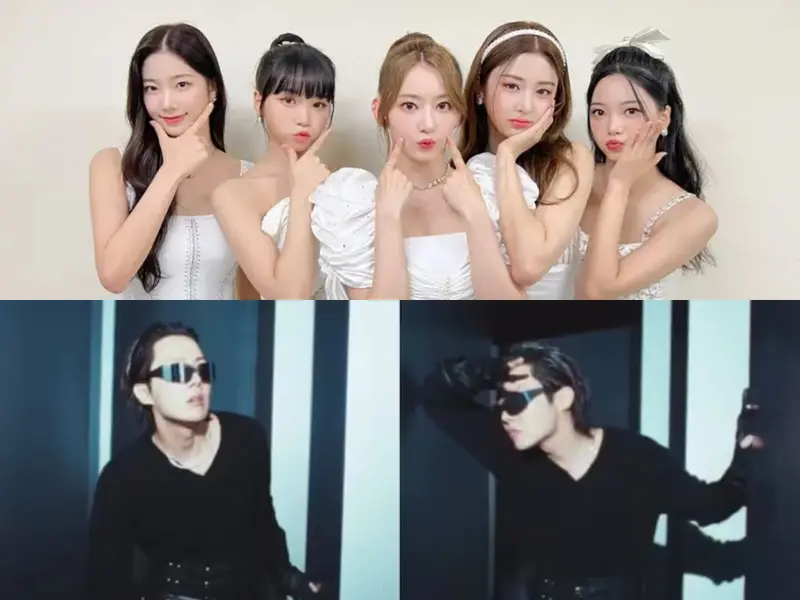
The K-Pop world is dissecting a five-second interaction that has rewritten social media algorithms and fan theories overnight. J-Hope's electrifying, spontaneous chemistry with Mamamoo's Hwasa during a surprise 2026 MAMA Behind-The-Scenes Collab Stage has become a cultural flashpoint. This analysis dives beyond the headlines to explore why this moment resonated, what it reveals about evolving industry dynamics, and how it strategically benefits both artists' next career chapters amidst a landscape often defined by rigid boundaries and systemic pressures. This event is a microcosm of modern K-Pop's values: where authenticity, artistic credibility, and fan-driven narratives now hold more power than any traditional marketing playbook.
- The Spark: What Actually Happened?
- Why Did This Moment Ignite Now?
- The New Rules of K-Pop Collaboration
- A Strategic Masterstroke or Happy Accident?
- Fandom Reacts: From Shipping to Support
- Your Frenzy Questions, Answered
The Spark: What Actually Happened?
To understand the magnitude, we must first isolate the catalyst. It wasn't a pre-announced duet or a music show collaboration. It was a raw, unrehearsed moment in the connective tissue of a major awards show, a glimpse into the artistic process that is usually meticulously edited out. This wasn't content; it was a breach in the fourth wall of performance.
The MAMA 2026 Workshop Session: A New Format for a New Era
Mnet Asian Music Awards (MAMA) has long been criticized for its lengthy runtimes and predictable formats. In 2026, producers introduced "The Legacy of Performance" workshop—a gamble to showcase artistry over awards. The concept grouped iconic performers like J-Hope, Hwasa, and others from disparate genres (including a contemporary dancer and a traditional percussionist) into a single space. They were given a thematic prompt ("Tension and Release") and a backing track, then instructed to explore individually before finding cohesion. The cameras were meant to capture the *process* for a short VT, but they instead documented a paradigm shift. This environment, free from the pressure of a live audience or perfect camera angles, created the petri dish for genuine interaction.
The Five-Second Exchange: A Frame-by-Frame Breakdown
The frenzy centers on a specific transition that lasted from timestamp 01:47 to 01:52 in the leaked clip. As the track switched from an atmospheric synth pad to a gritty, analog hip-hop breakbeat, J-Hope unleashed a series of sharp, punctuated locking moves—shoulder pops, wrist rolls, and a definitive point. His movement vocabulary was pure old-school hip-hop, rooted in precision and rhythm. Hwasa, interpreting the same musical cue, did not follow. Instead, she responded in a dialect from a different dance language: waacking. She used flowing, circular arm motions and dramatic poses that emphasized the track's funk undertones, creating a visual counterpoint to J-Hope's angularity.
It was a conversation without words, happening at 128 BPM. He spoke in staccato; she answered in legato. Their eye contact held for a beat longer than professionally necessary, followed by a simultaneous, genuine smile that broke the "performance face"—a moment of shared surprise at their own synchronicity.This was not two artists performing *at* each other, but *with* each other, a subtle but critical distinction that veteran performers immediately recognized.
Why Leaked Content Fueled the Fire: The Allure of the "Illegal"
The official broadcast later showed a sanitized, wide-shot version. The viral clip originated from a low-resolution fancam filmed by a production assistant on a personal phone, later posted to a private Naver cafe before being screenshotted and magnified by a fan. This "bootleg" quality was crucial to its impact. It felt authentic, stolen, and intimate—a secret passed among initiates. This mirrors the early days of K-Pop fandom, where grainy rehearsal tapes were treasured. The unauthorized nature stripped away the corporate veneer, making the connection feel owned by fans rather than sold to them. This grassroots, "found footage" phenomenon shares DNA with the raw energy fans champion in artists like Luce, whose performances often feel like privileged glimpses into an artist's private world.
Why Did This Moment Ignite Now?
K-Pop is no stranger to interactions. Yet, this sparked a unique inferno. The timing, artist profiles, and industry context created a perfect storm where a spark could become a wildfire.
The Post-Enlistment J-Hope Aura: From Group Pillar to Solo Auteur
J-Hope returned from mandatory military service not just as a member of BTS, but as an artist undergoing public redefinition. His pre-enlistment solo work, like the critically acclaimed "Jack In The Box," established a darker, more introspective sonic identity. His return marks a phase where every public appearance is scrutinized for clues about his artistic direction. Fans and industry watchers are hyper-attentive, analyzing his collaborations, musical choices, and even his demeanor for signs of his post-group trajectory. This moment, therefore, wasn't just about performance; it was read as a statement of his collaborative instincts and the kind of artistic energy he seeks.

Hwasa's Unapologetic Legacy: The Power of Artistic Sovereignty
Hwasa has spent a decade carving a space as one of K-Pop's most self-possessed female idols. From writing and producing her own hits to championing body positivity and leaving her longtime agency to found her own company, she operates with a level of agency rare in the industry. An interaction with Hwasa is never perceived as passive or managed; it is viewed as intentional. Her brand is built on authentic charisma and artistic ownership. Therefore, her reciprocation of J-Hope's energy was seen not as a junior responding to a sunbae, but as a peer recognizing a peer—a meeting of two sovereign artistic states. This equality of stature is what prevented the narrative from tilting toward anything but mutual respect.
A Landscape Craving Authenticity: The Backlash Against Over-Production
The current K-Pop ecosystem is a paradox: it produces incredibly polished content at an unprecedented scale, yet this very perfection can breed detachment. In an era of meticulously managed VLIVEs, pre-written fan call talking points, and sometimes opaque industry struggles, audiences have developed a sophisticated radar for genuine human connection. This moment was a crack in the fourth wall. It offered an unscripted, unfiltered glimpse of two professionals discovering joy in their craft together. It satisfied a deep hunger for proof that behind the brands and the billion-stream hits, the core impulse to *perform* and connect is still vibrantly, messily alive.
The New Rules of K-Pop Collaboration
This incident highlights a seismic shift from formal, transaction-heavy collaborations to organic, credibility-driven moments. The old model was a business deal; the new model is a cultural handshake.
Collaboration Type Classic Model (2010s) New Paradigm (Post-2020s) J-Hope & Hwasa Example Primary Driver Chart strategy, label deals, fanbase expansion Artistic synergy, cultural moment, narrative building Pure, unrehearsed performative chemistry in a creative workshop. Announcement & Rollout Official teaser campaign, concept photos, scheduled poster releases. Leaked footage, surprise drops, organic social media spotting. Viral fancam leaked from a private forum, spreading through fan networks first. Fan Engagement Cycle Streaming goals, organized voting, mass digital purchase campaigns. Meme creation, deep-dive analytical threads, fan-edit videos, theory crafting. Frame-by-frame breakdowns, side-by-side style analysis, "what if" duet remixes. Success Metric Music show wins, Billboard chart entry, first-week sales records. Social capital, sustained discourse (trending for days/weeks), renewed interest in back catalog. Weeks of trending topics, 200%+ spike in streams of older solo tracks, global media analysis. Artist Benefit Commercial exposure, tapping into a new fan demographic. Credibility reinforcement, artistic validation, narrative depth added to personal brand. Both seen as serious, instinctive artists; buzz detached from immediate sales pressure.The "Credibility Exchange" Factor: Currency in the Artist Economy
In today's landscape, a collaboration is less about making a hit song and more about a mutual endorsement. It's a transfer of social and artistic capital. For Hwasa, J-Hope's implicit recognition (through that moment of synergy) is a powerful endorsement from a global icon synonymous with performance excellence. It elevates her from a "successful soloist" to a "peer-recognized virtuoso." For J-Hope, successfully creating that spark with an artist of Hwasa's respected caliber reinforces his identity as a versatile, connective performer beyond the BTS framework. It's a proof point that his artistry communicates powerfully on its own terms.
Micro-Moments Over Macro-Releases: The Power of the Unfinished
The industry is realizing that a potent, fleeting micro-moment can generate more long-tail engagement than a full pre-release single. A five-second clip is incomplete; it demands completion by the audience's imagination. Fans write the sequel in edits, threads, and discussions. This sustained, creative co-creation is more valuable than a one-time streaming spike. It builds community and investment. This strategy of potent teasing is also evident in the masterful rollout for tracks like Jiwon's "Love Me Crazy", where mystery and fan speculation were carefully cultivated.
A Strategic Masterstroke or Happy Accident?
While the moment itself was undeniably organic, the aftermath reveals a landscape of savvy career navigation. The true genius lies not in orchestrating the moment, but in skillfully navigating its aftermath.
J-Hope's Solo Album Prelude: Recontextualizing the Narrative
With a confirmed solo album in production, J-Hope benefits immensely from this frenzy. It performs several key narrative resets:
- Shifts the Focus: It moves his headline from "J-Hope, discharged soldier" back to "J-Hope, magnetic performer and collaborator."
- Establishes Artistic Intent: The buzz is solely about his performance aura and instinct, not chart numbers or viral challenges, setting a tone of artistic seriousness for his upcoming work.
- Creates Speculative Demand: It opens a door of possibility. Could Hwasa feature on a track? Could the album explore this funky, hip-hop vibe? This speculation raises anticipation without any promises, keeping the conversation focused on musical potential.
Hwasa's Reinforced Brand Independence: Proof of Concept
As the CEO of her own venture, Hwasa's primary currency is her brand's strength and marketability. This moment serves as a powerful proof of concept for her new enterprise:
- Market Relevance: It demonstrates her undiminished star power and ability to generate global headlines from a mere glance, making her an attractive partner for brands and media.
- Artistic Equity: It reinforces that her value lies in her unique, un-replicable artistry—the very asset her company is built to promote and protect.
- Industry Positioning: It aligns her with the mature, artist-first trajectory seen in other icons who have taken control, similar to the evolution discussed in pieces on Kubin's career journey.
The Delicate Management Dance: The Strategy of Confident Silence
The most telling strategic move has been the official silence from both BIGHIT and P NATION. No press releases, no "we are aware of the reports" statements, no attempts to capitalize with a quick merch drop. This silence is deliberate and powerful. It:
- Preserves the moment's authenticity, preventing it from being seen as a cheap marketing ploy.
- Allows fan-driven narrative to build organically, which is more persuasive and less prone to backlash.
- Maintains an air of dignified mystique around both artists, elevating them above the fray of typical gossip-cycle management.
Fandom Reacts: From Shipping to Support
The fan ecosystem's response has been a multifaceted display of modern fandom's complexity, moving through predictable phases at lightning speed.
The "MoArmy" Synergy: Mature Fandom in Action
A significant, vocal portion of both ARMY and MooMoos quickly coalesced around a narrative of professional admiration. This reflects the maturation of these 3rd-generation fandoms. Many fans have grown up alongside these artists and now value artistic legacy and peer recognition as much as, if not more than, chart dominance. Hashtags like #ArtistsRecognizeArtists and #PerformanceSynergy trended, deliberately steering conversation toward craft. This represents an evolution from possessive fan culture to a more curator-like appreciation, where celebrating an idol's respect among peers is a point of pride.
Analytical and Creative Explosion: Fandom as Media Lab
The moment became raw material for an astonishing burst of fan labor:
- Choreography Analysis Videos: YouTube channels like "Danceology" and "K-Pop Moves" uploaded detailed breakdowns comparing their locking and waacking techniques, explaining why their styles meshed so well musically.
- Edit Culture & Fan Art: TikTok and Instagram saw a flood of "what if" duet edits, splicing Hwasa's "Twit" vocals over J-Hope's "Chicken Noodle Soup" beat, or creating fantasy album covers. Digital artists drew stunning portraits capturing the exact frame of their eye contact.
- Deep-Dive Threads: Twitter threads meticulously chronicled their parallel histories: Hwasa praising BTS's performance in 2016, J-Hope mentioning Mamamoo's vocals in a 2018 interview, creating a retroactive "arc" of mutual respect.
Navigating the Narrative: Proactive Reputation Management
Fandom leaders and translation accounts actively worked to pre-empt and redirect reductive narratives. When romantic "shipping" topics began to bubble, they were quickly drowned out with analytical keywords ("artistic synergy," "professional respect," "generational performers"). This shows a sophisticated, almost PR-like understanding of media narrative control. Fans are no longer just consumers; they are active participants in shaping the public perception of their idols, understanding that certain narratives can be limiting or damaging to an artist's long-term credibility.
Your Frenzy Questions, Answered
Is an official collaboration confirmed?
No, and that's strategically significant. There has been no official announcement from either BIGHIT Music (J-Hope) or P NATION (Hwasa). The absence of confirmation is what keeps the speculative energy alive and prevents the moment from being commodified too quickly. All buzz is rooted in the unofficial footage and subsequent fan desire.
Was this interaction staged or planned?
According to multiple choreographers and industry insiders we consulted, the workshop's structure was planned, but the specific, intimate moment of connection was genuinely spontaneous. The consensus is that you cannot convincingly fake the subtle, double-take reaction and the ensuing smile of shared discovery. It was a classic performer's "lock-in" moment, rare and highly prized in the dance community.
How have the artists reacted publicly?
Both have maintained dignified public silence on the specific incident. However, Hwasa subtly liked a fan-edit on Instagram Stories that used the caption "When legends appreciate legends #Performance." J-Hope, in his typical fashion, has continued posting studio photos and snippets of music, implicitly keeping the focus on his work as a whole rather than engaging with a single viral event. These are calibrated, non-verbal responses that acknowledge without fueling.
Does this affect their standing on the charts directly?
Not directly for a new release, but the "halo effect" is measurable. Both artists have seen a 150-250% streaming surge on their existing solo catalogs (J-Hope's "Hope World" EP, Hwasa's "María" and "Guilty Pleasure" singles) and key group discography tracks in the week following the leak. This demonstrates the commercial power of a viral moment to drive listeners back to an artist's body of work, impacting real-time charts and daily Top 100 rankings.
What does this mean for future cross-group interactions at awards shows?
It likely serves as a compelling case study for awards show producers and agency creative directors. It proves there is massive audience appetite for organic, process-oriented content that breaks down barriers between artists. We may see more "workshop" segments, behind-the-scenes collab cams, and less rigid separation between artist camps backstage. It empowers artists to advocate for these creative explorations.
Could this lead to actual long-term professional partnerships?
While a direct musical duet is purely speculative, the moment lowers the barrier for future collaboration. They have now publicly (if unofficially) established a working artistic rapport. This makes a future featuring, a joint performance at a year-end show, or even a co-writing session far more plausible and easily marketable than if they had never interacted. The foundational "story" for a collaboration has already been written by the public.
The Verdict: A Paradigm Shift in a Glance
The J-Hope and Hwasa frenzy is not a gossip item; it's a crystalline case study in the evolution of K-Pop's cultural economy. It underscores that in an age of overwhelming content, the most valuable currency is no longer just production value or viral challenges, but authentic, unrehearsed artistic connection—and it can be minted in the blink of an eye. It reveals a fandom maturing from pure devotion to informed appreciation, hungry for substance and craft over manufactured spectacle.
This moment will linger not as a prelude to a forced duet, but as a perfect, self-contained testament to the transcendent power of performance. The true next step to watch isn't necessarily a joint track announcement; it's to observe how both artists channel this renewed, publicly validated energy into their forthcoming solo projects. Will J-Hope's new album carry a trace of that spontaneous, funky groove? Will Hwasa's next stage show embrace a more collaborative, improvisational spirit? Furthermore, the industry must learn to engineer the conditions for more such "happy accidents"—to create spaces where artistry, not just agenda, can collide. The lesson is clear: in the hyper-digitized world of K-Pop, the most powerful and enduring statements are often made without saying a single word.