
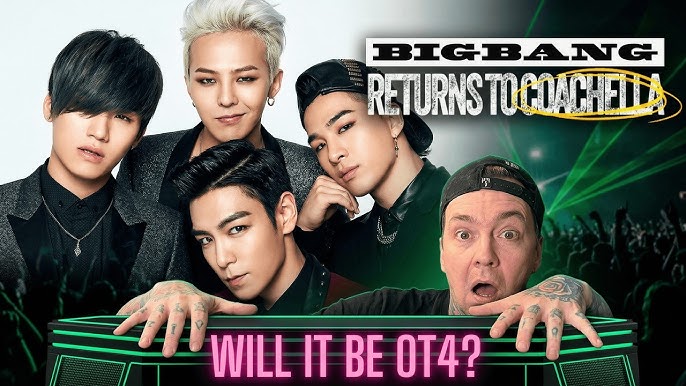
In a stunning industry power move, BIGBANG has categorically declined all Western media promotion for their historic Coachella 2025 performance, a decision that has sent seismic waves through both K-Pop and global music circles. This isn't mere scheduling conflict; it's a deliberate, strategic rejection of the traditional playbook for global expansion. By refusing interviews, talk shows, and press junkets, the quintet is asserting an unassailable truth: their legacy, their artistic vision, and their direct connection to fans transcend the need for Western validation. This analysis delves into the profound implications of their defiance, examining how it protects their mystique, underscores their unrivaled veteran status, and challenges the very pathways to international success for the generations that follow.
- The Defiance: What Exactly Did BIGBANG Reject?
- Legacy vs. Validation: Why "Proving Themselves" is Irrelevant
- The Artist Mythos: How Silence Became Their Loudest Statement
- Industry Aftershocks: What This Means for Younger K-Pop Acts
- The Fan Equation: Why VIPs are Celebrating, Not Criticizing
- Frequently Asked Questions
The Defiance: What Exactly Did BIGBANG Reject?
To understand the magnitude of BIGBANG's decision, one must first map the landscape of modern music promotion. Coachella is not just a festival; it's a global media nexus. For most artists, the performance is merely the centerpiece of a week-long promotional blitz across influential Western platforms.
The Standard Coachella Playbook for Global Acts
Typical engagements for a major act include high-profile interviews with outlets like Rolling Stone, Variety, and The New York Times. Appearances on late-night talk shows such as The Tonight Show or Jimmy Kimmel Live! are considered crucial for mainstream American exposure. Social media takeovers and curated content partnerships round out a strategy designed to convert a festival slot into lasting cultural imprint.
BIGBANG's Blanket "No"
According to multiple industry sources, BIGBANG's management, YG Entertainment, delivered a unified refusal to all such offers. Their stance was unambiguous: the performance would stand entirely on its own. There would be no pre-festival media tour, no post-performance press conferences, and no ancillary content designed for Western editorial digestion. This total withdrawal from the promotional apparatus is unprecedented for a K-Pop act of their stature on this stage.
Contrasting Pathways: A Tale of Two Eras
K-Pop Act Coachella Year Western Media Strategy Primary Goal BLACKPINK 2023 (Headliner) Comprehensive: Interviews with Vogue, BBC, i-D Magazine; Netflix documentary promotion. Mainstream Crossover & Brand Solidification 2NE1 2022 (Reunion) Focused Nostalgia: Select interviews highlighting reunion narrative; heavy social media engagement. Re-establish Presence & Celebrate Legacy AESPA 2024 Tech-Focused: Coverage in Wired, Forbes; panels about the metaverse and AI. Align with Futuristic Brand Identity BIGBANG 2025 Total Rejection: No interviews, no talk shows, no external press. Artistic Sovereignty & Myth ReinforcementLegacy vs. Validation: Why "Proving Themselves" is Irrelevant
For most acts, Coachella is a proving ground. For BIGBANG, it's a victory lap. This fundamental difference in position is the core of their strategic calculus.
They Are Already Architects
BIGBANG didn't just participate in K-Pop's global rise; they engineered pivotal parts of its blueprint. Their tours set revenue records, their fashion became gospel, and their musical experiments from "Fantastic Baby" to "Still Life" defined eras. When you have shaped an industry's trajectory for nearly two decades, the need to explain yourself to new gatekeepers diminishes to zero. This mirrors the power dynamic seen in our analysis of veteran idols who choose to stay in the dorms, prioritizing foundational stability over external perceptions of success.
The "ARIRANG" Principle of Inherent Power
Their move exemplifies what we term the "ARIRANG" Principle, inspired by the industry-wide pilgrimage seen at BTS's landmark concerts. True power isn't just about attracting attention; it's about becoming the gravitational center that others orbit. BIGBANG’s Coachella set doesn't need hype from Fallon because its cultural weight already pulls the industry's gaze. They are not entrants seeking approval; they are veterans hosting a viewing.
Redefining the "Global Stage"
By rejecting Western media, BIGBANG forcibly redefines what a "global stage" means. It asserts that a direct, unmediated connection to their global fanbase—the VIPs who have weathered scandals, hiatuses, and military service—holds more value than the fickle acknowledgement of foreign press. Their stage is wherever they perform, and their narrative is owned entirely by them and their fans.

The Artist Mythos: How Silence Became Their Loudest Statement
In an era of relentless overexposure, BIGBANG’s silence is a potent tool. It rebuilds the artist mystique that streaming and social media have largely eroded.
Controlling the Narrative, Absolutely
Every interview carries the risk of misquote, misinterpretation, or having one member's comment become a headline that defines the group. After years of intense public scrutiny and personal challenges, BIGBANG is seizing absolute narrative control. The only story will be the music and the performance itself. This total ownership is the ultimate luxury for a veteran act, a theme also explored in how senior idols are reshaping personal and professional timelines on their own terms.
The Allure of the Unreachable
By making themselves unavailable to the Western media machine, they elevate their own perceived value. They become the exclusive event you cannot preview, the artists you cannot access. This scarcity model generates more organic buzz and fervent discussion than any scheduled press round ever could. It turns their performance into a cultural "happening," akin to a surprise album drop.
“The most powerful brand statement in today’s saturated market is often ‘you cannot have me.’ BIGBANG understands that their inaccessibility is a core component of their enduring allure.” — An anonymous veteran music PR director quoted in our industry circles.
Industry Aftershocks: What This Means for Younger K-Pop Acts
BIGBANG’s move is not happening in a vacuum. It sends a direct message to the industry and sets a daunting, perhaps unreachable, precedent.
A New High-Water Mark for Veteran Status
They have effectively drawn a line in the sand. This level of defiance is only possible after achieving a certain stratum of legendary, icon-status. It instantly becomes the aspirational endgame for every active idol group: to reach a point where your art requires no external translation or promotion. It reframes success not as global fame, but as global autonomy.
The Pressure on 4th Gen & Beyond
For current top-tier groups, the pressure to engage with Western media remains immense; their journeys of crossover are still in progress. However, BIGBANG’s stance introduces a new question into long-term planning: When can we stop? It challenges the assumption that the promotional grind is perpetual. Furthermore, it highlights the unique path of legacy acts, much like SUPER JUNIOR-83z, who leverage their history to operate by their own rules, creating new units and tours centered purely on fan service and artistic desire.
A Potential Shift in Label Strategy
Forward-thinking agencies may begin to view "promotional refusal" not as a loss, but as a future brand asset to be earned. It could become a contractual milestone for veteran artists, a reward for decades of service. This would fundamentally alter the artist-label dynamic, placing greater ultimate power in the hands of the act that achieves true legacy status.
The Fan Equation: Why VIPs are Celebrating, Not Criticizing
The fan reaction to this news has been overwhelmingly positive, a testament to the unique bond BIGBANG has cultivated with their fandom.
Validation of Loyalty
For VIPs, this decision is a reward. It signals that BIGBANG values the dense, shared history with their core fandom over the casual curiosity of a new Western audience. It tells fans, "You understand us; we don't need to explain ourselves to outsiders." This deepens fan devotion and reinforces the "us against the world" narrative that has long been part of BIGBANG's identity.
The Ultimate Fan-Centric Experience
With no media filters, the fan experience of Coachella becomes purer. All anticipation is focused solely on the stage. All post-performance discussion will originate from fan-shot videos, fan accounts, and shared emotional reaction, not from a critic's review in a magazine. It makes the event more exclusive and communal for the fandom.
A Statement of Priorities
In an industry where fans are increasingly aware of the environmental and ethical impacts of their stars, as seen in the eco-ethics debate sparked by a camping item, BIGBANG's move is also read as a statement of authentic priorities. It says, "Our art and our fans come first," cutting away the corporate, promotional veneer. This authenticity resonates powerfully in today's climate.
Frequently Asked Questions
Does this mean BIGBANG is disrespecting Coachella or its audience?
Absolutely not. They are fulfilling their contractual obligation to perform. The rejection is aimed at the media apparatus surrounding the festival, not the festival itself or the audience attending. It's a distinction between the art (the performance) and the commerce (the promotion).
Could this hurt their global popularity or streaming numbers?
For a group at their career stage, metrics like short-term streaming bumps are secondary to legacy preservation. If anything, the controversy and discussion generated by this move will likely drive more global viewers to seek out their Coachella performance online, creating a more organic, curiosity-driven engagement.
Will other veteran K-Pop acts like BTS or TVXQ follow suit in the future?
It sets a powerful precedent. For acts with similarly self-sustaining fanbases and historic legacies, it becomes a viable, and perhaps attractive, option. However, each group's strategy is unique. BTS members, for instance, may engage selectively with Western media for solo projects, while potentially considering a unified group stance akin to BIGBANG's for a future milestone performance.
Is YG Entertainment supportive of this, or is it group-led?
All evidence points to this being a group-driven decision, likely supported by G-Dragon's renowned artistic vision. Given BIGBANG's unparalleled status within YG, the agency's role here is to execute their wishes, not to dictate strategy. This reflects the shift in power that occurs when artists become the label's most valuable legacy asset.
How can fans watch the performance if there's no press?
Coachella typically live-streams performances on its official YouTube channel. Furthermore, fan networks and dedicated VIP communities will be the primary hubs for sharing real-time updates, high-quality fancams, and post-show analysis. Fans should monitor our News page for official streaming links as the festival dates approach.
Does this affect their future Korean promotions?
Unlikely. This is a specific stance regarding Western media for a specific Western festival event. Their communication strategy in Korea and with Asian media remains a separate channel, though it may also become more curated and limited, following this trend of increased control.
Conclusion: The New Paradigm of Power
BIGBANG's Coachella media blackout is far more than a scheduling note; it is a declaration of artistic sovereignty that will echo through K-Pop for years to come. They have demonstrated that the pinnacle of global success is not ubiquity, but the privilege of selective presence. By forgoing the traditional gatekeepers, they have reinforced their mythos, rewarded their loyal fandom, and drawn a clear line between the journey of expansion and the status of arrival. For younger groups watching, the message is clear: build a legacy so undeniable that you, too, can one day write your own rules.
This moment forces us to re-examine what global dominance truly looks like in K-Pop's mature era. It's no longer just about charting on the Billboard Hot 100 or selling out stadiums worldwide; it's about achieving the cultural authority to step onto the world's biggest stages entirely on your own terms. As we watch this historic Coachella performance unfold, remember: the silence before the music was the most powerful part of the show.
What's Next? To understand how other legendary idols are navigating their veteran years with similar strategic control, explore our in-depth analysis on our Artists page, featuring profiles on the industry's most influential figures. The landscape of K-Pop power is shifting, and BIGBANG has just redrawn the map.