
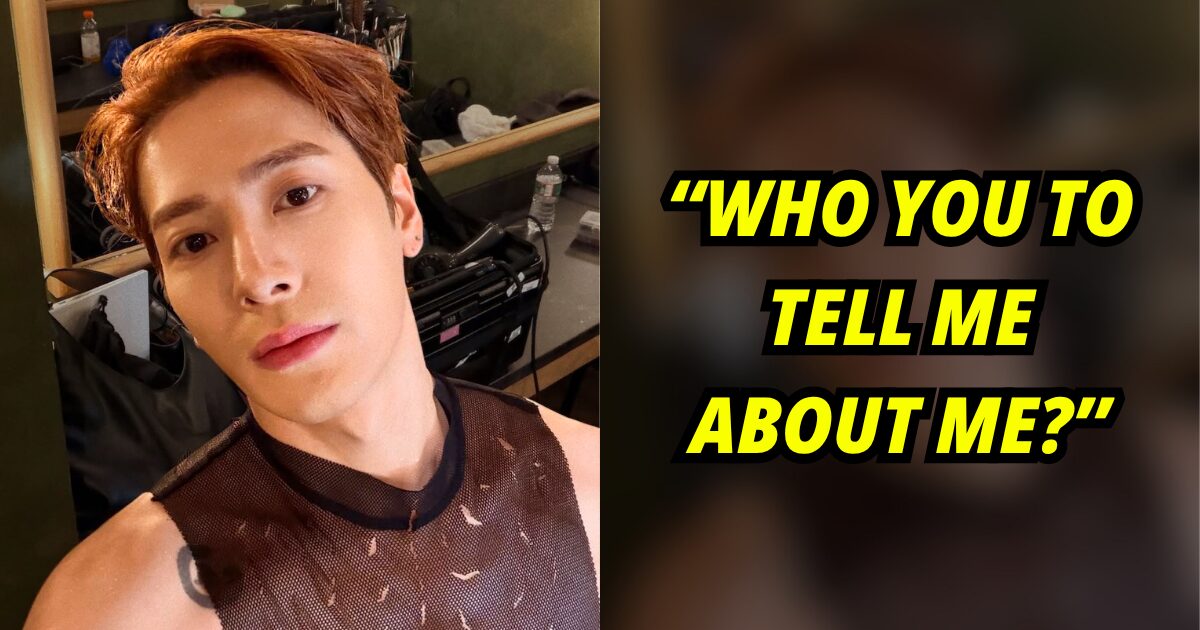
When Jackson Wang directly addressed a critic he labeled "delusional," he did more than just defend himself. He executed a calculated, high-stakes maneuver that redefines the power dynamic between K-Pop idols and their audiences. This analysis reveals how Jackson’s response, rooted in his unique position as a global CEO-artist, exposes the unsustainable pressure of "parasocial perfection" and signals a new era of assertive, boundary-setting celebrity. It’s a case study in reputation control, personal branding, and the painful evolution of fan culture.
- Why Did Jackson Wang Respond This Way—And Why Now?
- From Fan Letters to Fire Emojis: The 20-Year Evolution of Artist-Fan Interaction
- The Jackson Difference: CEO, Creator, and Why His Clap Back Carries More Weight
- The Industry Ripple Effect: Will More Idols Follow Suit? Beyond the Drama: The Tangible Business and Brand Implications
- A Guide for the New Era: How Idols and Fans Can Navigate This Shift
- Frequently Asked Questions (FAQ)
Why Did Jackson Wang Respond This Way—And Why Now?
Jackson Wang’s pointed retort wasn't a spontaneous outburst; it was a pressure release valve on a system at its breaking point. To understand the "why now," we must look at the convergence of his career trajectory, accumulated industry experience, and a digital landscape that magnifies every critique.
The Accumulated Weight of "Opinions"
For over a decade, Jackson has operated in a high-stakes environment where every comment is dissected. As he stated, "I'm just saying my opinion, just like what everyone is doing here." This simple sentence is a powerful equalizer. It challenges the unspoken hierarchy where fans and critics feel entitled to voice opinions, but idols are expected to silently absorb them. His response marks a point of personal saturation.
A Strategic Moment of Personal Brand Alignment
Jackson is no longer just a K-Pop idol from a major agency. He is the founder and CEO of Team Wang, a global fashion and music label. His brand is built on authenticity, hustle, and direct communication. Allowing a "delusional" narrative to stand unchallenged runs counter to everything his independent empire represents. This clap back was, in essence, brand management in real-time.
The Specifics of the "Delusional" Critique
While the exact content of the critique remains known primarily to the parties involved, its classification as "delusional" by Jackson is key. In fan culture parlance, "delusional" often refers to narratives constructed without evidence—fantasies or accusations untethered from reality. By using this term, Jackson didn't just disagree; he invalidated the foundational premise of the criticism, framing it as irrational rather than debatable.
From Fan Letters to Fire Emojis: The 20-Year Evolution of Artist-Fan Interaction
The Jackson Wang incident is a single frame in a much longer film. The relationship between Korean idols and their fans has transformed from distant admiration to intense, intimate, and often intrusive digital entanglement.
The Pre-Social Media Era: Managed Distance
In the 1st and 2nd generation of K-Pop, interaction was carefully curated. Fan letters were read on variety shows, messages were relayed through official fan club platforms, and an idol's personal thoughts were shared via handwritten postings on sites like Cyworld. The barrier—managed by agencies—was clear. Criticism was less immediate and more easily filtered.
The Social Media Bridge and Its Collapse
Platforms like Twitter, Instagram, and WeVerse promised "direct" access. Idols could share snippets of their lives, and fans could reply in real-time. This broke the traditional barrier but created a parasocial illusion of friendship and equal footing. The line between supporter and entitled commentator blurred dramatically. As seen in our analysis of the RM and Jungkook misquote controversy, a single out-of-context comment can now spiral into a global narrative in minutes.

The Rise of the "Expert" Critic
With accessibility came armchair analysis. Fans and non-fans alike now dissect vocals, dance, business decisions, and personal lives with the assumed authority of A&R executives, as seen in endless online "vocal technique" breakdowns or "company mistreatment" threads. Jackson’s retort is a direct challenge to this self-appointed expertise.
The Jackson Difference: CEO, Creator, and Why His Clap Back Carries More Weight
Not every idol could—or would—make this move. Jackson Wang’s unique position grants him a freedom and authority that is still rare in the industry.
The Power of Financial Independence
As the head of his own company, Jackson answers ultimately to himself and his business partners, not to the traditional hierarchy of a K-Pop entertainment agency. This financial and operational independence removes the fear of internal reprimand for "causing controversy" that might silence other artists. His risk calculus is different.
The "Global Artist" Versus "Pure Idol" Persona
Jackson has meticulously cultivated a global artist identity, collaborating with international acts and focusing on genres beyond pure K-Pop. This broader positioning insulates him somewhat from the stringent, often unforgiving expectations of "idol behavior" within the traditional Korean market. He is playing by a hybrid set of rules.
"I'm just saying my opinion, just like what everyone is doing here."
A History of Boundary-Setting
This isn't Jackson's first foray into setting boundaries. He has consistently spoken about mental health, the pressures of fame, and the importance of staying true to oneself. This action is a consistent extension of his long-stated philosophy, making it more credible to his core audience than a sudden, out-of-character outburst would be.
The Industry Ripple Effect: Will More Idols Follow Suit?
Jackson’s move raises the critical question: Is this an isolated act, or the first crack in a dam? The answer likely lies in a generational and positional shift.
The Precedent Setters: Senior Artists and CEOs
We can expect more senior artists, especially those with significant creative control or founder status, to feel empowered to speak directly. Think of figures like Psy, Zico, or CL. They have the industry capital and established brands to weather potential backlash. This is less about age and more about accrued power and autonomy.
The Active Group Member Dilemma
For idols actively promoting in groups under major agencies, direct confrontation remains highly risky. The potential for fan division, negative press, and agency discipline is immense. Their responses will likely remain more coded, using music, metaphorical Instagram stories, or vague-but-pointed commentary during live streams—a tactic we've seen employed by many artists addressing hardship, similar to the emotional depth shown in J-Hope's tribute to his grandmother.
A Comparative Table: Methods of Idol Response to Criticism
Artist/Scenario Method of Response Directness Level Likely Agency Stance Jackson Wang (CEO-Artist) Personalized, public clap back on same platform High (Direct Address) Self-Determined / Supportive Senior Soloist Lyrical references, press interview statements Medium (Abstracted) Collaborative / Strategic Active Group Member (Major Label) Silence, or "Thank you for loving us" blanket statements Low (Avoidant) Restrictive / Controlling Rookie Group No direct response; focus on "hard work" and "gratitude" narrative None Highly RestrictiveBeyond the Drama: The Tangible Business and Brand Implications
This is not just gossip; it's a business case. Jackson’s action has real implications for market perception, fan loyalty, and commercial value.
Short-Term Risk vs. Long-Term Brand Equity
The immediate risk is alienating a segment of fans who prefer the "always grateful, never confrontational" idol. However, the long-term gain is solidifying his brand as authentic and strong. In a crowded market, authenticity is a premium currency. It can attract brand partnerships and audiences that value realness over performative humility, much like how authentic performance prowess builds legacy, as discussed in The Jimin Paradox article.
Filtering the Fanbase
Actions like this act as a filter. They may push away some "fans" who feel entitled to criticize without pushback, while deeply strengthening the loyalty of those who respect his integrity and boundaries. This can lead to a more stable, supportive, and ultimately higher-spending core fandom.
Setting a New Benchmark for Artist Agency
For other artists watching, it sets a benchmark. It demonstrates that survival—and even thriving—after setting a boundary is possible. This empowers other artists in negotiations with their own agencies, potentially pushing the entire industry toward a model with more artist agency (in both senses of the word).
A Guide for the New Era: How Idols and Fans Can Navigate This Shift
As this dynamic evolves, both creators and consumers need a new playbook. The old rules are becoming obsolete.
For Artists and Agencies: A Strategic Framework
- Define Your Red Lines: What type of commentary is ignorable vs. damaging? Is it about false facts, family, artistry, or morals?
- Choose Your Platform Wisely: A blunt reply on a public thread is different from a thoughtful statement on your own verified channel.
- Align Response with Brand: The tone should match the artist's established persona—whether it's witty, stern, or educational.
- Have a Support System: Ensure management, legal, and PR are aligned before a potential response, not scrambling after.
For Fans and the Audience: Conscious Consumption
- Critique the Art, Not the Unknowable Person: It's valid to discuss a song's production or a performance's execution. Presuming to know an idol's character or intentions is "delusional."
- Understand the Human Behind the Halo: Idols are contract-bound performers, but they are not emotional sponges. They have limits.
- Follow the "Grandma Test": Would you say this comment to their face, or to your grandmother? If not, reconsider posting.
- Support Healthy Interaction: Engage with content that celebrates artistry, like our analysis of rising groups on our Charts page, rather than fueling drama.
Frequently Asked Questions (FAQ)
Q: Doesn't this go against the "humble idol" image K-Pop is known for?
A: It challenges a specific, often manufactured, interpretation of "humble." True humility isn't the absence of self-respect or the toleration of falsehoods. Jackson's response defends his truth, which can be seen as a humble act of respecting his own work and personhood, not arrogance.
Q: Could this hurt his popularity in Korea?
A: There is a nuanced risk. The traditional Korean media and public may view it as "causing trouble." However, his primary market has strategically expanded globally. The net effect is likely positive, strengthening his international appeal while maintaining a strong base with fans who respect principled stands.
Q: Are agencies now more likely to let their artists respond to hate?
A: Not universally. For most large agencies, control remains paramount. However, we may see more structured responses—official statements from the company, legally pursued defamation cases (as HYBE has done), or artists addressing issues in controlled environments like documentaries. The free-form, personal clap back will remain the domain of the most independent artists.
Q: What's the difference between this and "fanwars"?
A: This is a creator addressing a specific critic or criticism directly. Fanwars are typically conflicts between groups of fans, often with artists as passive symbols. Jackson's move is notable because he stepped out of the symbolic role and engaged as an active participant, shifting the paradigm entirely.
Q: Where can I find balanced reporting on events like this?
A: For in-depth, analytical coverage that goes beyond clickbait headlines, follow trusted industry analysis on platforms like K-Beats News. We focus on the "why" behind the event, providing context you won't find elsewhere, similar to our decoding of survival show strategies in "The Scout Masters Decoded".
Conclusion: The Principle, Not Just The Person
Jackson Wang's "delusional" critic moment is far bigger than one Instagram comment. It is the embodiment of The Jackson Wang Principle: the assertion that an artist's right to defend their reality is equal to a fan's right to an opinion. It underscores a painful but necessary maturation for the K-Pop industry as it grapples with its global scale and the intensity of its own fan culture.
This incident is a beacon for other artists and a reality check for audiences. The era of passive idols absorbing unlimited digital commentary is fading. The future belongs to multifaceted artist-entrepreneurs who will engage on their own terms. For fans, the call is to elevate the conversation—to critique with respect, support with wisdom, and remember that the idols we admire are, at their core, human creators deserving of basic dignity. The next time you're about to post a critique, ask yourself: is it constructive, is it true, and is it kind? The new era of K-Pop interaction depends on it.
What to do next? Reflect on your own engagement as a fan. Explore the artistry beyond the headlines by diving into our performance analyses, like our breakdown of KickFlip's winning performance, and commit to being part of a more sustainable, respectful fan culture. The power dynamic is shifting. Choose to be on the side that champions the art, respects the artist, and enjoys the music without the delusion.