
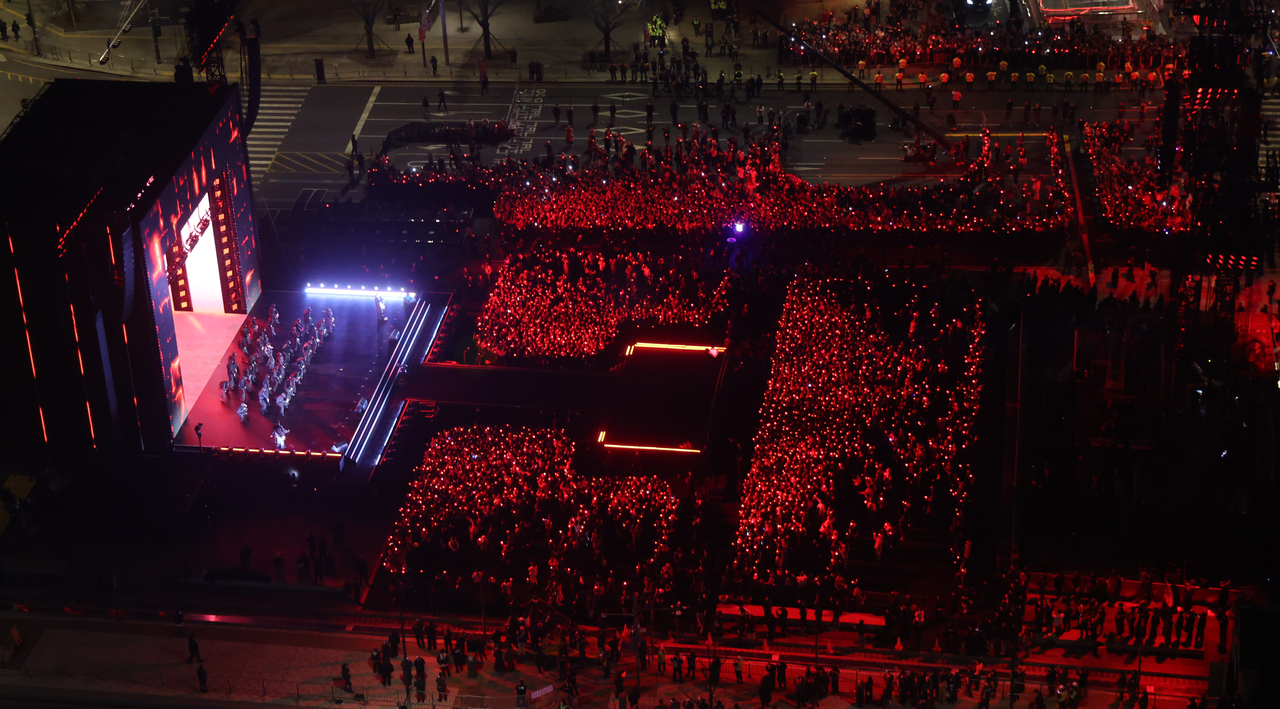

Under the shadow of Gyeongbokgung Palace’s ancient eaves and the gleaming glass of modern Seoul’s skyline, a quiet conversation unfolded in the digital realm, its tone as historically significant as the spectacle that preceded it. Days after an estimated 400,000 souls converged upon Gwanghwamun Square, transforming the nation’s historic heart into a sea of shimmering ARMY Bombs, the seven members of BTS did not first speak of records broken or stages conquered. Instead, their leader, RM, stepped forward with a message layered not in triumphant fanfare, but in profound, characteristically humble gratitude—and apology. This moment of reflection, far from the roaring cheers, has solidified the Gwanghwamun "BTS Yet to Come (Promise)" concert not merely as a logistical marvel, but as a masterclass in the ethos that has propelled BTS from idol group to cultural institution.
From Basement to Boulevard: The Road to Gwanghwamun
To understand the weight of an apology for crowded streets, one must first comprehend the distance traveled to reach them. The journey of BTS to a free, large-scale concert in one of Korea’s most symbolically potent public squares is a narrative etched in perseverance. From their humble beginnings in a modest basement practice room in Gangnam to filling stadiums across the globe, their path has been a constant dialogue with their fans, ARMY, and their homeland. Gwanghwamun Square itself is more than a venue; it is a stage for national celebration, protest, and collective memory. For BTS to be granted this space, especially for a free event following their seismic chapter-two comeback and military enlistment transitions, was an unprecedented gesture of national pride and recognition.
This event was positioned as a "gift" to ARMY, a tangible thank you for patience during their service period and a loud, joyful promise of the future. It was a strategic and emotional culmination, designed to be accessible, symbolic, and unifying. The planning, a joint effort between HYBE, Seoul Metropolitan Government, and various cultural organizations, was a monumental undertaking. As we previously explored in The Numbers Divide, aligning official and governmental perspectives on such events is complex, hinting at the immense behind-the-scenes coordination required. The stakes were astronomical: the safety of hundreds of thousands, the integrity of a national landmark, and the global reputation of K-Pop's standard-bearer.
The Weight of the Stage and the Promise
The concert was never just a performance; it was a covenant. Titled "Yet to Come (Promise)," it directly addressed the future of the group and their bond with fans. It served as a powerful, public reaffirmation of their 2022 hit song's message, assuring fans that their best moments are indeed still ahead, even as individual members fulfill their civic duties. This context is crucial. The gratitude expressed post-concert isn't merely polite PR; it's the foundational pillar of their relationship with the public. They were not just performers in that square; they were guests of honor in the city’s living room, acutely aware of the disruption their presence could cause.
"We Are Truly Grateful and Sorry": Dissecting RM's Post-Concert Message
On October 21st, RM took to the fan community platform Weverse to articulate the group’s collective sentiment. His message, written in Korean, was a model of conscientious public communication. He did not lead with the awe-inspiring visuals or the viral moments of the night. Instead, he meticulously extended thanks and apologies to a specific chain of stakeholders, painting a picture of deep communal awareness.
"We would like to convey our gratitude and apologies to the related organizations, citizens, and merchants who must have experienced inconvenience due to our performance at Gwanghwamun. We know it wasn't a small event, and we are truly grateful and sorry."
This simple statement is deceptively layered. First, he acknowledges the "related organizations"—the police, emergency services, city planners, and HYBE’s own staff who orchestrated the mammoth event. Second, he addresses the "citizens" of Seoul, those going about their daily lives who faced closed streets, crowded public transport, and the general frenzy. Third, and notably, he singles out the "merchants" of the area, recognizing that while some may have benefited from the foot traffic, others could have seen their regular business hampered or access blocked.
This tripartite acknowledgment shows a maturity and social responsibility that transcends typical celebrity fare. It reflects an understanding that a cultural event of this scale exists within a fragile ecosystem. The message continued with personal reflections from RM on the emotional impact of seeing the sea of fans, but it was this opening framework of gratitude-apology that captured the media’s and public’s attention. It turned the narrative from "BTS throws massive free concert" to "BTS acknowledges the communal effort behind their massive concert." This subtle shift is everything.
The Precedent of Sincerity
This is not the first time a member of BTS has used a moment of triumph to express sincere accountability. As reported in A Stage for Sincerity, Jimin once transformed a potential scandal into a moment of profound connection through a raw, on-stage apology. This pattern of behavior establishes a clear group ethos: their connection to ARMY and the public is built on a perceived two-way street of respect. RM’s message fits squarely into this legacy, proving that their core values remain intact despite their stratospheric fame.

ARMY's Echo: Fan Reaction to the Humble Gesture
The reaction from ARMY was immediate and overwhelmingly supportive, trending across social media platforms worldwide. Hashtags mixing gratitude ( #ThankYouBTS) with the apology sentiment ( #WeLoveYouBTS) flooded timelines. But beyond the slogans, the fan response showcased a nuanced understanding of the message's importance.
On fan forums and in quote-tweets, international fans praised the group’s "Korean manners" and deep-seated respect for their community. Korean fans, in particular, expressed pride in this display of "maeum" (heart/spirit), noting how it positively reflected on both the group and the fandom itself. Many shared stories or photos of the clean-up efforts undertaken by fans after the concert, a direct, communal response to the group’s ethos of responsibility. Others pointed out that the apology made them even prouder to be fans, stating that it reinforced why they support BTS beyond the music.
"They filled Gwanghwamun with music and then filled our hearts with humility. This is why they're legends," wrote one fan on X, a sentiment echoed by tens of thousands.
The conversation also tactfully addressed the logistical realities. Fans shared tips they used to minimize disruption, praised the police and security for their professionalism, and highlighted local businesses they patronized during the event. This created a virtuous cycle, turning the group’s apology into a fan-led initiative of positive civic engagement. The moment became a case study in how a fandom, when guided by the principles of its artists, can amplify a message of respect into tangible action. For more on how fandoms are shaping the industry's power dynamics, the recent poll discussed in The "Dilemma" Vote reveals fascinating parallels in fan agency.
The Industry Ripple: What BTS's Gratitude Means for K-Pop
In the high-stakes, fast-moving world of K-Pop, where perception is currency, BTS's post-concert conduct sends a powerful signal to the entire industry. Firstly, it re-centers the value of sincerity in an era often criticized for manufactured personas. At their zenith, they choose humility. This sets a dauntingly high bar for public conduct, reinforcing that legacy is built not just on charts and sales, but on sustained, respectful relationships with the public sphere.
Secondly, it highlights the evolving relationship between K-Pop giants and governmental/civic bodies. The successful, safe execution of the Gwanghwamun concert, followed by this gracious acknowledgment, strengthens the case for K-Pop as a partner in national soft power and cultural tourism. It frames major idol events not as disruptive pop concerts, but as manageable, culturally significant festivals that, with proper dialogue and respect, can benefit cities. This paves the way for future large-scale public events for other artists, provided they approach them with a similar level of conscientious planning and post-event diplomacy.
Economically, the gesture also serves as a shrewd long-term strategy. By publicly thanking and acknowledging local merchants and citizens, BTS and HYBE foster local goodwill. This makes it more likely for communities to welcome future events, reducing bureaucratic friction and building a reservoir of public support. It transforms a transactional relationship into a collaborative one. Furthermore, it insulates them from potential criticism, proactively addressing any narrative of celebrity privilege or inconvenience.
The Intangible Legacy vs. The Tangible Record
This event creates a fascinating dichotomy. On one hand, you have the tangible, record-smashing legacy of their musical output, akin to the historic streaming achievements we analyzed in Beyond the Record. On the other, you have the intangible legacy of conduct, embodied by RM’s message. While the former cements their status in industry history books, the latter cements their status in the public’s heart and the cultural narrative. It answers the question of "what will they be remembered for?" with a dual response: groundbreaking art and groundbreaking grace.
Yet to Come: The Path Forward After Gwanghwamun's Promise
So, where does BTS go from a moment that feels both like a peak and a promise? The Gwanghwamun concert was a powerful punctuation mark in their "chapter two," but RM’s message ensures it is not an end point. It is a bridge. The group now moves forward with the immense goodwill generated by this event, both from the spectacle and the subsequent humility. The members currently serving in the military carry with them the echoed cheers of hundreds of thousands and the knowledge that their team's integrity remains steadfast. Those active as soloists—like V, whose own live performance journey we examined in The Vocal Crucible—operate under a banner of respect that their group has painstakingly upheld.
The future, as their setlist proclaimed, is still "yet to come." The full-group reunion in 2025 now carries not only the anticipation of new music, but the expectation of a continued ethos. Will they attempt another public square concert? Perhaps. But more importantly, the standard has been set: for scale, for symbolism, and for sincerity. They have shown that the biggest stars can—and should—cast the longest shadows of gratitude.
For now, the echoes in Gwanghwamun have faded, replaced by the normal sounds of city life. But the echo of RM’s words remains, a resonant reminder that in the annals of K-Pop history, amidst the decibels of record-breaking shows, the quietest messages of thanks can sometimes speak the loudest. As we follow the continued evolution of each member and the group's eventual return, you can track all their movements and impacts right here on our News page and explore the full spectrum of artists shaping the genre on our Artists page. The concert may have been a promise, but the character displayed in its aftermath was the guarantee.