
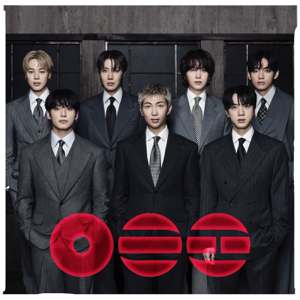

The numbers, as they so often do with BTS, are staggering—a deafening, digital roar that echoes across the global music industry. But to view the seismic success of their latest album, ARIRANG, solely through the lens of shattered records is to miss the forest for the historically significant trees. This week, the septet didn't just release an album; they executed a masterful, long-awaited homecoming that has irrevocably shifted the axis of K-Pop. ARIRANG has officially become the most-streamed K-Pop album in Spotify history, achieving the feat in a blistering timeframe that has left industry analysts scrambling for new superlatives. Yet, the true headline lies not in the "what," but the "how" and "why." This record wasn't broken with familiar formulas or guaranteed pop bangers, but with a profound, orchestral-led exploration of Korean traditional music (gugak) and identity—a move that many considered a commercial risk, but which ARMY has transformed into a cultural reset.
A Hiatus, a Journey, and the Long Road Back to "Us"
To understand the magnitude of this moment, one must rewind to the palpable uncertainty that followed the group's announcement of a hiatus in mid-2022 to focus on solo endeavors and mandatory military service. While members like Jin, J-Hope, and SUGA began their service, others like RM, Jimin, V, and Jung Kook carved out distinct solo identities, from indie introspection to global pop domination. The question hanging over the fandom was never if BTS would return, but what they would return as. Would they chase the ever-evolving trends of the global market? Or would they, armed with the wisdom and individual growth of their chapter two, redefine their own center?
The answer began to crystallize with subtle hints. In solo works, particularly in RM's deeply personal projects, references to Korean art and existential questioning became more pronounced. As we analyzed in a previous piece on The Verse Heard Round the World, RM's artistry has always walked the fine line between personal catharsis and collective commentary. Furthermore, moments like Jimin's raw, sincere apology on stage reaffirmed the group's foundational ethos of connection and humility, a bond that would prove crucial for a comeback of this nature. The stage was set not for a mere comeback, but for a declaration.
Deconstructing the "ARIRANG" Phenomenon: More Than Streams
The album's title itself, ARIRANG, is a powerful statement. It references the centuries-old Korean folk song of the same name, a melancholic yet resilient anthem of heartache and hope that is considered an unofficial national anthem. From the first teaser, it was clear this would not be a typical idol release. The lead single, "산길 (Mountain Path)," is a sweeping, string-heavy ballad featuring the distinct, haunting tones of the haegeum (a traditional Korean fiddle) and gayageum (a zither-like instrument), with lyrics that speak of a arduous, shared journey home. The boldness of leading with such a track for a global pop act is unprecedented.
The Sonic Architecture of a Record-Breaker
So, how did an album so deeply rooted in specific cultural sounds achieve universal, record-breaking appeal? The genius of ARIRANG lies in its hybridization. Producer Pdogg and the members, particularly RM who is heavily credited on the album, did not simply sample traditional sounds as exotic garnish. They built the album's architecture around them. Tracks like "달빛 소년 (Moonlit Boy)" weave intricate pansori-inspired vocal ad-libs into a contemporary R&B groove, while "회전목마 (Merry-Go-Round)" uses a minimalist janggu (hourglass drum) rhythm to propel a reflective hip-hop track about the cycles of life and fame.
This album was our way of physically and spiritually walking the mountain path back to our roots, and back to each other. We asked, 'What is the sound of our home?' 'ARIRANG' is the beginning of that answer.
The lyrical content is uniformly introspective, dealing with themes of return, gratitude, endurance, and the weight of legacy—themes that resonate deeply with a fandom that has matured alongside the artists. It’s a conversation between BTS and ARMY, facilitated through the medium of Korea's most timeless musical language. This sincerity is the engine behind the streams. Fans weren't just listening; they were collectively participating in a cultural homecoming, dissecting lyrical references, and sharing explainers on traditional instruments—turning the listening experience into an act of communal learning and pride.
The ARMY Engine: A Fandom Mobilized by Meaning
The fan reaction has been less of a celebration and more of a profound emotional event. Social media platforms have been flooded with the hashtag #OurARIRANG, under which fans share personal stories of what the album means to them, often connecting it to their own cultural identities. Streaming parties were organized not just with the goal of breaking records, but with the stated intent of "letting the world hear this sound." The record-breaking first-day and first-week Spotify numbers—which dwarfed all previous K-Pop album records—were a direct result of this highly motivated, purpose-driven campaign.
This goes beyond typical fan dedication. It reflects a fandom that values artistic intent and growth. As seen in other spheres of K-Pop, such as the intense discourse highlighted in our article on The "Dilemma" Vote, modern fandoms are deeply invested in the artistic and career trajectories of their idols. With BTS, ARMY has consistently rewarded musical risk-taking. The success of ARIRANG validates a powerful new dynamic: that in the era of artist-centric fandom, cultural authenticity is not a niche interest, but a potent catalyst for global engagement. Fan-created content analyzing the album's traditional elements has garnered tens of millions of views, proving the audience's appetite for depth.

Industry Quake: Redefining the Global "Mainstream"
The impact of ARIRANG's success on the music industry, both in Korea and internationally, cannot be overstated. For years, the blueprint for global K-Pop success involved incorporating Western pop, hip-hop, and EDM trends with Korean-language lyrics and high-concept performance. ARIRANG throws that blueprint out the window. It proves, with undeniable commercial data, that the most "global" sound a Korean artist can offer may, in fact, be their most inherently Korean one.
First, it redefines the commercial ceiling for music incorporating traditional sounds. Labels and artists who may have viewed gugak fusion as a limited, domestically-focused genre now have a staggering, global case study to examine. Second, it challenges the very notion of "accessible" music for international audiences. Spotify's data shows remarkably high listenership retention across all tracks, indicating that listeners are not skipping the deeply traditional tracks for more "familiar" ones—they are engaging with the album as a cohesive, captivating whole.
Third, and perhaps most importantly, it elevates the conversation around K-Pop from one about catchy music and impressive choreography to one about cultural transmission and artistic maturity. Music critics in major Western publications who have historically been dismissive of idol music are now grappling with ARIRANG as a serious, orchestral-folk work. This album moves BTS, and by extension K-Pop, firmly into a new echelon of artistic discourse. For a comprehensive look at how other idols are performing, you can always check our Charts page for the latest data.
The Live Performance Question
This shift also brings new challenges and spotlight, particularly regarding live performance. Performing these intricate, vocally demanding, and instrumentally complex songs live is a Herculean task. It inevitably places the members' live vocal prowess under a microscope, a topic of perennial debate in K-Pop as discussed in our analysis of The Vocal Crucible. Their upcoming comeback concerts, which promise to feature ARIRANG prominently, are already predicted to be historic events, with authorities bracing for massive crowds reminiscent of the logistics discussed in Beyond "Borrowing the Moon". These performances will be the ultimate test of translating this studio masterpiece into an equally powerful live experience.
The Path Forward: Legacy in the Making
So, what comes after breaking the ultimate streaming record? For BTS, the success of ARIRANG is not an endpoint, but a new origin point. It grants them unprecedented creative freedom and sets a new benchmark for their own artistic journey. The members have hinted in recent press conferences that ARIRANG is the first in a planned series of works that explore their heritage. This suggests a future where their group discography deepens in cultural specificity, even as their solo works continue to span a vast spectrum of genres.
For the industry, the "ARIRANG effect" will likely inspire a wave of artists and companies to invest more seriously in traditional music fusion, not as a novelty, but as a core artistic identity. It validates a hunger in the global market for authentic, rooted storytelling. The album also solidifies BTS's transition from global pop stars to cultural statesmen—artists whose work is inextricably linked to the promotion and evolution of Korean culture on the world stage.
The mountain path, as sung in their lead single, continues. But with ARIRANG, BTS has not only returned; they have built a new summit. They have demonstrated that in an algorithm-driven world, the most powerful connection is still a human one, forged through shared history, sincere artistry, and the timeless, unifying language of music that speaks from the soul of a nation. The record-breaking streams are merely the digital footprints of a million listeners walking that path alongside them, discovering that the way forward often begins by looking deeply, and proudly, back. To explore more about the artists shaping this landscape, visit our Artists page.