
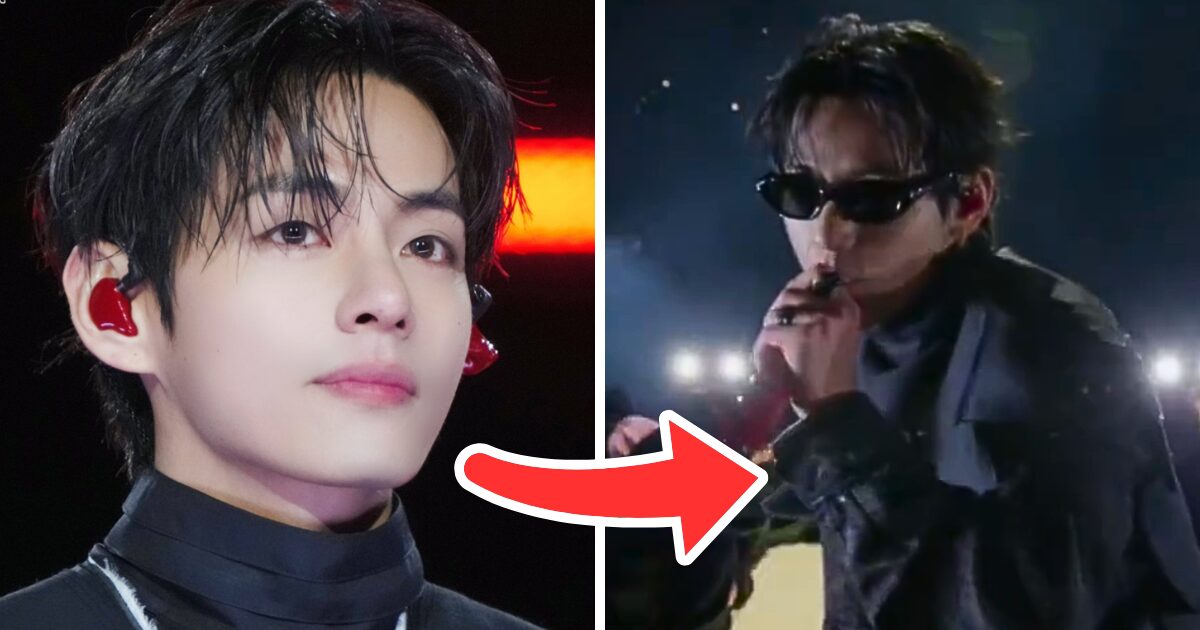

The roar of a quarter-million-strong crowd had barely faded. The confetti cannons were still. The historic scale of BTS's long-awaited group comeback concert, an event so massive it had authorities bracing for a logistical onslaught, was undeniable. Yet, in the days that followed, the conversation among fans and critics alike shifted from the spectacle's grandeur to a minute, microscopic examination of one member's performance. Kim Taehyung, known globally as V, finds himself navigating a sudden and fierce storm of scrutiny, his live vocal performance during the concert becoming a lightning rod for debate, accusations of lip-syncing, and a profound questioning of artistic integrity at the very pinnacle of K-Pop.
This is not merely gossip. For an artist of V's stature—a member of the world's most influential pop group, now cementing his solo identity—such criticism strikes at the heart of the performer-fan contract. The controversy, erupting from fan-captured fancams and dissected across social media platforms, exposes the relentless pressure of the modern idol stage, where every breath, every note, is subject to ultra-high-definition analysis. It forces a conversation about what fans truly expect from their idols in the post-pandemic concert era, the technical realities of large-scale productions, and the fragile balance between artistic presentation and raw, unfiltered talent.
From "Singularity" to Solo Star: V's Journey to the Crucible
To understand the weight of this moment, one must appreciate V's unique trajectory within BTS. Never the conventional vocalist, V carved his niche with a deep, husky baritone that defied typical idol ranges. His solo stages within BTS concerts, like the mesmerizing "Singularity," became events in themselves, celebrated for their theatricality and his distinctive, emotive tone. He was the "concept king," an idol whose artistic expression often leaned into jazz, R&B, and soulful moods, setting him apart from the group's pop and hip-hop core.
His official solo debut with the album Layover in 2023 was a critical and commercial triumph, a cohesive collection of smooth, neo-soul tracks that fully embraced his musical identity. Promotions showcased a more relaxed, confident V, but the focus was largely on recorded music and choreography. The comeback concert with BTS, however, represented a different beast: a return to the mega-stage, performing both group hits and his solo material like "Slow Dancing" for a sea of fans and the world's gaze. It was to be a triumphant reaffirmation of his place in the group's powerhouse vocal line. Instead, it became a test.
This scrutiny is not unfamiliar territory for BTS members, each of whom bears the incredible weight of global fame. As explored in our analysis of Jimin's raw, on-stage apology, the group has faced moments where individual actions became magnified into global controversies, requiring immense personal vulnerability to navigate. The pressure to be perfect, both as a unit and as individuals stepping into their own, is a constant undercurrent.
Deconstructing The Dissonance: What The Fancams Actually Show
The controversy hinges on specific moments from the multi-hour concert. Fans and critics point to several instances during V's performances of his solo track "Slow Dancing" and certain group numbers. The primary accusations are two-fold: first, that his live vocals were noticeably strained, pitchy, or weak; second, and more damningly, that he was at times lip-syncing to a pre-recorded vocal track, with his mouth movements allegedly not matching the audio output.
"The disconnect was jarring," wrote one popular K-Pop critic on a forum. "During the chorus of 'Slow Dancing,' you see him taking a breath for a dance move, but the vocal run continues uninterrupted at full volume. In an industry where live singing is a badge of honor, these moments stand out."
Defenders, however, offer technical counterpoints. They argue that in massive stadium shows, what audiences hear is often a complex blend of live vocals, pre-recorded backing tracks (including guide vocals and harmonies), and real-time pitch correction or enhancement. A moment that appears to be lip-sync could be a singer relying on a backing track for support during intense choreography or a sound mixing decision. Furthermore, V is known for his extensive use of ad-libs and stylistic vocal runs in performances. Could some of the perceived dissonance be him improvising or altering melodies in real time?

"The issue isn't whether a backing track was used—that's standard for any major production. The issue is the perceived lack of synchronization between the primary vocal we hear and the physical effort we see. For an artist of his caliber, that gap becomes a narrative."
This technical deep dive is emblematic of modern fandom. Concerts are no longer ephemeral experiences; they are recorded from hundreds of angles, the audio isolated and analyzed, and performances compared frame-by-frame to music show stages and other concerts. The evidence, therefore, is not in professional reviews but in a decentralized court of public opinion, ruled by TikTok analyses and Twitter threads.
The Shadow of "Layover" and Studio Perfection
Complicating the matter is the nature of V's solo work itself. Layover is an album of subtle, controlled vocal performances. The songs are not belting anthems but intimate, breathy, and technically demanding in their own way for their phrasing and tone. Replicating that exact, polished studio sound live, while dancing, under emotional duress from a historic comeback, is a monumental challenge. The contrast between the recorded perfection and the live rendition may have made any imperfection more glaring.
A Fandom Divided: ARMY's Protective Front vs. Critical Voice
The reaction from ARMY, BTS's global fanbase, has been a complex tapestry of unwavering defense, quiet concern, and internal conflict. Social media platforms have become battlegrounds of interpretation.
One faction has mobilized a protective campaign, flooding timelines with alternative fancams that they claim prove his live singing, highlighting moments of clear vocal strain as evidence of authenticity. They point to his history of stable live performances and argue that he may have been ill, exhausted from the intense concert schedule, or affected by in-ear monitor issues. The narrative here is one of unfair targeting and a media (both mainstream and social) eager to tear down a beloved idol at a peak moment. This protectiveness mirrors dynamics seen in other groups, where fan loyalty becomes a shield, as discussed in our report on ENHYPEN's Ni-ki and the fierce defense of group integrity.
Another faction within the fandom expresses a more nuanced disappointment. These fans, while supportive, hold BTS to a self-established high standard of live performance. For them, the issue is not about "canceling" V but about accountability and the preservation of the group's hard-earned reputation for genuine artistry. They fear that perceived lip-syncing at such a high-profile event undermines the very authenticity that attracted them to BTS in the first place.
A third, more critical group—often comprising non-fans and general K-Pop observers—has used the moment to levy broader criticisms against the industry's reliance on pre-recorded tracks and intense post-production, with V as the current, high-profile example.
The division is significant. It shows a fandom evolving from monolithic defense to incorporating more critical discourse, a tension between unconditional support and invested expectation. This mirrors the evolving power dynamics in K-Pop fandom explored in our analysis of fan polls shaping group futures.
Industry Echoes: A Symptom of a Larger K-Pop Conversation
The scrutiny of V's performance is not an isolated incident but a flare-up in K-Pop's perennial "live singing" debate. The industry has long grappled with the tension between flawless, broadcast-ready performances and the unpredictable beauty of live human sound.
On one side are the purists who argue that live singing, with all its potential flaws, is the ultimate mark of a true artist and should be non-negotiable for major concerts where fans pay premium prices. They point to legendary senior idols and vocal powerhouses who built their reputations on unparalleled live stability.
On the other side are pragmatists who cite the extreme physical demands of contemporary K-Pop choreography, the sheer scale of stadium productions where sound travels poorly, and the intense pressure on idols to deliver a "perfect" product. In this view, a blend of live vocals and a supportive backing track is not deceit but a necessary tool for ensuring a consistent, high-energy show for all attendees.
V's situation sits at the apex of this debate. As a BTS member, he is held to the highest possible standard. His group is synonymous with breaking global barriers, and with that comes an expectation to represent the "best" of K-Pop, including vocal prowess. Furthermore, as he promotes as a soloist, his individual artistic credibility is under the microscope. Can he carry a full concert on his own vocal strength? This comeback stage was, in many ways, the first major test.
The incident also highlights the role of agencies like HYBE. In an era of immense pressure to protect valuable IP (the idols), what directives are given regarding live singing versus track reliance for vocal preservation? Is the priority the immediate spectacle or the long-term health and authenticity of the artist's voice? For more on the business and cultural pressures shaping such decisions, readers can explore our broader industry coverage on our News page.
The Path Forward: Silence, Statement, or Song?
So, what comes next for Kim Taehyung? The playbook for such situations is not standardized, especially for an artist of his magnitude.
Option one is silent perseverance. The most likely path is for V and HYBE to not directly address the controversy. The group will continue their scheduled activities, and V will deliver subsequent performances. The best rebuttal, in this case, would be a series of undeniably strong, stable live vocals in future concerts or appearances, allowing the narrative to correct itself organically. This is the traditional Korean entertainment industry approach: weather the storm through continued action.
Option two is a direct, transparent address. While riskier, a candid acknowledgment—perhaps citing fatigue, technical difficulties, or even a artistic choice that didn't translate—could disarm critics and resonate with fans valuing honesty. This would follow the precedent of emotional vulnerability set by his bandmate Jimin. However, it also risks validating the criticism and setting a precedent where every performance fluctuation requires an explanation.
Option three is artistic integration. V could use this experience as fuel. Future solo work or performances might deliberately incorporate more raw, "unplugged" segments to showcase his vocal ability beyond doubt, transforming the criticism into a new chapter of his artistic story.
Ultimately, this moment is a pivotal one in V's solo career. It is a harsh reminder that the solo spotlight is both brighter and hotter. The tools that create a flawless stage—backing tracks, post-production, and meticulous planning—can sometimes obscure the very human artistry they are meant to enhance. For ARMY and the watching world, the coming weeks will be telling. Will the conversation fade with the next news cycle, or will it leave a lasting mark on the perception of one of K-Pop's most beloved idols?
This controversy, at its core, is about more than a few contested notes. It is about the definition of live performance in 2024, the immense burden carried by those at the top, and the evolving, sometimes fraught, relationship between an idol and the fans who watch their every move. As BTS continues to navigate their historic chapter and V solidifies his solo path, the demand is not just for perfection, but for the compelling, authentic humanity that made them stars in the first place—a humanity that sometimes includes a voice that wavers, but a truth that resonates. To track how this impacts his standing and the broader musical landscape, fans will be watching our Charts page closely for the tangible effects of this intangible debate.