
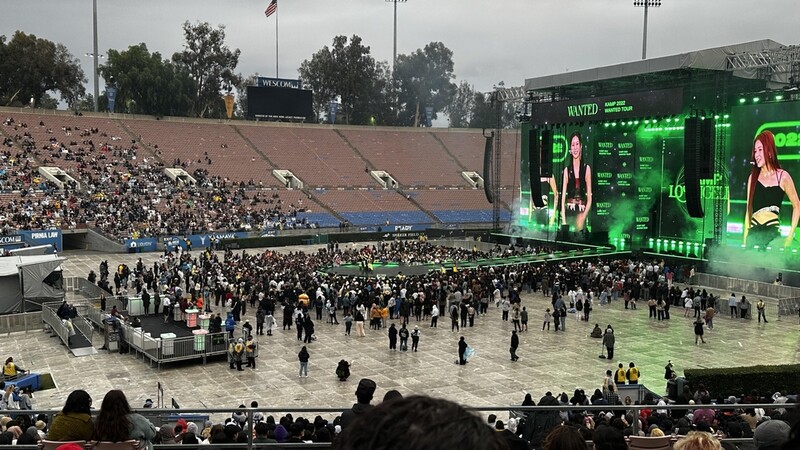

A viral post showing a K-Pop event with zero attendees wasn't just cringe content—it was a stark, unedited X-ray of the industry's underbelly. Beyond the schadenfreude, this incident reveals critical truths about event planning failures, the brutal economics of mid-tier idol survival, and the complex algorithm of modern fandom that goes far beyond raw talent. The empty chairs tell a story of mismanagement, market saturation, and a disconnect some agencies can no longer afford to ignore.
- What Actually Happened? Deconstructing The Viral Event
- Who (or What) Is Really To Blame? Agency, Organizer, or System?
- Can a Group Be Talented But Have No Fans? The Painful Paradox
- The New Fandom Economics: Why "Viral" Doesn't Pay The Rent
- Lessons From The Empty Room: How The Industry Must Adapt
- Your Questions Answered: Idol Event FAQs
What Actually Happened? Deconstructing The Viral Event
The image was devastatingly simple: a small stage set for a performance, rows of empty seats, and a few staff members looking on. No roaring crowd, no light sticks, just silence. This was the reality for one rookie group at a scheduled "fan meeting" event in a suburban mall this past week.
The Event Details: A Perfect Storm of Misfires
The event was a promotional fan meet for a recently debuted boy group from a small, independent agency. It was held on a weekday afternoon in a location with poor public transport links. Tickets were not sold but were ostensibly meant to be obtained through a confusing combination of prior album purchase proof and a lottery on an obscure platform. Crucially, there was almost no promotion from the organizing body on social media channels where the group's potential fans actually reside.
From Obscurity to Virality: How The Post Exploded
The photo, likely taken by a mall employee or a passerby, first spread on domestic community forums like Instiz and TheQoo with titles dripping in secondhand embarrassment. It then hit the international fan circuit on X (formerly Twitter) and Reddit, where it was amplified by a mix of genuine sympathy, morbid curiosity, and the inevitable "schadenfreude" that accompanies K-Pop's hyper-competitive landscape. The narrative was instantly framed as the "ultimate failure," but few stopped to ask about the context.
Beyond the Single Image: The Ripple Effect on the Group
The human cost is the real story. While netizens debated, the members—who undoubtedly prepared diligently—had to perform or interact in that vacuum. The psychological impact on young idols in this situation cannot be overstated. It directly challenges the very validation cycle that drives training and debut. As we explored in our analysis of artistic resilience in T.O.P's "Another Dimension", public perception and personal morale are inextricably linked, even for veterans.
Who (or What) Is Really To Blame? Agency, Organizer, or System?
Pointing fingers is easy, but the empty hall is usually a symptom of multiple breakdowns. The immediate reaction is to blame the group's lack of appeal, but that's a superficial read. The failure is typically systemic.
Agency Miscalculation: The Hope-Over-Strategy Approach
Many small agencies operate on a "build it and they will come" mentality, vastly overestimating their group's reach. They agree to any event for exposure without auditing the organizer's promotional plan or the venue's suitability. They may prioritize a quick payoff from an event fee over the long-term brand damage of a poorly attended showcase. The agency's primary job is to protect and strategically position its artists; failing to vet an event is a dereliction of that duty.
Event Organizer Negligence: The Promotion Black Hole
Mall events or local festival bookings are often handled by third-party promoters whose K-Pop knowledge may be minimal. Their promotion checklist might be just a flyer at the mall entrance and a single social media post, utterly inadequate for drawing a niche audience. They bank on the venue's foot traffic rather than targeted, digital outreach to the specific fandom. The organizer failed to create a viable funnel from potential interest to actual attendance.

The Saturation Engine: K-Pop's Grueling Output
The core issue is volume. With dozens of groups debuting every year, the market is impossibly saturated. Fans have finite time, money, and emotional bandwidth. As discussed in our overview of K-Pop's 2026 "New Spring", the industry is in a period of intense experimentation and output, which leaves many worthy acts in the shadows. The system is designed to produce more content than the ecosystem can support, making such scenarios almost inevitable for a segment of the industry.
Can a Group Be Talented But Have No Fans? The Painful Paradox
Absolutely. This is one of K-Pop's hardest truths. Raw talent—singing, dancing, rapping—is merely the entry fee. Building a fandom is a separate discipline entirely, governed by different rules.
The "It" Factor vs. The Practice Room
A group can execute flawless choreography and have stable live vocals but lack the intangible "star quality" or compelling group narrative that triggers fan attachment. Conversely, a group with magnetic charisma and a strong story can build a fanbase despite middling technical scores. Talent gets you in the door; personality, concept, and relatability make people stay and invest.
Concept & Identity: The Make-or-Break Variables
A group's concept is its battle flag. It must be distinctive, cohesive, and consistently communicated. An unclear or generic concept gets lost in the noise. Consider the immediate, if controversial, identity carved out by a group like MPREG with their daring concept, which we analyzed in "MPREG's Debut". For better or worse, no one forgets their name. Many groups at mid- and low-tier levels have concepts that feel like diluted versions of top-tier trends, offering fans no compelling reason to switch allegiance.
The Comparison: Top-Tier vs. Mid-Tier Realities
The chasm between the haves and have-nots in K-Pop is not just about music quality. It's a comprehensive ecosystem divide.
Factor Top-Tier Group Reality Mid/Low-Tier Group Reality Promotion Budget High-budget MVs, prime-time variety spots, global playlisting campaigns. Low-budget MVs, reliance on YouTube-based shows, limited ad spend. Event Planning Events are demand-driven, often selling out in minutes. Venues are packed. Events are often supply-driven (agency books to fill schedule). Risk of poor turnout. Fandom Infrastructure Well-organized, international fan unions, sophisticated streaming goals. Fragmented or small fandom, less organizational power, reliant on casual listeners. Media & Public Perception Constant media coverage shapes a dominant, positive narrative. Often invisible to major media; narrative can be defined by isolated viral negatives.The New Fandom Economics: Why "Viral" Doesn't Pay The Rent
The 2024-2025 fandom model is built on sustained micro-actions, not passive listening. An idol's success is increasingly quantified, and that data has a direct cost.
The "Proof of Love" Economy: From Albums to Ad Clicks
Modern fandom is a job of proofs. Fans prove their love by bulk-buying albums for photocards, mass-streaming music videos to boost counts, and meticulously voting on every possible app. This economy requires significant time and financial investment. A new group from a small agency asks fans to divert these resources from their existing "ults." Without a powerful hook or superior content, that switch is a hard sell.
Digital vs. Physical Fandom: The Attendance Gap
A group can have a modest online following—a few thousand Twitter followers, some YouTube views—but this rarely translates to physical turnout for an event, especially if it's inconveniently located. Digital support is low-commitment; showing up in person is high-commitment. The leap between "liking" a tweet and taking a train to a mall is enormous, and many agencies mistakenly see the former as a guarantee of the latter.
The Role of Fashion & Branding in Fan Identity
Part of fan engagement is aspiring to an idol's aesthetic. A group's style is a key pillar of its brand. When a group's fashion sense is sharp and distinctive, it gives fans a visual language to adopt and share, further cementing community. Our deep dive into "Denim Decoded" shows how powerfully attire fuels identity. A lack of a strong, recognizable style can make a group feel forgettable, reducing that crucial visual pull.
Lessons From The Empty Room: How The Industry Must Adapt
This incident, while extreme, should serve as a crucial case study. The old playbook is broken for the vast majority of acts. Adaptation is no longer optional.
For Agencies: Transparency and Niche Building
Agencies must be brutally honest about their group's reach. This means:
- Prioritizing Digital Crowds: Hosting engaging, high-quality live streams on V LIVE or YouTube is often more valuable and less risky than a poorly attended physical event.
- Super-Serving the Core: Instead of chasing mass appeal, deeply nurture the first 100-1000 fans. Know their names, interact directly, make them evangelists.
- Strategic Event Partnership: Only agree to events with verifiable, co-managed promotion plans. Co-host with a popular web show or a specific brand that aligns with the group's concept.
For Organizers: Respecting the Fandom Model
Event organizers must understand that K-Pop fans are not general mall shoppers. Successful events require:
- Targeted Digital Marketing: Using fandom-specific hashtags, partnering with fan translators, and buying ads on platforms like Twitter/X and TikTok, not just local newspapers.
- Fan-Centric Logistics: Choosing venues accessible by public transport, providing clear ticketing information in multiple languages, and considering fan project logistics.
- Realistic Expectations: Setting venue size and format appropriate to the group's actual pull, creating an intimate and full experience rather than an empty and cavernous one.
For the Ecosystem: Valuing Sustainability Over Hype
The industry's relentless debut cycle is unsustainable. Investors and labels need to measure success beyond debut charts and consider long-term brand health. Sometimes, slower, organic growth rooted in authentic musical and conceptual identity is more viable than a flashy, expensive debut followed by obscurity. The well-being of idols, as highlighted in pieces like our coverage on "The Family Shadow", is paramount and is undermined by these public humiliations.
Your Questions Answered: Idol Event FAQs
Q: Do groups get paid if no one shows up?
A: It depends on their contract. Many groups, especially from small agencies, receive a flat fee for appearing at an event, which they would get regardless of turnout. However, a portion of their income might be tied to merchandise sales or a percentage of ticket revenue, which would obviously be zero. The real cost is reputational, not just financial.
Q: Has this happened to big groups before?
A: Rarely at their own dedicated events, but even established idols can have poorly attended appearances at remote overseas festivals or poorly promoted mall shows in new markets. Early in their careers, many now-top groups performed to sparse crowds. The difference is that in the social media era, such moments are permanently archived and can go viral globally.
Q: How do fans find out about these smaller events?
A> Primarily through the group's or agency's official social media accounts (Twitter, Instagram, Weverse) and fan café announcements. International fans rely heavily on dedicated fan translators on Twitter/X who subtitled and disseminate the information. If the agency doesn't effectively use these channels, the information simply doesn't reach the fandom.
Q: What's the best way to support a nugu (obscure) group you like?
A> Consistent, low-cost digital support is huge: stream their official MVs and music on platforms, engage with all their social media posts, and participate in their YouTube lives. If you can, buy one copy of their album directly from a source that counts toward charts. Most importantly, talk about them online—word-of-mouth from a real fan is the most powerful tool they have.
Q: Will an event like this usually end a group's career?
A> Not necessarily, though it's a severe blow. Careers end from sustained lack of revenue and agency bankruptcy, not one viral fail. However, the psychological impact on the members and the stain on their narrative can be difficult to overcome. It becomes part of their "story," for better or worse, and the agency must work incredibly hard to reframe a comeback narrative.
Conclusion: The Echo That Demands to Be Heard
The silence in that hall echoes far beyond a single mall. It is a wake-up call for an industry segment drowning in its own output. Success in modern K-Pop is a three-legged stool of artistic skill, strategic branding, and fan-centric engagement. Removing any one leg causes a collapse. For fans, it’s a reminder that behind every viral moment are real people whose dreams are on the line—a sentiment we must balance with critical industry analysis.
The path forward requires more than just hope. It demands smarter strategies, genuine fan connection, and perhaps a systemic shift towards sustainability over endless churn. While we celebrate the giants dominating our Charts page, we must also develop a framework for appreciating and sustaining the vast middle class of artists striving for their spotlight.
Your Next Step: Explore the diverse landscape of K-Pop beyond the headlines. Visit our Artists page to discover groups across the spectrum of popularity, and dive deeper into industry trends through our analysis on our News page. Understanding the full ecosystem makes you not just a fan, but a more discerning observer of this complex, captivating culture.