
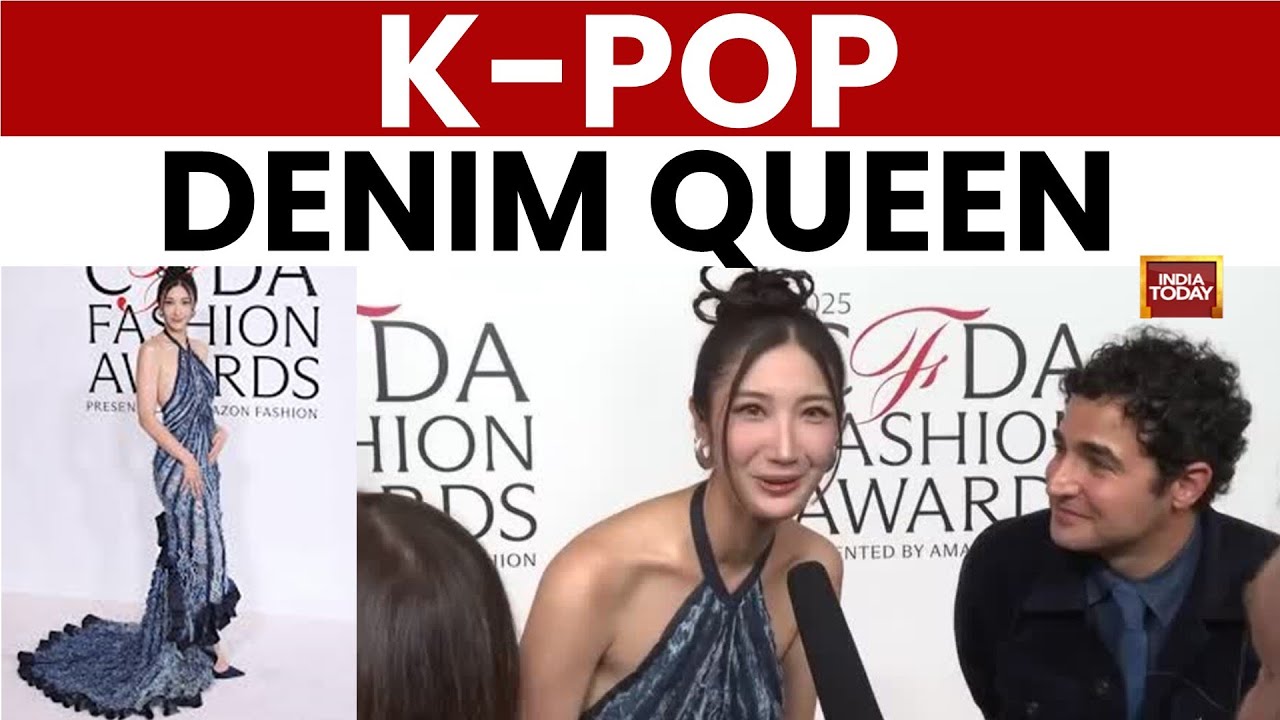
For decades, denim has been far more than just clothing in K-Pop; it’s a foundational uniform, a canvas for rebellion, and a strategic branding tool. This analysis deconstructs how idols and stylists weaponize blue jeans, transforming simple fabric into powerful statements about nostalgia, authenticity, and genre evolution. From Apink's timeless elegance to Lil Moshpit's deconstructed edge, denim tells the story of K-Pop itself.
- Why is Denim Such a K-Pop Staple?
- How Has Idol Denim Style Evolved?
- Is Denim a Key to K-Pop's Gender-Fluid Fashion?
- How Does Stage Denim Differ from "Idle" Street Style?
- What's Next for Denim in K-Pop?
- Denim in K-Pop: Your FAQs Answered
Why is Denim Such a K-Pop Staple?
At first glance, blue jeans might seem like a global basic. In K-Pop's hyper-curated universe, however, their persistence is a calculated choice. Denim serves multiple, often contradictory, purposes: it signals approachability amidst fantasy, provides a neutral backdrop for concept experimentation, and carries deep cultural cachet.
The Democratizing Fabric: Bridging the Idol-Fan Gap
Denim is inherently coded with casual, everyday connotations. When an idol wears jeans, it creates a momentary bridge between their luminous stage persona and the "real" world. Stylists leverage this to foster a sense of relatable intimacy, even during highly-produced photo shoots or variety content. It's a visual shorthand for "authenticity," a crucial currency in fan culture.
The Ultimate Chameleon: A Canvas for Any Concept
Few fabrics are as versatile. A pristine, light-wash denim jacket can underscore innocent, school-age concepts. Ripped, black skinny jeans instantly telegraph rebellion and rock influences. Distressed overalls suggest playful youth. This malleability makes denim a stylist's secret weapon, allowing for seamless transitions between concepts within a single comeback era, as seen with groups who explore dual title tracks.
Western Nostalgia & Cultural Translation
Denim is steeped in Americana, embodying ideals of freedom, rebellion, and youth. K-Pop has long engaged in a complex dialogue with Western pop culture, translating and recontextualizing its symbols. Adopting denim is part of this dialogue, allowing idols to tap into that cultural lineage while filtering it through a distinctly Korean aesthetic of precision and collectivism.
How Has Idol Denim Style Evolved?
The journey from head-to-toe matching denim suits of the early 2000s to today's artisanal, deconstructed pieces mirrors K-Pop's own journey from niche genre to global fashion powerhouse. The evolution is marked by increasing individualism and high-fashion integration.
The Era of Uniformity: Denim as Group Identity
In the 2000s and early 2010s, denim was often used as a literal uniform to reinforce group cohesion. Think matching jeans paired with identical jackets or shirts. This created a powerful, monolithic group image but left little room for individual member styling. The focus was on the unit, not the parts.
The Rise of "Styled" Denim: Customization and Luxury
As K-Pop's budgets and global influence grew, so did denim's treatment. Off-the-rack jeans were replaced by custom-fit pieces, often hand-distressed, painted, or embroidered. Luxury brands like Balmain, Saint Laurent, and Vetements began appearing on idols, merging streetwear roots with haute couture. This signaled K-Pop's arrival on the international fashion stage.

Deconstruction and Genderless Silhouettes
The current trend, led by both established idols and 4th/5th generation trailblazers, involves taking denim apart. Asymmetrical cuts, jarring juxtapositions (like pairing a vintage trucker jacket with elegant silk), and purposefully "awkward" fits dominate. This aligns with the global trend towards deconstructed fashion and rejects traditional, form-flattering denim in favor of statement-making art pieces.
Era Denim Hallmark Iconic Example Fashion Philosophy 2000s / Early 2nd Gen Matching Sets, Clean Washes TVXQ, S.E.S Group Cohesion, Pop Uniformity Late 2nd / 3rd Gen Skinny Jeans, Strategic Rips, Luxury Brands BIGBANG, f(x), G-Dragon's personalized looks Individual Expression within the Group, High-Fashion Integration 4th / 5th Gen (Current) Oversized, Deconstructed, Genderless, Vintage NewJeans' Y2K revival, (G)I-DLE's avant-garde styling, Lil Moshpit's remixed streetwear Nostalgia Re-contextualized, Avant-Garde Statement, Silhouette Over FormIs Denim a Key to K-Pop's Gender-Fluid Fashion?
Absolutely. Denim's unisex origins and structural nature make it the perfect vehicle for blurring fashion's gendered lines. K-Pop stylists have been pioneers in this arena, using denim to challenge norms long before it became a global conversation.
Breaking the Binary: Silhouettes Over Gender
The traditional "girls wear skinny, boys wear straight" denim rule is obsolete in K-Pop. We regularly see male idols in ultra-skinny or even embellished jeans, while female idols dominate in boxy, oversized trucker jackets and straight-leg or baggy jeans. This focus on silhouette and attitude, rather than gendered coding, expands the creative palette for all idols.
Icons of Fluid Denim
Artists like Sunmi have paired denim hot pants with masculine blazers. BE BOYS, in their recent "Be:2" promotions, often utilize shared denim wardrobe pieces across members, emphasizing a cohesive, fluid group aesthetic. On the other side, a group like FIRR in their "REEL" era might use delicate, painted denim to soften a powerful performance concept, showing its range.
The "Boyfriend Jean" Reclaimed
This trend, popularized globally, finds a unique expression in K-Pop. It’s not about borrowing from a boyfriend's closet for a cute look; it's about claiming a traditionally masculine silhouette as a power move. It signifies comfort, confidence, and a rejection of restrictive, hyper-feminine styling, aligning with messages of self-assurance common in modern lyrics.
How Does Stage Denim Differ from "Idle" Street Style?
There's a stark, intentional divide between the denim worn for performance and the denim captured by paparazzi at airports. Understanding this dichotomy reveals the layers of an idol's public persona.
Stage Denim: Armor for Performance
On stage, denim is engineered for impact and durability. It's often heavily customized, incorporating:
- Rigorous Reinforcements: Seams are double- or triple-stitched to withstand intense choreography.
- Strategic Distressing: Every rip and fade is placed for visual effect under stage lights, not by chance.
- Integrated Hardware: Chains, extra grommets, or even LED elements turn jeans into part of the spectacle.
This is denim as costume, designed to tell the song's story and survive the performance.
"Idle" Street Denim: Curated Relatability
Airport fashion and casual sighting photos present "off-duty" denim. This style is a masterclass in aspirational relatability. It features:
- High-End Basics: Think perfectly-fitting, plain denim from brands like Amiri or Re/Done.
- Effortless Layering: A simple white tee, a designer bag, and pristine sneakers with the jeans.
- The "Undone" Vibe: The look suggests personal style, not stylist direction, though it is almost always meticulously planned.
This builds the idol's personal brand beyond their group activities, a topic we often track on our News page.
The Case Study: Apink's Enduring Appeal
Veteran group Apink provides a perfect lens for this contrast. During their "15th Season" promotions, stage looks might feature coordinated denim elements with elegant sparkle. Their individual airport fashion, however, showcases mature, sophisticated denim pieces—think high-waisted, wide-leg silhouettes or tailored denim coats—that reflect their evolved personal tastes beyond the group's concept.
What's Next for Denim in K-Pop?
Based on runway trends, stylist collaborations, and the forward momentum of 5th generation groups, the future of K-Pop denim points toward greater sustainability narratives, tech integration, and even more radical deconstruction.
Upcycled and Vintage as Status Symbols
The new luxury isn't a new pair of designer jeans; it's a one-of-a-kind, perfectly sourced vintage Levi's 501 or a reworked piece from a deadstock archive. Stylists are becoming hunters, and an idol wearing a unique, upcycled denim piece signals fashion knowledge and eco-consciousness—a valuable part of any modern idol's image.
Tech-Infused Fabric and Interactive Elements
We're already seeing glimpses with LED accessories. The next step could be denim woven with smart fibers for color-changing properties or integrated, subtle lighting for concert performances. Imagine a jacket that changes wash under different stage lights, syncing with a song's mood shift.
The "Anti-Fit" and Sculptural Denim
The move away from the body will continue. Expect more jarring, architectural shapes—denim that stands away from the body in rigid, sculptural forms, or pieces that resemble denim "collages" rather than functional clothing. This aligns with the artistic direction of groups pushing visual boundaries, similar to the avant-garde approach seen in tracks like "CLOSE YOUR EYES - OVEREXPOSED".
Denim in K-Pop: Your FAQs Answered
Which idol is considered a "denim icon"?
G-Dragon remains the undisputed pioneer. He transformed denim from a uniform into a personal art form, popularizing customized pieces, gender-fluid styling, and high-fashion denim hybrids. His influence is seen in every generation that followed.
How can I get the "idol denim look" without a stylist?
Focus on fit and one statement piece. Get one pair of jeans that fits you impeccably in a current silhouette (wide-leg or straight, for example). Then, add one customized element: a painted jacket, uniquely patched jeans, or interesting denim accessories. Don't try to replicate a full head-to-toe curated look.
Is the head-to-toe denim look (the "Canadian Tuxedo") back in K-Pop?
Yes, but with a crucial twist. It's no longer matching in wash or style. The modern version involves pairing a dark, oversized denim jacket with light-wash, baggy jeans, or vice versa. The key is contrast in shade and proportion to avoid a costumed look.
Why do idols often wear denim in music video behind-the-scenes content?
Denim serves as a neutral, "off-duty" visual palate cleanser between elaborate costume shots. It helps demarcate the idol "at work" in costume from the idol "being themselves" on set, creating a more intimate, documentary-style feel for fans.
Are there specific denim brands favored by K-Pop stylists right now?
Stylists pull from a wide mix. High-end staples include Balmain, Amiri, and Tom Ford. For vintage and upcycled feels, they source from archives or Korean boutique rework brands. Fast-fashion pieces also appear, often heavily altered to be unique.
How does denim styling differ between boy groups and girl groups today?
The lines are increasingly blurred. The difference is less about gender and more about group concept. A hip-hop influenced boy group and a girl-crush concept girl group may wear similar baggy, distressed denim. A softer, retro-concept group of any gender will lean into cleaner, vintage-inspired fits. For the latest concept debuts across all groups, check our Charts page.
Conclusion: The Seam That Binds Generations
Denim's thread runs through the entire tapestry of K-Pop history. It is the constant, adaptable variable in an industry defined by rapid change. From establishing group identity to dismantling gender norms, from serving as sturdy stagewear to acting as a token of curated casualness, denim proves its unparalleled utility. It is both a mirror reflecting each generation's aesthetic—from the unified looks of the past to the deconstructed individualism of the present—and a fabric onto which fans project their own interpretations of authenticity and style.
To truly appreciate its evolution, look beyond the garment itself. Analyze how it's worn, by whom, and in what context. Follow the journeys of veterans like Apink and watch the bold experiments of newer acts like Lil Moshpit. Denim is not just fashion; it's a critical language in the visual dialect of K-Pop. Your next step? Dive deeper into the styles of your favorite idols on our Artists page, and start viewing every fray, fade, and fit as an intentional part of their story.