
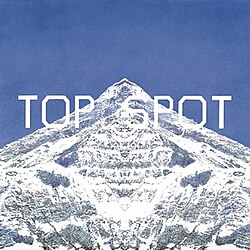

After over a decade of profound silence, T.O.P of BIGBANG has not merely returned—he has re-materialized. His latest solo endeavor, "Another Dimension," is not a comeback but a declaration of artistic sovereignty. This analysis delves into the crucible of his ten-year creative hiatus, exploring how his transformation from a chart-topping idol into a dedicated fine artist and curator has culminated in a genre-defying release that prioritizes concept over convention, permanently altering the trajectory of his legacy and the possibilities for veteran idols in the industry.
In This Analysis:
- What Really Happened During T.O.P's 10-Year Hiatus?
- How Has T.O.P's Sound Evolved from "Doom Dada" to Now?
- What Does "Another Dimension" Mean for the K-Pop Industry?
- How Does the Visual & Curatorial Art Build the World? Frequently Asked Questions (FAQ)
What Really Happened During T.O.P's 10-Year Hiatus?
The public narrative was one of absence. For fans, the gap between solo releases felt like a void. However, as revealed in his recent GQ interview, this period was not a pause but a deliberate, all-consuming dive into the creative process. T.O.P reframed his hiatus not as inactivity, but as essential incubation.
The Philosophy of "Devoted to Creation"
T.O.P's statement, "I devoted myself entirely to creation," is a radical stance in an industry driven by constant output. This was not a vacation. It was a conscious withdrawal from the idol cycle of promotion, variety appearances, and fan service to engage in a deeper, more private artistic practice. He shifted his primary identity from performer to creator, operating on a timeline divorced from commercial K-Pop's frenetic pace.
From Idol to Artist-Curator: Building a New Foundation
His activities during this decade were foundational. He immersed himself in the global contemporary art scene, establishing himself as a serious collector and curator. His collaborations with renowned institutions and artists weren't celebrity side projects; they were rigorous education. This period allowed him to develop a sophisticated visual and conceptual language, which now directly informs the aesthetic universe of "Another Dimension." The hiatus, therefore, was less about making music in a studio and more about building the intellectual and sensory toolkit to make music that transcends.
How Has T.O.P's Sound Evolved from "Doom Dada" to Now?
Comparing 2013's "Doom Dada" to "Another Dimension" reveals not a linear progression, but a dimensional leap. The former was a groundbreaking, avant-garde hip-hop track within the K-Pop sphere. The latter exists outside traditional spheres altogether, demanding a new framework for listening.
Deconstructing the Hip-Hop Persona
Early T.O.P was built on a foundation of charismatic, low-toned rap, defining BIGBANG's hip-hop edge. Tracks like "Turn It Up" and "Doom Dada" showcased a technically skilled, stylistically bold rapper. "Another Dimension" suggests a move beyond persona. The vocal delivery is often more atmospheric and treated as a textural element rather than a driving rhythmic force. The focus has shifted from lyrical flow to sonic landscape, indicating an artist less interested in asserting an identity than in constructing an environment.
The New Sonic Palette: Ambience, Dissonance, and Space
The production on "Another Dimension" leans into ambient electronics, experimental noise, and spacious, minimalist arrangements. Where K-Pop, and even his past work, often seeks to fill every moment with hook or energy, this new work embraces silence, dissonance, and gradual evolution. It favors mood over melody, challenging listeners used to immediate gratification. This aligns more closely with contemporary art music or avant-garde electronica than with mainstream pop or hip-hop, as seen in other bold genre shifts we've covered, like CLOSE YOUR EYES' "OVEREXPOSED".
Aspect Then (Pre-2014) Now ("Another Dimension") Primary Role Idol-Rapper, Performer Artist, Curator, Composer Sonic Center Beat-driven Hip-Hop, Pop Structures Ambient Textures, Avant-Garde Electronica Lyrical Focus Wordplay, Persona, Narrative Abstract Imagery, Philosophical Concepts Visual Goal Stylish Music Video, Fashion Immersive Art Film, Installation Industry Engagement Chart Competition, Broadcast Promotions Gallery Exhibitions, Critical DialogueWhat Does "Another Dimension" Mean for the K-Pop Industry?
T.O.P's return is a seismic event not just for fans, but for the industry's very architecture. It demonstrates a viable, respected path for veteran idols that doesn't rely on nostalgia or conforming to current trends.

Redefining the "Second Act" for Veteran Idols
The standard path for aging idols often involves variety shows, acting, or safe musical iterations of past glory. T.O.P bypasses this entirely. He leverages his fame not for easy access, but as a platform for high-concept, uncompromising art. This sets a powerful precedent. It proves that an idol's "second act" can be one of authentic artistic maturation, potentially influencing how other senior artists with institutional power, like CL or G-Dragon, approach their own reinventions. For more on how veteran groups are navigating legacy, see our analysis of Apink's "15th Season".
The Blurring Line Between K-Pop and Art Music
"Another Dimension" actively dissolves the boundaries separating pop music from the fine art world. By presenting his music as one component of a larger curatorial project—involving film, sculpture, and installation—T.O.P forces critics and the market to evaluate it by different standards. This isn't about winning on our Charts page (though it may); it's about challenging categorization itself. It asks whether K-Pop can be a vessel for purely conceptual art, expanding the genre's definition from "Korean popular music" to "Korean artistic expression through sound and performance."
How Does the Visual & Curatorial Art Build the World?
The music of "Another Dimension" is inseparable from its visual and physical manifestations. T.O.P is not releasing songs; he is unveiling fragments of a constructed universe.
The Music Film as Gallery Piece
The visual accompaniments are directed with the precision and stark aesthetic of a gallery film. They prioritize composition, symbolism, and slow-burning tension over narrative or dance sequences. This approach creates a sense of exclusivity and depth; the viewer feels they are interpreting art, not consuming content. It demands active engagement, aligning with his activities in the art world and creating a cohesive brand language that transcends entertainment.
Curation as an Extension of the Album
Reports of accompanying physical installations or exhibitions are key. By placing his music within a curated spatial environment, T.O.P makes the experience tactile and immersive. This turns the release from a transactional audio event into a holistic sensory encounter. It also leverages his credibility as a curator, lending the entire project an air of legitimacy within the high art community that typical idol promotions could never achieve. For insights on how other artists are building immersive worlds, check our take on FIRR's "REEL".
Frequently Asked Questions (FAQ)
Q: Does "Another Dimension" mean T.O.P has left BIGBANG or the K-Pop industry?
A: Not necessarily. It signifies an expansion of his artistic scope. He is operating in a parallel, self-created space that exists alongside his group legacy. This project defines his solo identity, but it doesn't preclude future collaborations under the BIGBANG banner, though those would now be viewed through the lens of his evolved artistry.
Q: Is this music even meant for the general public or mainstream fans?
A> Its intent appears to be artistic statement first, popular appeal second. It targets a niche audience that appreciates avant-garde music and conceptual art, as well as loyal fans willing to follow his journey anywhere. It’s a filter, deliberately moving away from mass-market palatability.
Q: How does this compare to G-Dragon's solo work?
A> G-Dragon's solos, while innovative, have largely operated within and expanded the boundaries of fashion-forward pop and hip-hop. T.O.P's new work seeks to exit those boundaries entirely. GD plays the game at a master level; T.O.P is building a new game board in a different room.
Q: Will this approach influence younger K-Pop artists?
A> Its direct influence may be limited due to the unique capital and status required. However, it sets a powerful symbolic precedent. It shows that ultimate creative freedom is a possible end goal, potentially inspiring idols to think long-term about their artistic development beyond idolhood.
Q: Where can I find more news on experimental shifts like this?
A> Follow our dedicated News page for daily updates, and explore our Artists page for deep dives into artist evolution across the industry.
Conclusion: A New Blueprint for Artistic Freedom
T.O.P's "Another Dimension" is more than an album; it is a case study in radical artistic reinvention. By leveraging a decade of silent cultivation, he has returned not to reclaim past glory, but to present an entirely new paradigm. He challenges what a K-Pop idol can become, what K-Pop music can sound like, and how it can be presented to the world.
This project may not dominate streaming numbers in the way of a typical idol release, but its success will be measured in critical respect, cultural impact, and the lasting expansion of possibilities it creates. For the industry, it’s a wake-up call. For fans, it’s an invitation to grow alongside an artist. For T.O.P, it is the fearless entry into the chapter he spent ten years meticulously writing. The dimension is open, and it is unequivocally his own.
What's Next? To understand how other artists are pushing boundaries in real-time, explore our latest "What Just Landed" rel="internal">What Just Landed" rel="internal">What Just Landed" rel="internal">What Just Landed" rel="internal">What Just Landed" rel="internal">What Just Landed" rel="internal">What Just Landed" rel="internal">What Just Landed" rel="internal">What Just Landed" rel="internal">What Just Landed" rel="internal">What Just Landed" reviews, including the innovative remix on Lil Moshpit's "Annyeonghaseyo" and the confident new entry from BE BOYS with "Be:2". The landscape is changing, and T.O.P has just redrawn the map.