

A Tale of Two Tallies: When History's Witnesses Disagree
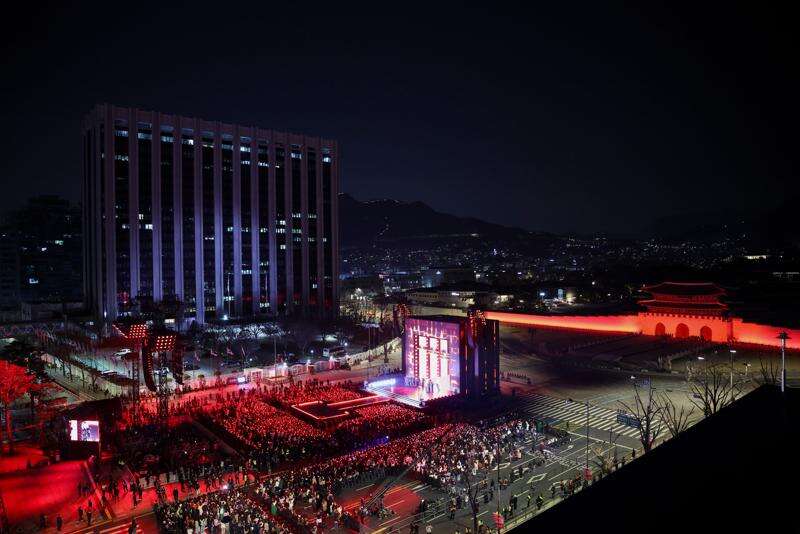
The confetti had settled over Gwanghwamun Square. The final notes of the anthemic performance had faded into the Seoul night. BTS, in their first full-group concert since the start of their chapter two, had seemingly delivered yet another flawless, history-making event. The narrative was set: a triumphant return, a sea of ARMY, a cultural reset. Then, the numbers came out. And they told two starkly different stories. In the days following the landmark concert, a surprising discrepancy emerged between the official attendance figure released by HYBE and the preliminary estimates circulating from government and police sources. What was reported as a monumental gathering of approximately 104,000 attendees by the company was being contextualized by authorities as a potentially far larger event, with early crowd estimates hinting at numbers exceeding a quarter of a million. This gap of over 150,000 people is more than a statistical anomaly; it is a window into the complex challenges of measuring fandom's physical might, the logistical tightrope of mega-events, and the evolving narrative control in an industry where scale is often synonymous with success.
From Bulletproof to Unstoppable: The Concert as a Milestone
To understand the weight of this moment, one must appreciate the journey. The Gwanghwamun concert, dubbed "BTS COMEBACK LIVE," was not merely a promotional stop. It was a symbolic homecoming and a powerful declaration of unity. Following a period of focused individual activities—enlistment included—this was the first time the full group was performing new music together for fans, a moment ARMY had awaited for years. The choice of location was profoundly significant. Gwanghwamun Square is the nation's ceremonial heart, a site for presidential inaugurations and national celebrations. Staging a pop concert there was unprecedented, immediately elevating the event from a fan gathering to a national occasion.
This was not BTS's first rodeo with jaw-dropping crowd sizes. Their history is punctuated with events that strained infrastructure and redefined possibilities, from packed stadium world tours to the must-watch free online concerts during the pandemic that drew tens of millions of simultaneous viewers. As we explored in a previous analysis, "Beyond 'Borrowing the Moon': BTS's Historic Comeback Concert Stuns Authorities as Police Brace for Quarter-Million ARMY Onslaught", the anticipation and logistical planning for this event were on a completely different scale from day one. Authorities were preparing for a potential human tide, a testament to the group's unmatched drawing power. The concert was the culmination of a legacy built on genuine connection, a factor that consistently translates digital devotion into physical presence.
The Weight of the Wait: A Fandom's Pent-Up Energy
The explosive reaction was fueled by more than just new music. It was a release of collective anticipation. For a fandom accustomed to constant content and interaction, the enforced hiatus—though fruitful for the members' solo careers—created a reservoir of eager energy. The promise of seeing Jin, SUGA, J-Hope, RM, Jimin, V, and Jung Kook share a stage again transformed this concert into a pilgrimage. This emotional undercurrent is crucial for understanding why crowd estimates could vary so wildly; this was an event people were willing to travel across the globe for, and to wait for days to secure even a distant vantage point.
Decoding the Data Dissonance
On June 21st, HYBE issued an official press release declaring the event a resounding success and a safe conclusion. The key figure presented: "approximately 104,000 people attended." This number was likely derived from a combination of factors: official ticket allocations for the paid, seated sections closest to the stage, capacity calculations for designated standing and viewing areas managed by the event organizers, and data from partnered platforms for the live viewing experience in nearby cinemas and venues that were part of the official event scope.
"The 'BTS COMEBACK LIVE' in Gwanghwamun was completed safely with approximately 104,000 fans in attendance. We extend our deepest gratitude to the artists, fans, and all the authorities who cooperated to make this meaningful event possible," stated the HYBE announcement.
Concurrently, reports began surfacing from government and police briefings that painted a picture of a much larger footprint. While not an official final count, initial estimates from traffic analysis, drone footage, and crowd density mapping by the Seoul Metropolitan Police Agency and the Ministry of the Interior and Safety suggested a peak crowd size that could have reached between 250,000 and 260,000 individuals. This figure ostensibly encompassed not just the official attendees in cordoned zones, but the entire sphere of influence: fans gathered on peripheries, in adjacent streets and plazas, on overpasses, and in buildings with sightlines, all there to partake in the atmosphere.
Methodology: Counting Heads vs. Gauging a Phenomenon
The divergence stems from fundamental differences in purpose and methodology:
- HYBE's Count (The Managed Event): This is a liability and logistics figure. It counts people within the company's operational purview—those for whom they are directly responsible for safety, security, and services. It's a controlled, ticketed, or registered audience.
- Government Estimate (The Public Spectacle): This is a public safety and resource figure. Authorities must account for every person within a geographic radius affected by the event. Their concern is crowd density, traffic flow, emergency service access, and metropolitan disruption. They count bodies in space, regardless of ticket status.
In essence, HYBE reported on the concert as a controlled production. The government estimated the concert as a mass mobilization. One is a corporate statement of success; the other is a municipal report on impact. This distinction, while logical, reveals the chasm between a fandom's organic, sprawling scale and the structured confines of even the most ambitious event planning.

The ARMY Reacts: Pride, Pragmatism, and Protocol
Within the ARMY community, the reaction to the dual figures has been a fascinating mix of pride, analytical debate, and heightened concern for member safety. On platforms like Twitter (X), Weverse, and fan forums, the discourse has split into several key threads.
Many fans wear the higher government estimate as a badge of honor. "Only BTS could turn downtown Seoul into a human ocean," one fan posted alongside aerial footage. The larger number is seen as proof of the group's undiminished, raw popularity—a metric that cannot be fully captured by tickets alone. It speaks to a cultural pull so strong it draws people simply to be in the vicinity of the moment.
Conversely, a significant portion of the fandom has vehemently supported HYBE's lower, official number, arguing for precision and caution. "Sticking to the official count is important to avoid misinformation and to respect the planning that went into a safe event," argued a long-time fan on a discussion board. This group often points out that inflating numbers, however flattering, can lead to dangerous expectations and compromised security for future events. The memory of past crowd crushes in other genres globally has made a portion of ARMY acutely aware of the importance of accurate crowd management data.
The discrepancy also fueled discussions about access and fairness. Fans who had unsuccessfully vied for official tickets expressed a bittersweet sentiment—gratified that their presence in the surrounding area was "counted" in the public narrative, yet frustrated by the lack of direct access. The event became a two-tiered experience: the core attendees and the vast peripheral congregation, both united in purpose but separated by proximity. This dynamic echoes themes we've seen before, such as in "A Stage for Sincerity: Jimin's Raw Apology Reshapes a Scandal", where BTS's direct engagement with fan sentiment became a crucial part of navigating a complex situation.
Industry Implications: The High-Stakes Game of Scale
This incident is not an isolated data point. It is a case study with profound implications for the entire K-Pop concert and festival ecosystem.
1. The Logistics Ceiling: The gap highlights a growing pain for the industry. Fandoms, particularly for top-tier groups like BTS, BLACKPINK, and SEVENTEEN, can now mobilize at a scale that challenges the very infrastructure of major cities. Traditional venues are often insufficient. Organizers are forced to look at public squares, multiple linked venues, and hybrid online-offline models. The Gwanghwamun concert shows that even these ambitious plans may only capture a fraction of the total demand, pushing event planners and authorities to continuously innovate. For more on how groups are navigating these new scales of fame, visit our Artists page for deeper profiles.
2. The Economic Narrative: Numbers drive headlines, investor confidence, and brand valuation. A quarter-million-strong crowd is a powerful economic indicator, suggesting immense direct spending (travel, accommodation, merchandise) and indirect tourism uplift. While HYBE's conservative number is legally prudent, the government's estimate serves as a powerful, independent validator of BTS's economic engine—a fact not lost on local businesses or cultural ministers. This tangible impact reinforces the argument for K-Pop as a critical soft power and economic asset.
3. Safety as the Paramount Currency: Ultimately, the fact that both narratives—HYBE's and the government's—emphasized the event's safe conclusion is the most important takeaway. In a post-Itaewon tragedy world, South Korea is hyper-vigilant about crowd safety. The successful management of an event of this potential magnitude, regardless of the final agreed-upon number, sets a new benchmark for public-private cooperation. It proves that with meticulous planning, extreme-scale events are possible, but the margin for error is zero. This will inform all future major K-Pop events in public spaces.
4. Redefining "Attendance" in the Digital Age: The conversation forces the industry to question what "counts" as participation. Is it only a scanned ticket? Or does gathering in a public park to watch a live stream on a giant screen with thousands of others constitute attendance? The lines are blurring. The event's true reach was likely a spectrum: from the front-row fan to the supporter watching from a café three blocks away, to the millions streaming online globally. Our metrics for success need to evolve to capture this layered reality.
Looking Ahead: Lessons for the Next Chapter
The Gwanghwamun comeback will be remembered not just for the performances, but for the complex conversation it sparked about measurement, capacity, and fandom's physical form. As BTS moves forward with their promised full-group activities in 2025, and as the wider industry plans its next generation of spectacles, several key lessons emerge.
First, transparency and collaboration between agencies and authorities must deepen. A shared, real-time data dashboard for mega-events, combining ticketing data with police crowd monitoring, could help bridge the narrative gap and, more importantly, enhance situational awareness for safety teams.
Second, the success of this event, confirmed by all sides, opens doors. It demonstrates to cautious city governments that with the right partnership, K-Pop's biggest events can be managed safely and can deliver immense cultural and economic benefits. We may see more landmark locations becoming potential concert venues.
Finally, for ARMY and BTS, this episode is another testament to their unique bond. The members have always acknowledged their fans as the core of their journey. Seeing that devotion materialize as a force that can reshape the map of a city center is a powerful symbol. As the group prepares for their next collective phase, the world now has an even clearer—if numerically debated—picture of the ground upon which they stand. It is ground covered, shoulder to shoulder, by a global community. The challenge for the future will be to build stages large enough to hold them, and to develop a language of measurement that can truly capture their scale.
For continued coverage on BTS's journey and the evolving landscape of live K-Pop events, stay tuned to our News page for the latest updates and in-depth analysis.