
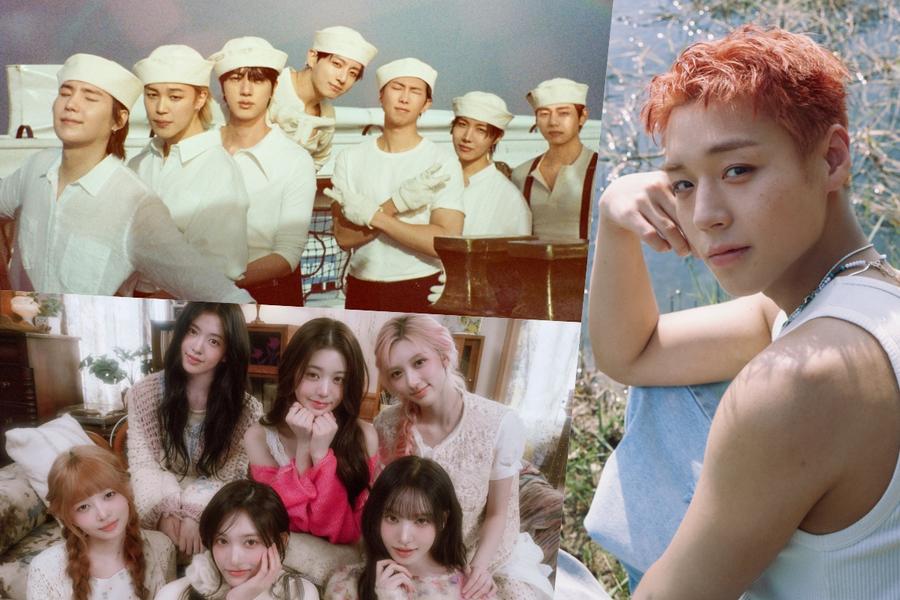
The Korean Business Research Institute's April advertisement model rankings are in, and they paint a vivid picture of shifting influence, crisis management, and strategic brand alignment. This month's top ten reveals a decisive consolidation of power around fourth-generation icons, a stunning recovery story, and the subtle but undeniable impact of recent controversies on commercial appeal. The data confirms that in 2024, an idol's brand value is a fragile currency, directly tied to public perception and strategic visibility beyond the stage.
- What Exactly Are Brand Reputation Rankings & Why Do They Matter?
- April's Top Contenders: A Breakdown of the Top 10
- The Biggest Movers: Analyzing Stellar Rises and Concerning Drops
- The Controversy Factor: How Scandals and Public Opinion Shape Brand Value
- Beyond the Idol: What Brands Are Looking For in 2024
- What These Rankings Predict for the Rest of 2024
- Advertisement Model Rankings: Your Questions Answered
What Exactly Are Brand Reputation Rankings & Why Do They Matter?
To the casual observer, brand reputation rankings might seem like another popularity contest. In reality, they are a sophisticated, data-driven barometer of an idol's commercial viability and public sentiment at a precise moment in time. The Korean Business Research Institute (KBRI) analyzes massive datasets—media coverage, community engagement, search volume, and social buzz—to generate a numerical brand value index. This isn't about who has the most fans, but whose presence moves the needle with the general public and, crucially, corporate marketing departments.
The Methodology: More Than Just Social Media Likes
The KBRI's algorithm processes participation, media, communication, and community indexes from a staggering volume of big data. It filters out negative and repetitive mentions to focus on genuine consumer-driven engagement. This means an idol trending due to a scandal may see a spike in volume but not necessarily a positive impact on their brand reputation score. The distinction is critical.
Why Agencies and Investors Watch Closely
For entertainment agencies, these rankings are a report card on their management strategies. A rising star signals effective promotion and clean public relations. A falling star can trigger internal strategy reassessments. For brands, the list is a shortlist for endorsement deals. A high ranking correlates directly with campaign ROI, making idols like IVE's Wonyoung or BTS's V perpetually hot properties. You can track the commercial trajectories of your favorite artists on our Artists page.
April's Top Contenders: A Breakdown of the Top 10
April's list underscores the ongoing reign of fourth-generation female idols in the advertisement sphere, with a notable male-group veteran holding strong. The composition speaks to a market that values omnipresent media faces, fashion authority, and a meticulously maintained public image.
The Unshakeable Top Tier
Securing the top spots are individuals who have transcended their group identities to become standalone brands. IVE's Jang Wonyoung continues her historic streak, a testament to her unparalleled influence in beauty, fashion, and lifestyle sectors. Her recent appearance, as covered in Wonyoung's Devil Wears Prada Moment, alongside Hollywood legends, exemplifies the tier of exposure she now commands, directly boosting her domestic brand value.
The Strategic Climbers
This month saw significant movement in the mid-top tier. Idols associated with chart-dominating musical comebacks or viral non-musical moments (like a particularly acclaimed drama role or variety show appearance) have seen proportional lifts. Their presence indicates that brand reputation is a lagging indicator of successful, multi-platform activity.
The Veteran Anchor
The consistent presence of a senior male idol like BTS's V in the top five is a fascinating case study. It demonstrates that sustained, high-quality public engagement—through respected fashion ventures, military service updates, and unwavering fan community strength—can maintain elite brand equity even during group hiatus periods.
 RankIdol (Group)Key Brand AssociationsNotable Movement
1Jang Wonyoung (IVE)Luxury Fashion, Cosmetics, BeveragesHolding Steady (Icon Status)
2V (BTS)High Fashion, Global LuxuryConsistent Elite Presence
3Karina (aespa)Tech, Beauty, Premium RetailStrong Rebound Post-News
4Cha Eun-woo (ASTRO)Skincare, Finance, ApparelPerennial Mainstay
5Suzy (Soloist)Finance, Jewelry, Digital PlatformsDefining the "Original" Benchmark
6Jung Kook (BTS)Global F&B, SportswearSustained Solo Momentum
7Kim Yuna (IVE)Youth Fashion, Accessories, TechRising Dual Threat with Wonyoung
8Lee Junho (2PM)Home & Living, Food, Mass RetailDrama-Driven Surge
9NewJeans (Hanni / Danielle)Gen-Z Tech, Fast Fashion, SnacksCollective Group Brand Power
10Rowoon (Soloist/Ex-SF9)Health, Wellness, Pet CareSteady Actor-Idol Crossflow
RankIdol (Group)Key Brand AssociationsNotable Movement
1Jang Wonyoung (IVE)Luxury Fashion, Cosmetics, BeveragesHolding Steady (Icon Status)
2V (BTS)High Fashion, Global LuxuryConsistent Elite Presence
3Karina (aespa)Tech, Beauty, Premium RetailStrong Rebound Post-News
4Cha Eun-woo (ASTRO)Skincare, Finance, ApparelPerennial Mainstay
5Suzy (Soloist)Finance, Jewelry, Digital PlatformsDefining the "Original" Benchmark
6Jung Kook (BTS)Global F&B, SportswearSustained Solo Momentum
7Kim Yuna (IVE)Youth Fashion, Accessories, TechRising Dual Threat with Wonyoung
8Lee Junho (2PM)Home & Living, Food, Mass RetailDrama-Driven Surge
9NewJeans (Hanni / Danielle)Gen-Z Tech, Fast Fashion, SnacksCollective Group Brand Power
10Rowoon (Soloist/Ex-SF9)Health, Wellness, Pet CareSteady Actor-Idol Crossflow
The Biggest Movers: Analyzing Stellar Rises and Concerning Drops
While the top often seems static, the real story is in the volatility beneath. April's rankings featured remarkable comebacks and a few disappearances that signal deeper industry currents.
The Comeback Narrative: aespa's Karina
The most discussed story is the re-entry of aespa's Karina into the top three. Following a very public personal event that sparked intense media and fan discourse, her brand value initially faced uncertainty. Her swift return to the upper echelons is a masterclass in crisis management and testament to the raw power of dedicated fandom and strategic, respectful public addressing of a situation. It shows that modern audiences value authenticity and resilience.
The Disappearing Acts: Reading Between the Lines
Equally telling are the names that fell out of the top tier. Often, a sudden drop is not due to a scandal but to a period of inactivity—no comeback, no drama, no major public events. This "out of sight, out of mind" reality pressures idols into a constant cycle of content. It also highlights the precariousness of brand value tied solely to transient viral moments without a solid foundation of public goodwill or artistic recognition. For broader industry trends, check our comprehensive News page.
The Controversy Factor: How Scandals and Public Opinion Shape Brand Value
The relationship between controversy and brand value is complex and non-linear. The April data provides a clear lens into this dynamic, contrasting different types of public relations challenges.
The "Recoverable" vs. "Structural" Controversy
As seen with Karina, a personal-life controversy, when addressed directly, can lead to a short-term dip followed by a powerful recovery, sometimes even strengthening fan loyalty. This contrasts sharply with controversies that attack an idol's professional integrity or character. For instance, the lingering brand damage discussed in our analysis Decoding EVAN's Fall From Grace shows how perceived insincerity or unprofessionalism can have a longer, more detrimental tail on commercial appeal.
The Burnout Paradox
Health-related concerns, while generating sympathy, create a difficult brand environment. As explored in our piece on Tao's Health Crisis, visible exhaustion or frailty, while evoking fan concern, makes brands hesitant. Endorsements require energy, reliability, and an image of vitality. An idol's health, therefore, is not just a personal matter but a core asset directly linked to their market value.
Beyond the Idol: What Brands Are Looking For in 2024
The composition of the top ten is a direct reflection of corporate marketing strategies. Brands are no longer just buying an idol's face; they are investing in a specific narrative and demographic channel.
The Rise of the "Lifestyle Ambassador"
Gone are the days of simple product-in-hand photoshoots. Idols like Wonyoung and V are signed as global ambassadors whose role is to embody the entire ethos of a luxury house. Their value lies in their ability to generate high-fashion editorial content and attract global eyeballs, not just drive immediate sales in Korea.
Niche Targeting and Authenticity
For non-luxury brands, the key is authentic niche alignment. An idol known for loving pets is perfect for pet food. A idol with a known fitness routine fits athleisure. The public can detect disingenuous endorsements, so brands are digging deeper into idols' real interests and public personas to find the perfect match, which in turn solidifies that idol's brand in that category.
What These Rankings Predict for the Rest of 2024
Based on April's data and industry trajectory, several key trends are set to define the brand reputation battle for the coming months.
The Soloist Surge Will Continue
With more idols from top groups debuting solo or expanding into acting, individual brand power will fragment further. We will see more soloists like Jung Kook or actor-idols like Rowoon claiming top spots, potentially independent of their group's activities. This creates both opportunity and management complexity for agencies.
Contract Stability as a Brand Pillar
As seen with the industry shockwaves from EXO-CBX's INB100 Exit, public legal battles and contract disputes inject instability that brands abhor. Idols and groups perceived to be in stable, long-term arrangements with their agencies or in control of their own careers (like BTS members) will inherently carry lower risk and higher brand attractiveness.
Global Impact Measured Locally
An idol's successful foray into the Western or European market will increasingly boost their domestic brand reputation. A magazine cover abroad, a collaboration with an international artist, or a spot in a foreign campaign is now immediate fuel for their KBRI index, creating a virtuous cycle of global and local prestige.
Advertisement Model Rankings: Your Questions Answered
Q: How often are these rankings released?
A: The Korean Business Research Institute releases official brand reputation rankings monthly, typically in the first week for the preceding month.
Q: Can an idol be a top advertisement model without being in the top musical acts?
A: Absolutely. While musical success helps, brand reputation is heavily influenced by acting roles, variety show presence, fashion influence, and public perception. Many top advertisement models are primarily actors or have stable public images beyond chart performance.
Q: Why do some groups have multiple members on the list while others have none?
A> This reflects both the group's strategy and individual member promotion. Some groups push a "whole group" brand, while others successfully promote individual member identities. It also depends on the distribution of non-musical activities (e.g., only one member may be acting).
Q: Does military service automatically drop an idol from the rankings?
A> Not necessarily. While activity slows, well-managed PR with occasional updates, coupled with pre-recorded content or sustained fan projects, can keep an idol's brand value stable. BTS members are current proof of this phenomenon.
Q: Where can I see historical ranking data?
A> For tracking trends over time, you can follow our analysis and monthly breakdowns right here on our Charts and Data page.
Conclusion: The Fragile Throne of Public Perception
The April advertisement model rankings are far more than a simple list. They are a dynamic map of influence, a report on crisis navigation, and a crystal ball for commercial trends. They confirm that an idol's brand in 2024 is a hybrid asset—built on talent, solidified by strategic visibility, and perpetually vulnerable to the court of public opinion. For fans, it's a measure of their idol's reach; for the industry, it's the ultimate metric of marketability. As we move deeper into the year, watch for the idols who can blend artistic output, authentic public engagement, and strategic brand partnerships—they are the ones who will dominate not just these rankings, but the next era of K-Pop itself.