
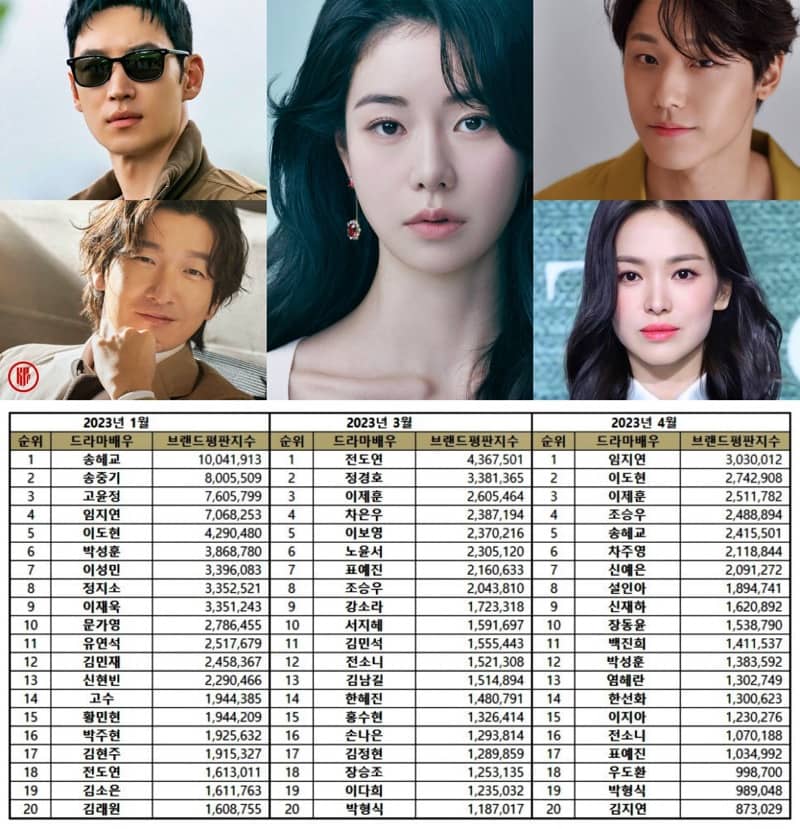
The April 2024 drama actor brand reputation rankings are more than a popularity contest; they are a strategic map of K-Pop's successful invasion of the acting world. Led by ASTRO's Cha Eun-woo, the list showcases a dominant trend: idols are not just participating, they are leading the conversation, driving viewership, and defining commercial success. This analysis uncovers the data, drama, and corporate shifts behind the names, revealing why an idol's acting role is now the industry's most potent brand multiplier. The dominance is no fleeting moment but a structural shift in how Hallyu stars are built, marketed, and sustained.
- Why Are Idols Dominating the Actor Rankings Now?
- Cha Eun-woo's #1 Ranking: A Case Study in Brand Synergy
- The "Viral Co-Stars" Effect: How Secondary Roles Catapult Brands
- The Corporate Engine: How Agencies are Engineering the Crossover
- FAQs: Your Questions on Idols, Acting, and Brand Power
- What This Means for the Future of K-Pop
Why Are Idols Dominating the Actor Rankings Now?
The prevalence of idols in the top tiers of the drama actor brand rankings is not accidental. It is the culmination of a decade-long industry evolution, where training, audience building, and multi-platform visibility converge to create the perfect crossover star. This takeover is built on three concrete pillars: a ready-made audience, a refined talent pipeline, and cold, hard commercial calculus.
The Pre-Built Fandom Advantage: A Launchpad With Rocket Fuel
Unlike rookie actors who start from zero, a debuting idol-actor begins with a massive, engaged, and digitally-savvy fanbase. This provides an immediate ratings and social media buzz floor for any project they join. The Korean Corporate Reputation Research Institute's methodology, which analyzes media coverage, consumer engagement, community interaction, and communication volume, is precisely the battlefield where organized idol fandoms excel. A fandom's standard operating procedures—streaming parties, hashtag campaigns, and trending keyword coordination—directly inflate the very metrics that determine these rankings.
This isn't just about domestic viewership. Consider the global reach. An idol from a group with a strong international following, like NCT's Jaehyun (who starred in Dear.M) or TWICE's Nayeon (in her upcoming acting debut), brings guaranteed overseas streaming numbers to a platform like Netflix or Viki from day one. For producers, this translates to better licensing deals and fulfilled global distribution KPIs before a single scene is shot.
From Trainee to Triple Threat: A New Training Paradigm
Agency training systems have formally expanded beyond singing and dancing. "Acting classes are no longer an elective for visual members; they are core curriculum for most trainees showing any aptitude," an industry insider shared. This professional preparation is systematic. SM Entertainment, for example, has long run in-house acting workshops, producing talents like TVXQ's Yunho and SHINee's Key. JYP Entertainment's approach with 2PM's Junho was meticulous, starting him in musical theatre to hone his live performance chops before transitioning to television.
This investment reduces the "idol actor" stigma and equips them with fundamental skills, allowing genuine talent to be evaluated as serious actors first. The result is a generation that enters the acting field not as novices, but as prepared professionals. SF9's Rowoon (now pursuing acting full-time) and Apink's Jung Eun-ji are prime examples, having received critical acclaim that has permanently separated their acting identities from their idol origins.
The Data-Driven Casting Decision: De-risking Multi-Million Dollar Projects
Production companies and broadcasters are businesses first. In an era where a single drama can cost billions of won (millions of USD), casting is the primary risk-management tool. Casting an idol with strong, quantifiable brand power de-risks a project in three key ways:
- Pre-Airing Publicity: The announcement alone generates weeks of news cycles, fan art, and social media discussion, valued at millions in equivalent marketing spend.
- PPL (Product Placement) Revenue: Advertisers pay premiums to have their products featured alongside a star with a robust endorsement portfolio. An idol like Cha Eun-woo, who represents brands from luxury cosmetics to telecommunications, makes a drama instantly more attractive to sponsors.
- Guaranteed Baseline Engagement: As noted, it secures a baseline of viewership and streaming activity, crucial for securing lucrative overseas distribution deals with global platforms desperate for predictable content performance.
This commercial reality makes idol-actors, especially those with proven data, irresistible to producers facing intense pressure from investors and networks.

Cha Eun-woo's #1 Ranking: A Case Study in Brand Synergy
ASTRO's Cha Eun-woo topping the list for April is a masterclass in long-term brand management and strategic evolution. His success in the psychologically intense thriller Wonderful World isn't a standalone win; it's the peak of a carefully constructed narrative that has seamlessly blended his idol persona with a maturing acting career, demonstrating a textbook-perfect crossover trajectory.
Beyond Visuals: The Strategic Evolution from "Icon" to "Actor"
Eun-woo's early career leveraged his standout visuals in webtoon-adaptation rom-coms like My ID is Gangnam Beauty and True Beauty. These roles, while popular, typecast him as the "perfect, stoic love interest." His agency, Fantagio, and the actor himself have since executed a deliberate pivot. By choosing Wonderful World—a drama centered on grief and revenge where he played a mysterious man entangled in tragedy—he actively sought a role that demanded darker emotional shades and complexity.
This shift is critical. It generates a different kind of media coverage: from entertainment outlets praising his looks to culture desks analyzing his performance. Headlines change from "Cha Eun-woo's handsome stills released" to "Cha Eun-woo shows acting growth in intense melodrama." This regrams the public perception, moving the conversation definitively toward "actor Cha Eun-woo."
The Idol-Activity Fuel: A Self-Sustaining Promotional Ecosystem
His concurrent activities with ASTRO create a virtuous, self-reinforcing cycle of promotion. This synergy is operational:
- OST Participation: Singing on the drama's OST, as he did for Wonderful World, drives the song up music charts, which in turn keeps the drama's name in music show and streaming service contexts.
- Fandom Mobilization: Organized fan projects, like coordinated live-streaming of premieres or social media hashtag events, directly boost the drama's real-time engagement metrics, which are watched closely by broadcasters.
- Cross-Promotion on Variety: Appearances on variety shows to promote ASTRO's music become opportunities to casually discuss the drama, reaching audiences who might not follow drama news.
This interconnectedness demonstrates how chart performance, fandom power, and acting buzz are no longer separate silos but parts of a single, amplified brand engine.
A Bittersweet Backdrop: The Narrative Power of Legacy and Longevity
This achievement arrives amid ASTRO's period of transition and mourning, following the tragic loss of Moonbin and with members fulfilling military enlistment. This context is not incidental to the brand sentiment; it adds a powerful, poignant layer of "legacy" and "perseverance" to Eun-woo's success. Media narratives frame his work as "carrying the group's name forward" or "showing strength during a difficult time," which amplifies emotional resonance and fan loyalty. It underscores a crucial, often unspoken, rule: an idol's individual brand is inextricably linked to their group's ongoing story. Success in one arena honors the collective narrative, deepening the bond with fans who support the entire group's journey.
The "Viral Co-Stars" Effect: How Secondary Roles Catapult Brands
The path to top brand rankings isn't exclusive to leads. A strategic, well-played supporting role can be a more explosive brand catalyst than a bland leading one. The rankings frequently spotlight actors in secondary positions whose characters capture the public's imagination, creating a viral moment that generates disproportionate buzz relative to screen time.
The "Scene-Stealer" Phenomenon: Maximizing Minimal Minutes
A charismatic villain, a heartbreaking second lead, or a hilarious best friend—these archetypes offer clear, memorable arcs that are perfect for social media fragmentation. Idols, with their trained expressiveness and armies of fans ready to clip, GIF, and edit every notable second, are experts at maximizing this potential. A single, powerful reaction shot or a 15-second emotionally charged clip can become a TikTok trend or a Twitter meme overnight, flooding the data pools analyzed for brand reputation.
Consider Girl's Day's Hyeri in Reply 1988. While not a supporting role, her casting as the lead was initially viewed through an "idol" lens; her transformative, acclaimed performance created a viral sensation that permanently rebranded her as a top-tier actress. For a pure supporting example, look at BTOB's Sungjae in Guardian: The Lonely and Great God. His role as the quirky grim reaper provided comic relief and emotional depth, making him a standout in a star-studded cast and significantly elevating his individual brand.
The Rookie Launchpad: From Viral Moment to Leading Contract
For newer idol-actors, a praised supporting role is the ultimate career catalyst. The sequence is predictable: critical praise for their performance leads to increased media interviews, which boosts their individual search volume and social mentions. This measurable spike in brand reputation becomes their primary negotiating tool for securing the next project, often a lead role in a smaller-scale drama or web series.
This path is a direct parallel to the music industry's strategy of creating viral "moments" to build an artist. Just as a dance challenge or a killer high note can trend, so can a perfectly delivered dramatic line. It’s about creating shareable, engaging content that transcends the medium itself, a strategy central to modern K-Pop marketing.
The Corporate Engine: How Agencies are Engineering the Crossover
This shift is not organic; it's a top-down, corporately-driven strategy. Major entertainment conglomerates have structurally reorganized, transforming from music labels into full-spectrum talent incubators and content producers. The idol-actor is a key product of this vertical integration.
Agency/Group Core Strategy Representative Idol-Actor (April Ranking) Corporate Mechanism & Advantage Fantagio Leverage the idol's dominant public image to secure iconic "visual" leads, then systematically pivot to genre dramas (thriller, mystery) to demonstrate range and secure critical legitimacy. ASTRO's Cha Eun-woo (#1) In-house actor division (Fantagio Music & Acting) allows for seamless career management, internal resource sharing, and unified contract negotiations for music and acting. SM Entertainment Systematic, stable casting across its vast network (SM Culture & Partners). Prefers pre-produced projects for schedule stability. Focuses on building long-term actor careers post-idol peak. U-KNOW Yunho, SHINee's Key, former f(x) member Krystal Owns stakes in production companies and has deep ties with broadcasters. Can package acting opportunities with variety show appearances or MC roles on SM-managed programs. HYBE Labels Aggressively leverages unparalleled global fandom data to broker partnerships. Uses multi-label system to position artists from different groups (SEVENTEEN, fromis_9, etc.) for acting, treating it as a new frontier for brand expansion. fromis_9's Lee Seoyeon, SEVENTEEN's Mingyu (upcoming) HYBE's IP and storytelling expertise, combined with ADOR's creative direction or Source Music's management, can craft a star's narrative across music, film, and web content. Direct pipelines to global platforms through HYBE's corporate partnerships. JYP Entertainment Selective, quality-over-quantity. Typically allows acting pursuits only after group position is firmly established. Prioritizes project prestige and script quality to protect the group's and the actor's high-value reputation. 2PM's Junho (veteran), former Wonder Girls' Sohee Strong, longstanding relationships with film and drama directors built on trust. Known for well-managed artists, making them a "safe" choice for prestigious productions.The In-House Production Pipeline: Controlling the Chain
The most powerful force is vertical integration. Conglomerates like CJ ENM (owner of Mnet, Studio Dragon, and a stake in numerous agencies) and Kakao Entertainment (controller of Melon, numerous agencies like IST Entertainment, and production studios) control the entire value chain. They scout and train the idol, produce and distribute the music, *and* finance and produce the dramas through subsidiary studios. This creates a closed-loop system:
- Guaranteed Casting Slots: A CJ ENM-owned agency's idol will have a clear pathway to audition for, if not be directly cast in, a Studio Dragon-produced drama.
- Synergistic Promotion: The drama's OST is performed by the idol or their group, promoted on CJ-owned music shows. Behind-the-scenes content airs on CJ-owned cable channels.
- Data Leverage: Streaming data from Melon (Kakao) can inform which idol has the most engaged domestic fanbase ripe for a drama crossover.
This model minimizes external risk and maximizes profit retention within the corporate family.
Managing the "Overexposure" and "Typecasting" Risk
Savvy agencies use brand reputation data not just to push actors, but to strategically pace their careers. The goal is the "Lee Junho Model": a sustained, credible rise over years, not a flash-in-the-pan burnout. This involves:
- Genre Rotation: Following a rom-com with a historical drama (The Red Sleeve) or a crime thriller, to avoid pigeonholing.
- Strategic Gaps: Allowing time between projects for public anticipation to build and for the artist to undergo rigorous preparation for the next role.
- Quality Filtering: Rejecting similar, high-paying but creatively stagnant roles that might offer short-term brand bumps but long-term damage to artistic credibility.
FAQs: Your Questions on Idols, Acting, and Brand Power
Does a high brand ranking mean they are a good actor?
Not directly. Brand reputation measures visibility, buzz, and community engagement—the "volume" of conversation. It is a metric of popularity and influence, not a review score. A rookie idol in a controversial role may rank high due to negative engagement, for example. However, consistently high rankings over multiple, diverse projects often indicate that an idol-actor has achieved public acceptance and trust, which is a prerequisite for a long-term acting career. Critical acclaim (awards, reviews) operates on a separate, though sometimes overlapping, track.
Can acting success hurt an idol's music career or group dynamics?
Scheduling conflicts are the primary practical hurdle. However, a successful acting career rarely diminishes the music career; instead, it broadens and diversifies the artist's portfolio. Drama viewers may check out the idol's group, bringing in new, often older, fans. Music fans gain more content and a deeper narrative to follow. The risk lies in perception: if an idol is perceived as neglecting group activities or if solo stans use acting success to fuel intra-fandom conflict. Agencies manage this through clear communication and ensuring the actor continues to participate in key group promotions.
Why do some universally acknowledged top idol-actors not appear on this list?
The rankings are a monthly snapshot driven by specific, ongoing projects or news cycles. An A-list idol-actor like 2PM's Junho or EXO's Doh Kyung-soo (D.O.) will not rank when they are between projects, on military service, or focusing on film work (which has a different, less frequent promotional cycle). The list favors those currently on air, in heavy pre-broadcast promotion, or involved in a major news story.
How do solo stans and group fandoms affect this data?
Dramatically and measurably. A subset of a fandom dedicated to a specific member will often mobilize with exceptional force for that member's individual activities, including acting projects. They may run more concentrated data-bombing campaigns (mass searches, article generation) than the general fandom would for a group activity. Analysts note this can create temporary data spikes that may not fully align with broader, general public interest. It's a known variable in the K-Pop ecosystem's data landscape.
Is this trend good for "traditional" actors from non-idol backgrounds?
It creates intense competition for leading roles in youth-oriented genres (rom-com, school, fantasy). However, the trend also has significant upsides for the acting industry at large:
- Market Expansion: Idol-star power brings bigger budgets, higher production values, and more international distribution, benefiting every cast and crew member.
- Genre Specialization: Veteran actors often secure more complex, mature leading roles that require a depth of experience idols may not yet have, solidifying their positions as masters of their craft.
- Increased Opportunities: The overall boom in Korean drama production, fueled by global demand, means more total roles available across all genres and age ranges.
What This Means for the Future of K-Pop
The April 2024 rankings are a definitive signal: the archetype of the top-tier K-Pop idol has irrevocably changed. Future success will be measured on a multi-axis grid: not just in music show wins, album sales, or Billboard entries, but in the ability to captivate and command authority across drama screens, variety sets, and fashion runways.
The industry is accelerating toward a "Portfolio Artist" model. An artist's career is a holding company, with music, acting, variety, and endorsements as its subsidiaries. A dip in one sector can be buoyed by strength in another, creating career resilience and longevity. This is a strategic risk mitigation for agencies and a blueprint for sustained relevance for artists whose performing careers may have natural life cycles.
For fans, this means deeper, more narrative-rich connections. Following an idol becomes a multi-platform experience—analyzing a drama character on Monday, streaming the new title track on Friday, and watching them on a reality show over the weekend. The fan's role expands from supporter to critic, cheerleader, and cultural analyst.
The implications for the global Hallyu wave are profound. The idol-actor becomes a more potent cultural ambassador, embedding Korean narratives into global consciousness through accessible, character-driven stories. Their established global fanbase serves as a built-in distribution network for Korean cultural products beyond music.
The final step in this evolution is the metrics suite. To understand a group's true impact, industry analysts will now cross-reference Melon streaming charts with Nielsen drama ratings, Instagram engagement rates with brand reputation index scores. The message is clear: the idol who can own the script with the same conviction as they own the stage is not just participating in the next decade of Hallyu—they are writing it. Keep your eyes on both the concert halls and the screen; they are now the same stage.