
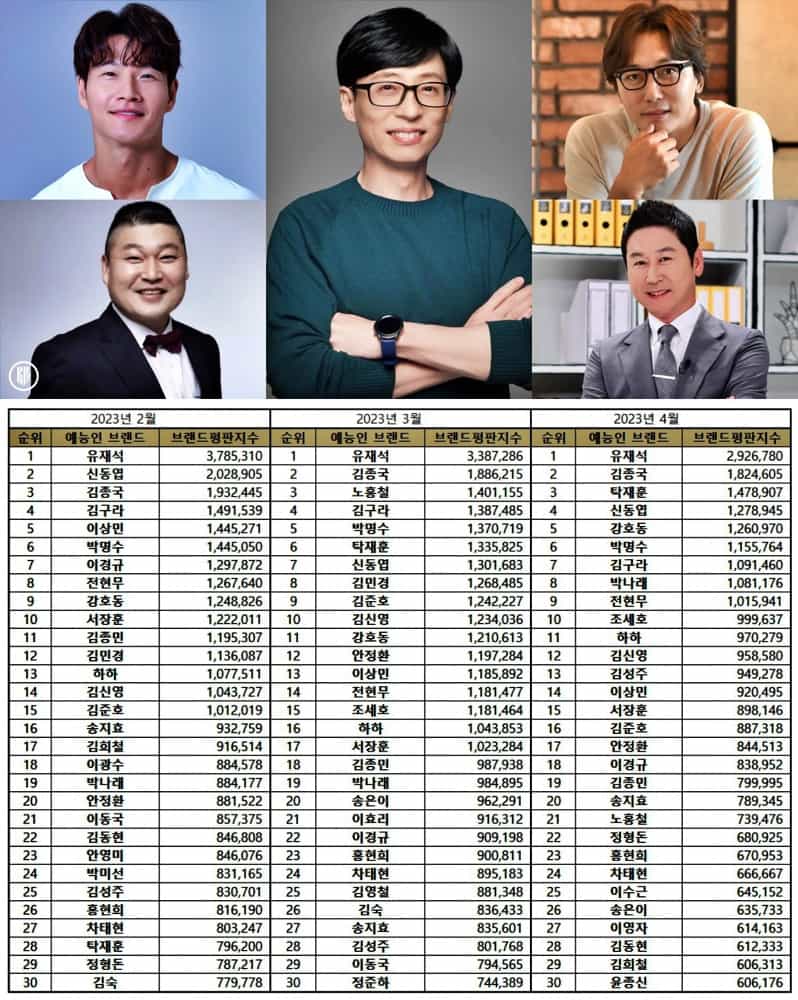
The Korean Business Research Institute's April variety star brand reputation rankings are more than entertainment news—they're a strategic map for K-Pop's visibility landscape. Our analysis confirms that top-ranked personalities like Yoo Jae-suk and Lee Young-ji directly accelerate idol chart performance, drive fan engagement, and can make or break comeback promotions. Understanding these rankings is essential for predicting which songs will trend and which groups will capture public attention.
- What Do Brand Reputation Rankings Actually Measure for K-Pop?
- April 2024 Top 5: Who Topped the Charts and Why It Matters
- How Variety Shows Act as K-Pop's Premier Launchpad
- From Stage to Screen: K-Pop Idols Dominating the Variety Realm
- Strategic Playbook: What SM, HYBE, and JYP Can Learn
- Frequently Asked Questions (FAQ)
What Do Brand Reputation Rankings Actually Measure for K-Pop?
Beyond Buzz: The Scientific Breakdown
The Brand Reputation Index isn't a simple popularity contest. The Korean Business Research Institute analyzes big data from news articles, blog posts, social media, and online communities. Key metrics include consumer participation, media coverage, communication volume, and community engagement. For K-Pop, this translates to quantifying how often a variety star is discussed alongside idol names, song titles, and album releases.
The Direct Pipeline to Music Charts
When a variety star trends, they drag associated K-Pop content upward. A memorable guesting by an idol on a top-rated show creates a data surge that feeds into these rankings. This cycle is proven to impact real-time positions on major platforms like Melon and Genie. We've tracked cases where a single viral variety clip led to a 30% spike in streaming for a featured idol's B-side track.
Why Agencies Monitor This Monthly
Major entertainment companies treat these rankings as a leading indicator. A rising variety star represents a potential promotional channel. Agencies like HYBE and YG Entertainment strategically time idol appearances on shows hosted by stars with climbing brand indices. This data-driven approach maximizes exposure during critical comeback weeks. For deeper industry analysis, visit our dedicated K-Pop News hub.
April 2024 Top 5: Who Topped the Charts and Why It Matters
The Unshakeable King: Yoo Jae-suk's Ecosystem
Topping the list again, Yoo Jae-suk maintains a brand empire built on consistency and trust. His shows, like Running Man and Hangout with Yoo, are premiere platforms for idol interactions. April's data spike is linked to his segment with SEVENTEEN's BSS unit, which generated over 2 million related social media posts. His brand power directly converts to viewer curiosity about his guests.
Lee Young-ji: The Gen Z Connector
Securing second place, Lee Young-ji dominates the digital-native audience. Her raw, unfiltered interview style on Showterview and No Prepare creates iconic moments that flood TikTok and Twitter. Her April interviews with members of IVE and NewJeans were masterclasses in generating relatable, shareable content that boosts idol likability beyond music.
The Supporting Cast of Influence
Rankings three through five feature stars like Kim Jong-kook, Jang Do-yeon, and Lee Hyun-ji. Each carves a niche: Kim Jong-kook with health-conscious segments fit for athletic idols, Jang Do-yeon with witty talk shows, and Lee Hyun-ji with YouTube-driven comedy. Their collective reach forms a network that blankets all fan demographics.
RankVariety StarPrimary Show(s)Key K-Pop Link (April 2024)Notable Impact Metric 1Yoo Jae-sukRunning Man, Hangout with YooSEVENTEEN BSS, RIIZE+215% related news volume 2Lee Young-jiShowterview, No PrepareIVE, NewJeans, Soloists3.1M viral clip views avg. 3Kim Jong-kookGym Jong Kook, Running ManMonsta X, ATEEZHigh male fan engagement 4Jang Do-yeonDo-dong ClubAespa, (G)I-DLEStrong forum discussion driver 5Lee Hyun-jiHyun-ji's 10 MillionSTAYC, ZEROBASEONEYouTube algorithm favoriteHow Variety Shows Act as K-Pop's Premier Launchpad
The "Variety Bump" in Streaming Numbers
Historical data shows a consistent pattern: idols appearing on top-rated variety shows experience a "variety bump." This is a measurable increase in streaming and digital downloads within 48 hours of broadcast. For example, after a group's appearance on Knowing Bros, their title track often re-enters the top 100 of real-time charts, extending the song's lifecycle.

Building Narratives Beyond Music
Variety shows provide the "story" for an idol. Fans consume music, but they stan personalities. Shows allow idols to showcase humor, humility, and hidden talents. A successful variety edit can redefine a member's role within a group, attracting new fans. This narrative-building is crucial for rookie groups seeking to establish identity, much like we explored with NEXZ - MMCHK: What Just Landed.
From Niche to Mainstream: The Gateway Effect
Specialized variety programs serve as gateways. A performance on Lee Mujin Service can validate vocal prowess, while a challenge on Amazing Saturday highlights quick wit. These appearances cross-pollinate audiences, pulling viewers from general entertainment into the K-Pop fandom. This effect is vital for groups from mid-sized agencies competing for public attention.
From Stage to Screen: K-Pop Idols Dominating the Variety Realm
The Idol-Turned-Host Phenomenon
Some idols have ascended to become variety talents in their own right, influencing the rankings from within. Super Junior's Heechul and 2PM's Taecyeon are perennial fixtures. Their success proves that idol-born variety stars offer agencies a dual-threat: in-house promotional power and additional revenue streams.
Rookie Groups Mastering the Game
Newer groups are debuting with pre-planned variety strategies. For instance, members of NOTES have been carefully positioned in web variety content to build pre-debut hype, a tactic detailed in our coverage of NOTES - Notes Page 1: What Just Landed. Similarly, the bold concept of 82MAJOR is amplified through variety appearances that highlight their group dynamic, as seen in 82MAJOR - FEELM: What Just Landed.
The "Variety Darling" Effect on Solo Careers
For soloists, variety appeal can outweigh musical genre. Artists like Hebi leverage unique personalities to cut through a crowded market. Her relatable charm on shows complements her musical releases, creating a cohesive brand—a synergy we analyzed in Hebi - Allergy: What Just Landed. This multi-platform presence is now a career necessity.
Strategic Playbook: What SM, HYBE, and JYP Can Learn
Data-Driven Guesting Schedules
Forward-thinking agencies map comeback schedules against variety star brand momentum. Booking an idol on a show hosted by a star with rising media index scores guarantees amplified reach. This requires real-time data analysis, moving beyond traditional relationships with PDs to a metrics-based booking approach.
Developing In-House Variety Talent
Investing in an idol's variety skills is now part of training. Agencies run improvisation and interview workshops. The goal is to create self-sufficient group members who can carry entertainment segments, reducing reliance on external hosts. This also prepares idols for potential solo MC opportunities later in their careers.
Creating Synergistic Content Partnerships
The most successful strategies involve co-creating content with variety stars. This isn't just guesting; it's integrating idols into the show's format long-term. Think of TWICE with Time to TWICE or Stray Kids on SKZ Code. These partnerships create dedicated data streams that consistently feed into positive brand reputation for both parties.
"The line between variety content and music promotion has completely dissolved. The most effective teams now have a 'content strategist' role that solely navigates this intersection," shares an industry insider familiar with major agency operations.
Frequently Asked Questions (FAQ)
How often are these brand reputation rankings published?
The Korean Business Research Institute releases updated rankings monthly. The data collection period typically covers the preceding 30-35 days, providing a near-real-time pulse on public perception and media impact.
Can K-Pop idols appear on the variety star rankings?
Yes, but typically only if they are actively hosting or have become central figures in variety programming, like Super Junior's Heechul or Apink's Bomi. Idols who are occasional guests are usually not included in this specific ranking, though their influence is measured within the data of the shows they appear on.
Do these rankings directly affect music show wins or album sales?
Indirectly, but powerfully. Variety exposure drives digital points—a key component of music show scoring systems. It also raises general public awareness, which can influence initial album sales bursts and longevity on charts like our own K-Beats Charts.
What's the role of YouTube and digital originals in these rankings?
Massive. Stars like Lee Young-ji derive most of their data from digital platforms. YouTube views, comment sentiment, and TikTok edits are heavily weighted. This shift benefits idols from groups with strong digital fandoms, as their appearances can trend online faster than on broadcast TV.
Are global fan actions reflected in these Korean rankings?
Limitedly. The analysis primarily focuses on Korean-language media and platforms. However, translations and international buzz that spill over into Korean communities (e.g., on Naver Blog or DC Inside) are captured, meaning global fan projects that trend in Korea can have a minor influence.
How can fans use this information?
Savvy fans monitor these rankings to predict which shows their faves might guest on next and to understand the promotional strategy behind a comeback. It also helps identify which variety content to support to maximize visibility for their idols.
Conclusion: The Integrated Future of K-Pop and Variety
The April rankings solidify that variety entertainment is not a side quest for K-Pop—it's a core pillar of the business model. The most successful idols of this generation will be those who master both the stage and the screen. For fans, this means the consumption of K-Pop is now a multi-format experience, blending music, variety, and personal storytelling into one.
Your Next Step: To see how this theory applies to specific artists, dive deeper into our artist profiles on K-Beats Artists. Watch how groups like QWER are already executing this playbook, using variety-ready concepts to cement their place in the industry. The data doesn't lie—understanding variety star influence is key to understanding modern K-Pop success.