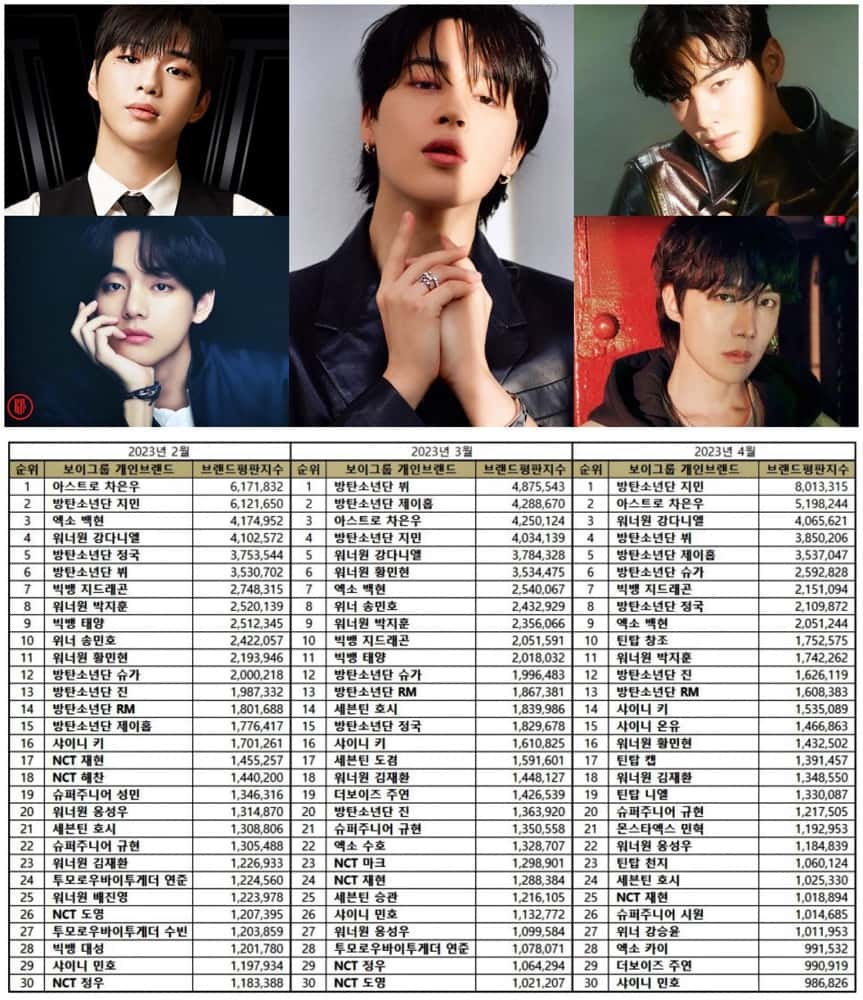
The Korean Business Research Institute's April brand reputation rankings for boy group members have dropped, and the results are more than a simple list—they're a snapshot of a shifting industry landscape. This month saw a dramatic reshuffle, with rising 4th and 5th generation stars challenging established solo powerhouses, signaling a new era where digital engagement and narrative control rival traditional metrics of success. The data underscores a crucial trend: brand power is no longer just about music releases, but about sustained, multifaceted visibility across all media.
- What Exactly Are Brand Reputation Rankings?
- Who Topped the April Charts & Why? The Real Story: Which Rising Stars Defied Expectations?
- What Drove the Major Shifts This Month?
- What Does This Mean for Solo vs. Group Brand Power?
- Your Brand Reputation Rankings FAQ
What Exactly Are Brand Reputation Rankings?
Before dissecting the April results, it's vital to understand what these rankings measure. They are not simply popularity contests or album sales charts. The Korean Business Research Institute analyzes big data, mining millions of data points from news articles, blog posts, online communities, videos, and social media.
The Algorithm Behind the Fame
The institute's methodology focuses on three core components: Consumer Participation, Media Coverage, and Communication Momentum. This means an idol's ranking is driven by how much the public is actively talking about them, how widely the media is reporting on them, and whether that buzz is growing or shrinking. A high score indicates a dominant presence in the public consciousness, which is pure gold for advertisers and media producers.
Why They Matter More Than Ever
In today's hyper-competitive landscape, these rankings are a leading indicator. They predict CF deals, drama casting calls, variety show invites, and even influence a group's long-term viability. A member with consistently high brand reputation often becomes a "gateway" for new fans to discover the whole group. For a deeper look at how public perception shapes careers, our analysis of The Digital Purge phenomenon reveals the intense pressure behind the spotlight.
Who Topped the April Charts & Why?
The top five this month tells a story of legacy, momentum, and surprise breakouts. It's a mix of expected heavyweights and strategic surges.
Rank Member (Group) Key Driver for April Brand Index Trend 1 V (BTS) Ongoing acting buzz for "Cheongdam Undercover," high-end fashion appearances, and sustained solo fanbase activity. Stable Peak 2 Sunwoo (THE BOYZ) Viral "Wind Cries" stage fancam, acclaimed variety show wit on "DoReMi Market," and strong community engagement. Sharp Rise 3 Jung Kook (BTS) Residual momentum from military update photos and consistent global streaming dominance for solo catalog. Minor Dip 4 Jaehyun (NCT) Leading role in the hit web-drama "First Love, Again" and brand ambassador announcements for a luxury watchmaker. Significant Rise 5 Yeonjun (TXT) Appointment as music show MC, trend-setting airport fashion, and pre-release hype for TXT's upcoming comeback. Steady ClimbV's Unshakeable Throne
Kim Taehyung (V) maintaining the top spot, even during his military service, is a masterclass in brand building. His acting project news generates continuous media cycles, while his curated, artistic social media presence and status as a fashion muse keep participation high. His brand is now distinct from BTS's group activities, operating on a self-sustaining cycle.
The THE BOYZ Sunwoo Surprise
Sunwoo's jump into the #2 spot is arguably April's biggest headline. It wasn't driven by a group comeback, but by organic, fan-driven virality. A single, powerful stage fancam showcasing his performance intensity spread across TikTok and Twitter. Combined with his natural, funny appearances on variety, it created a perfect storm that introduced him to a wider public beyond the existing fandom.
The Real Story: Which Rising Stars Defied Expectations?
Beyond the top five, the mid-tier rankings reveal where the industry's future might be headed, with several 4th and 5th gen idols making unprecedented leaps.
5th Gen's Breakout Moment
Members from groups like BOYNEXTDOOR and TWS saw remarkable climbs. This wasn't accidental. For BOYNEXTDOOR, their consistent "boy-next-door" concept relatability, amplified by their latest release "Perfect Crown Pt.3", translated into strong community buzz. It demonstrates how a cohesive, well-executed group narrative lifts individual member profiles.
The "Actor Idol" Effect in Real-Time
Idols with confirmed drama or film casting saw immediate index spikes. Jaehyun's rise is the prime example, but he's not alone. Other members appearing in web dramas or musicals experienced similar boosts. This confirms the market's high demand for idols who can seamlessly cross over into acting, effectively doubling their media footprint and appealing to a non-music audience.
The "Variety Virus" Contagion
Idols who became recurring guests or fixed members on popular variety shows enjoyed sustained reputation growth. The data shows that a well-timed, funny clip or a charming moment on shows like "Knowing Bros" or "Running Man" can have a longer-tail impact on brand index than a one-off music show win, creating a more relatable and enduring public persona.
What Drove the Major Shifts This Month?
April's volatility points to three non-music drivers becoming increasingly decisive in the reputation wars.
1. The Fancam Economy
A single, standout fancam from a music show or concert is now a potent strategic asset. As seen with Sunwoo, these user-generated content pieces can bypass traditional media and go straight to the public's heart, creating instant, visceral connections. They highlight individual charisma in a way that group shots often cannot.
2. The Fashion & Endorsement multiplier
High-fashion brand ambassador deals are no longer just prestige items; they are powerful reputation engines. They generate high-quality media photoshoots, exclusive event appearances, and associate the idol with luxury and taste. This external validation from prestigious houses significantly boosts media index scores.
3. Narrative Control Through Social Media
Idols and their teams who skillfully use platforms like Instagram, Weverse, and Bubble to share curated slices of life—hobbies, behind-the-scenes moments, personal thoughts—build stronger "participation" metrics. This direct communication fosters a sense of intimacy and loyalty that directly feeds into the brand reputation algorithm. For contrasting perspectives on industry control, our piece on The Final Curtain Call explores the pressures groups face.
What Does This Mean for Solo vs. Group Brand Power?
The April data highlights a delicate and evolving balance between an idol's individual brand and their group's collective identity.
The "Gateway Member" Phenomenon
Groups with one or two members consistently ranking high often see a "halo effect." New fans discover the group through that high-profile member and then stan the full team. This makes cultivating strong individual brands within a group not a risk, but a strategic necessity for overall growth. You can track the group progress of these trending idols on our Artists page.
Preparing for the Solo Flight
Consistently high individual rankings are the clearest predictor of solo success post-group activities. The data shows companies are likely observing these trends closely, using them to gauge which members the public is most invested in as individuals, informing future solo debuts in music, acting, or variety.
Managing the Internal Balance
The challenge for group leaders and agencies is to foster this individual recognition without creating visible inequality that can fracture the fandom. The most successful groups right now are those where multiple members have distinct, strong public personas that complement rather than compete with each other.
Your Brand Reputation Rankings FAQ
Q: Do these rankings directly affect an idol's income?
A: Indirectly, but powerfully. High rankings make idols more attractive for lucrative CF deals, acting roles, and hosting gigs, which often surpass music income. They are a key metric used by advertisers and producers.
Q: Can fans "game" the system to boost their idol's rank?
A> While fan activity (posting, searching, engaging) is a component, the algorithm is designed to measure organic, widespread public conversation. Coordinated spam or hashtag campaigns have limited effect if they don't generate genuine media pickup and broader public discussion.
Q: Why do some hugely popular international idols rank lower?
A> The rankings are based primarily on Korean-language media and community data. An idol with massive global streaming numbers but less frequent coverage in Korean news may rank below someone with stronger domestic media presence. It's a measure of Korean public brand, not global fandom size.
Q: How often do the rankings change?
A> They are updated monthly, and volatility is common. A single major event—a drama premiere, a scandal, a viral moment—can catapult an idol up or send them plummeting down, as the data is very responsive to real-time buzz.
Q: Where can I see historical ranking data?
A> While the Institute releases monthly reports, we track long-term trends and analysis right here on our News page, providing context you won't find elsewhere.
Conclusion: The Narrative is the New Currency
The April brand reputation rankings confirm a fundamental shift. Raw talent and group success are merely the entry ticket. The idols rising to the top are those mastering the art of the continuous narrative. They are building brands through layered stories told across music, fashion, variety, and digital intimacy. For fans, this means the relationship with an idol is richer and more multi-platform than ever. For the industry, it means the playbook for success is being rewritten in real-time, with data as the author.
The next step? Watch the May rankings closely. Will the rising 5th gen stars consolidate their gains? Can the solo powerhouses maintain their grip without new music releases? The trends we've identified here will be put to the test. Keep your eye on the data, and you'll see the future of K-Pop unfold. For more on how digital momentum translates into chart success, check out our breakdowns on our Charts page.