
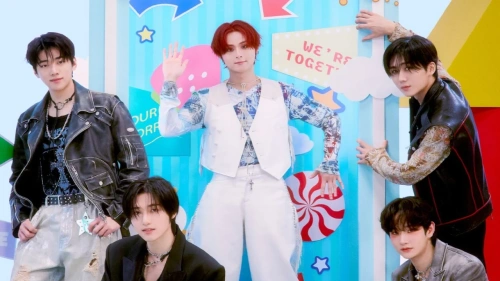

In a move that shocked the K-Pop world, fourth-generation boy group NOVA has announced their disbandment, effective after their final farewell schedule next month. This isn't just a group ending; it's a case study in the intense pressures facing mid-tier boy groups in a saturated market. Our analysis reveals a perfect storm of fierce competition, unsustainable company strategies, and shifting fan engagement models that ultimately made continuation untenable.
- What Exactly Happened with NOVA?
- Why Do Promising 4th Gen Groups Disband So Suddenly?
- How Has the 4th Gen Boy Group Landscape Changed?
- How Does NOVA's Path Compare to Other 4th Gen Groups?
- What's Next for the Members of NOVA?
- What Can We Learn from This Disbandment?
- FAQs: NOVA's Disbandment Answered
What Exactly Happened with NOVA?
The official statement from their agency, Stardust Entertainment, was a model of polished finality. It expressed gratitude to the fans (known as Novaites), highlighted the group's achievements since their 2020 debut, and framed the decision as a mutual, respectful conclusion after the members' contracts expired. However, industry insiders suggest a more complex narrative.
The Timeline of a Slow Fade
NOVA's activity had noticeably slowed over the past 18 months. After a strong 2022 with two mini-albums and extensive touring, 2023 saw only a single digital release and fewer group schedules. Members increasingly focused on individual activities—acting, variety appearances, solo music—which often signals a strategic pivot or underlying group instability.
Reading Between the Lines of the Statement
The key phrase was "after deep discussion and consideration of the members' future paths." This standard language frequently masks a financial reality: the cost of renewing seven contracts, producing a comeback, and managing a group no longer delivering a sufficient return on investment. Unlike a sudden scandal-driven collapse, this was a strategic dissolution.
The Role of "Final Schedule" in Modern Disbandments
The announcement of a final fan meeting and a goodbye single is now an industry norm. It serves a dual purpose: providing closure for fans and generating one last revenue stream. This commercialized farewell, while emotional, is a stark reminder of K-Pop's business fundamentals. For a deeper look at how idols navigate major career transitions, read our analysis The Digital Purge: Decoding The Korean Star Disappearance Phenomenon.
Why Do Promising 4th Gen Groups Disband So Suddenly?
NOVA had a solid fanbase, music show wins, and international recognition. Their disbandment feels premature against that backdrop. The reasons are seldom about talent alone and almost always about economics and ecosystem.
The "Mid-Tier Squeeze" Financial Model
For groups not from the Big 4, profitability is a razor-thin margin. Debut debts are high, and recoupment takes years. NOVA, from a mid-sized agency, likely faced constant pressure to outperform. When growth plateaus, agencies face a choice: invest heavily in a high-risk comeback or cut losses. Stardust Entertainment seemingly chose the latter.
Concept Saturation and Identity Crisis
NOVA debuted with a distinctive "cosmic fantasy" concept. By 2023, that niche was crowded. Their later attempts to pivot to a darker "teen crush" sound confused their core fandom without attracting a new one. In 4th gen, a blurred identity can be fatal, as fans have endless alternatives. Check our Artists page to see the sheer volume of active groups competing for attention.

The Touring Dilemma
Post-pandemic, touring became essential for revenue. However, mounting a world tour is a massive capital risk. For a group like NOVA, with strong but not massive fandom power, tours often remained regional. Without the global touring revenue of their top-tier peers, their financial foundation was less stable. This precarious position echoes issues faced by others, as explored in From Spotlight to Shadows: The Financial Freefall Facing Former BIG3 Idols.
How Has the 4th Gen Boy Group Landscape Changed?
The environment NOVA debuted into in 2020 is radically different from 2024. Understanding these shifts is key to understanding their fate.
The Dominance of "Fandom Power" Over Public Appeal
Fourth-gen boy group success is almost entirely driven by dedicated, organized fandom size for album sales and voting, not general public digital chart performance. Groups like Stray Kids and ATEEZ set a benchmark of multimillion-sale comebacks. For groups hovering in the 200,000-300,000 sales range, like NOVA, staying competitive in terms of production quality and promotion scale becomes financially straining.
The Shortened Attention Economy
The content cycle is relentless. Groups are expected to feed fans with constant variety, behind-the-scenes, and social media content. Maintaining this engine requires a large, costly staff. When engagement metrics (likes, shares, VLIVE viewership) start to dip, it signals diminishing returns to agencies.
Company Resource Allocation
Stardust Entertainment debuted a new girl group in late 2023. It's common for mid-sized agencies to redirect finite resources—songwriters, producers, marketing budgets, management staff—toward newer, potentially more profitable ventures. An older group past its explosive growth phase often gets deprioritized, creating a self-fulfilling prophecy of decline.
How Does NOVA's Path Compare to Other 4th Gen Groups?
Contrasting NOVA's journey with both survivors and those who met a similar fate provides critical context. The table below highlights key differentials.
Group (Agency Size) Debut Year Key Survival/Pivot Factor Current Status NOVA (Mid-Sized) 2020 Struggled with concept pivot; plateaued sales; agency shifted focus. Disbanding (2024) ATEEZ (Mid-Sized) 2018 Unwavering concept identity; powerful global fandom; exceptional touring power. Top-Tier, Thriving WEi (Mid-Sized) 2020 Strong individual member brand building (acting, variety); steady fanbase growth. Active, Stable BAE173 (Small/Mid) 2020 Member participation in survival shows (JT's Peak Time) for renewed attention. Active, Rebuilding CIX (Mid-Sized) 2019 Consistent, high-quality narrative-driven concepts; strong core fandom loyalty. Active, SteadyThe "ATEEZ Exception" vs. The Rule
ATEEZ proves a mid-sized agency group can reach the top. However, they are the exception that highlights the rule. Their success relied on a uniquely distinct sound and performance identity from day one, and massive international investment. Most mid-sized agencies cannot replicate this blueprint.
The Importance of Individual Member Branding
Groups like WEi show how robust individual careers (in acting, for example) can subsidize and stabilize the group's overall brand, providing a safety net. NOVA's members developed individual pursuits, but not at a scale strong enough to buoy the entire group's prospects.
What's Next for the Members of NOVA?
For the seven members—Jaehyun, Minsoo, Taewon, Kihyun, Sungjae, Yoochan, and Hui—the post-group journey begins. Their paths will likely diverge based on skills, visibility, and personal goals.
The Soloist Pathway
Main vocalist Kihyun and main rapper Taewon have already released solo SoundCloud tracks. They may pursue official solo debuts, though the solo market is fiercely competitive. Success requires a distinct musical color beyond their group's identity.
The Actor/Entertainer Transition
Visual members Jaehyun and Sungjae have made acting cameos. They will likely audition for drama roles, leveraging their existing fanbase for initial support. Variety-dol Yoochan could find a niche on web variety shows.
The Behind-the-Scenes Move
Member Hui, known for co-producing some of NOVA's B-sides, may transition into songwriting and production for other artists, a common and often sustainable path for creatively inclined idols.
The Possibility of Re-debut
It's not uncommon for members from disbanded groups to re-debut in new units or groups, sometimes together. However, given their varied career directions, a full-unit re-debut seems unlikely. Fans should monitor individual agency signings.
What Can We Learn from This Disbandment?
NOVA's story is a cautionary tale and a reflection of industry maturation. For fans and observers, key lessons emerge.
For Fans: The Power of Support and Letting Go
Fan support is crucial, but it must be directed effectively. Consistent album sales, streaming, and voting are a group's economic lifeline. The modern fan-idol relationship requires a nuanced understanding of these business realities, much like the boundaries discussed in The V Effect. A healthy farewell is part of the K-Pop cycle.
For the Industry: The Need for Sustainable Models
The "debut and pray for a viral hit" model is failing mid-tier groups. Agencies need long-term, flexible planning, including earlier development of individual member careers and more realistic financial projections to ensure stability beyond the initial 7-year contract period.
For Future Groups: Identity and Adaptability Are Key
A clear, authentic concept is non-negotiable. However, groups must also find organic ways to evolve without alienating their base. Building a multi-faceted fandom that appreciates both the music and the members as individuals creates a more resilient foundation. Understanding what captivates audiences physically and performance-wise, as analyzed in Beyond Genetics: Decoding The Idol Proportions, is part of that holistic package.
FAQs: NOVA's Disbandment Answered
Q: Was there a scandal that caused the disbandment?
A: No public scandal is associated with NOVA's disbandment. All available evidence points to a business decision based on contract expiration, financial assessment, and the members' future career directions.
Q: Will the members keep the 'NOVA' name or group social media?
A> Typically, group names and official social media accounts are retained by the agency after disbandment. Members will likely create new personal accounts for their individual activities.
Q: Can the fandom pressure the agency to reverse the decision?
A> While fan petitions and projects express powerful sentiment, they rarely reverse a finalized business decision of this magnitude. The costs involved in re-negotiating seven contracts and re-investing are prohibitive.
Q: Did any member want to leave the group?
A> The official statement emphasizes a mutual decision. In such situations, it's common for some members to be more eager to pursue solo paths than others, but a unified front is always presented publicly to protect all members.
Q: Where can I watch their final fan meeting?
A> Stardust Entertainment will likely release details on ticketing and potential online streaming for the final fan meeting. Follow their official announcements channel for accurate information.
Q: Is this a sign more 4th gen groups will disband soon?
A> The 2024-2025 period will see many 4th gen groups reach their initial 7-year contract mark. We expect a wave of renewals, renegotiations, and likely more disbandments, as the market corrects itself. Stay informed on all movements via our News page.
Conclusion: The Echo After the Final Note
The disbandment of NOVA is a poignant moment marking the end of an era for their fans and a significant data point for the industry. It underscores that in the hyper-competitive 4th generation, consistent musical identity, scalable fandom growth, and adaptable business models are not just ideals but necessities for survival. Their journey from hopeful debut to dignified closure reflects the dreams, investments, and harsh realities embedded in the modern K-Pop system.
For Novaites, the grief is real and valid. The best next step is to honor their legacy by supporting the members' future endeavors, preserving the music and memories, and engaging with the community that was built. For industry watchers, it's a call to advocate for more sustainable practices. For everyone, it's a reminder to appreciate the active groups on our Charts page while they are in their spotlight. The show goes on, but each finale teaches us something about the nature of the performance itself. As we've seen with artists who master their narrative, like in The Jackson Wang Principle, control over one's path is the ultimate goal, whether within a group or beyond it.