
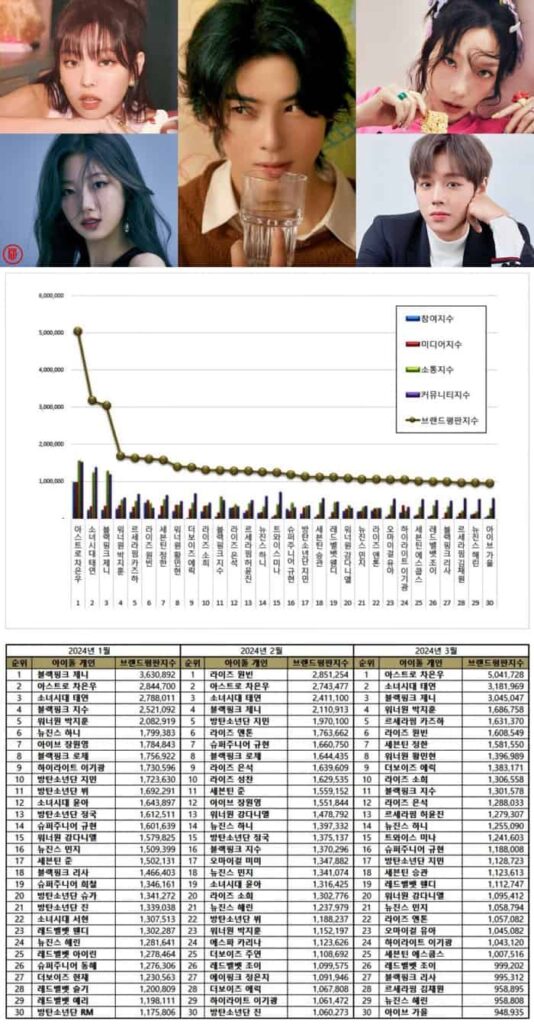
The digital pulse of the K-Pop industry beats fastest not on stage, but in the vast data streams analyzed monthly by the Korean Business Research Institute. The release of the March Individual Idol Brand Reputation Rankings is more than a simple popularity contest; it's a cultural diagnostic, a snapshot of the collective Korean consciousness as it pertains to its idols. This month's results, fresh off the Lunar New Year holidays and amidst a flurry of pre-spring comebacks, reveal a fascinating narrative. It's a story not just of who is on top, but of why they are there—a tale where viral TikTok dances, heartfelt fan letters, drama OST dominance, and the quiet, steady march of post-military reintegration converge to redraw the competitive map.
The Throne Room: A Familiar Face with Unshakable Foundations
Topping the March rankings is ASTRO’s Cha Eun-woo, a feat that, while common, carries new weight in 2024. Eun-woo's brand isn't built on a sudden, flashy event this month, but on the formidable, multi-hyphenate fortress he has constructed over years. His consistency is his superpower. While his group, ASTRO, has faced uncertainties, Eun-woo's individual trajectory has been a masterclass in brand management: from his unwavering position as a visual icon and commercial kingpin to his steady acting career, most recently in the drama "A Good Day to Be a Dog." The institute's report highlights high link and keyword analysis around terms like "actor," "reliable," and "commercial model."
“Idols like Cha Eun-woo represent a paradox,” says industry commentator Park Ji-hyun. “He is the quintessential idol, yet his brand has transcended the idol cycle through acting and advertising. His reputation is less about ‘noise’ and more about ‘presence.’ He is a safe, prestigious, and positively perceived asset, which is catnip for big corporations and the general public alike.”
His lead, while significant, feels different this month. The gap between first and the surging contenders below is narrower, suggesting that while the throne is secure, the walls are buzzing with activity from a new wave of influence.
The Viral Vanguard and the Power of a Single Moment
The most electrifying stories in March's list come from dramatic surges, and no story is more potent than that of IVE’s Jang Won-young and LE SSERAFIM - LE SSERAFIM - PUREFLOW pt.1: What Just Landed" rel="internal">PUREFLOW pt.1: What Just Landed" rel="internal">LE SSERAFIM’s Hong Eunchae. Won-young, perennially high-ranked, saw a specific spike linked not to music, but to a moment of relatable, viral exhaustion. A fancam from a recent fansign event, where the idol was seen visibly—and adorably—fighting off sleep, swept across social media platforms like Twitter and TikTok. The keyword analysis exploded with terms like "sleepy," "hardworking," and "cute," driving massive participation index scores.
Similarly, Hong Eunchae’s meteoric rise into the top tier is a direct result of her breakout role as the effervescent MC of Mnet's "Eunchae's Star Diary." Her genuine, quirky interviews with sunbaenim idols have become must-watch content, making her the industry's beloved youngest sister. Her brand reputation is built on "brightness," "chemistry," and "MC," proving that variety prowess can be as powerful as musical performance in shaping public affinity. This trend underscores a critical evolution in idol branding, as explored in our analysis of public persona in "From Paradise to PR Nightmare"—where a single, unscripted moment can redefine perception faster than any curated campaign.
The Soloist Surge: The "Lim Young-woong Effect" and Genre Crossovers
Lurking powerfully within the top 10 is a name that represents a different ecosystem entirely: trot and ballad singer Lim Young-woong. His consistent placement among idol giants is a reminder of the immense, often under-reported power of the domestic Korean fanbase, particularly among older demographics who engage differently with media consumption and voting patterns. His inclusion disrupts the traditional K-Pop hierarchy and points to the institute's methodology, which analyzes media coverage, consumer interaction, and community visibility across a wide spectrum. His brand is synonymous with "trust," "sincerity," and "Korea's son," values that resonate deeply and create a formidable, loyal fanbase that actively participates in these data-driven metrics.
This crossover appeal is also seen in the strong showing of soloists like IU (who maintains a top position regardless of activity) and Park Hyo-shin, whose recent OST releases have dominated digital charts. It creates a fascinating brand landscape where the viral idol, the drama OST vocalist, and the national trot star compete on the same data-driven plane.
The Post-Military Renaissance and the Stability of Legacy
Another compelling narrative thread in March's data is the steady climb of idols who have completed their mandatory military service. EXO’s D.O., with his focused acting career and recent solo musical activities, sees a robust ranking. More notably, SHINee’s Key and Taemin both hold strong positions, bolstered by SHINee's incredibly successful "Hard" comeback and subsequent activities, which demonstrated that veteran groups can not only return but redefine their peak. Their brand keywords mix nostalgia with "performance kings" and "artistry," a testament to a career that has matured in the public eye.

This "second act" stability contrasts with the sometimes volatile rankings of rookies and highlights the long-term value of a well-nurtured career. It proves that military service, often seen as a risky hiatus, can be a brand refresher, allowing the public to miss an idol and then re-appreciate them with renewed respect. For more on the intense pressures idols face in the public eye, both pre- and post-service, "When Fandom Crosses the Line" explores the darker side of constant visibility.
Fan & Community Reaction: A Data-Driven Celebration
Fan reactions to these rankings are no longer confined to celebratory tweets; they have become part of the data cycle itself. On platforms like Weverse, TikTok, and Instagram, fandoms for idols like Eunchae and Won-young actively curated and amplified the very clips that contributed to their rise, using specific hashtags to drive the participation index. For Cha Eun-woo's fandom, the response was one of calm validation, trending phrases like "Eternal First Place" that reinforce his steady image.
However, the discourse within fan communities also reveals a sophisticated understanding of the rankings' mechanics. "It's interesting to see how a non-music moment like Won-young being sleepy can cause such a spike," commented a senior fan on a Naver cafe. "It shows the rankings are really about engagement in all its forms—people talking, sharing, and feeling connected to an idol's human moment, not just their stage performance." Others pointed to the absence of certain top-tier active idols from very recent powerhouse groups, sparking debates about data collection periods and the lag between major comebacks and their full impact on this particular index.
Industry Analysis: What the Numbers Really Measure
The Korean Business Research Institute's methodology is key to interpreting these results. The brand reputation index is derived from an analysis of consumer participation, media coverage, interaction, and community awareness of 1,767 individual idols, pulling from big data collected over a 30-day period. It measures volume of mentions, the positivity/negativity ratio of those mentions, and the spread of engagement. Therefore, it is not a measure of pure fandom size (like album sales) or digital chart success, but of conversation and perception.
This explains why a viral, positive moment can catapult an idol upward, and why an idol in between comebacks but starring in a popular drama (like Song Kang, who appears) can maintain a high rank. It also highlights the vulnerability of the metric to controversy. An idol embroiled in a scandal would likely see high participation and media scores, but with a catastrophic negativity ratio, plummeting their brand reputation. The rankings are a barometer of public sentiment as much as popularity.
Furthermore, this system inherently favors idols who generate "talkable" content regularly—be it through variety shows, constant social media interaction, acting roles, or even unique personal style. It underscores the modern idol's need to be a perpetual content creator. The debate around the pressures this creates, especially regarding live performance, is vividly captured in our feature, "Beyond the Viral Clip: Deconstructing the 'Live Vocal' Debate."
The Commercial Ripple Effect
The commercial implications are immediate and tangible. Advertising agencies and drama casting directors closely monitor these trends. A rising star like Hong Eunchae becomes a prime candidate for CFs targeting youth and vitality. Cha Eun-woo's consistent top placement justifies his premium endorsement fees. Lim Young-woong's position attracts brands seeking trust and wide demographic appeal. This ranking is, in many ways, a live-updating resume for the industry's decision-makers, directly influencing the flow of millions of won in commercial deals.
What's Next: The Spring Shake-Up
March's rankings feel like the calm before a storm of activity that will reshape April's list. The data period for March likely missed the full impact of several major events that will dominate next month's analysis. The imminent, highly-anticipated comeback of BTS's Jimin and Jung Kook with new solo projects is guaranteed to create a seismic shift, potentially challenging the very top of the list. Their pre-comeback marketing alone generates unprecedented engagement, a phenomenon we've examined in depth regarding the power and peril of such cycles in "Digital Dystopia."
Furthermore, the recent comeback of TWICE with "With YOU-th" and the explosive solo debut of member Nayeon will see the group's individual members, particularly Nayeon, Jihyo, and Mina, likely surging. Jihyo's own bold approach to her solo concept, which we analyzed in "JIHYO's 'VENUS' Gambit," demonstrates the powerful brand impact of artistic autonomy, a factor that will continue to influence individual rankings.
The March rankings ultimately serve as a fascinating baseline. They show a landscape where legacy is durable, viral moments are powerful but fleeting, and the pathways to public recognition are diversifying. As spring comebacks flood the market, the data will churn violently, reflecting the frantic pace of the industry itself. One thing remains certain: the conversation—measured, analyzed, and ranked—is the true currency of modern K-Pop, and every idol is a living, breathing economy. For ongoing tracking of how these brand perceptions intersect with musical performance, fans can always visit our Charts page, and to delve deeper into the profiles of the idols shaping these trends, explore our comprehensive Artists database.