
The Serene Image and the Savage Storm
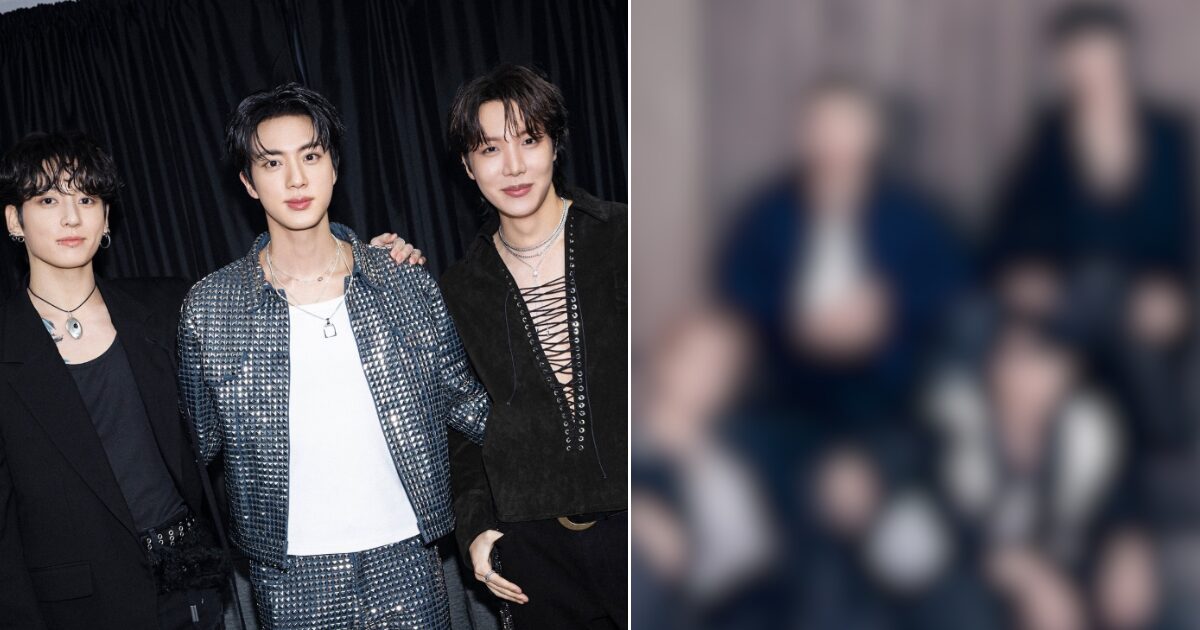
In the carefully calibrated universe of K-Pop, a teaser photo is more than just a picture; it is a covenant, a piece of a puzzle, and the first note of a symphony yet to be heard. For BTS, the global phenom currently on the precipice of a monumental group comeback following their chapter of individual service, these images carry the weight of a world's expectation. This week, however, a set of seemingly serene, artistically shot preview images did not just spark excitement—they became the epicenter of a coordinated, vicious, and telling online assault. What began as a whisper of dissent over styling and visual direction swiftly metastasized into a flood of malicious comments targeting the members' appearances, their artistry, and their very legitimacy. This incident is not an isolated blip on the radar of fandom drama. It is a glaring symptom of a systemic illness within digital K-Pop culture, revealing how the machinery of hate can be weaponized against even the most entrenched and beloved icons, especially at their most vulnerable moments.
The photos in question, released as part of the group’s official pre-comeback rollout, depicted the members in muted, elegant tones. The aesthetic was mature, subdued, and introspective—a stark, intentional contrast to the high-energy, vibrant concepts of their earlier years. Yet, within minutes of their release, specific platforms, particularly online communities notorious for anti-BTS sentiment, were flooded with posts. The criticism quickly escalated beyond subjective taste (“I don’t like the styling”) to deeply personal, often absurdly cruel, attacks on the members' faces, bodies, and ages. This was not mere critique; it was a targeted campaign of degradation, aimed squarely at the morale of both the artists and their fanbase, ARMY, just as the comeback engine begins to roar to life.
Bangtan in Transition: The Context of a Crucial Juncture
To understand the amplified impact of this hate campaign, one must appreciate the unique moment BTS occupies. The group is emerging from a period defined by two major, interconnected realities: the fulfillment of mandatory military service and the flourishing of their individual artistic careers. Members like Jin and J-Hope have completed their service, while others are actively enlisted. This hiatus, while structured, created a landscape where the entity "BTS" existed more in spirit, legacy, and solo projects than in active, collective output.
This period of individuation, brilliantly successful as it was, also subtly altered the digital landscape. Fandom attention, while steadfast, was necessarily diversified. The online spaces once overwhelmingly dominated by ARMY's celebratory and protective mass became slightly more porous. Simultaneously, the group's unprecedented global dominance has, for years, fostered a simmering undercurrent of resentment from fragments of other fandoms and general anti-fan communities. With the group physically separated and the fandom navigating a new multi-soloist support system, these negative elements perceived an opportunity—a moment of perceived vulnerability before the full force of the group's reunion.
The comeback of BTS isn't just a music release; it's a cultural reset. That magnitude of event attracts not just anticipation, but a desire in some corners to preemptively undermine it. Attacking the teaser visuals is a tactical strike at the narrative of their triumphant return.
Furthermore, the group’s artistic evolution has been linear and intentional. From the "School Trilogy" to Love Yourself: Tear and onto the BE and Proof eras, their visuals have matured in lockstep with their themes. The new teasers continue this trajectory, signaling a chapter likely steeped in reflection, maturity, and possibly a redefinition of their collective identity post-service. This deliberate shift away from conventional "idol" brightness is a bold artistic statement, but it also provides a surface for detractors to label it as "tired," "aged," or "lost spark"—critiques often laden with ageist and unrealistic industry standards.
A History of Symbolism and Scrutiny
This is not the first time BTS's artistic previews have been met with instant, intense backlash. As explored in our previous analysis, When Symbolism Drowns: How a Single Frame in BTS's "SWIM" Teaser Ignited a Global Debate on Artistic Integrity, the group's complex, metaphor-heavy content often sparks immediate, and sometimes wilfully misinterpreted, controversy. The "SWIM" teaser for Butter faced accusations of plagiarizing a Filipino film, a claim that was swiftly and thoroughly debunked but not before spawning thousands of hateful posts. This pattern reveals a playbook: seize upon a piece of pre-release content, frame it within a negative narrative (plagiarism, poor visuals, "flop" energy), and amplify it to create a cloud of negativity around the launch.
Deconstructing the Digital Onslaught: More Than Just "Hate Comments"
The term "malicious hate" often feels abstract. In this instance, it manifested in several distinct, pernicious layers. Analysis of the trending posts and comments reveals a multi-pronged attack strategy.
- The Ageism and Visual Policing Attack: A significant portion of comments focused on mocking the members for looking "old," "tired," or "different." This directly targets the core of idol industry prejudice, where youth is fetishized. Comments about weight, facial features, and skin were rampant, enforcing brutal, unrealistic beauty standards.
- The "Flop" Narrative Engineering: Detractors immediately declared the concept "boring," the photos "low quality," and preemptively labeled the upcoming music a predicted "flop." This is a psychological tactic aimed at seeding doubt and painting the comeback with an aura of failure before a single note is heard.
- Orchestrated Community Action: Evidence suggests coordination within specific online communities (notoriously on platforms like the Korean site Nate Pann and certain Twitter/X spaces). Similar phrasing, identical hashtags, and the simultaneous flooding of quote-tweets and replies indicate an organized effort to maximize visibility of the hate, a tactic known as "ratio-ing."
- Weaponizing Solo Stan Culture: In a toxic twist, some comments pitted members against each other, claiming one was styled better than another, or that a particular member was "carrying" the group visually. This seeks to exploit fissures within the fandom itself, diverting energy from collective celebration to internal defense and conflict.
This campaign exists in a direct symbiotic relationship with the very social media ecosystems that K-Pop relies on for promotion. The algorithms that promote trending topics do not distinguish between trending for love and trending for hate. Engagement is engagement. Thus, the malicious posts, through sheer volume of replies and quotes, can artificially boost the visibility of the teaser content in a negative context, potentially coloring the perception of casual observers.

The Broader HYBE Context
This incident does not occur in a vacuum for HYBE. The corporation and its artists are no strangers to intense, often bad-faith, online scrutiny. The recent discourse around live vocals, for instance, touched many of its groups, as examined in our piece Beyond the Viral Clip: Deconstructing the "Live Vocal" Debate in the HYBE Era. There is a segment of the K-Pop audience that holds HYBE and its flagship act, BTS, to a uniquely unforgiving standard, often conflating corporate strategies with the artists' own agency. Attacking BTS's visuals becomes a proxy for critiquing HYBE's dominance, a way to challenge the hierarchy of the industry itself.
ARMY's Fortress: Counter-Strategies and Emotional Labor
The response from ARMY was immediate, massive, and strategically nuanced. It showcased a fandom that has, over a decade, become adept at navigating digital warfare. The reaction moved through key phases:
- Protective Flooding: The primary strategy was to drown out the hate with overwhelming positivity. Fans flooded the original post with millions of loving comments, emojis, and appreciative analyses of the photos' symbolism and beauty. "We love you," "You look amazing," and "So excited for the comeback" became a wall of support.
- Strategic Reporting and Documentation: Organized fanbases systematically reported the most egregiously malicious comments for terms-of-service violations. Simultaneously, others documented the hate campaigns, creating records of coordinated attacks to highlight the issue to media and the company.
- Narrative Reclamation: Fans took to other platforms like TikTok and Instagram to create celebrative video edits and thoughtful threads analyzing the photographic technique, the fashion, and the likely narrative themes of the comeback, successfully steering the broader conversation back to artistry.
- Emotional Support Networks: Within the fandom, there were widespread calls to check on each other's mental health, reminding everyone to take breaks from the toxic spaces and focus on the joy of the impending reunion. The emphasis was on collective resilience.
Seeing those comments was like a punch to the gut. But then you see your timeline fill with thousands of ARMY saying how beautiful they are, how proud they are, and you remember this is what matters. We're not just defending them; we're affirming our own community against that kind of poison.
However, this response comes at a cost—the immense emotional labor performed by fans, particularly younger ones, who feel compelled to constantly defend their idols. It transforms the experience of a comeback from one of pure anticipation into a mixed state of joy and siege mentality. This dynamic is a defining, and exhausting, feature of contemporary mega-fandom. For more on how fans navigate these spaces, visit our dedicated K-Beats News hub for ongoing analysis.
Industry-Wide Implications: When Hate Becomes a Metric
The targeting of BTS is a bellwether for the entire K-Pop industry. It demonstrates several alarming trends that affect artists of all tiers.
First, it highlights the professionalization of hate. What was once random trolling now often follows strategic patterns: identify a vulnerable moment (pre-comeback, post-scandal, during a health hiatus), craft a simplistic negative narrative, and coordinate amplification. This mimics PR strategy, but in reverse. It creates a perverse environment where a certain level of malicious engagement is almost expected for top-tier acts, a distorted signifier of their relevance.
Second, it places agencies in a difficult bind. Should HYBE or Big Music make a statement? Doing so could legitimize the hate campaign and give it more oxygen. Staying silent can feel like abandoning the artists to the wolves. Most choose silence, relying on the fandom's counter-action and legal teams to handle the most extreme cases. This implicitly outsources the frontline defense to fans.
Third, it impacts creative direction. While artists like BTS have earned significant creative capital, the fear of such backlash can, on a subconscious level, influence teams at other companies. It reinforces risk-aversion, pushing concepts toward safer, more conventionally "idol-like" aesthetics. The bold, mature visual direction taken by artists like JIHYO in her solo work, as we analyzed in "JIHYO's 'VENUS' Gambit", becomes an even braver act in this climate. The message sent by hate campaigns is clear: deviate from the narrow mold at your peril.
Finally, it corrupts the feedback loop. Constructive criticism is vital for any art form. However, when the loudest voices are those spewing vitriol, it becomes impossible to separate valid artistic discourse from bad-faith attacks. This impoverishes the conversation around K-Pop, reducing it to binary screaming matches rather than nuanced discussion about music and performance. Tracking genuine public reception is better done through resources like our Charts page, which reflect consumption, not just noise.
The Road Ahead: Resilience, Music, and the Unbreakable Bond
So, what comes next? In the immediate term, the BTS comeback machine is unstoppable. More teasers, music previews, and ultimately the release itself will shift the focus squarely back to the art. History has shown that ARMY's collective power to convert online negativity into record-breaking commercial support is unparalleled. The hate campaign, ironically, may only serve to strengthen the solidarity and determination of the fandom, creating a classic "backfire effect."
For the members themselves, who have spoken openly about the mental toll of such attacks in the past, this is a familiar, if unwelcome, dragon to face. Their resilience has been forged in the fire of a decade under the microscope. Their upcoming activities, including promised new music and potential world tour preparations, will be the ultimate rebuttal. The narrative will not be written by anonymous commenters, but by the songs they release and the stages they command.
For the industry, this incident is a stark reminder of the dark underbelly of its global digital success. It calls for more robust action from social media platforms to identify and dismantle coordinated harassment campaigns. It also underscores the need for continued mental health support for artists, who are expected to create uplifting art while being subjected to relentless personal attack.
The story that began with a few photos is, ultimately, not about those photos at all. It is about the battle for the soul of K-Pop's digital public square. It is a test of whether the community will be defined by the creativity of its artists and the passion of its fans, or by the corrosive noise of a malicious minority. As BTS prepares to step back onto the global stage together, their journey will once again be about more than music. It will be a testament to whether love, curated over years through genuine connection, can still loudly, decisively, and successfully drown out the hate. The comeback hasn't even truly begun, but the most significant victory may already be in the making: the unwavering choice to celebrate, despite everything.