
The Digital Breadcrumb That Broke The Internet
In the meticulously curated world of K-Pop, where every Instagram story is a press release and every Like is a strategic endorsement, followers are currency. They are a map of alliances, a ledger of respect, and a public ledger of personal affection. So, when two of the industry's most beloved idols, idols whose narratives are inseparably intertwined, allegedly sever that most visible of digital ties, the foundation of fandom itself seems to shudder. This is not merely gossip; it is a seismic event in the parasocial landscape. Earlier this week, the LE SSERAFIM - PUREFLOW pt.1: What Just Landed" rel="internal">LE SSERAFIM fandom, FEARNOT, and the wider K-Pop community were plunged into a state of collective anxiety and frenzied detective work after reports confirmed that members Miyawaki Sakura and Kim Chaewon were no longer following each other on Instagram. The move, perceived as a cold, deliberate digital distancing between the group's revered "unnie line" and founding pillars, has sparked a firestorm of speculation, heartbreak, and furious debate, challenging the very image of unity LE SSERAFIM has so powerfully projected.
"No one saw it coming," read the initial breathless report, and for once, the hyperbole felt accurate. In an industry of controlled leaks and managed surprises, this felt genuinely, shockingly organic.
The timing, as with all things in K-Pop, is a character in itself. It arrives not during a quiet hiatus, but on the heels of the group's triumphant and critically acclaimed Easy promotional cycle, and amidst a flurry of successful individual activities for all members. There was no public scandal, no visible tension on stage or in variety content. The unfollow appeared, to the outside world, to be an act without a catalyst—a bolt from the blue that has left fans scrambling for context and experts questioning the unspoken rules of idol social media conduct.
From IZ*ONE to LE SSERAFIM: A Forged-In-Fire Bond
To understand the magnitude of this moment, one must first understand the depth of the Sakura-Chaewon narrative. Their story is not simply one of groupmates; it is a saga of survival, rebirth, and legendary partnership that reads like K-Pop lore. Both were standout members of the project group IZ*ONE, formed from the crucible of Mnet's Produce 48. Sakura, the seasoned Japanese idol and consummate performer, entered as a global superstar. Chaewon, the vocal powerhouse with understated charisma, emerged as one of the show's most compelling "hidden card" revelations.
Their bond, however, was solidified in the aftermath. When IZ*ONE disbanded in April 2021, the future for all twelve members was a terrifying question mark. In a move that stunned the industry, it was revealed that Source Music (under the HYBE umbrella) had not just signed one, but two of IZ*ONE's most popular members to helm an entirely new group. Sakura and Chaewon were a package deal. They were the foundational nucleus, the veteran leaders who would guide a new generation. They entered the HYBE building together, trained together, and debuted together in LE SSERAFIM in May 2022. Their chemistry was immediate and electric, often described as a partnership of equals—Sakura the thoughtful, articulate sage, and Chaewon the determined, resilient captain.
The Pillars of FEARNOT
For FEARNOTs, "Sakura & Chaewon" became synonymous with stability and trust. Their joint VLive sessions, their supportive interviews about leaning on each other during difficult times, and their evident comfort formed a core part of LE SSERAFIM's brand identity: strong, fearless, and unbreakably united. Their past was a strength, not a shadow. As we explored in our analysis of post-group trajectories in "The 5 That Got Away," the successful transition of idols from one major group to another is rare and fraught with pressure. That they did it together made their story uniquely powerful. This context makes the Instagram unfollow not a petty spat, but a potential crack in the very bedrock of the group's origin story.
Anatomy of a Social Media Storm: What Actually Happened?
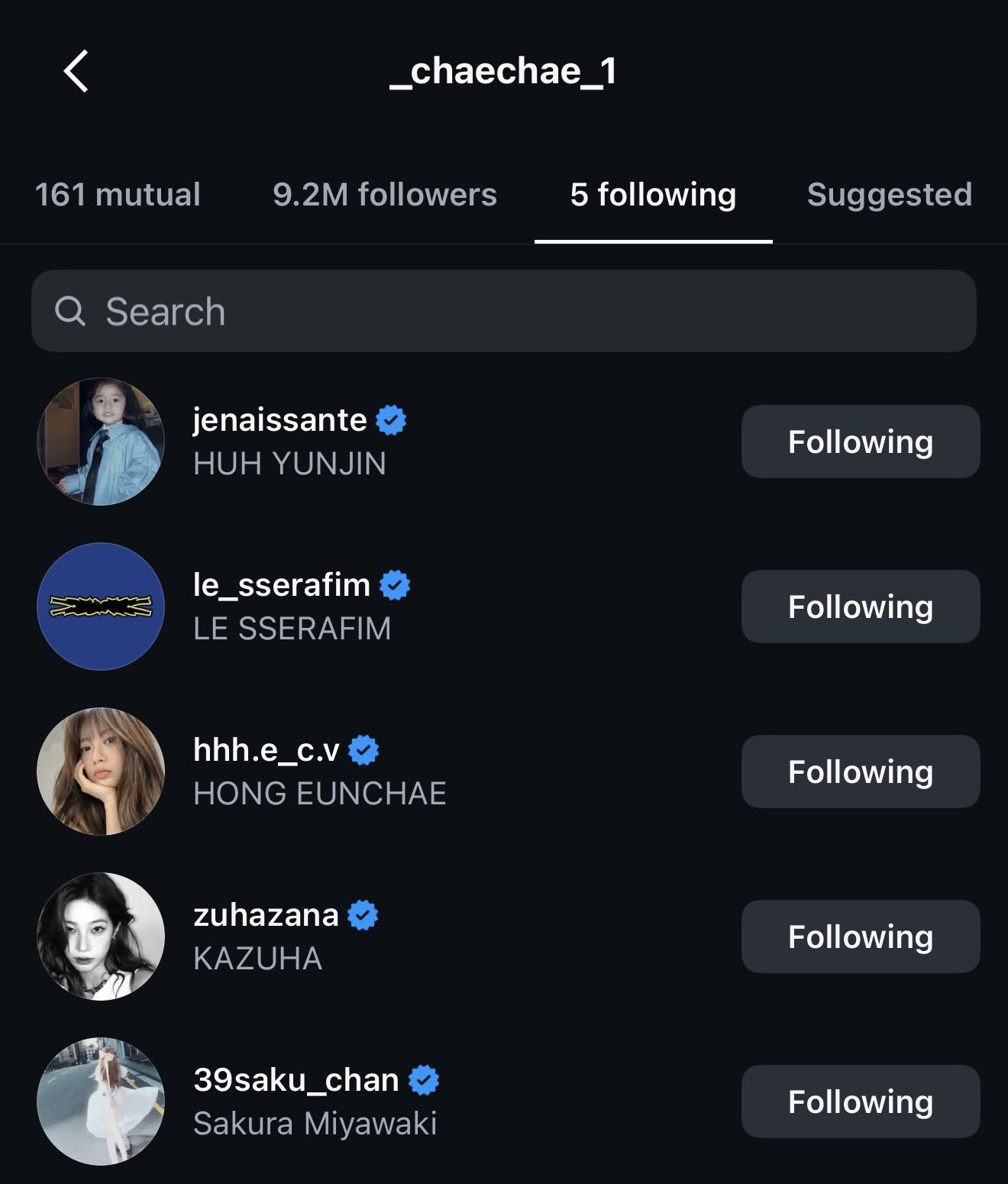
The "event" itself was almost comically minimalist in action, yet maximalist in implication. Sometime between fan checks, observant netizens on platforms like Instiz and Pann Nate discovered that Kim Chaewon was no longer following Miyawaki Sakura on her personal Instagram account (@_chaechae_1). Further investigation confirmed the reverse was also true; Sakura's account (@39saku_chan) did not follow Chaewon. Crucially, both still followed and were followed by their other three LE SSERAFIM - PUREFLOW pt.1: What Just Landed" rel="internal">LE SSERAFIM members—Kazuha, Yunjin, and Eunchae—as well as the group's official account. This specificity is what fueled the inferno. This was not a mass cleansing or a platform protest. It was a targeted, bilateral digital disconnection.
The news spread with viral ferocity. Hashtags in Korean, Japanese, and English began trending. "사쿠라 채원" (Sakura Chaewon) and "언팔" (unfollow) dominated real-time charts on Twitter. Screenshots and side-by-side comparisons were disseminated across every major fan community. The K-Pop news cycle, always hungry for drama, went into overdrive. Yet, from the epicenter: silence. No statement from Source Music or HYBE. No clarifying Instagram Stories from the members. No casual, reassuring posts together. Just the glaring, numerical evidence on their public profiles.
The Murky Timeline and Mounting Speculation
Compounding the mystery is the unclear "when." Fans began frantically scrolling through past content, searching for clues. Was there a subtle shift in body language during a recent fan sign? A less frequent mention in bubble messages? The human need for narrative is powerful, and in the absence of fact, theory rushes in. Some pointed to Chaewon's recent and wildly successful individual activities—her MC role, her rising status as a "it girl"—suggesting a possible, though unverified, shift in dynamic. Others wondered if the intense pressure of maintaining their "perfect leader" personas, a topic we've seen idols like those in "Beneath the Spotlight" describe as a lifelong burden, had finally created an unseen fissure.

"It feels like watching your parents fight," one devastated fan wrote on Weverse. "You know they're both incredible people, but the fact that they're not talking is a world-ending feeling."
The digital paper trail is cold. Both have posted solo content since the unfollow discovery. Both have interacted with other members' posts. The gap between them, however, remains, turning their Instagram profiles into a modern-day Cold War map, with the "Following" list as the demarcation line.
A Fandom Divided: Heartbreak, Anger, and Conspiracy Theories
The reaction from FEARNOT and the K-Pop community at large has been a turbulent spectrum of emotions, showcasing the intense parasocial relationship between idols and fans.
The Heartbroken Majority
For many, the initial response was pure, unadulterated shock and sadness. On platforms like Weverse and private Discord servers, fans expressed feeling a genuine sense of personal loss. The Sakura-Chaewon bond was a comforting constant, a proof that genuine friendship could flourish in the high-pressure K-Pop ecosystem. Its perceived dissolution feels like a betrayal of that ideal. "I stanned LE SSERAFIM - PUREFLOW pt.1: What Just Landed" rel="internal">LE SSERAFIM because of their unwavering team spirit. This makes me question everything I believed about them," one fan tweeted, a sentiment echoed thousands of times.
The Defensive Factions
As is common, fandom splintered into defensive camps. "Sakura stans" and "Chaewon stans" began to mobilize, each side digging through archives to paint the other idol as the more dedicated or wronged party. Arguments erupted over who unfollowed first (a largely unverifiable detail), with each faction claiming their bias was merely "responding" to the other's slight. This toxic side of fan culture turns a personal matter between two individuals into a tribal war, with loyalty to one member seemingly requiring animosity toward the other.
The Pragmatic Detectives and Conspiracy Theorists
A significant portion of the community has taken a more analytical, if equally speculative, approach. Theories abound:
- The "Clean Follow List" Theory: Perhaps it's a managerial directive for both to streamline their public connections ahead of new individual ventures.
- The "Private Fight, Public Peace" Theory: They could have had a personal disagreement and are using the unfollow as a silent, real way to create space, while remaining professional for the group.
- The "Glitch or Hack" Theory: The ever-present, hopeful explanation of a technical error or compromised account, though the bilateral nature makes this less likely.
- The "Maximum Publicity" Theory (The Most Cynical): Could this be a deliberately orchestrated, bizarrely aggressive form of engagement bait, knowing the storm it would create, to be followed by a heartwarming "re-follow" and reconciliation story that drives massive traffic?
Amidst the chaos, a poignant thread has emerged: fans pleading for privacy. "They are human beings before they are our idols," wrote one forum user. "Maybe they just needed a breather from the pressure of performing a perfect friendship 24/7 for our consumption." This perspective, however, often gets drowned out by the louder waves of drama.
Industry Analysis: When a Follow Is Not Just a Follow
Beyond the fan maelstrom, this incident holds up a mirror to the K-Pop industry's complex and often contradictory relationship with social media. An idol's Instagram is rarely just a personal photo diary; it is a core piece of their commercial brand, a direct marketing channel, and a curated performance of self.
1. The Currency of Connection: Following someone, especially a colleague, is a public declaration of affiliation. In an industry built on "family" labels, not following your group member—particularly one with a shared, deep history—sends a deafening message. It breaks the fourth wall of the idol performance. It suggests that the behind-the-scenes reality may not align with the on-stage harmony. This is why agencies often mandate that group members follow each other; it's basic brand management. That this occurred under HYBE, a company renowned for its meticulous media strategy, is particularly baffling to insiders.
2. The Pressure of the Parasocial Pipeline: Idols are encouraged to build intimate bonds with fans through platforms like Weverse and Bubble, sharing "personal" moments. This amplifies the impact when a crack appears in the idol-to-idol relationship that fans thought they understood. Fans invest not just in the music, but in the story. As discussed in our piece on "Beyond the Screen," the modern idol experience is a 360-degree narrative. A discordant chapter like this threatens the entire storybook.
3. Precedent and Power Dynamics: While public unfollows are rare, they are nuclear-grade when they happen. They often precede—or confirm—major, irreversible shifts: contract negotiations falling apart, members leaving groups, or long-simmering disputes boiling over. This incident immediately draws parallels to moments in other groups where social media behavior hinted at deeper issues, though rarely between two such central figures at the peak of their group's success. It raises uncomfortable questions about the sustainability of the "perfect team" image in the long term, a theme also relevant to the evolving landscape for senior groups, as we analyzed in "The Great Reckoning."
"In K-Pop, the 'unfollow' is the digital equivalent of a diplomatic recall. It's not a casual act; it's a statement made knowing the entire world is reading it," comments a veteran PR manager for a mid-tier agency, speaking on condition of anonymity.
What's Next: Silence, Statement, or Unforeseen Resolution?
The path forward is shrouded in uncertainty, and the next move—or non-move—will be critically analyzed.
Scenario 1: The Managed Silence. HYBE and Source Music may decide to never publicly address it. They could instruct the members to gradually resume normal interactions—liking each other's posts, appearing together in casual group content—hoping the digital "proof" fades from memory as new, harmonious evidence piles up. This is a high-risk strategy, as the unfollow will remain a permanent, archived fact for fans to point to during any future hint of discord.
Scenario 2: The Direct Address. A statement could be released, perhaps attributing it to a "private personal matter between the members that has been resolved." They might claim it was a mutual decision for "personal account management." Any statement, however, legitimizes the frenzy and sets a precedent that the company will comment on members' private social media habits—a door most agencies are loath to open.
Scenario 3: The Organic Reconciliation. The most hopeful outcome for fans: Sakura and Chaewon themselves, perhaps during a live broadcast or in a pre-recorded video, casually address it with a laugh. A "We were being silly, of course we're fine!" moment, followed by a very public re-follow. This would provide the cathartic closure the fandom desperately wants, but it risks feeling staged if not handled with exquisite authenticity.
Scenario 4: The New Normal. The most unsettling possibility: the unfollow stands, and the public dynamic between them cools permanently, becoming purely professional. They perform together flawlessly, promote as a unit, but the era of their visible, off-stage "best friend" narrative is quietly retired. This would force a fundamental rebranding of the group's internal dynamics for fans.
Ultimately, the LE SSERAFIM machine must continue. Comebacks will be planned, songs will be recorded, and tours will go on. The true test will be in the unscripted moments: the backstage vlogs, the spontaneous Weverse lives, the award show waiting room clips. Every glance, every shared laugh, every moment of distance will be scrutinized with forensic intensity. This incident has irrevocably changed the lens through which their relationship is viewed.
For now, the world watches two Instagram profiles, and waits. The saga of Sakura and Chaewon has entered a new, unpredictable chapter, proving that in today's K-Pop, the most powerful stories are sometimes told not in music videos or reality shows, but in the stark, binary data of a social media connection list. The fallout is a stark reminder that behind the glamour and the hits chronicled on our Charts page, the idols we follow on our Artists page navigate an incredibly complex web of personal and professional pressures, where even the smallest digital action can trigger a global tremor.