
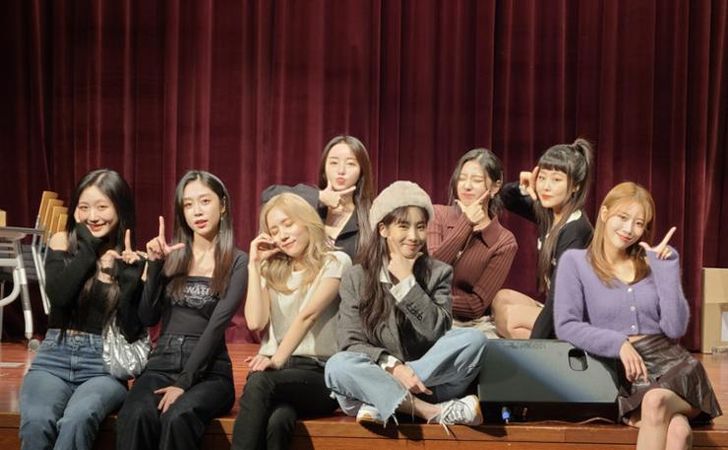

The heart of K-Pop fandom is a powerful, often contradictory, force. It’s built on a foundation of fierce loyalty to a collective unit, a carefully constructed family of talents known as a group. Yet, sometimes, a member leaves. Whether through controversy, contract dissolution, or the pursuit of a solo path, their absence leaves a palpable void—a silhouette on the stage where they once stood. For fans, it’s a wound that never quite heals, and the whisper of "what if" never truly fades. This isn't just about nostalgia; it's an ongoing emotional investment in a story that feels unfinished. Today, we examine the five idols whose return to their original groups is the subject of the most passionate, sustained fan campaigns in the industry, exploring the complex history, present reality, and faint, hopeful glimmers of a future reunion.
The Unfinished Symphony: Understanding the Void
In an industry that moves at lightning speed, why do certain departures linger so powerfully in the collective consciousness? The answer lies in the unique alchemy of each group. A team isn't just a sum of its parts; it's a specific vocal blend, a dynamic of personalities, a shared history of trainee days and debut struggles. When a key piece is removed, the chemistry shifts irrevocably. Fans aren't just mourning a person; they're mourning a specific sound, a specific interaction, a specific era. This longing is amplified in the digital age, where old content is perpetually accessible, a constant reminder of what was. The plea for a return isn't mere wishful thinking—it's a desire to complete a narrative, to hear the harmony as it was originally composed, and to see the full circle of artists who grew up together on the public stage.
When Departures Define Eras
Some exits are so seismic they become the defining line between two distinct chapters in a group's history. These aren't quiet, amicable transitions announced after careful planning. They are often abrupt, news-breaking events that send shockwaves through fandom and dominate headlines for weeks. The groups survive, adapt, and often flourish in new directions, but the shadow of the departure remains, a topic of endless discussion on forums and a source of perennial "if only" fan edits. This emotional residue is the fuel for the most determined "come back" campaigns, where fans analyze every vague social media post, every distant interaction between former members, and every industry hint for a sign of reconciliation.
Case Study 1: Zion of CLOUD 9 – The Redemption Arc Waiting to Happen
Perhaps no recent departure is as layered and controversial as that of Zion from the once-buzzing group CLOUD 9. His exit, shrouded in scandal following his former manager’s explosive allegations, didn't just remove a main vocalist; it dismantled the group's public image. As detailed in our previous investigation, "The Curtain Falls: CLOUD 9's Zion Exposed", the fallout was immediate and severe. The group went on an indefinite hiatus, and Zion retreated from the public eye entirely.
Yet, in the silence, a fascinating fan movement has grown. A subsection of the fandom, calling themselves "The Ninth Cloud," has tirelessly campaigned for accountability, forgiveness, and ultimately, reunion. They argue that Zion’s raw talent was the soul of CLOUD 9's signature sound—a blend of R&B and pop that hasn't been replicated since. Their petitions focus not on dismissing the past, but on the concept of growth and redemption. "We’ve seen the worst," one fan project statement reads. "Now we want to witness a comeback in the truest sense of the word—for him and for the group." They point to other idols who have faced scandals and rehabilitated their careers, suggesting that a contrite, matured Zion could bring a powerful, real-world narrative of change back to the group. Whether the industry—or his former members—would ever be willing to take that risk is the monumental question.
Case Study 2: Jessica Jung & Girls' Generation – The Eternal "What If"
No list of this nature is complete without addressing the elephant in the room, the departure that remains the most discussed in K-Pop history: Jessica Jung and Girls' Generation. Leaving the group in 2014 under circumstances that fans still debate today, Jessica’s exit created a rift that seemed unbridgeable. She forged a successful path as a solo artist, author, and fashion mogul with her brand BLANC & ECLARE. Girls' Generation, as an eight-member unit, released the iconic "Holiday" and celebrated their 10th and 15th anniversaries, proving their enduring legacy.
So why does the fan desire for her return burn so brightly? It's about legacy and closure. For many SONE, Girls' Generation’s golden era is intrinsically linked to the nine-member formation. Songs like "Gee," "Genie," and "The Boys" featured her distinctive vocal color prominently. The dream of a one-time reunion performance, perhaps for a major anniversary special, is the holy grail for a generation of fans. The community reaction is a mix of passionate hope and resigned realism. Online, hashtags like #9GorNever trend regularly on departure anniversaries. Fans dissect any potential hint, like former members liking Jessica’s social media posts, with forensic intensity. The emotional pull is less about daily group activities and more about symbolic unity—a healing of the most famous wound in K-Pop to properly crown the nation's girl group.
"The dream of nine is what built the fandom. It's our origin story. Seeing it again, even just once, wouldn't be just a performance; it would be history." - A long-time SONE in an online forum.
Case Study 3: Dawn & Pentagon – The Artistic Soulmate Severed
The story of Dawn and Pentagon is one intertwined with another very public relationship, making the professional separation uniquely poignant. Dawn, known for his avant-garde style and rap-making skills, was a crucial creative force in Pentagon, contributing to songs like the group's breakout hit, "Shine." His departure from Cube Entertainment alongside his now-former partner, HyunA, in 2018, was a dual bombshell that reshaped both careers.

For Universe (Pentagon's fandom), the loss was deeply artistic. Pentagon has continued to make excellent music, but many fans argue that the group lost a certain fearless, experimental edge that Dawn embodied. His subsequent solo work has only highlighted that unique flavor. The fan desire for his return is less about scandal and more about a belief that his artistic synergy with main producer and member Hui was something special. With several members now completing their military service, and the group entering a new phase, fans speculate about the possibility of independent artists collaborating outside the rigid idol system. Could Dawn feature on a Pentagon track as a guest? Could he participate in a special performance? The campaign is less about a full-time return and more about rekindling that specific creative spark, a sentiment echoed in countless "Dawn x Pentagon" fan-made mashups and concert wishlists.
Fan Sentiment: The Engine of Hope
Across these cases and others, the driving force is a fandom's unwavering emotional capital. This isn't passive longing; it's active campaigning. Fans create and fund spectacular digital billboards in Times Square or Seoul's Gangnam district pleading for a return. They trend global hashtags for days. They produce elaborate video tributes showing the idol's history with the group, set to emotional music, that garner millions of views. They analyze legal frameworks of contracts and agency relationships like seasoned analysts. This collective action is a powerful testament to the deep bonds formed through K-Pop. It’s also a strategic effort to send a message to the agencies and the idols themselves: the demand, and the love, still exists. For a comprehensive look at active fan projects, our News page tracks these campaigns regularly.
The Power of "Proof"
A key aspect of fan reaction is the search for "proof" of enduring connection. A former member mentioning a group member's name in an interview, an ambiguous Instagram story that could be interpreted as referencing an inside joke, or even being spotted in the same neighborhood—all are scrutinized and celebrated as potential signs of a thaw. This digital detective work keeps the hope alive and the community engaged, transforming a past event into a living, ongoing mystery.
Industry Realities: Why Returns Are the Rarest of Events
While fan desire is powerful, the cold mechanics of the K-Pop industry make such returns exceptionally difficult. To understand why, one must look at the precedent and the barriers.
Firstly, contractual and legal hurdles are immense. An idol's departure usually involves a complex termination of a long-term, multi-faceted contract. Re-entering such a binding agreement, often with the same agency they left (which may have been under contentious circumstances), is a legal and bureaucratic minefield. Secondly, there's the brand and image alignment. An idol who has been away, especially one with a controversial past, has built a separate public persona. Re-integrating that into the carefully managed image of an active group is a marketing challenge of epic proportions. Thirdly, and perhaps most crucially, is group dynamics. Years have passed. The remaining members have hardened their bonds, found new chemistry, and moved through the pain of the departure. Reintroducing a former member can disrupt hard-won stability, a risk leaders and agencies are hesitant to take.
There are, however, glimmers of precedent. EXO's Lay maintained his membership while promoting extensively in China for years, eventually participating in the group's 2023 comeback. This model of a "geographically distant but officially present" member is one possible, though logistically challenging, framework. More often, we see symbolic gestures: former members appearing in the audience at concerts, sending congratulatory flower stands, or offering private support. These moments, while falling short of a full return, are vitally important to fans as acknowledgments of a shared past.
The industry also watches the mental health of its artists more closely now. As explored in our piece "The Crossroads at Seven", the pressures that can lead to a departure are immense. A return would require an environment that actively safeguards against those same pressures, a significant shift in agency culture.
Case Study 4 & 5: The Modern Mysteries – Han Seo-heon & Jinni
Moving to more recent history, two departures have left fans bewildered and clamoring for answers: Han Seo-heon of OMEGA X and Jinni of NMIXX.
Han Seo-heon's case is one of immense fan protectiveness. After OMEGA X's horrific public struggles with agency abuse, Seo-heon left the group in 2023 citing health reasons, following a prior hiatus. For fans, his departure was seen not as a choice but as a tragic consequence of the trauma inflicted. The desire for his return is intrinsically tied to the narrative of the group's hard-fought survival and rebirth under a new agency. Fans want the complete, healed family to triumph together. They see his return as the final step in a victory over adversity, a powerful symbol of reclaiming their story. His recent solo activities are supported, but with the constant hope that it's a path leading back to the OMEGA X fold.
Jinni's exit from JYP's NMIXX in December 2022, merely months after debut, remains one of the most abrupt and unexplained in recent memory. The agency's vague "personal circumstances" explanation did little to satisfy fans who had already invested in her standout stage presence. Unlike other cases, there is no public scandal or controversy to point to, which makes the silence even more deafening. The fan campaign, "We Miss Jinni," is fueled by mystery and unrealized potential. With NMIXX solidifying their identity and soaring in popularity, fans are left to wonder how Jinni's unique charisma would have evolved within the group's "mixx pop" sound. The plea for her return is a plea for resolution—to understand what happened and to see a talented performer reclaim the stage she was born to stand on. You can follow the evolving careers of all active idols on our Artists page.
What Comes Next: The Delicate Balance of Hope and Reality
So, what is the future for these five, and the many other idols in similar situations? The path forward is narrow but not entirely closed. The most plausible scenarios are not grand, full-time reunions, but moments of collaboration and acknowledgment.
We may see more former members participating as featured artists on group tracks or special album projects, outside the constraints of a full agency contract. We may see one-time special stage collaborations for award shows or anniversary concerts, meticulously negotiated for maximum impact. The digital concert and "Beyond LIVE" model also opens possibilities for virtual collaborations that bypass physical logistics. The success of groups like P1Harmony, who recently shattered ceilings on the Billboard 200, shows that the global market is hungry for cohesive, authentic group stories—a fact that could make agencies reconsider the value of a "complete" original lineup for strategic projects.
Ultimately, the unyielding fan campaigns serve a purpose beyond their stated goal. They keep the legacy of these idols within the group's narrative alive. They ensure that companies know the market value of that history. And for the idols themselves, navigating solo careers or time away from the spotlight, they are a constant reminder that they are remembered, loved, and missed not just as individuals, but as a part of a specific, irreplaceable whole.
The dream of return is a testament to the art K-Pop creates: it’s so powerful, so evocative, that the idea of its perfect, original form remains worth fighting for, even years later. While the industry's gates are heavy, the sound of fans pushing on them, in unified hope, is a resonance that never quite dies away.