
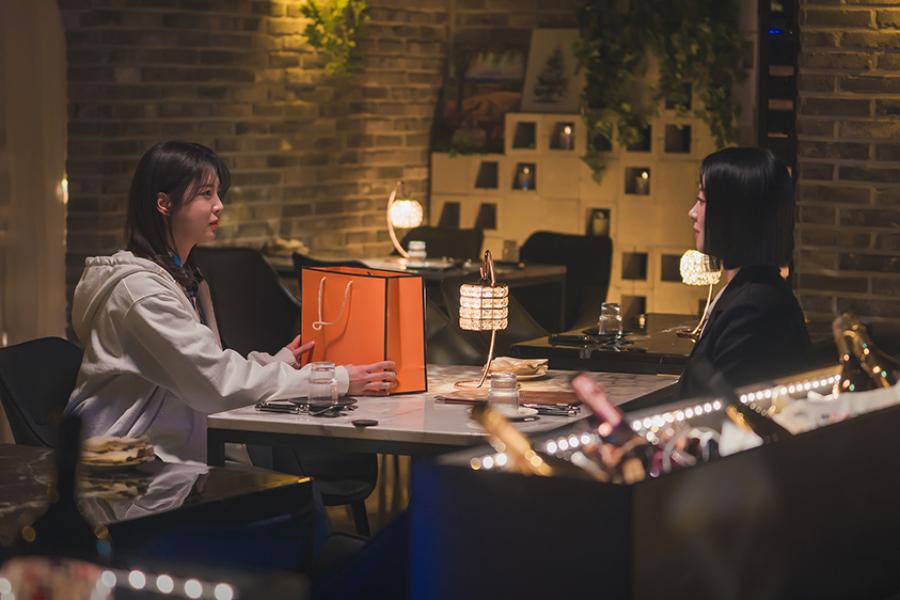
The poignant moment where veteran actress Yoon Da Young presents a thoughtful gift to newcomer Uhm Hyun Kyung on her first intern day in "Our Happy Days" transcends simple drama plot. It serves as a powerful metaphor for the respectful, yet complex, transfer of legacy and knowledge happening right now across the entire K-Pop industry. This analysis uncovers the deeper narrative of generational tension and reconciliation, mirroring real-world shifts between established idols and explosive rookie talent.
- What’s the Real Story Behind the Generational Clash?
- Why is Yoon Da Young's Gift So Symbolically Loaded?
- Where Do We See This "Gift Exchange" in K-Pop Today?
- What Does This Tell Us About a Changing Korean Cultural Mindset?
- How Will This Dynamic Shape the Next K-Pop Generation?
- Frequently Asked Questions (FAQ)
What’s the Real Story Behind the Generational Clash?
The core tension in "Our Happy Days" isn't just familial disagreement. It represents a fundamental ideological divide between tradition and modernity, seniority and innovation, a path well-trodden and a road being built. This clash is the engine of the drama and a direct reflection of societal currents.
The Tradition vs. Innovation Dichotomy
In typical family sagas, elders represent unwavering tradition. In this narrative, the "gift" from senior to junior symbolizes a choice: will it be a tool to enforce old ways, or a key to unlock new potential? Early reports suggest Yoon Da Young's character embodies a strict, traditional work ethic, while Uhm Hyun Kyung's intern brings fresh, digital-native perspectives. This friction is where growth happens, both on screen and in the recording studio.
More Than Age: A Conflict of Systems
This isn't about young versus old. It's about legacy systems versus agile new methodologies. The drama's "office" setting parallels K-Pop agencies where established training regimes, debuted in the 2010s, now intersect with Gen Z idols who are self-produced, deeply connected to global fans via social media, and challenge the top-down model. The intern's first day is akin to a rookie group's debut, entering an ecosystem with pre-existing rules.
Why is Yoon Da Young's Gift So Symbolically Loaded?
The specific nature of the "unexpected gift" is crucial. While the source material may not detail it, in cultural context, such a gift from a senior holds immense weight. It can be a gesture of acceptance, a test, or a passing of the torch.
Historical Context of Senior-Junior Gifting
In Korean professional and entertainment culture, a senior's gift to a junior is rarely casual. It carries intention. A gift like a high-quality pen implies an expectation of diligent work. A planner suggests organization and foresight. A simple, practical item like a cushion or snacks can be a gesture of empathy and welcome. The subtext communicates whether the senior sees the junior as a threat, a burden, or a potential successor.
Analyzing the "Unexpected" Element
The word "unexpected" is key. It implies a deviation from a potentially cold or formal initiation. This surprise gesture breaks the anticipated tension, suggesting Yoon Da Young's character possesses depth and a willingness to bridge the gap first. In K-Pop, this mirrors when senior groups publicly support rookies—like when a sunbae group mentions a hoobae on live broadcast, gifts them a microphone, or offers heartfelt advice on a variety show. It’s a powerful, viral-able moment of recognition.
Where Do We See This "Gift Exchange" in K-Pop Today?
The drama's scene is not fiction; it's documentary. The K-Pop industry is currently engaged in a massive, public renegotiation of generational relationships. The "gift" is often metaphorical, taking forms of support, collaboration, or public acknowledgment.

Public Support as the Ultimate Gift
Today's senior idols often use their platforms to "gift" exposure to newcomers. This can be seen in:
- Social Media Shoutouts: A simple story repost or comment on a rookie's post.
- Live Broadcast Mentions: Giving a rookie group a "fanboy" or "fangirl" moment on VLIVE or Instagram Live.
- Award Show Gestures: The now-iconic moments of seniors guiding juniors, letting them speak, or offering comforting words during tense broadcasts.
The Collaboration Bridge
More direct than a shoutout is the collaborative "gift." When a senior artist features on a junior's track, or invites them to co-write, it's a transfer of credibility. Consider how senior producers or idol-composers now regularly work with newer groups, blending experience with fresh sound. This parallels the drama's potential arc where the intern's new ideas ultimately revitalize the senior's work.
K-Pop "Gift" Drama Parallel (Inferred) Real-World Example Verbal Acknowledgment on Show Senior publicly praising intern's first report Senior MC praising a rookie group's performance during a music show encore Featuring on a Track Senior inviting intern to co-lead a project Established soloist featuring a 4th-gen idol rapper on a comeback single Passing of "Legendary" Stage Senior entrusting intern with a key client A legendary group covering a rookie group's song, or vice-versa, in a tribute stage Behind-the-Scenes Mentorship Senior offering private, critical career advice Former idol trainers or sunbae artists unofficially coaching new debutsWhen the "Gift" is Creative Freedom
The most valuable gift a senior generation can offer is autonomy. Agencies built on rigid control are slowly learning that the "gift" of creative input attracts and retains top rookie talent. This shift is evident in groups who participate in songwriting and production from debut, a privilege fought for by previous generations. The intern's fresh perspective in the drama will likely be the very thing that saves the day, proving the senior's initial gift of trust was the correct choice.
What Does This Tell Us About a Changing Korean Cultural Mindset?
"Our Happy Days" is a cultural artifact. Its focus on resolving generational tension through empathy, rather than pure hierarchy, signals an evolution in mainstream Korean storytelling, which directly influences and is influenced by K-Pop's narratives.
From Hierarchical to Horizontal Relationships
The strict jonior-senior (junior-senior) dynamic is softening. Respect remains paramount, but the form is changing. The drama's gift scene suggests a horizontal transfer of value. The senior has experience; the junior has new skills and cultural literacy. Both are valuable. This is seen in K-Pop when senior idols actively learn TikTok dances from rookies, or ask them about new slang. The flow of knowledge is no longer one-way.
The Global Audience Factor
K-Pop's global domination forces this change. With international fans less ingrained in traditional Korean hierarchy, the industry adapts its public face. Moments of casual, friendly interaction between generations play better to a global audience expecting relatable content. The drama's premise, likely aiming for broad appeal, taps into this same modern sensibility, portraying conflict with the expectation of mutual growth and understanding.
This mirrors the evolution in how agencies market their artists. For insights into how modern groups are crafting their debut narratives, see our analysis of the recent sensation BE BOYS - Be:2: What Just Landed.
How Will This Dynamic Shape the Next K-Pop Generation?
The Uhm Hyun Kyung character's journey—from nervous intern to (presumably) valued team member—provides a blueprint for the future of idol group interactions and company structures.
The Rise of the "Hybrid" Mentor
Future senior idols will likely be hybrids: deeply respected for their legacy and experience, but also fluent in the digital language and creative expectations of the new generation. They won't just give gifts; they'll exchange them. We'll see more mutual follow-backs on social media, more collaborative content creation (like YouTube variety shows mixing sunbae and hoobae), and a more open dialogue about mental health and industry pressures across generations.
Legacy as a Foundation, Not a Cage
The true resolution in "Our Happy Days" will be the family realizing their legacy is strongest when it evolves. Similarly, legendary K-Pop groups like Apink demonstrate this by continually evolving their sound while honoring their roots. Their enduring success, as explored in Apink - 15th Season: What Just Landed, is a masterclass in respecting legacy while embracing growth. The next generation will build upon this, seeing the past not as a rigid rulebook but as a foundational toolkit.
For a look at how established artists are revisiting and reinventing their own past work, our piece on Lil Moshpit - Annyeonghaseyo (Sik-K Remix): What Just Landed offers a compelling case study in inter-generational collaboration within music production itself.
Frequently Asked Questions (FAQ)
Q: Is "Our Happy Days" directly about the K-Pop industry?
A: No, it is a family drama centered on multigenerational conflict in a likely corporate or traditional family business setting. However, its core themes of legacy, respect, innovation, and reconciliation are universal, providing a perfect allegory for the current shifts within K-Pop and broader Korean entertainment.
Q: What could the gift realistically be in the drama's context?
A: While speculative, culturally resonant gifts could include a high-quality hanji (traditional paper) notebook symbolizing the start of a new story, a sleek thermos for long work hours (practical care), or even a small piece of jewelry like a pin, representing belonging to the "team" or family.
Q: How can I see these "gift" moments in real K-Pop?
A: Follow award show behind-the-scenes content, watch variety shows like "Idol Room" or "Knowing Bros" when multiple generations appear, and monitor social media interactions. Key moments are often subtitled and shared by fanbases. Tracking our Charts page can also show you when collaborative projects between artists of different generations gain traction.
Q: Are newer K-Pop groups less respectful of seniors?
A: Absolutely not. The form of respect is evolving. Deep bows and formal language are still used. The change is in the addition of more casual, supportive interactions after formal greetings are observed. The respect is now multi-modal, combining tradition with genuine public camaraderie.
Q: Will this dynamic end the concept of "seniority"?
A: Seniority will remain a cornerstone of Korean and K-Pop culture, as it provides structure and order. However, its expression is becoming more nuanced. It is shifting from a system of pure command to one of respected guidance, where the senior's authority is partly earned through their ongoing support and relevance.
Conclusion & Your Next Steps
The simple act of gift-giving in "Our Happy Days" opens a profound window into the cultural reset occurring in real time. The drama's narrative of cautious welcome, clashing methodologies, and hopeful reconciliation is being lived out by every senior idol who shares a stage and every rookie group that debuts with a bold new vision.
This is more than a plot point; it's the story of K-Pop's maturation. To stay ahead of these evolving narratives, keep watching not just the music, but the interactions between the artists who make it. Follow the "gifts"—the shoutouts, the collaborations, the moments of public support. They are the real-life episodes of this ongoing, industry-wide drama.
Want to dive deeper into how established artists are navigating this new landscape? Explore our in-depth analyses of recent comebacks that blend legacy with innovation, such as our review of CLOSE YOUR EYES - OVEREXPOSED: What Just Landed. For the latest on all artists driving these conversations, bookmark our Artists page for comprehensive profiles and career timelines.