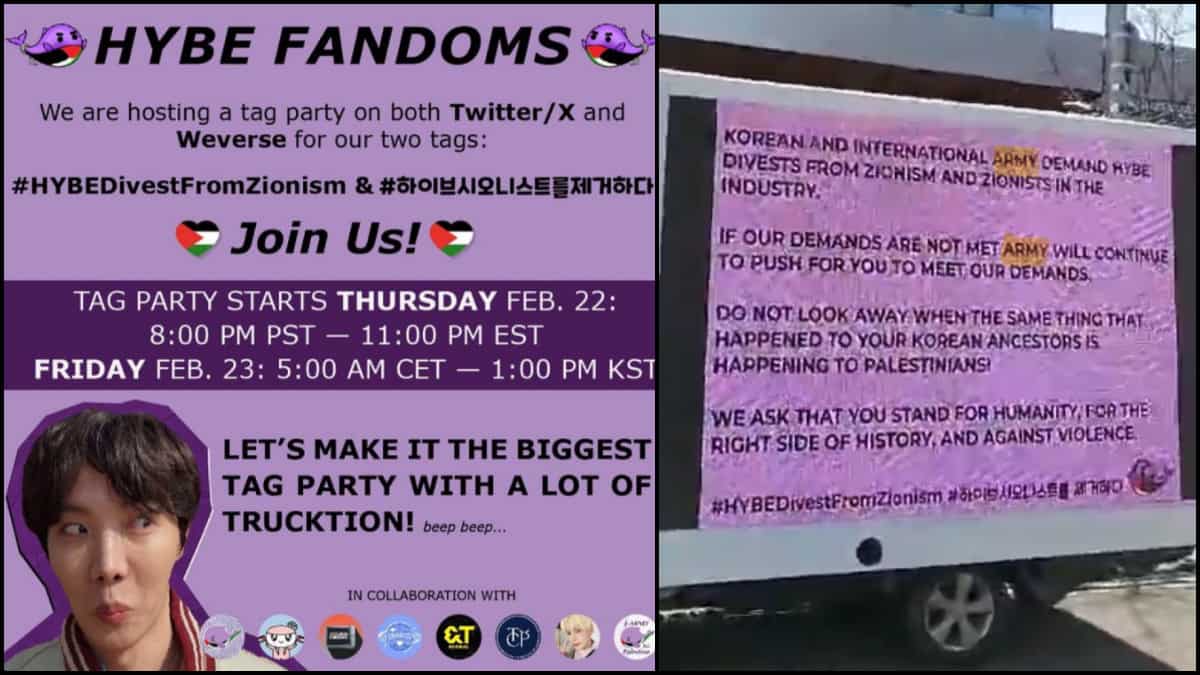

The world of K-Pop is no stranger to controversy, but when the kings themselves, BTS, step into a firestorm, the entire industry holds its breath. This week, a seismic wave of outrage, heartbreak, and fierce debate has fractured the normally unified front of the ARMY fandom and sent shockwaves through the business offices of every major label. The source? An official announcement confirming that the members of BTS—currently fulfilling their mandatory military service—have, through their company HYBE, entered into a monumental, multi-faceted partnership with the Saudi Arabian General Entertainment Authority (GEA). This isn't just a concert deal; it's a comprehensive collaboration encompassing future performances, content production, and cultural exchange initiatives tied directly to the Kingdom's Vision 2030 reform plan. The reaction has been anything but celebratory, evolving into what industry insiders are calling the most serious and divisive crisis of the group's global era.
The Unshakeable Foundation: BTS and the ARMY Covenant
To understand the magnitude of the fury, one must first understand the sacred covenant between BTS and ARMY. This relationship was built on more than music; it was constructed on a language of shared vulnerability, progressive social messaging, and an unwavering sense of mutual protection. From their early Love Yourself campaign in partnership with UNICEF to RM's powerful UN speeches, BTS cultivated an image as global ambassadors for youth empowerment, self-love, and positive change. Their lyrics often championed the marginalized, and their public stance, while carefully navigated, implicitly supported inclusivity.
This carefully nurtured identity made them not just pop stars, but symbolic leaders. As explored in our analysis of their historic chart dominance in "BTS Makes History: 'SWIM' Dives to #1", their success is deeply intertwined with their message. ARMY's devotion is, in part, a devotion to this perceived ethos. The group’s hiatus for military service only heightened the sense of protective stewardship within the fandom, making any major decision made on their behalf feel intensely personal and consequential. They are not just idols on a break; they are legends in repose, and their legacy is considered sacred ground.
The Saudi Context: More Than a Venue
Saudi Arabia, under the leadership of Crown Prince Mohammed bin Salman, has aggressively pursued a "Vision 2030" strategy to diversify its economy and modernize its global image. A cornerstone of this has been investing billions into sports, tourism, and entertainment, luring events like Formula 1, major boxing matches, and now, K-Pop's biggest act. However, the Kingdom's human rights record, particularly regarding women's rights, LGBTQ+ rights, freedom of expression, and the 2018 assassination of journalist Jamal Khashoggi, remains a source of intense international criticism and condemnation from groups like Amnesty International.
For many global fans, Saudi Arabia isn't just another tour stop; it's a geopolitical entity with a record starkly at odds with the values BTS has been widely associated with. The collaboration, therefore, isn't viewed as a simple performance contract. It's seen as the group's brand—and by painful extension, the fandom's collective identity—being leveraged to "sportswash" a regime's international reputation. The deal is framed as a cultural "exchange," but critics ask: what is BTS exchanging, and at what cost to their core message?
Deconstructing the Deal: The Multiple Points of Ignition
The announcement itself was a polished press release from HYBE, touting the partnership as a "historic step to bridge cultures" and "bring BTS's positive message to new audiences." However, fans and critics alike immediately began dissecting the subtext, finding several specific triggers for the escalating fury.
1. The Timing and Agency of the Members
With all members enlisted, they cannot publicly speak on or promote this deal. The announcement comes from HYBE, a corporation making a billion-dollar business decision while its artists are legally unable to offer any personal input, clarification, or reassurance. This has created a profound sense of powerlessness and distrust. Is this a decision the members truly supported, or a corporate maneuver executed while they were institutionally silenced? The lack of their voices, the very voices that built the trust, is the primary accelerant of the fire.
"We defended them through every hardship, based on what they told us they stood for. Now, a company is making this choice for them while they can't say a word. It feels like the foundation of our trust has been exploited," wrote a longtime fan translator on X (formerly Twitter), in a thread that garnered over 200k likes.
2. The Depth of the Partnership
This goes far beyond a one-off concert. The memorandum of understanding (MOU) outlines co-production of content, potential involvement in Saudi entertainment city developments, and long-term cultural programs. This signifies a deep, branded alignment with the Saudi state's vision, suggesting a recurring relationship, not a one-time paid performance. For critics, this transforms BTS from artists visiting a country to implicit endorsers of a nation-branding campaign.

3. The Clash of Core Values
This is the most emotionally charged aspect. ARMY is a global, diverse community with significant LGBTQ+ and feminist membership. The idea that their collective financial and emotional support—which helped build HYBE's empire—is now being used to partner with a nation where their fellow fans' identities could be persecuted is experienced as a profound betrayal. It raises an agonizing question: was the message just a marketable theme, or was it a genuine creed? As one fan put it on Weverse: "They sang 'Love Myself' while I struggled to accept my identity. Now that love is being sold to a place that would not love me back."
A Fandom Divided: The Global ARMY Civil War
The reaction across social media and fan platforms has been chaotic, painful, and historic in its divisiveness. It has effectively sparked a civil war within ARMY, breaking the fandom into several distinct, clashing factions.
The Outraged and Betrayed
This is the most vocal group on international platforms like X, Tumblr, and Reddit. They are organizing email campaigns to HYBE, creating detailed infographics on Saudi Arabia's human rights record, and using the hashtag #HYBEBetraysARMY. Their stance is one of principle, arguing that some things are more important than profit or expansion. They feel a personal sense of betrayal and are publicly questioning their future support.
The Defenders and Pragmatists
Another large segment argues for business pragmatism and cultural bridge-building. They point out that numerous Western artists, from Mariah Carey to WWE, have performed in Saudi Arabia. They argue that BTS's presence could have a positive, liberalizing influence, and that cultural exchange is a force for good. Some also fiercely defend the members' right to make business decisions and condemn the "purity testing" of the group. "They are artists, not politicians. Let them perform where they want," is a common refrain.
The Geographically Nuanced & Anguished Middle
Complicating the binary is the reaction from fans in the Middle East and Southeast Asia. Many Arab and Muslim ARMYs have expressed joy and pride at the recognition, feeling that the backlash is culturally imperialist and paints an entire region with a broad, negative brush. Meanwhile, fans in countries with complex political relationships with Saudi Arabia, or who belong to marginalized groups, are trapped in a painful middle ground, torn between their love for BTS and their personal values or safety. This multifaceted reaction mirrors the complexity seen in past scandals, such as the nuanced discussions around agency and rumor that followed the stylist photo incident with TXT's Yeonjun.
The emotional toll of this infighting is severe. Fan spaces that were once shelters are now battlegrounds, echoing the kind of emotional exhaustion revealed in Luna's candid livestream about isolation. The mental health of the fandom itself is under strain.
Industry Earthquake: The Precedent and the Price
Beyond the fandom, the K-Pop industry is watching with bated breath. The implications are vast and will influence corporate strategy for years to come.
The Geopoliticization of K-Pop
BTS has officially dragged K-Pop into the heart of geopolitical brand management. Every future major deal with entities in regions like the Middle East, China, or Southeast Asia will now be scrutinized through this "values vs. revenue" lens. Labels will have to perform risk assessments not just on market potential, but on fan demographics and their core artists' branded identities. Can a girl group with a feminist concept credibly perform in certain markets? Can any group that has voiced support for LGBTQ+ rights? The calculus has become infinitely more complex.
Artist Agency vs. Corporate Power
This situation is a stark case study in the limits of idol agency. Even at the pinnacle of success, as BTS is, major geopolitical business decisions can be made by the corporation during their military service. This has sent a chilling reminder to fans of all groups about where ultimate power often lies. It highlights the very human toll on the idols themselves, who may return to a drastically altered brand landscape they had no hand in creating, facing a fractured fanbase—a pressure not unlike the unseen burdens on staff revealed in the FLEUR member's emotional fan call.
The Financial Reckoning
HYBE is undeniably chasing immense financial opportunity. Saudi investment is bottomless. However, the backlash poses a tangible threat to the "brand sincerity" that is BTS's most valuable asset. If a significant portion of the global fanbase disengages, the long-term loss could outweigh the Saudi payday. All eyes are on our Charts page to see if this controversy triggers any measurable impact on catalog streaming or merchandise sales. Furthermore, will other global brands, which partnered with BTS for their wholesome, universal image, now reconsider?
The Long Road Ahead: Reconciliation or Rupture?
As the members continue their service, the silence from their personal channels is deafening. The path forward is fraught with uncertainty, and the resolution will define BTS's post-military era.
The Inevitable Reckoning: Upon their return, RM, Jin, SUGA, j-hope, Jimin, V, and Jungkook will have to address this. They cannot avoid it. Their response—whether a careful corporate statement, a heartfelt personal reflection in a live stream, or a complete avoidance of the topic—will be the most scrutinized moment of their careers. They must navigate speaking to their betrayed international fans, their supportive Middle Eastern fans, and their corporate overlords at HYBE, all without sparking further diplomatic or commercial incident.
The Legacy Redefinition: This incident permanently alters the BTS narrative. The story is no longer just about underdogs rising to global stardom with a message of love. It now includes a chapter where that very message was contested in the global arena of politics and commerce. Their legacy will include this controversy.
A New Blueprint for the Industry: Every other major group and their company will learn from this. We may see more explicit "values clauses" in fan club terms, more cautious market expansion, or conversely, a brazen move toward purely profit-driven deals, accepting fan backlash as a cost of business. The industry's relationship with its artists and their audiences has entered a new, more cynical phase.
Ultimately, the fury triggered by BTS's Saudi collaboration is about more than a business deal. It is a painful collision between the idealistic world K-Pop often sells—and that fans desperately want to believe in—and the hard realities of global capital and geopolitics. It asks whether an idol group, or any artist, can scale to become a global economic powerhouse without sacrificing the core values that fueled their ascent. For BTS and ARMY, the music is now on pause, but the most difficult performance of their intertwined history has just begun. The world is watching, waiting to see if the final chord is one of reconciliation or irrevocable rupture. For all the latest developments, follow our continuing coverage on our News page.