
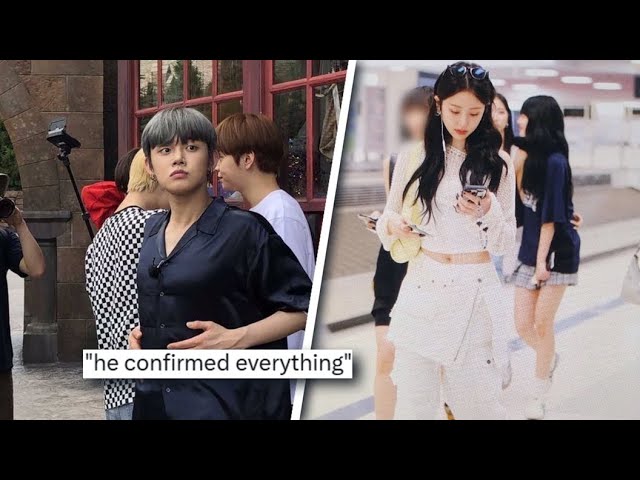

The K-Pop news cycle is a machine fueled by a potent mix: dazzling official content, meticulous fan curation, and the volatile, often unpredictable, spark of rumor. Sometimes, that spark comes from a dispatch photo of an idol looking tired; other times, it’s a speculative dating story from an unverified source. But rarely does it ignite from such an innocuous, even celebratory, source as a professional stylist’s heartfelt gratitude post. This week, however, that’s precisely what happened, turning a moment of career pride into a viral storm centered on TXT’s Yeonjun, and in the process, holding up a mirror to the fascinating, fraught relationship between idol, industry, and audience.
The Spark: Decoding the Photo That Set the Internet Alight
On a seemingly ordinary Tuesday, a well-respected fashion stylist, Park Minhee—known for her work with various celebrities and recently for coordinating Yeonjun’s standout looks for a major luxury brand event—posted a series of images to her private Instagram. The captions expressed professional thanks and reflected on the successful collaboration. Among the photos was a candid, behind-the-scenes shot of her and Yeonjun. They were dressed in coordinated, high-fashion attire, standing close together in what appeared to be a green room, smiling broadly at the camera. The image radiated a comfortable, friendly professionalism.
For most industries, this would be a standard networking post. In K-Pop, it became a Rorschach test for fan interpretation. Screenshots of the post, shared initially on niche forum sites like theqoo and Pann, quickly gained traction. The angle of their stance, the warmth of their smiles, and the simple fact of a non-family, non-group-member woman appearing in a casual setting with a top male idol on a private account, was enough to catalyze speculation. Within hours, the narrative had been distilled and weaponized into a startling claim spreading across Twitter and TikTok: “Yeonjun spotted at event with ex-girlfriend,” with the stylist erroneously identified as a former romantic partner.
“It was a perfect storm of visual ambiguity and fan culture’s hyper-vigilant narrative engine,” says cultural commentator Lee Ji-hyun. “The photo wasn’t a paparazzi shot; it was an insider’s genuine moment. That authenticity, paradoxically, made it more fertile ground for fictional backstories. Fans, and anti-fans, could project a complete drama onto a single frame.”
From Niche Forums to Trending Panic
The velocity of the rumor’s spread was textbook for the digital age. Edited clips comparing the stylist’s face to grainy, unrelated photos of a woman near a concert venue months prior began to circulate. “Proof” threads, often relying on coincidental color schemes or vague “source: trust me” claims, amassed thousands of quotes. The hashtag #Yeonjun, devoid of context, began trending globally, filled with a chaotic mix of concerned MOAs (TXT’s fandom), curious onlookers, and malicious actors fueling the fire. The core of the “scandal” wasn’t evidence, but the contagious anxiety of “what if.”
Yeonjun and TXT: Idols in the Age of Hyper-Scrutiny
To understand the magnitude of the reaction, one must understand the stature of the artist involved. Yeonjun, born Choi Yeonjun, isn’t just a member of TXT; he is widely hailed as a “4th Generation It Boy,” a trendsetter whose every fashion choice and dance move is dissected and emulated. As the oldest member of TXT (Tomorrow X Together), a group launched under HYBE with the immense legacy of BTS as predecessors, he has always operated under a microscope. TXT’s narrative, from their debut, has been one of growth, youthful connection, and navigating the trials of youth together—a concept that, for a portion of fans, can uncomfortably intersect with real-world adulthood and private relationships.
The group has consistently pushed artistic boundaries, and Yeonjun, in particular, has carved a space as a solo performer and fashion icon. This incident, however, highlights the double-edged sword of that individual prominence. As we analyzed in our feature on the evolving autonomy of top idols, “Beyond the Brand Ambassadorship”, the modern idol is increasingly a singular brand. But with greater individual recognition comes intensified, and often invasive, personal scrutiny that extends far beyond their official schedule.
The HYBE Playbook: Professionalism as a Shield
HYBE’s approach to its artists has evolved into a nuanced blend of intense promotion and fierce protection. In this environment, a stylist is not merely a service provider but a key part of the trusted inner circle—the “celebrity team” that ensures an idol’s public perfection. The fact that the photo originated from within this professional fortress made the public’s reinterpretation of it particularly jarring. It breached an unspoken wall between backstage reality and public fantasy. This event serves as a stark contrast to the carefully managed solo ventures discussed in our coverage of recent solo debuts, where narrative control is absolute.
Anatomy of a Reaction: Fandom, Antis, and the Silent Majority
The digital ecosystem’s response fragmented into distinct, vocal camps. The most visible was the wave of defensive MOAs. Social media was flooded with “clearing searches” campaigns, where fans mass-posted positive content about Yeonjun’s professional achievements and tagged the trending topic with unrelated, flattering keywords. Hashtags like #YeonjunOurStar and #YeonjunStylistPartners trended in response, often accompanied by glossy event photos of Yeonjun to re-establish the “correct” narrative of him as a consummate professional.

On the other side, anti-fans and general gossipmongers amplified the original rumor, sometimes layering on additional falsehoods about the stylist’s career or inventing past connections. This noise, however loud, represented a minority. The most significant reaction, arguably, came from a growing segment of the fandom and neutral observers who expressed exhaustion and critique.
“It’s embarrassing,” wrote one viral Pann post. “A talented artist works hard at a major event, his stylist does a great job and posts a thank you, and we turn it into a soap opera. It disrespects his work, her work, and makes the entire international fan community look delusional.”
This sentiment echoed widely. Many used the moment to critique the persistent “boyfriend idol” fantasy and the immediate sexualization or romanticization of any interaction between male idols and women. The discussion expanded to compare the treatment of this incident to similar ones involving female idols, noting a stark disparity in scrutiny and assumed guilt. For a deeper look at how fans engage with and shape idol narratives, explore our extensive profiles on our Artists page.
Industry Mechanics: Why "No Comment" Was the Loudest Statement
In a traditional scandal, one might expect a statement from the agency: a denial, a legal threat, or a clarification. HYBE and BIGHIT Music’s response to this incident was defined by its absence. No official press release was issued. No mention was made on Weverse or fan community platforms. This silence was, in itself, a powerful and calculated message.
“By not acknowledging it, the agency refused to legitimize the rumor as something worthy of a corporate response,” explains PR strategist Kim Seong-min. “They treated it as what it was: background noise. It forced the narrative to collapse under its own lack of substance. A statement, even a denial, would have given the story a new, official chapter and extended its news cycle.” Instead, the official channels continued as normal, promoting TXT’s upcoming schedules and Yeonjun’s brand work, effectively drowning out the rumor with the volume of sanctioned content.
This strategy highlights a shift. Agencies are learning that not every digital fire needs to be fought with a press release; sometimes, starving it of oxygen is more effective. It also protects the professional relationship at the core of the story—the stylist. A legal response could have inadvertently cast blame or spotlight on her, whereas silence allowed her to quietly make her account private and let the professional nature of her work stand as the only relevant fact.
The Parasocial Contract in Flux
This incident is a microcosm of the evolving “parasocial contract” between idols and fans. The unspoken agreement where fans receive a carefully curated version of an idol’s life in exchange for support is being strained by the internet’s insatiable hunger for “real” moments. When a genuinely real, yet still professional, moment slips through, the fan machinery doesn’t always know how to process it except through familiar, often dramatic, tropes. The reaction also underscores the immense pressure on idols to sanitize their social landscapes, potentially avoiding even innocent friendships to prevent misinterpretation. For perspectives on how senior artists navigate public life, see our report on “When the Spotlight Follows You Home.”
Aftermath and Implications: What the Silence Teaches Us
As the week progressed, the rumor peaked and began its inevitable decline. The lack of new “evidence,” the forceful redirection of the fandom, and the agency’s resounding silence created a vacuum the speculation could not sustain. Attention shifted to official updates on our Charts page tracking TXT’s latest music and the upcoming promotional cycle for the group’s next project. The stylist’s private Instagram remained private, a small but significant casualty of the frenzy.
The lasting impact of this non-scandal, however, is more cultural than personal. It serves as a case study for several key trends:
- The Power of Professional Networks: It reaffirms that an idol’s success is built on a bedrock of professional relationships—stylists, choreographers, producers—who are real people, not narrative props.
- Fandom Maturation: A significant portion of the audience demonstrated a desire to move beyond invasive speculation, advocating for respect for an idol’s private and professional boundaries.
- Agency Strategy 2.0: HYBE’s non-response may become a more common template for dealing with baseless, image-based rumors, prioritizing narrative control over direct confrontation.
Looking Forward: TXT’s Path and a Changing Conversation
For TXT and Yeonjun, the path forward is clearly one of continued artistic focus. The group is in a pivotal phase of their career, solidifying their musical identity and global reach. This incident, while a distracting blip, is unlikely to affect their trajectory. If anything, it may strengthen the internal resolve to let the work speak loudest. Yeonjun’s position as a fashion icon and performer remains unshaken, as recognized in broader industry conversations like those in “The HYBE Vocal Dynasty.”
The broader conversation, however, needs to continue. Every time the ecosystem chooses to dissect a smile in a thank-you photo instead of discussing the art it helped create, it diminishes the very culture it claims to adore. The lesson from this week is not about Yeonjun or a stylist; it’s about the audience’s own capacity for critical consumption. The fastest way to kill a baseless rumor is not always a tweet or a statement—sometimes, it’s simply the collective decision to look away, and to look instead at what truly matters: the music, the performance, and the respectful support of the artists who create them. As the industry evolves, so too must the parameters of our curiosity, learning to distinguish between a headline and a hallucination. For all the latest developments where the focus is firmly on the music, keep watching our News page.