
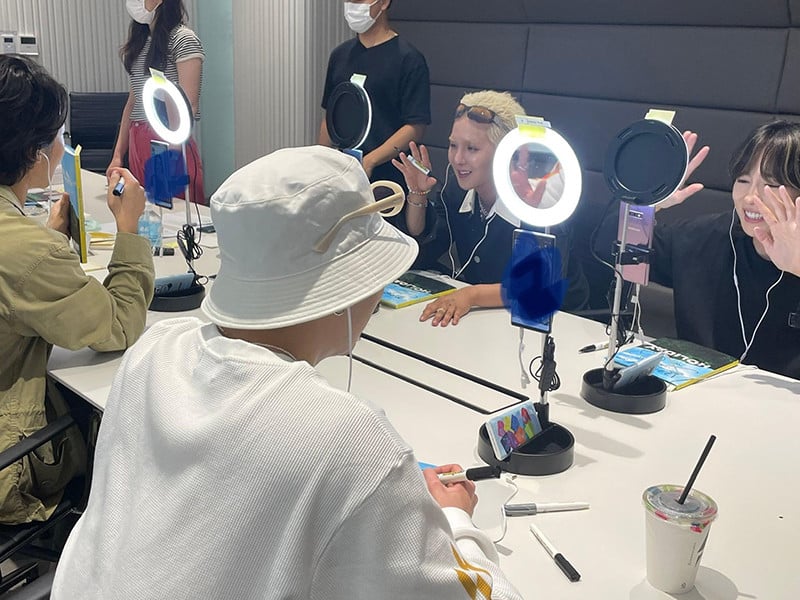

The curated world of K-Pop is built on a foundation of flawless visuals, impeccable performances, and meticulously managed interactions. For fans, video call events are a precious, intimate gateway to their favorite idols, a brief moment of perceived one-on-one connection in a globally scaled industry. But what happens when that carefully constructed facade cracks, not because of scandal, but because of raw, human empathy? This week, the industry was forced to look in the mirror when FLEUR's Soo-jin, during a scheduled fan call, broke down in tears while defending an overworked staff member, revealing a side of the idol ecosystem rarely seen by the public.
The incident, which was partially recorded by the fan (with Soo-jin’s permission to share her message) and subsequently spread across social media like wildfire, has triggered a seismic and deeply divided response. It pits admiration for an idol's compassion against concerns for professionalism, and has sparked a long-overdue conversation about the working conditions of the countless assistants, coordinators, and managers who form the backbone of every idol's career. This isn't just about a single emotional moment; it's a spotlight on the silent engine of the K-Pop machine.
The Rise of FLEUR and the Pressure of the "Mid-Tier" Grind
To understand the weight of Soo-jin's words, one must first understand the context of her group. FLEUR, debuting in 2022 under Starline Entertainment, represents a classic "mid-tier" success story. They are not from the "Big 4" conglomerates, yet they have carved out a loyal, dedicated fandom through relentless activity: constant comebacks, extensive touring of university festivals and regional events, and a grueling schedule of fan signings and video calls. This is the grueling path to sustainability for many groups outside the immediate spotlight of mega-corporate backing.
Soo-jin, the group's main vocalist and eldest member, has always been portrayed as the "motherly" figure within FLEUR—responsible, warm, and keenly aware of her juniors and those around her. Her image is one of nurturing stability. In many ways, her outburst is consistent with this persona, yet it shattered the unspoken rule that idols, while allowed to be tired for themselves, must never pull back the curtain on the fatigue of their team. As we explored in our analysis of the HYBE Vocal Dynasty, the pressure on idols at all levels is immense, but the infrastructure supporting them often operates in complete obscurity.
The Unseen Workforce: Managers, Coordinators, and "Invisible" Staff
Idol staff are the ultimate shadows. They are the individuals carrying luggage at 4 AM, scrambling to secure a last-minute meal that meets seven different dietary restrictions, handling furious logistics when flights are delayed, and sitting through endless hours of schedules solely to ensure the idol's safety and readiness. Their job is to be everywhere and nowhere, essential yet invisible. Burnout in these positions is notoriously high, with long hours, low pay (especially for entry-level positions), and the emotional labor of managing both an idol's career and, at times, their personal well-being.
“The staff are the ones who remember our allergies when we forget, who find a charging port for our phone when we’re drained, and who take the blame when things go wrong, even when it’s not their fault,” one former idol stylist told K-Beats under condition of anonymity. “We are trained to absorb stress so it doesn’t reach the idol. When an idol publicly acknowledges that, it’s… it’s incredibly rare and emotionally charged.”
The Moment the Facade Cracked: Soo-jin's Tearful Defense
According to fan accounts and the shared video clip, the incident occurred during the final minutes of a video call event. The fan, reportedly a long-time supporter, made a passing comment about a staff member who had appeared "a bit slow" in handing Soo-jin a prop during a previous live broadcast. The comment was likely intended as light-hearted or observant, not malicious.
Soo-jin’s reaction, however, was immediate and visceral. Her smile faded, and she leaned closer to the camera, her voice dropping from its usual bright tone.

"Please, don't say that about our staff. That unnie... she hadn't slept for almost two days because she was handling everything for our schedule and then stayed up to prepare all the materials for this fan call. She was running on caffeine and dedication. We see it. We see how hard they work for us. They are not 'slow.' They are exhausted. We are all so tired together."
At this point, Soo-jin began to cry, apologizing to the fan for becoming emotional but reiterating her point. “I just wanted you to know. What you see is us, but behind us, there are people breaking their backs. Please send them love too.” The call ended shortly after, with the fan reportedly expressing support and apologies.
The Permission to Share: A Deliberate Choice?
A critical element of this story is that Soo-jin explicitly gave the fan permission to share her words. This moves the incident from a potential private leak to a public statement. Industry insiders are divided on the intent. Some view it as a spontaneous emotional moment where Soo-jin sought to grant permission out of courtesy. Others, however, speculate it was a calculated, albeit risky, cry for help—a way to apply public pressure on the agency to address staff working conditions without filing an official, internal complaint that could have repercussions for her or the staff member in question.
“It’s a nuclear option,” says Park Ji-hyun, a former idol manager turned industry commentator. “You are using the fan-audience relationship, which is sacred and commercial, to highlight a labor issue. It’s fearless and dangerous. It shows she was willing to risk her own image to protect her team.”
A Fandom Divided: Compassion vs. "Business as Usual"
The reaction from the K-Pop community, particularly FLEUR's fandom “Bloom,” has been intensely polarized, reflecting a broader tension within fan culture.
The Supportive Camp: #WeSeeYouToo
A significant portion of fans have rallied behind Soo-jin, launching supportive hashtags like #WeSeeYouToo and #ThankYouIdolStaff. Social media is flooded with posts appreciating coordinators, managers, and security teams. Many fans have sent coffee trucks and snack packages to Starline Entertainment addressed specifically to the staff. “Soo-jin showed us what true leadership is,” tweeted one fan. “She used her platform, her moment with a fan, to defend someone with no platform. That’s character.” This faction argues that acknowledging the humanity of the industry only deepens the respect for the final product, drawing parallels to how fans of groups like BTS have long appreciated the behind-the-scenes teams, as hinted at in the creative processes discussed around projects like "Echoes of the Mountain".
The Critical Camp: Unprofessional and Damaging
The opposing view criticizes Soo-jin for what they see as a breach of professionalism. Arguments here include:
- Violating Fan Service Protocol: The fan paid for a positive, personal interaction, not to be lectured or made to feel guilty.
- Potentially Endangering Staff: By singling out a staff member’s exhaustion, she may have inadvertently made that individual a target for internal scrutiny or even blame from the agency.
- Damaging Group Image: It paints Starline Entertainment in a negative light, which could harm FLEUR’s future opportunities and partnerships. “It was an emotional, selfish move,” commented one netizen on a forum. “Now every time we see a staff member near FLEUR, we’ll be pitying them. It breaks the illusion.”
This critique echoes sentiments sometimes seen when idols step outside carefully managed narratives, similar to discussions around public encounters that blur the line between idol and civilian.
Industry Analysis: A Symptom of a Systemic Problem
Soo-jin’s tears are not an isolated incident but a symptom of systemic overwork prevalent in the fast-paced K-Pop industry. While recent years have seen more discussion about idol mental health, the well-being of staff remains largely unaddressed.
“Idols have contracts, unions are slowly forming for them, and they have public advocacy,” explains cultural critic Lee Dong-wook. “The staff are contractual or freelance workers with almost no leverage. Their burnout is considered a cost of doing business. Soo-jin didn’t just cry for one staff member; she cried for an entire exploited class within the system.”
This moment also intersects with the growing conversation about idol wealth and autonomy. As idols like BLACKPINK’s Jisoo amass personal fortunes and buying power, as detailed in our article "Beyond the Brand Ambassadorship", it creates a stark dichotomy. At the top of the industry, idols are becoming moguls; at the working levels, both idols and their support teams in smaller agencies can be trapped in cycles of exhaustive labor with limited financial upside. Soo-jin’s act bridges that gap, using her position to advocate for those with far less power.
The Agency's Dilemma: Damage Control or Meaningful Change?
Starline Entertainment’s response will be telling. The standard playbook would involve a vague apology for “causing concern,” assuring fans that staff are “well-cared for,” and possibly quietly disciplining Soo-jin for her outburst. However, the genie is out of the bottle. A more progressive, and riskier, approach would be to publicly announce new welfare protocols for staff—mandated rest periods, mental health resources, or improved overtime pay—and credit Soo-jin for her compassionate leadership. This could, in theory, transform a PR crisis into a reputation-building moment, setting a new standard for mid-tier agencies. For more on how agencies navigate idol careers, fans can explore our comprehensive Artists page.
What's Next: Ripples in the Pond
The immediate future holds several possibilities. For Soo-jin and FLEUR, there may be an unofficial “cooling-off” period. Their next public appearances and fan calls will be scrutinized for any sign of tension or change. Will other idols feel empowered to speak similarly, or will agencies tighten control over fan call topics? This event could lead to more restrictive guidelines for interactive fan events.
On a broader scale, the incident adds fuel to the growing fire of labor advocacy within the Korean entertainment sector. It provides a human face—actually, two human faces: the crying idol and the exhausted staffer—to an abstract issue. Legislative bodies and labor rights groups may cite this as a case study in why protections need to extend beyond the stars on stage.
Ultimately, Soo-jin’s tearful plea did more than defend one staff member. It forced the global audience to acknowledge a simple, uncomfortable truth: the glittering world of K-Pop is built on the sweat of invisible laborers. Whether this moment fades as a fleeting controversy or catalyzes real change depends on whether the industry chooses to listen. The response from agencies, fans, and the idols themselves will determine if this was merely a crack in the facade, or the beginning of a structural reckoning. For continued coverage on this evolving story and its impacts, follow our ongoing reporting on the K-Beats News page.
The idol-staff relationship, often described as familial in press releases, was tested in the most public way. In choosing her staff over the pristine idol-fan dynamic, Soo-jin may have redefined what it means to be an idol in the modern era: not just a performer, but an advocate, and most profoundly, a human being who sees the humanity in others. The cost of that revelation, for her and her career, remains to be seen.