
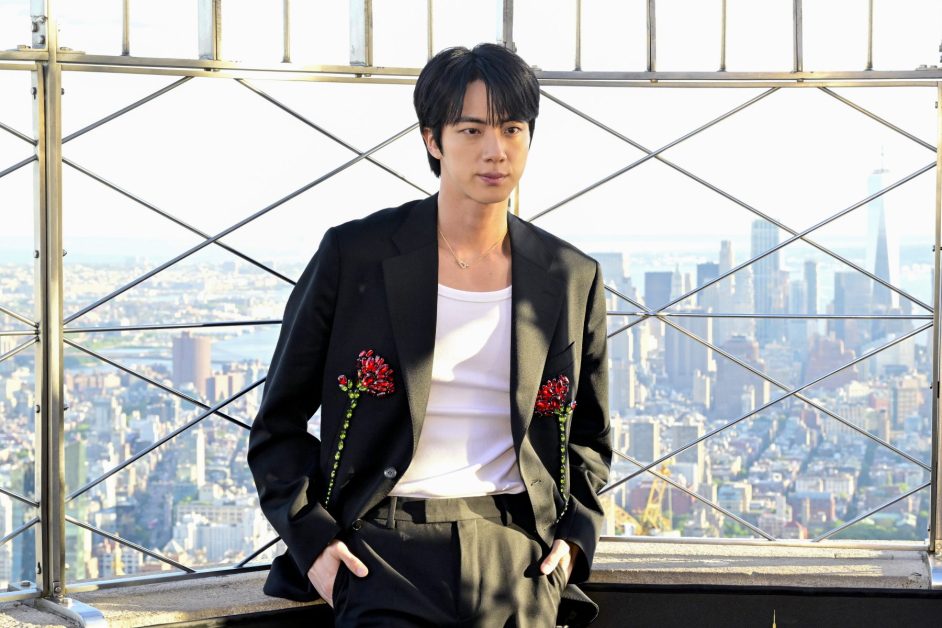

During a pivotal moment on the ARIRANG World Tour stage, BTS's Jin appeared to consciously disregard a direct cue from his production staff, choosing a raw, emotional vocal climax over technical perfection. This fleeting act was far more than a simple concert anecdote; it was a masterclass in artistic sovereignty. It underscores a seismic shift in the K-Pop industry where veteran idols, backed by immense fan capital and career tenure, are increasingly navigating—and reshaping—the delicate balance between agency protocols and unfiltered artistic expression. This moment serves as a potent case study in the quiet revolution happening within the world's most systematized pop culture engine.
- What Exactly Happened at the ARIRANG Concert?
- Why This Moment Matters Beyond the Hype
- The Evolving Artist vs. Agency Power Dynamic
- Deciphering the Fan Reaction: More Than "He's Hot"
- The Broader Industry Ripple Effect
- FAQ: Your Questions Answered
What Exactly Happened at the ARIRANG Concert?
The incident occurred during a high-stakes solo segment, a part of the concert where each BTS member carries the narrative weight alone. Jin, known for his impeccable live vocals and theatrical flair, was performing a particularly demanding ballad, a genre that lives or dies on authentic emotional transmission. As he approached the song's emotional peak, a series of pre-arranged technical cues—the invisible architecture of a major world tour—were set to activate. The specific nature of the cue, whether for a lighting change, a stage mechanism, or a vocal monitor adjustment, is known to production teams, but its interruption by the artist is what sparked analysis.
The "Warning" In Context: The Machinery of a Megatour
Backstage communication, often through in-ear monitors (IEMs) or off-stage staff signals, is the standard nervous system for managing complex tour logistics involving pyrotechnics, moving stages, and cinematic visual sync. The "warning" Jin seemingly defied was almost certainly a time-sensitive cue. In a high-pressure environment, such cues are not suggestions but critical markers for safety and synchronicity. For an artist to consciously override one is to momentarily prioritize the human element over the mechanical. It's a declaration that the live connection, the unscripted gasp from the audience, can outweigh a perfectly timed flash of light.
Consider the typical flow: a stage manager counts down in an artist's ear, "Vocal cue in 3, 2, 1..." or "Move to mark C now." Ignoring this disrupts a chain of events. Jin’s choice to hold a note longer, to linger in a moment of raw expression, meant recalculating the next several seconds of the show in real-time—a risk only an artist supremely confident in both his team's adaptability and his own purpose would take.
Jin's Calculated Pivot: From Performer to Auteur
This was not an error or a lapse in professionalism. Insiders familiar with BTS's notoriously meticulous rehearsals confirm that every breath, step, and camera angle is often choreographed. Jin's decision was therefore a conscious pivot, an authoritative edit to the night's script. It was the application of a hard-won artistic instinct, prioritizing the live, in-the-moment connection with ARMY over the sterile execution of a plan. This transforms the performer from a component within a machine into the auteur of the moment, reclaiming the stage as an artist's domain, not just a technician's playground.
"The most powerful moments in live music are often the ones that couldn't be rehearsed. They are collisions of preparation and present emotion. An artist feeling secure enough to chase that collision is a sign of a mature creative partnership with their production team, not a breakdown of it." — Anonymous veteran concert director for major K-Pop tours.
This act mirrors moments from legendary performers across genres—think Bruce Springsteen extending a story, or Beyoncé altering a vocal run—where technical execution bends to serve overwhelming feeling. Jin’s move inscribed his ARIRANG performance within that legacy of live authority.
Why This Moment Matters Beyond the Hype
While fan edits cheer "he's so hot for this," the industry implications are profound. This moment is a microcosm of a larger, ongoing conversation about creative control, artistic maturity, and the market value of perceived "imperfection" in a polished industry. It’s a data point in the financial and cultural revaluation of the idol.

The Myth of the "Perfect" Idol and the Value of Authentic Flaw
K-Pop's global ascent has been built on a foundation of flawless, synchronized execution. Jin's action challenges that foundational narrative by inserting authentic, unrehearsed humanity at a critical juncture. It signals a deliberate move from the idol-as-perfect-product to the idol-as-authentic-performer, a transition critical for sustainable long-term careers post-military service and into solo endeavors. It proves that strategic, emotionally resonant "imperfection" can be a more powerful brand asset than robotic precision. Fans don't just remember a perfect show; they remember a feeling. This moment engineered that feeling.
We see this value echoed in other senior artists' choices: IU's deliberate inclusion of raw voice cracks in emotional live performances, or Sunmi's discussions about anxiety on stage. These "flaws" don't diminish their stature; they deepen fan investment by showcasing relatable humanity alongside supreme skill.
A Statement of Seniority and Hard-Earned Credibility
Context is everything. A rookie idol deviating from a show plan might face severe repercussions, framed as unprofessionalism or a lack of discipline. For an artist of Jin's stature—a member of the group that reshaped the global music industry, with over a decade of impeccable stage history—the same action is framed and received as artistic intuition. This establishes a visible hierarchy of creative trust within the industry itself. Tenure, commercial success, and fan trust become social capital that can be spent on moments of creative interpretation.
This credibility is not just social; it's financial. An artist who can drive ticket sales and trend globally by holding a note too long has demonstrated a marketable power that agencies are increasingly forced to formally acknowledge in contracts and planning sessions.
The Evolving Artist vs. Agency Power Dynamic
Jin's moment is a visible flare in a growing trend of artists consciously reshaping their relationship with their agencies. The traditional top-down, factory-style model is being pressured from all sides: by artists' personal ambitions, by fan expectations for authenticity, and by the logistical realities of managing veterans with individual brands.
The Precedent of Self-Funded Endeavors and Financial Leverage
This act of on-stage autonomy mirrors the off-stage financial and creative risks being taken by other senior groups. For instance, THE BOYZ recently made headlines for their self-funded concert preparations, a move that fundamentally alters the power dynamic with their agency. When artists invest their own capital, their stake in creative and financial outcomes intensifies exponentially. They transition from employees to stakeholders.
This is part of a larger pattern of "artist-as-CEO" seen with figures like G-Dragon, Zico (through KOZ Entertainment), and Soyou, who have all leveraged their success to build their own labels or gain unprecedented control. Jin’s concert decision is a micro-version of this principle: investing his social capital (trust, reputation) to purchase a moment of pure creative control.
Contract Renewals and the Codification of Creative Clauses
As landmark groups like BTS navigate individual and group contract renewals in a new era, clauses pertaining to creative control, personal brand management, approval over schedules, and even veto power over certain commercial activities are becoming standard, high-priority negotiation points. Jin's concert moment is a live demonstration of the kind of artistic discretion these new contracts are increasingly seeking to codify. It’s a real-time argument for why such clauses are necessary.
The industry is moving from contracts that purely restrict to contracts that delineate zones of autonomy. This shift is crucial for retaining top talent who now have global options and personal ambitions that extend far beyond the group's initial concept.
Artist Action Traditional Agency Priority The New Negotiated Middle Ground Industry Example Defying a live show cue for emotional impact (Jin) Show consistency, safety, schedule adherence, brand uniformity. Pre-approved "artistic freedom" zones within performances; trust in veteran artist's live instincts. Senior soloists often have "ad lib" sections in concerts; Mamamoo's renowned live improvisation. Self-funding concerts or content (THE BOYZ, older soloists) Financial control, centralized profit, brand consistency. Profit-sharing models, hybrid production ventures, artist-led subsidiary labels. PSY's P NATION, DPR's independent creative collective. Pursuing independent acting/OST projects (V, J-Hope, Jinyoung) Group schedule synergy, maximizing group-focused promotions. Carved-out individual "season" activities with dedicated agency support teams; clear contractual windows. EXO's D.O., Got7's Jinyoung maintaining parallel acting careers. Publicly sharing unfiltered creative process (lyric drafts, studio clips) Tight control over public narrative, mystique, polished final product. Curated "authenticity" as a brand pillar; artist-run communication channels (Weverse, YouTube). Stray Kids' 3RACHA production videos, (G)I-DLE's Soyeon in the writing room.Deciphering the Fan Reaction: More Than "He's Hot"
The viral reaction phrase "he's so hot for this" is a fascinating piece of modern fan lexicon. It operates on multiple levels, transcending physical attraction to encapsulate admiration for confidence, rebellion, competence, and authority.
"Hot" as a Metric of Agency and Power
In this context, "hot" is synonymous with empowered agency. Fans are celebrating Jin's demonstrated power to steer his own artistic narrative in real-time, to be the author of a memorable moment rather than its subject. This builds a deeper, more respectful fan connection, moving beyond parasocial fantasy to a partnership that admires professional audacity and skill. It’s a key driver in sustaining fan loyalty during group hiatuses or military service, as fans invest in the individual's creative journey, closely tracked on platforms like our Charts page.
This language reflects a consumer who is savvy to industry mechanics. Celebrating an idol's "hot" defiance is also a tacit endorsement of that behavior, sending a market signal that fans will reward displays of autonomy. It turns fandom into a form of collective bargaining where support is the currency.
The Role of Social Media Amplification and Narrative Control
A single concert moment, witnessed by tens of thousands, is magnified into a global cultural event through millions of fan edits, analytical tweet threads, and deep-dive video essays. This collective amplification does more than just hype; it controls the narrative. The fan consensus framed Jin's act as one of artistic bravery, not negligence. This public narrative is powerful. It makes it difficult for any internal critique to gain traction and reinforces the artist's position. The moment is taken from the arena and weaponized in broader discourse about artist rights, making it a leverage point in industry-wide conversations.
The Broader Industry Ripple Effect
The implications of this evolving dynamic extend beyond concert halls and into legal, promotional, and training spheres, setting new precedents for the next generation.
Legal and Ethical Precedents: Owning the Moment
As artists assert more control over their live personas, defining the boundaries of their personal brand and image becomes legally critical. This ties directly into ongoing industry debates about ownership, like those explored in our analysis "Beyond The Mugshot", which examines the legal battles over image and AI. An idol's conscious, public curation of their own live moment—essentially claiming ownership of a deviation from the plan—strengthens their legal and ethical claim to their public persona and its commercial value.
Blueprints for Artistic Longevity and Sector Synergy
This shift mirrors successful transitions in other entertainment sectors. Just as top K-Dramas are evolving, with hits like Lovely Runner showing a blueprint for K-Pop's future in acting through star-driven narratives, the concert stage is becoming a space for similar narrative risk-taking by the performer. Furthermore, as groups mature, member movements and individual career paths—analogous to the strategic shifts discussed in "Mark's NCT Exit Decoded"—are increasingly managed with formalized individual artist input and bespoke planning.
Impact on Younger Groups and Trainee Culture: A New Aspiration
Aspiring idols and newly debuted groups now have a public, celebrated case study in how the industry's ultimate veterans navigate autonomy. This changes the expectations trainees bring into debut negotiations and influences how younger groups, once they establish a commercial foothold, begin to push for their own "mic drop" moments of creative control. The lesson is clear: build your credibility, cultivate your fan connection, and that capital can be used to buy creative freedom. It may even influence training to include more modules on artistic identity and stagecraft philosophy, rather than purely technical execution.
FAQ: Your Questions Answered
Could Jin have faced real professional consequences for this?
For an artist of his stature and within the specific culture of HYBE/BTS's long-term partnership, likely not in a punitive sense. The "consequences" would have been a post-show debrief—a professional conversation about the risk/reward of such choices. For a less-established idol in a more rigid agency structure, the same action could lead to reduced center time, lines, or future performance opportunities, highlighting the stark power imbalance that still exists at different career stages.
Was this really spontaneous, or could it have been a staged "rebellion"?
While "staged authenticity" is a core concept in pop, industry experts lean toward this being a genuine, in-the-moment choice. The power of the moment lies in its authenticity. BTS shows are intricately planned but build in flexible segments for fan interaction. The specific, seemingly urgent nature of the staff cue (as interpreted by fans watching Jin's reaction) suggests his override was a real-time decision. Its spontaneity is precisely what makes it a compelling act of sovereignty.
How does this relate directly to BTS's current military enlistment phase?
It's deeply connected. This period has forced both the members and HYBE to reconfigure operations around individual activities and brand-building. Moments like this on a global tour solidify each member's standalone artistic identity and their ability to command a stage alone. This is crucial for maintaining relevance, fan engagement, and commercial viability throughout the group's mandatory hiatus, ensuring the unit's strength is built upon individually robust pillars.
Will this encourage other idols to recklessly defy their staff during concerts?
It's more likely to encourage structured, pre-negotiated conversations about creative freedom rather than spur-of-the-moment defiance. Blind rebellion is risky and unprofessional. The takeaway for artists is that building a track record of success, reliability, and fan trust creates the capital to successfully advocate for designated moments of on-stage improvisation or for input into overall show design. It's about moving the needle on collaboration, not inciting chaos.
Where can I see more examples of this power shift in action?
Look beyond the stage. Follow artists' solo concert credits (noting "artistic director" titles), behind-the-scenes content about songwriting and production credits, news about contract renewals and new label foundations, and even how idols speak about their creative process in interviews. Our dedicated News page regularly analyzes these trends, and in-depth profiles on our Artists page delve into individual creative evolutions that signal this broader shift.
Conclusion: The Mic Drop Heard 'Round the Industry
Jin's seemingly simple, seconds-long act at the ARIRANG concert is a resonant symbol of a transformed landscape. It demonstrates that the ultimate power in K-Pop is gradually, inexorably shifting towards the artists who command the stage and the fans who financially and culturally support them. This is not about chaos or disrespectful rebellion, but about the sophisticated, hard-won integration of artistic instinct into the world's most meticulously engineered pop culture machine. It's a negotiation made visible, a balance of power tipping in real-time.
The era of the purely compliant idol is giving way to the age of the artist-entrepreneur. For fans, this evolution promises more authentic, thrilling, and personally invested connections with the artists they support. For the industry, it demands new, more collaborative and flexible models of partnership. To stay ahead of these evolving dynamics—from concert stages to corporate boardrooms—keep your analysis rooted with us at K-Beats.