
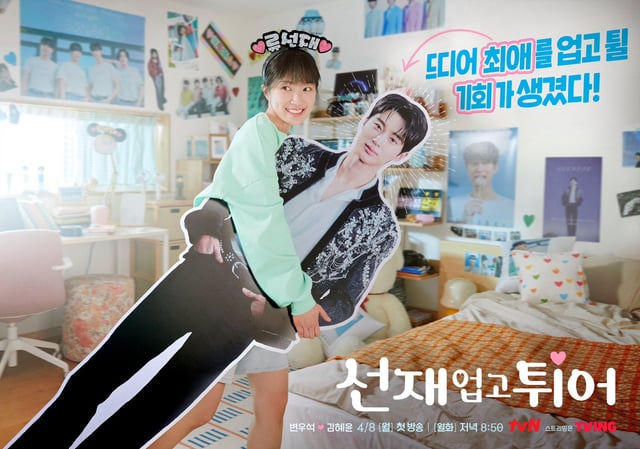
Two years after its finale, tvN's “Lovely Runner” is more than a beloved drama; it's a cultural case study. The release of special anniversary posters starring Kim Hye Yoon and Byeon Woo Seok isn't just nostalgia—it's proof of a rare, enduring synergy between K-Drama storytelling and K-Pop idol fandom mechanics. This drama didn't just tell a time-slip romance; it successfully reverse-engineered the idol-fan relationship, influenced music chart domination, and set a new standard for how idol-led narratives can resonate permanently within the industry. Its lasting impact offers a clear blueprint for agencies and producers.
- Why Does "Lovely Runner" Still Resonate So Deeply?
- The Unbeatable Music Symbiosis: From Drama OST to Chart Domination
- Beyond the Screen: The "Sol Hee/ Sun Jae" Effect on Fashion & Beauty
- The New Idol-Actor Blueprint: What "Lovely Runner" Got Right
- Lasting Industry Impact: How This Drama Changed the Playbook
- "Lovely Runner" Anniversary FAQ
Why Does "Lovely Runner" Still Resonate So Deeply?
The anniversary posters triggered an immediate flood of fan art, edits, and trending hashtags. This isn't typical post-drama behavior. "Lovely Runner's" longevity stems from its foundational understanding of its core audience: K-Pop and K-Drama fans who are deeply invested in character immersion and emotional payoff.
The Genius of the "Idol-Fan" Narrative Framework
At its heart, the drama is a meta-commentary on fandom itself. Im Sol (Kim Hye Yoon) isn't just a fan; she is a *sasaeng* with a redemption arc, whose knowledge becomes the key to saving her idol, Ryu Sun Jae (Byeon Woo Seok). This flipped the script, giving the fan character ultimate agency and making the idol character vulnerably human. It validated the emotional labor of fandom while exploring its darker extremes, a duality rarely addressed so thoughtfully.
Character Authenticity Over Archetype
Sun Jae wasn't a flawless K-Pop god. He was portrayed with palpable loneliness, career anxiety, and the weight of public perception—themes instantly recognizable to anyone following real idol scandals or mental health disclosures. This authenticity created a protective, empathetic fan response that extended beyond the screen to the actors themselves, mirroring real idol fan culture.
This deep character connection contrasts sharply with the often superficial treatment of idol characters in other series. It’s a level of narrative care that fosters long-term attachment, similar to how fans stick with an idol group through comebacks and phases. For more on how narratives shape fan perception, see our analysis on systemic issues within agencies that can break that bond.
The Unbeatable Music Symbiosis: From Drama OST to Chart Domination
"Lovely Runner" executed a masterclass in audio-visual synergy. Its OST wasn't background music; it was a central character and a direct pipeline to music chart success, demonstrating how drama popularity can be monetized and magnified in the streaming era.
The "Sudden Shower" Phenomenon
Byeon Woo Seok's in-character band, Eclipse, and their song “Sudden Shower” achieved something remarkable: it charted as if it were a real idol group release. The drama provided the perfect MV-style narrative framework, making the song's emotional impact inseparable from key plot moments. This created a feedback loop—viewers streamed the song to relive the drama, and the song's charting brought new viewers to the drama.
OST as Strategic Career Launchpad
For the participating artists, from veteran singers to rookie idols, the OST became a career highlight. The drama’s specific, emotion-laden scenes gave each song a built-in story, making them perennial favorites on streaming playlists like "K-Drama Tears" or "Healing." This proves that a well-integrated OST is a powerful tool for both drama promotion and artist exposure, a strategy now being dissected by every major agency's drama project team.
 OST Track
Artist
Chart Peak (Circle Digital)
Key Drama Scene Association
Lasting Impact
“Sudden Shower”
Byeon Woo Seok (as Eclipse)
#1
Sun Jae's audition, band practice moments
Became a defining "idol" track; still used in variety shows
“I’ll Be By Your Side”
Choi Hyun Wook (Wi-ing)
#7
2008 timeline, emotional solstice moments
Epitomizes the "nostalgic" sound of the drama
“Loved”
BIBI
#3
Final episode montage, healing resolution
Considered one of BIBI's most iconic soft vocal performances
“The Reason Why We Can't Break Up”
SE O (BVNDIT)
#12
Tension & longing scenes in 2023 timeline
Showcased SE O's solo potential post-group activity
OST Track
Artist
Chart Peak (Circle Digital)
Key Drama Scene Association
Lasting Impact
“Sudden Shower”
Byeon Woo Seok (as Eclipse)
#1
Sun Jae's audition, band practice moments
Became a defining "idol" track; still used in variety shows
“I’ll Be By Your Side”
Choi Hyun Wook (Wi-ing)
#7
2008 timeline, emotional solstice moments
Epitomizes the "nostalgic" sound of the drama
“Loved”
BIBI
#3
Final episode montage, healing resolution
Considered one of BIBI's most iconic soft vocal performances
“The Reason Why We Can't Break Up”
SE O (BVNDIT)
#12
Tension & longing scenes in 2023 timeline
Showcased SE O's solo potential post-group activity
Beyond the Screen: The "Sol Hee/ Sun Jae" Effect on Fashion & Beauty
The drama's influence exploded past ratings into tangible consumer trends. This "viral fashion" effect is a hallmark of top-tier K-Pop idol influence, and "Lovely Runner" proved a drama could achieve the same, creating a commercial blueprint for future productions.
Y2K Revival, Curated by K-Drama
Im Sol's 2008-era looks—butterfly clips, chunky sneakers, layered tanks—didn't just reference Y2K; they curated and sanitized it for a new generation. Brands saw immediate sell-outs of similar items, proving that drama-led fashion cycles can be as potent as idol magazine pictorials. This showed producers the direct commercial value of meticulous, era-specific styling.
The "Byeon Woo Seok" Standard for Male Idol Visuals
Sun Jae's style, particularly his softer, layered haircuts and "boyfriend" aesthetic, became a salon reference photo across Asia. More importantly, his physique—toned but not overly muscular—sparked discussion. In an industry often critiqued for extreme body standards, his portrayal offered a slightly different, attainable archetype. This echoes critical conversations we've seen elsewhere, like the concerns raised about the "skeletal standard" for female idols.
The New Idol-Actor Blueprint: What "Lovely Runner" Got Right
The drama has become a mandatory reference for agencies transitioning their idols into acting. It demonstrated that success isn't about landing a leading role, but landing the *right* role within a narrative that complements idol training.
Casting Chemistry as a Non-Negotiable
The off-the-charts chemistry between Kim Hye Yoon and Byeon Woo Seok was the engine of the drama. This highlights a shift: producers now prioritize proven chemistry reads and joint promotional potential over casting a single big-name idol. It’s about creating a partnership that can drive two years of anniversary content, not just 16 episodes of viewership.
Leveraging Idol Skills Within the Narrative
By making Sun Jae an idol, the script naturally incorporated performance scenes, vocal training montages, and media interviews—areas where an idol-turned-actor like Byeon Woo Seok could excel with authentic ease. This is the blueprint: write parts that use an idol's existing skillset to build character authenticity, rather than forcing them into an unrelated archetype.
Lasting Industry Impact: How This Drama Changed the Playbook
The ripple effects of "Lovely Runner's" success are visible in current production and agency strategies. It moved several concepts from "experimental" to "essential" in the industry playbook.
The "Anniversary Marketing" Model
Releasing new, in-character promotional material two years post-finale is a tactic borrowed directly from idol group "debut anniversary" culture. It treats the drama and its couple as a perennial brand, keeping them relevant for CF deals and keeping the fan community active. This sustains value far beyond initial licensing fees.
Validation of the "Time-Slip Romance + Idol" Formula
The drama proved that the time-slip mechanism is perfect for idol narratives. It allows for exploration of training periods (the past), the pressures of fame (the present/future), and the "what if" scenarios fans constantly imagine. Expect more pitches combining fantasy romance with the idol world mechanics, as seen in upcoming projects on our news page.
Heightened Scrutiny on Post-Drama Management
The explosive rise of Byeon Woo Seok post-drama put a spotlight on his agency's management. Could they capitalize on the momentum? This parallels the intense scrutiny on idol agencies managing a group's breakthrough—a misstep can squander immense potential. It underscores that drama success, like a viral comeback, is only the first step. For a look at how mismanagement can unfold, consider the complexities revealed in trainee system scandals.
"Lovely Runner" Anniversary FAQ
Q: Will there be a Season 2 or special episode?
A: As of now, tvN and the production company have not announced any plans for a second season or official special episode. The anniversary posters are described as a gift to fans. However, the enduring demand makes it a possibility never fully off the table, much like popular idol groups reuniting for special stages.
Q: Did the actors actually sing the OST songs?
A: Yes, Byeon Woo Seok sang "Sudden Shower" as his character Ryu Sun Jae. His vocal performance was a major point of praise, adding to the authenticity of his idol character. Other OST tracks were performed by professional singers like BIBI and SE O.
Q: Why are the anniversary posters causing such a big reaction?
A: They are not mere stills; they are new, professionally shot images of the actors in character, released unexpectedly. This mimics the "surprise content drop" strategy of K-Pop idols, reigniting fan excitement and reminding the industry of the property's enduring value. It's a masterclass in fan service.
Q: How did "Lovely Runner" affect the careers of the main leads?
A> Kim Hye Yoon solidified her status as a top-tier drama actress with unparalleled chemistry. Byeon Woo Seok experienced a meteoric rise, transitioning from a recognized supporting actor to a leading A-lister with immense commercial appeal, mirroring the trajectory of an idol after a viral hit song. You can track the ongoing careers of such artists on our Artists page.
Q: Is the drama's fashion still influencing trends today?
A> Absolutely. While the peak Y2K trend has evolved, the specific "Im Sol" layering techniques and accessories remain a reference point. More lastingly, Sun Jae's "soft masculine" style continues to influence male fashion trends and idol styling choices, proving the drama's aesthetic impact had longevity.
Conclusion & The Road Ahead
The second anniversary of "Lovely Runner" is not a footnote; it's a benchmark. It demonstrates that the highest achievement for a K-Drama in the modern era is to embed itself into the ongoing culture and commerce of K-Pop. The drama's legacy is a roadmap: authentic idol-centric narratives, perfectly synced music, and post-broadcast fan engagement modeled on idol marketing are no longer bonuses—they are prerequisites for legendary status.
For producers, the lesson is to study its fusion of genres and character depth. For agencies, it's a clear sign that strategic acting roles can build careers as powerfully as a music show win. For fans, it's a gift that keeps giving, much like following an idol's journey. As we analyze future idol-led dramas and comebacks, from groups like NEXZ to established actors, the "Lovely Runner" standard will be the measuring stick. To stay updated on how these trends evolve, keep watching our Charts page for OST performance and follow our in-depth analyses of the industry's next moves.