
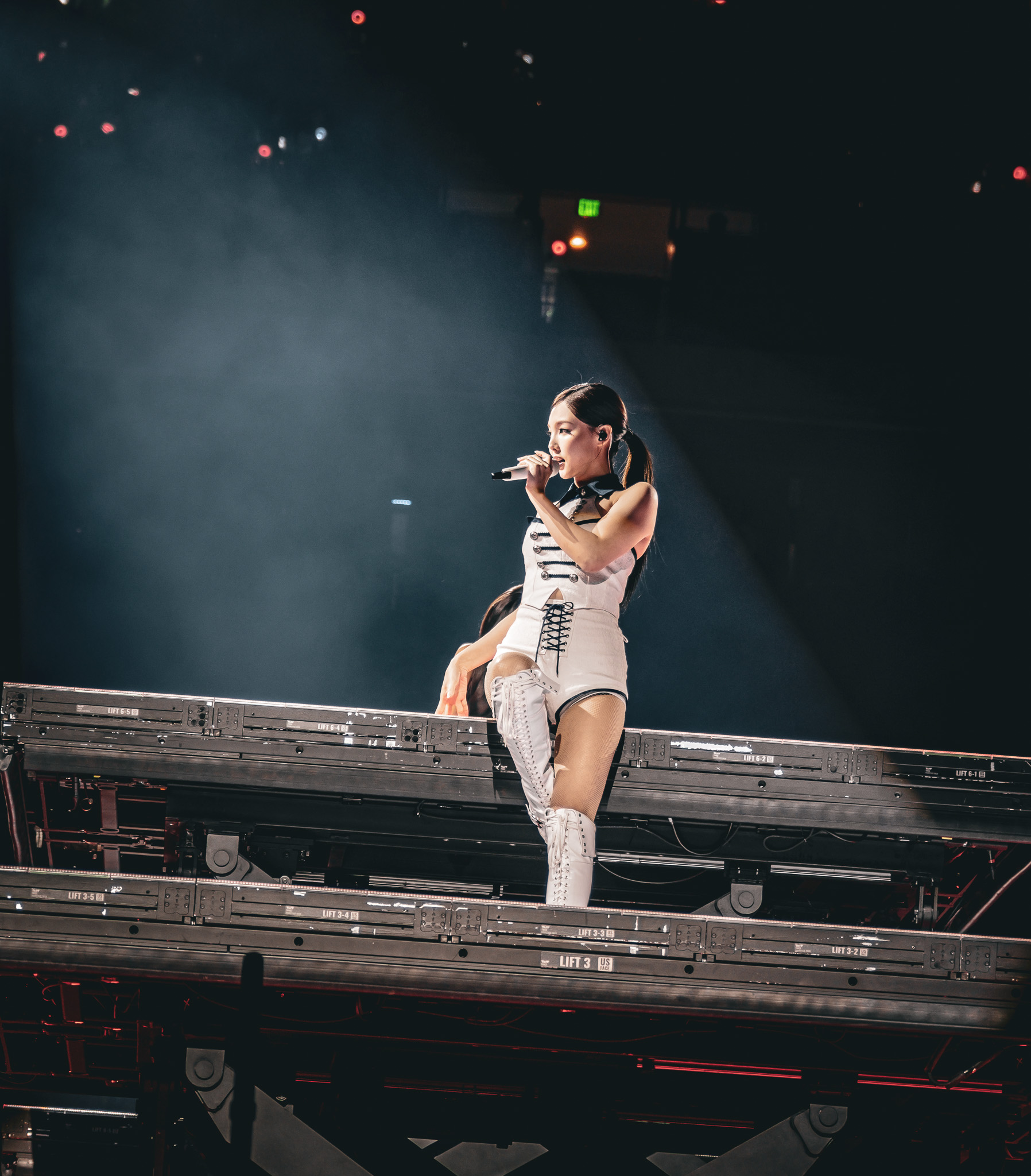

Opening: A Flicker of Concern in the Spotlight’s Glare
For a fleeting moment during a recent TWICE fan signing event in Seoul, the carefully curated glow of idol perfection dimmed. It wasn't a missed note or a choreography misstep, but something far more human, and far more concerning, that captured the world's attention. A high-definition fancam, focused on member Momo, zoomed in not on her ever-present smile, but on her legs. The footage, spreading with viral urgency across social media platforms like X (formerly Twitter) and Instagram, showed a startling landscape of dark, extensive bruising covering her shins and calves. The purple and yellow blotches, stark against her skin, told a silent story of repeated impact, relentless practice, and physical sacrifice invisible during the group's flawless performances. This wasn't a minor scrape; it was a vivid, undeniable testament to the extreme physicality that underpins K-Pop's brightest smiles. In an instant, the conversation shifted from admiration for TWICE's ongoing "With YOU-th" world tour to a wave of alarm, empathy, and urgent questions about the sustainability of such a demanding career path, even for the industry's most established stars.
Background: TWICE’s Decade of Perseverance and the Evolution of Idol Athleticism
To understand the gravity of this moment, one must first understand the legacy of TWICE. Debuted in 2015 under JYP Entertainment, they rose to become a defining "Nation's Girl Group" of their generation through an unmatched combination of catchy "cheer-up" anthems, intricate and energetic choreography, and a relatable, cohesive group dynamic. Their journey is a masterclass in longevity, having successfully navigated the treacherous "seven-year curse" with a full-group renewal in 2022, a move that solidified their bond and commitment to each other and their fans, ONCE. You can explore the stories of other groups navigating renewal crossroads in our analysis, "Beyond The Tears: NCT DREAM’s Emotional Crossroads and the Fight for a Permanent Future".
However, this longevity comes at a physical price. TWICE’s choreography, particularly from their earlier hits like "TT" and "Likey," has always been demanding, but as the industry standard has evolved, so has the required athleticism. Concepts have grown more complex, formations more intricate, and the expectation for synchronization more absolute. Momo, the group's main dancer, is renowned for her power, precision, and almost superhuman control. Her dance skills are legendary, but they are forged in countless hours in practice rooms, where repetition is king and the floor is an unforgiving partner. The bruising seen is typical for dancers specializing in styles involving frequent floorwork, knee drops, and high-impact movements—a standard part of the repertoire for many girl groups today.
This incident does not occur in a vacuum. It highlights a pervasive, often unspoken, reality in K-Pop: the idol’s body is the primary instrument, and it is subject to immense wear and tear. The industry's schedule—a relentless cycle of comebacks, promotions, tours, fan meetings, and variety appearances—leaves little room for true physical recovery. As groups like TWICE push deeper into their careers, the cumulative effect of years of such exertion becomes increasingly visible. For a broader look at how agencies are (or are not) addressing artist welfare, our report on "Inside PLEDIS's Legal War Room" details one agency's structural approach to protection.
The "Always-On" Idol Economy
The pressure is compounded by the modern "always-on" media landscape. Idols are constantly observed, from official broadcasts to airport fashion, backstage livestreams, and intimate fancams like the one that revealed Momo's condition. There is no off-season, no true downtime where they can heal away from the public eye. The physical toll is an open secret, acknowledged in passing with ice packs seen in behind-the-scenes content or mentions of painkillers, but rarely confronted as a systemic issue. This moment with Momo forced that conversation into the glaring light of the mainstream.
The News: Deconstructing the Viral Moment and JYP’s Response
The specific footage originated from a fan signing event held on March 10th. As Momo interacted with fans, her seated position and the angle of the camera allowed for a clear, prolonged view of her legs. Within hours, the clips and screenshots were amplified by concerned fans and K-Pop news aggregators. The bruising was severe and extensive, suggesting sustained impact over time rather than a single accident. Key areas of concern for fans and medical commentators online included:
- The Bilateral Nature: Bruising was present on both legs, indicating the cause was likely choreography-related rather than a one-off stumble.
- The Color Gradient: The mix of deep purple and fading yellow/brown hues pointed to bruises in various stages of healing, evidence of ongoing, recurrent trauma.
- The Location: Concentrated on the shins and calves, classic impact zones for dancers performing moves that involve kneeling, floor spins, or rapid footwork.
The viral spread triggered an immediate and intense demand for a statement from JYP Entertainment. Initially, the silence was deafening, fueling further anxiety. However, within 48 hours, the agency issued a brief but pointed response to media inquiries:
"The bruising on Momo's legs is due to the intense practice and performance schedule for the ongoing tour and activities. She is receiving constant care and management from our on-staff medical team. There is no major injury affecting her schedule, and she is committed to fulfilling all planned activities with the support of the agency. We thank fans for their concern and ask for their continued warm support for TWICE's endeavors."
This statement, while acknowledging the cause, was met with mixed reactions. It confirmed the obvious—that the bruising was work-related—but offered little in terms of substantive change or reflection on the schedule that led to such a condition. It framed the issue as one of individual care ("receiving constant care") rather than one of systemic workload management. For many fans, this was a frustratingly standard corporate response, prioritizing the continuation of the commercial machine over a deeper welfare audit.

Fan & Community Reaction: From Alarm to Advocacy
The global ONCE fandom reaction was a complex tapestry of shock, heartbreak, frustration, and mobilized action. Social media platforms became the central forum for this outpouring.
On Twitter, hashtags like #WellBeingForTWICE and #ProtectMomo trended worldwide. The sentiment was overwhelmingly protective. Fans shared side-by-side comparisons of Momo's bright stage persona and the jarring fancam footage, writing emotional tributes to her dedication. "We love your performances, but we love *you* more," became a common refrain. This incident seemed to breach an unspoken contract for many fans—they accept the hard work, but witnessing such a visceral result of it felt like a line had been crossed.
A Shift in Fan Priorities
Beyond the emotional response, a more pragmatic, advocacy-oriented movement gained steam. Long-time fans began meticulously compiling timelines of TWICE's activities over the preceding months: the final legs of their massive "READY TO BE" tour, immediate preparation for the "With YOU-th" comeback, relentless music show promotions, video shoots, and now a new tour. The visual evidence of Momo's legs served as a powerful, indisputable data point in an argument fans have been making for years: the schedule is inhuman. Petitions began circulating, not demanding cancellations, but urging JYP to institute mandatory, scheduled rest periods, increase the visibility and authority of medical staff, and reconsider the density of activity blocks.
This reaction mirrors a growing trend in K-Pop fandom, where consumers are increasingly seeing themselves as stakeholders in artist welfare. They are leveraging their collective power—their voice and their purchasing capacity—to advocate for better conditions. The incident also sparked broader discussions on forums like Reddit and NetizenBuzz about the treatment of idols across the industry, with many drawing parallels to past incidents of visible exhaustion or injury in other groups. The conversation expanded from "Is Momo okay?" to "Why is this still happening to our idols in 2024?"
Industry Analysis: A Symptom of a Larger Systemic Challenge
The bruising on Momo’s legs is not an anomaly; it is a symptom of a deep-rooted, industry-wide challenge: the collision between the idol "superhuman" ideal and biological reality. As groups like TWICE, who are now senior artists, choose to continue performing at peak intensity, the industry lacks a mature framework to support aging idols' bodies. The model is still built on the boundless energy of teenagers, not the accumulated strain on professionals in their mid-to-late twenties.
First, there is the economic imperative. A group like TWICE is a revenue-generating powerhouse. Tours, comebacks, and endorsements represent massive financial investments for JYP and its partners. Downtime is seen as lost opportunity, creating immense pressure to maintain a constant output. The agency’s statement, emphasizing her commitment to the schedule, underscores this reality. The well-being of the artist, while important, is often balanced against commercial contracts and shareholder expectations.
Second, there is the cultural and competitive aspect. K-Pop is a battlefield of perfection. To stay on top, groups must constantly outdo themselves and their peers with more demanding concepts, more spectacular stages, and more prolific content. This "arms race" of performance pushes choreographers and idols to new physical extremes. The bruising is, in a grim sense, a badge of this extreme dedication—a fact that the industry and even some fans have historically romanticized. Breaking this cycle requires a fundamental shift in how success is measured, moving beyond sheer output and spectacle to include sustainability and artist health as metrics of a well-managed career.
This moment also raises questions about agency transparency and duty of care. While JYP provided medical care, could more have been done proactively? Could schedules have been spaced differently to allow for recovery? The incident invites comparison to SM Entertainment's past struggles with managing the emotional and structural toll on units like NCT Dream, highlighting that even major agencies grapple with these human resource challenges. Furthermore, as idols look beyond their peak performance years, the physical cost can have long-term implications. We've examined one path in "From Spotlight to Salon", which explores the physical and financial legacy of an idol's career.
The Role of Choreography and Staging
A specific point of analysis is the evolution of choreography itself. While spectacular, many modern routines are not designed for biomechanical longevity. The prevalence of high-heeled performances for female idols, coupled with complex floorwork, creates a high-risk environment for acute and chronic injury. There is a growing call from within dance communities and concerned fans for choreographers and companies to collaborate with sports medicine specialists to design impressive yet physically sustainable routines, especially for veteran artists.
What's Next: A Turning Point for TWICE and the Industry?
This incident, while centered on one member of one group, has the potential to be a watershed moment. For TWICE, the immediate path is clear: they will continue their scheduled activities, as confirmed by JYP. Momo's professionalism ensures she will perform through the discomfort. However, the intense scrutiny will not fade. Every future performance will be watched with a more discerning, concerned eye by fans looking for signs of strain or, hopefully, recovery.
The true test lies ahead, in the planning rooms of JYP Entertainment. Will this public concern translate into tangible changes for TWICE’s next project cycle? This could manifest as:
- Strategic Rest Periods: Building genuine, unplugged recovery time into the contract year, not just gaps between scheduled events.
- Enhanced Medical Partnerships: Moving beyond on-call care to integrated, preventative physiotherapy and conditioning programs tailored for each member's role (dancer, vocalist).
- Choreography Adaptation: Working with Momo and the performance director to potentially modify the most impactful moves for tour repetitions without sacrificing artistic integrity.
On a broader scale, this event adds fuel to a slowly building fire of advocacy within the K-Pop industry. It follows increased discussion about mental health, fair contracts, and post-idol careers. The image of Momo’s bruised legs is a powerful, unambiguous symbol that could empower other fandoms to speak up and push agencies toward more humane practices. It challenges the narrative that suffering for art is noble, suggesting instead that preserving the artist is the ultimate act of respect for the art itself.
Ultimately, TWICE’s story is one of remarkable resilience and love for their craft and fans. This moment of vulnerability isn't a sign of weakness, but a stark reminder of their humanity. How the industry—agencies, fans, and media alike—chooses to respond will define the next era of K-Pop. Will it continue to demand superhuman feats, or will it learn to better cherish the very humans who create the magic? The world is watching, and the conversation, much like the faint echoes of those bruises, will linger long after the spotlight on this particular incident fades. For continuing coverage on artist welfare and industry trends, follow our ongoing reporting on our News page and explore profiles of your favorite performers on our Artists page.