
The video was barely ten seconds long. Shot from the crowd during a Stray Kids fansign event, it showed member Han—typically known for his playful, dimpled smile and energetic stage presence—looking up at a fan. His expression, in that fleeting, unguarded moment before he registered the camera, was one of intense, unvarnished fatigue. His brows were drawn, his gaze sharp. It was not the "warm" or "bright" look fans are conditioned to expect. Within hours, the clip had spiraled across social media platforms, igniting a firestorm of debate. Was it a glare? A moment of justifiable exhaustion? An unintentional breach of the unspoken contract between idol and fan? While the internet argued, Han himself did not wait for the court of public opinion to render a verdict. He took to the group's official fan community, Bubble, and issued a swift, sincere, and personal apology. This simple act transformed a potential scandal into a profound case study, laying bare the intricate, high-stakes dynamics of modern K-Pop fandom and the human reality of the artists at its center.
The Han We Know: From Survival Show Underdog to STAY's Heart
To understand the resonance of this moment, one must first understand the artist at its center. Han Jisung debuted in 2018 as a core member of Stray Kids, a group forged in the crucible of JYP Entertainment's intense survival program. From the outset, Han established himself as a "genius idol," a triple threat whose prowess in rap, vocals, and songwriting became foundational to the group's self-producing, noise music identity. He is a primary contributor to the group's extensive discography through the production team 3RACHA, penning lyrics that often explore themes of anxiety, self-doubt, and the struggle for identity—topics that have forged a deep, empathetic bond with the fandom, STAY.
His on-stage and on-camera persona is famously vibrant. Han is the member known for his chaotic energy, his impeccable comedic timing, and an ability to light up any variety show or live broadcast. This duality—the introspective, sometimes tormented songwriter and the exuberant, crowd-pleasing performer—is what makes him so compelling. STAYs have consistently praised his "realness," his willingness to show vulnerability, whether through tearful speeches at awards shows or candid discussions about his mental health hiatus in late 2021. This established narrative of an artist who strives for authentic connection made his momentary lapse in fansign demeanor all the more startling, and his subsequent apology all the more significant.
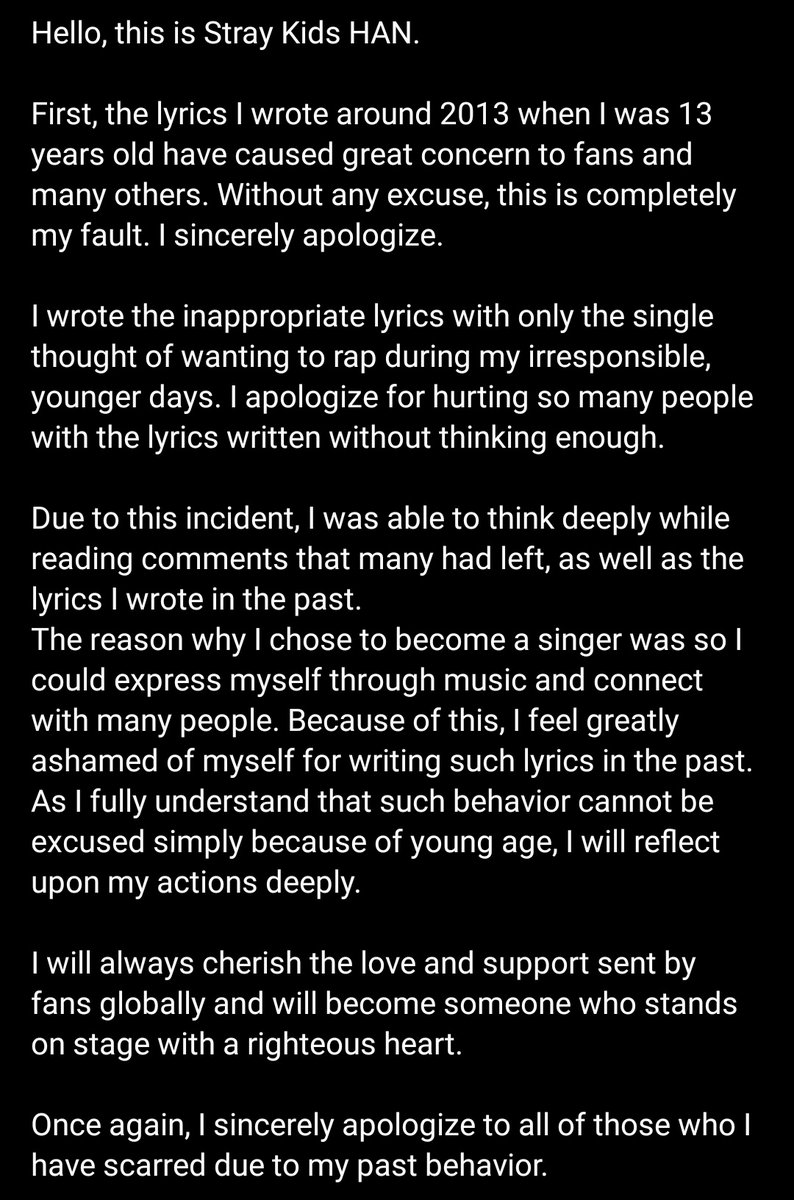
"I was careless. Please forgive me. To the STAY who came to see me, I'm really sorry. I will reflect on myself."
This Bubble message, simple and direct, was the entirety of his public statement. There was no corporate PR team draft, no vague corporate-speak. It was a personal address, taking full ownership. This instinct to connect directly, without filtration, is a hallmark of Han's relationship with STAY, but in this context, it served as a rapid defusal of a potentially explosive situation.
Deconstructing The Incident: More Than Just a "Glare"
The incident itself requires careful dissection beyond the clickbait headline. Fansign events are not casual meet-and-greets; they are marathon tests of endurance, acting, and emotional labor. An idol will sit for hours, repeating the same personalized interactions for hundreds of fans, each expecting a unique, magical, and photograph-perfect moment. The pressure to maintain a flawless facade of gratitude and enthusiasm is immense.
The Anatomy of a Fansign
Consider the context: Stray Kids are at the absolute pinnacle of global popularity. Their schedule following a major comeback is inhumanly packed: music shows, overseas travel, filming, rehearsals, and constant content creation. The fansign is often slotted into this chaos. On this day, Han was likely facing a line of hundreds. The fan in question approached, and in that split second before he could activate his "idol mode," his true state surfaced. Experts in non-verbal communication might not call it anger, but rather a micro-expression of autonomic nervous system overload—a blank, zoning-out stare common in extreme fatigue or sensory saturation.
What happened next is crucial. The fan posted the clip, perhaps feeling slighted or simply sharing a "real" moment. The viral spread was instantaneous. Comments fractured into distinct camps: those who felt deeply hurt and betrayed by the look; those who defended Han, citing his right to be tired; and those who criticized the fan for filming and sharing an unguarded moment. The situation perfectly encapsulates the modern paradox: fans demand authenticity, yet punish the very human flaws that authenticity reveals.
The Precedent of Apology
Han's action follows a subtle but growing trend within the industry, where idols are increasingly taking personal, direct accountability for perceived missteps in fan interactions. As we explored in our analysis Beyond The Stage Dive: I.N’s Heartfelt Apology and the Unseen Weight of Idol Responsibility, Han's bandmate I.N previously set a powerful example by personally apologizing for a minor stage incident. This shift from silence or corporate statements to personal communication reflects a broader change in the idol-fan power dynamic. It treats the relationship as a reciprocal one, built on mutual respect rather than unilateral idol worship.

STAY Divided? The Ripple Effect Across the Fandom
The reaction within the STAY fandom was a fascinating display of its maturity and complexity. Unlike simpler narratives of blind defense or universal condemnation, the community engaged in a nuanced, multi-layered discourse.
On one hand, a segment of fans expressed genuine hurt. For them, a fansign is a significant financial and emotional investment. Saving for album purchases to win a slot, traveling, and building anticipation culminate in a hope for a positive, memorable interaction. Han's expression, seen through this lens, felt like a rejection of that effort. Social media posts with tags like #WeLoveYouHan were interspersed with quieter, more disappointed testimonials from fans who questioned the nature of their parasocial relationship.
Conversely, a powerful wave of support emerged, rooted in advocacy for idol well-being. This faction argued vehemently against the dehumanization of idols. Tweets and forum posts highlighted the grueling nature of idol schedules, with many drawing parallels to their own experiences with burnout and the impossibility of smiling constantly at work. This group praised Han for his apology but also questioned the culture that made it necessary.
"He apologized for being human for one second. Let that sink in," wrote one popular translator and fan account, a sentiment that was echoed thousands of times.
Perhaps the most impactful reaction came from fans who used the incident as a catalyst for a broader conversation. They circulated guidelines on "fansign etiquette," reminding others that idols are not animatronic dolls, that filming every second can be invasive, and that respect should flow both ways. This internal self-policing is a hallmark of a fandom transitioning from a passionate fanbase to a more conscientious community. The debate even spilled over into discussions about generational shifts in K-Pop consumption, much like the divides exposed when fans try to build their own dream festival lineup.
Industry Echoes: Why This Moment Matters Beyond Stray Kids
While centered on Han, this incident sends reverberations throughout the K-Pop industry, touching on critical issues of mental health, fan entitlement, and corporate responsibility.
Firstly, it underscores the unsustainable emotional labor demanded of idols. The industry sells a fantasy of accessible, ever-affectionate stars. Events like fansigns are commercial transactions packaged as intimate connections. Han's moment of fatigue was a crack in that facade, a reminder of the immense psychological effort required to sustain it. Agencies, including JYP, are increasingly faced with the challenge of balancing profitable fan engagement with the mental well-being of their artists. Incidents like this add pressure to re-evaluate the format and frequency of such high-intensity interactions.
Secondly, it highlights the double-edged sword of direct idol-fan communication platforms like Bubble. While they foster closeness, they also create an expectation of immediate personal accountability for any perceived slight, 24/7. The idol is never truly "off," as a controversy can erupt and require a response at any moment, as Han demonstrated.
Thirdly, the public and media response sets a precedent. The fact that major outlets like K-Beats are analyzing this not as "scandal" fodder but as a complex socio-cultural moment signifies an evolution in K-Pop journalism. The focus is shifting from pure gossip to examining the systemic forces at play. This mirrors a larger trend in how we cover the industry, similar to our in-depth look at the evolving careers of idols in acting, as seen when the cast of a major drama said their goodbyes, marking a new chapter.
Ultimately, the industry watches how these situations are resolved. Han's quick, personal apology likely mitigated significant brand damage for both himself and Stray Kids. It proved that honesty and swift accountability can be more effective than evasion. In an era where fans value "realness," showing the work of maintaining a relationship—even when it involves apologizing—can paradoxically strengthen that bond. For a look at how other groups navigating unique pressures have fared, one can consider the story of K-Pop's pioneering LGBTQ+ boy group and the different challenges they faced.
Looking Forward: Reflection, Resilience, and the Road Ahead
In the immediate wake, the event will likely lead to quiet, internal adjustments. JYP Entertainment may brief artists on managing fatigue during long events, or subtly adjust fansign protocols. For Han, it will be a moment of personal reflection, a sharp reminder of the microscopic scrutiny he lives under. However, if his past is any indicator, he may channel this experience into his art. His songwriting has always been a conduit for his inner life, and this encounter with the exhausting expectations of fame could well fuel future 3RACHA tracks.
For STAY, the incident serves as a collective maturation point. It is an opportunity to define what kind of fandom they want to be: one that consumes idols as products, or one that champions them as human artists. The thoughtful discourse that followed suggests a leaning toward the latter. The fandom's ability to hold both empathy for Han and understanding for the fan's initial hurt points to a sophisticated, emotionally intelligent community.
The true "what's next" extends to the entire industry. As K-Pop continues its global domination, the traditional, tightly controlled idol image is becoming increasingly difficult to maintain. Moments of human error or fatigue will inevitably leak out. The question is how the ecosystem—agencies, media, and fans—chooses to respond. Will it be with punitive outrage, or with a collective deep breath and a recognition of shared humanity?
Han's brief, tired glance and his immediate apology may be forgotten in the whirlwind of the next comeback, the next record broken, the next viral challenge. But for those watching closely, it marked a small, significant step. It was a moment where an idol, however inadvertently, reminded the world that behind the glittering performance on our Charts page and the flawless images on our Artists page, there is a person. And in taking responsibility for his momentary humanity, Han Jisung didn't break the idol contract; he subtly, powerfully, began to rewrite its terms.