
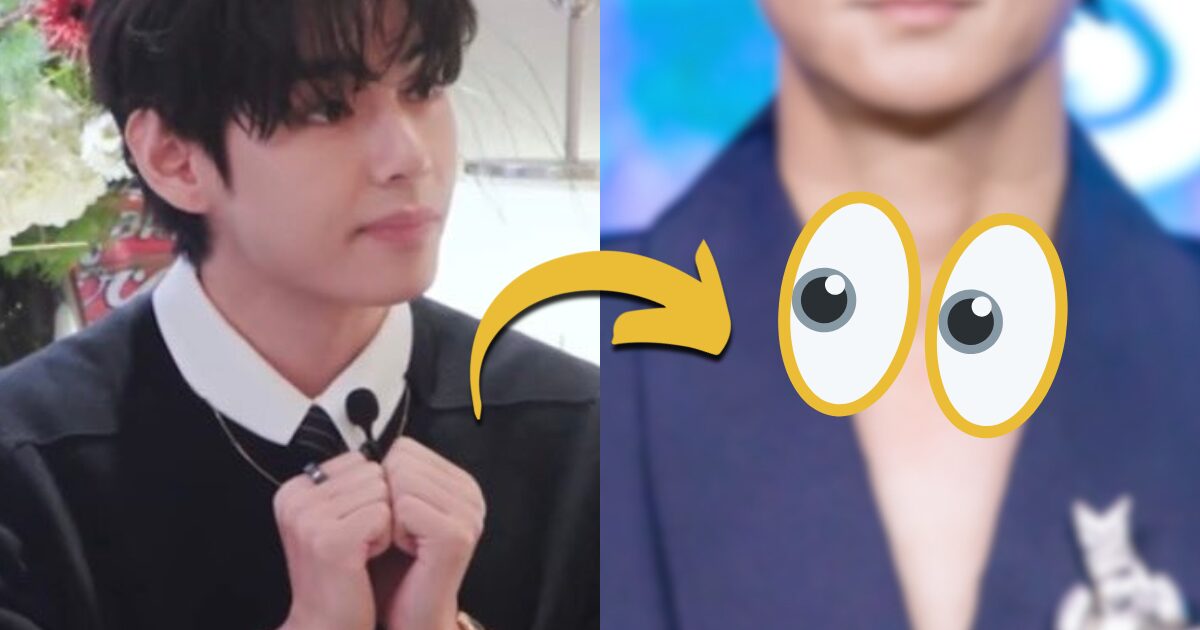

The world knows Kim Taehyung, BTS's V, as a global icon of unparalleled charisma. His stage presence is magnetic, his baritone voice unmistakable, and his visual appeal is so potent it has spawned its own lexicon—the "Taegeuk Dancer" aura, the "CGV" (Computer-Generated Visual) perfection. Yet, in a recent, deeply personal revelation that has sent shockwaves through the K-Pop community, V confessed that his path to this monumental status was almost derailed by a single, devastating moment of comparison. The subject of this comparison? The legendary actor Lee Joon-gi, whose "face card"—a K-Pop slang term for sheer visual power—was so "insane" it made a young Taehyung question his entire future.
This story, emerging from a casual yet profound segment on a variety show, transcends mere celebrity anecdote. It taps into the very heart of Korea's stringent beauty culture, the daunting hierarchy within the entertainment industry, and the fragile psychology of a trainee. It is a narrative about the idol who almost wasn't, the dream that nearly died before it began, and the unexpected face that became both a benchmark and a temporary barrier.
The Weight of a Dream: V's Pre-Debut Journey
Long before "Dynamite" topped the global charts, Kim Taehyung was a teenager from Daegu with a dream. Recruited by Big Hit Entertainment (now HYBE) under the now-legendary premise of accompanying a friend to auditions, V entered a system designed to test the absolute limits of physical and mental endurance. The trainee period, as documented in countless BTS memoirs and logs, was a crucible of 14-hour practice days, constant evaluation, and the pervasive anxiety of elimination.
Within this system, visuals are not merely appreciated; they are a quantified, critiqued, and essential component of an idol's potential marketability. Agencies invest immense resources in sculpting not just talent, but image. For a young Taehyung, whose handsome features were often described as unique and "actor-like" even then, confidence was not a given. It was something forged in the fire of practice and peer comparison. His journey was part of a larger wave, similar to the intense pressures faced by groups navigating legacy and change, much like the emotional trials recently explored regarding NCT Dream and SM Entertainment's internal debates over their future.
The Actor-Idol Hierarchy: A Cultural Context
To understand the gravity of V's statement, one must understand the unspoken cultural ladder in Korean entertainment. Historically, actors—especially those in film—have occupied the top tier, associated with prestige, serious artistry, and longevity. Idols, while phenomenally popular, have often battled perceptions of being "manufactured" or less focused on pure acting craft. An actor's visual is often framed as classic, cinematic, and natural; an idol's visual is spectacular, trend-setting, and meticulously curated. When a trainee like V compared himself to a top-tier actor like Lee Joon-gi, he wasn't just comparing looks; he was confronting an entire hierarchy of perceived value and artistry.
The Fateful Encounter: Lee Joon-gi's "Insane Face Card"
The incident, as recounted by V, occurred during his trainee days. The specific context varies slightly in retellings, but the core is consistent: he saw actor Lee Joon-gi in person or in a focused media clip. Lee Joon-gi, a superstar since his breakout role in "The King and the Clown" (2005), is renowned for his sharp, elegant, and almost ethereally handsome features, particularly his expressive eyes and sculpted jawline. He embodies the "kkunminam" (flower pretty man) ideal with a charismatic, powerful edge.
"I saw Lee Joon-gi sunbaenim, and his face was just... it was insane. I thought, 'How can someone look like that?' I felt like I could never compare. In that moment, I seriously thought about giving up. What was I even doing?"
This quote, paraphrased from V's emotional delivery, is staggering in its honesty. It reveals a vulnerability seldom seen from an artist at his pinnacle. This was not a moment of simple admiration; it was a crisis of identity. The visual standard he witnessed felt unattainable, casting a shadow over his own self-perception and his belief in his place in the competitive entertainment world. It’s a poignant reminder of the human behind the icon, a theme echoed in stories of other artists navigating self-doubt, such as former idol Lee Soo-ah's journey to redefine her life and self-image post-career.
Deconstructing the "Face Card" Phenomenon
The term "face card" has become ubiquitous in K-Pop fan lingo, meaning one's visual appeal is so strong and reliable it functions like an unbeatable card in a game. "Face card never declines" is the highest compliment. Lee Joon-gi's face card is legendary, having remained potent for nearly two decades across genres from historical drama to noir thriller. For a trainee internalizing the industry's intense focus on visuals, witnessing this paragon firsthand could feel less like inspiration and more like a definitive verdict.

ARMY and Netizen Reaction: Empathy and Outrage
The reaction from ARMY and the wider online community was immediate and multifaceted. Social media platforms like Twitter and Korean forums such as Pann and theqoo exploded with thousands of posts.
- Empathetic Heartbreak: The dominant sentiment was one of protective sorrow. Fans shared edited photos and videos of a young, pre-debut Taehyung, writing captions like "You never had to doubt" and "The world almost missed that smile." Many shared their own stories of being crushed by comparison, creating a powerful moment of collective empathy.
- Respect for Honesty: V was widely praised for his vulnerability. In an industry where idols are often expected to project invincible confidence, his admission was seen as a brave dismantling of perfect facades, encouraging conversations about mental health and self-esteem.
- Comparative Debates: Inevitably, debates flared about "who is more handsome." However, a significant portion of the discourse, led by mature fans, pushed back against this, arguing that the story was not about ranking but about the subjective, often painful, experience of self-doubt. Comments emphasized that V and Lee Joon-gi possess distinct, era-defining visuals that should not be pitted against each other.
- Industry Criticism: Many used the moment to criticize the toxic visual pressures of the K-Pop trainee system. Discussions pointed out how the industry's hyper-focus on specific beauty standards can erode the confidence of even the most genetically gifted individuals, creating an environment where someone like V could doubt his potential.
Industry Analysis: The Psychology of Visual Standards and Survival
V's confession is a case study in the psychological underpinnings of the K-Pop industry. Dr. Park Min-ji, a cultural psychologist who has consulted with entertainment agencies, explains: "The trainee period is a state of heightened suggestibility. Every glance in the mirror, every comment from an evaluator, every comparison to a senior artist is magnified. They are being conditioned to see themselves as a product-in-development. Witnessing an established 'perfect standard' like Lee Joon-gi can trigger an impostor syndrome so severe it threatens the core of their ambition."
This incident also highlights the evolving nature of the "idol visual." While actors like Lee Joon-gi set a timeless, sharp-jawed standard, V himself has come to represent a new paradigm: the "duality visual." He can shift from adorable "taetae" to fierce, smoldering performer to elegant, actor-like presence. His unique, sometimes unconventional handsomeness—once a potential source of doubt—has become his greatest trademark, proving that the market now celebrates distinctiveness as much as classic beauty.
Furthermore, this story underscores the immense pressure on agencies to nurture not just talent, but the mental fortitude of their artists. As groups like BTS and SEVENTEEN achieve unprecedented global success, protecting their artists' well-being becomes a complex legal and ethical operation, not unlike the "fortress" strategy being built by PLEDIS for SEVENTEEN ahead of crucial contract milestones.
The Silver Lining: Fuel for a Fire
Analysts note that such moments of profound doubt, if overcome, can become a secret weapon. The humility born from feeling "less than" can fuel a relentless work ethic. V's subsequent dedication to honing his stagecraft, his unique facial expressions (the "Vante" gaze), and his artistic pursuits in photography and painting may have been, in part, a sublimation of that early insecurity. He didn't just try to match a standard; he worked to create his own category entirely.
What's Next: V's Forged Legacy and a Changing Industry
Today, the idea that Kim Taehyung almost quit is almost unthinkable. He stands as a pillar of the biggest boy band in history, a successful solo artist with "Layover," and a budding actor with his acclaimed debut in "Hwarang" and the upcoming drama "That Is My Polestar." His visual is now the benchmark for millions. The boy who doubted his face now has his face plastered across global campaigns for luxury houses like Celine.
His story, now public, will likely serve multiple purposes moving forward:
- Mentorship Narrative: It provides a powerful tool for him and other senior idols to counsel trainees. The message is clear: even your heroes doubted themselves.
- Deepened Artist Narrative: As V continues his solo and acting pursuits, this revelation adds a layer of poignant depth to his "actor-like" persona. It frames his entire journey as one of overcoming a specific, personal hurdle related to the very field he is now entering.
- Industry Reflection: It adds momentum to the ongoing conversation about trainee welfare and the need for psychological support systems within agencies to combat the damaging effects of constant comparison.
Ultimately, the tale of V and Lee Joon-gi's face card is not a story of defeat, but of a crossroads. It is about the fragile moment before destiny solidifies. The fact that V persevered, transforming his moment of insecurity into a driving force, is what cemented his legendary status. It reminds us that the most captivating "face cards" in K-Pop are not just about genetics, but about the story, the struggle, and the undeniable charisma forged in the gap between doubt and destiny. As the industry continues to evolve, the hope is that future trainees can find their own unique path without having their dreams momentarily crushed by comparison, but inspired by the diverse spectrum of beauty and talent that artists like V have fought to expand. For the latest on how established artists navigate these complex careers, fans can always turn to our comprehensive news coverage.