
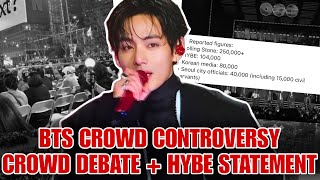

Opening: The Festa That Fractured a Foundation
The annual BTS Festa, a multi-day celebration of the group’s anniversary, has historically been a sacred space for ARMY and the artists alike—a time of heartfelt letters, nostalgic throwback performances, and candid reflections on a journey unlike any other in music. The 2025 Festa, however, concluded with a shockwave that has left the global music industry reeling. In a move described by industry insiders as “unthinkable” and “strategically baffling,” HYBE Corporation issued an official statement that did not celebrate the group’s lyrical genius, but openly criticized it. The corporate entity, birthed from the group’s own success, took aim at the very heart of BTS’s identity: the substance and direction of their songwriting. This is not a story of a simple disagreement; it is a profound rupture at the nexus of art and commerce, one that challenges the foundational myth of one of the world’s biggest pop acts.
The statement, released on the final evening of Festa festivities, ostensibly framed its commentary as forward-looking “brand stewardship.” Yet, its language—pointed, clinical, and devoid of the reverence typically afforded to BTS’s discography—landed like a declaration of war on the fandom’s core values. Overnight, social media platforms transformed from celebratory spaces into digital battlegrounds, with the hashtag #HYBEApologizeToBTS rocketing to the top of global trends. The fury is palpable, but beneath it lies a deeper, more troubling question: Has the corporation built by BTS’s dream finally grown too large to understand it?
Background: From Bangtan to Behemoth
To comprehend the seismic nature of this event, one must first understand the symbiotic, almost sacred, relationship that has existed between BTS and their creative home. The narrative is well-worn but essential: a group of young trainees under producer Bang Si-hyuk debuting with a fiercely socio-politically conscious hip-hop sound, speaking to the anxieties and dreams of their generation. Their lyrics tackled mental health (“Tomorrow,” “The Last”), societal pressure (“N.O,” “Baepsae”), and self-love (“Epiphany,” “Answer: Love Myself”) long before such themes were commonplace in mainstream pop.
This authentic, self-penned voice was not just a marketing point; it was the bedrock of their connection with ARMY. Each album, from The Most Beautiful Moment in Life series to Map of the Soul: 7, was dissected not only for its melodies but for its lyrical poetry and narrative depth. As explored in our analysis of "Beyond the Numbers: How BTS's "THE COMEBACK LIVE: ARIRANG" on Netflix Redefined the Global Live Experience", their power has always lain in this unparalleled synergy of performance and profound message.
The Corporate Evolution
Parallel to BTS’s artistic ascent was the meteoric rise of their agency. Big Hit Entertainment transformed into HYBE Corporation, a publicly-traded behemoth with a portfolio of labels, a groundbreaking platform in Weverse, and ambitions stretching into gaming, metaverse, and education. With this growth came new stakeholders, immense shareholder pressure, and a diversification strategy that, while successful, increasingly framed BTS as the invaluable, but singular, pillar in a much larger architectural plan. The group’s enlistment period, a time of planned solo activities and chapter two, was seen as a test for HYBE’s multi-label ecosystem.
This period also saw the members diving deeper into personal artistic exploration. Releases from j-hope, RM, and SUGA’s Agust D have been particularly lauded for their raw, unfiltered, and complex lyricism, dealing with fame, identity, and existential fatigue. It is precisely this type of introspective, sometimes challenging, artistry that appears to be at odds with the “brand direction” hinted at in HYBE’s controversial statement.
The News: Decoding the Corporate Lexicon
The full text of HYBE’s statement, disseminated to news outlets and posted on its official investor relations channel, is a masterclass in corporate communications that utterly failed to read the room. It began with standard congratulations for BTS’s anniversary before pivoting abruptly.
“As HYBE looks to steward the long-term global brand health of all its artist IP, we are engaged in continuous evaluation of all creative outputs. In relation to recent lyrical content from BTS members, both as a group and in individual capacities, our analysis suggests a divergence from the broadly accessible, universally hopeful brand narrative that has been central to the group’s global crossover. Moving forward, creative direction will be collaboratively aligned to ensure consistency with the overarching, positive brand equity that serves as a foundation for all business verticals.”
The phrasing is deliberately opaque, but the implications are stark. Key terms like “brand health,” “artist IP,” and “overarching, positive brand equity” reduce BTS’s music to a product line in need of managerial oversight. The critique targets “recent lyrical content,” which fans and critics immediately interpreted as references to:

- Agust D’s “Amygdala” and “Snooze”: Deeply personal tracks about trauma, survival, and the heavy cost of success.
- RM’s solo work on Indigo: Philosophical musings on art, legacy, and the confusion of modern life.
- Group tracks like “Dis-ease” and “UGH!”: Songs from BE and Map of the Soul: 7 that confront inner anxiety and societal rage, respectively.
The statement implies these themes are not “broadly accessible” or “universally hopeful” enough, a notion that fundamentally misreads why ARMY connects with BTS. The fandom’s devotion is built on this very honesty—the admission that the “Love Myself” journey includes pain, anger, and “dis-ease.” To suggest these lyrics are a “divergence” is to suggest the core of BTS’s artistry is a problem to be solved. Industry analysts we spoke to noted the statement’s timing, post-Festa, seemed designed for a shareholder audience concerned about commercial optimization during the group’s quasi-hiatus, utterly neglecting the emotional resonance of the moment for fans. For more on how idols are navigating personal and professional evolution, see our feature on A New Chapter: BELUGA's Sena Announces Birth of First Child.
Fan & Community Reaction: The Roar of ARMY
The backlash was instantaneous, global, and devastatingly articulate. This was not mere fan anger; it was a collective intellectual and emotional rebuttal. #HYBEApologizeToBTS amassed over 15 million tweets in 12 hours. However, beyond the hashtag, the response took multifaceted forms:
The Lyrical Defense
Fans launched “Lyric Appreciation” threads, meticulously dissecting the very songs HYBE’s statement seemed to critique. They translated complex wordplay, contextualized historical references, and shared personal testimonies of how these “non-universally hopeful” lyrics provided solace during their darkest times. “They saved us with their honesty about pain, and now HYBE calls that a ‘divergence’?” wrote one fan on Weverse, a platform owned by HYBE itself. “The ‘brand’ they want to manage is built on the bones of the truths they now want to sanitize.”
Financial Mobilization
ARMY’s economic power is legendary, and talk of a coordinated boycott began to surface. This wasn’t aimed at BTS content, but specifically at HYBE’s other ventures: delaying purchases from the Weverse Shop, canceling subscriptions to Weverse and VLIVE (prior to its migration), and pledging to avoid stocking up on merchandise from other HYBE labels. The most striking move was a grassroots campaign to massively short HYBE stock on the Korean exchange, a drastic measure that demonstrates the severity of the breach of trust.
Direct Appeals to the Members
Across platforms, messages poured out urging the BTS members—currently all serving in the military—to know that ARMY stands with their art, not the corporation’s interpretation of it. A viral petition titled “Protect Their Pens” called for legally guaranteed creative control for the members upon their return. The sentiment echoes historical tensions in K-Pop, but at an unprecedented scale. As seen in stories like "Beyond the Throwback Filter: Inside Girl's Day's Heartfelt Reunion", the bonds between artists and fans can outlast and transcend corporate structures.
“We fell in love with Bangtan Sonyeondan, not HYBE’s ‘Artist IP BTS.’ The moment they confuse the two is the moment they lose everything,” tweeted a fan account with over 500,000 followers.
Industry Analysis: A Precedent-Setting Quake
The repercussions of this statement extend far beyond HYBE’s headquarters. It has sent a chilling message through the entire K-Pop industry and raised critical questions about the future of artist-agency relationships.
First, it shatters the illusion of inviolability. If HYBE, the company that literally owes its existence to BTS’s creative freedom, is willing to publicly critique their lyrics, what does that mean for younger, less powerful artists across the industry? It emboldens other agencies to prioritize brand-safe, shareholder-friendly content over artistic risk. This could lead to a homogenization of music at a time when artists like NewJeans, LE SSERAFIM - PUREFLOW pt.1: What Just Landed" rel="internal">LE SSERAFIM, and Stray Kids are pushing boundaries.
Second, it highlights a dangerous disconnect between corporate management and cultural capital. HYBE’s statement reads like a memo from a consumer goods company, not a music label that understands its flagship act. It fails to grasp that BTS’s “brand equity” is intrinsically tied to their authenticity and willingness to explore dark themes. As one veteran music executive (who requested anonymity) told us, “This is like BMW issuing a statement criticizing the design of the 3 Series. It’s not just tone-deaf; it’s corporate suicide. It devalues the very asset they’re trying to protect.”
Third, it places BTS’s 2025 reunion in an entirely new, fraught context. All eyes will now be on the first group comeback after military service. Will there be visible creative tension? Will the lyrics be scrutinized for signs of “compliance” or “rebellion”? The narrative is no longer simply “The World Awaits BTS’s Return,” but “The World Watches How BTS Navigates Their Corporate Overlords.” This unfairly burdens the artistic process and could overshadow the music itself. For context on how major brand campaigns normally function, our analysis of McDonald's groundbreaking campaign shows a more synergistic model.
Finally, this incident may accelerate existing trends. Artists and their legal teams may push for even stronger creative control clauses in contracts. The value of artist-owned labels and production companies, like those established by several BTS members, becomes even more apparent. It also serves as a cautionary tale for investors: the cultural engine of K-Pop cannot be managed like a typical asset without risking catastrophic backlash. For the latest on how artists are charting their own paths, follow updates on our Charts page.
What's Next: An Uncertain Reckoning
The path forward is murky, fraught with both danger and potential. HYBE finds itself in a crisis almost entirely of its own making. The immediate need is for damage control, but a simple apology may not suffice. The statement struck at a sacred trust, and restoring it will require more than PR gymnastics; it may require structural changes and a visible, unequivocal reaffirmation of BTS’s absolute creative autonomy.
The Ball is in HYBE’s Court: Insiders suggest emergency board meetings are underway. The likely outcomes range from a retraction and apology (the minimum required), to a public pledge of non-interference, or even the quiet departure of the executives who greenlit the statement. How they navigate the next 72 hours will be studied in business and music schools for years to come.
The Silence of the Members: Currently enlisted, the BTS members are in a unique position. They are likely aware of the firestorm but constrained in their ability to respond publicly. Their first communications upon beginning to complete their service will be parsed for any subtext, any hint of their stance. The true measure of this conflict’s resolution will be seen in the music they choose to make when they finally return as a full group.
A Lasting Scar on the Legacy: Even in the best-case scenario, a line has been crossed. The story of BTS and HYBE can no longer be told as a seamless fairy tale of mutual growth. It will now include this chapter of public fracture. The question is whether it becomes a footnote or a defining turning point. Will it be remembered as the moment HYBE overreached and was forcefully corrected by the power of ARMY and the unassailable legacy of the artists themselves? Or will it be the first sign of a slow, painful divergence between the world’s biggest band and the corporation that bears their imprint?
One thing is certain: the era of blind faith in the HYBE-BTS symbiosis is over. The trust must be rebuilt, note by note, word by word. The world, and a furious, heartbroken ARMY, will be watching. For continuing coverage on this and all stories shaping the K-Pop landscape, stay tuned to our News page.