
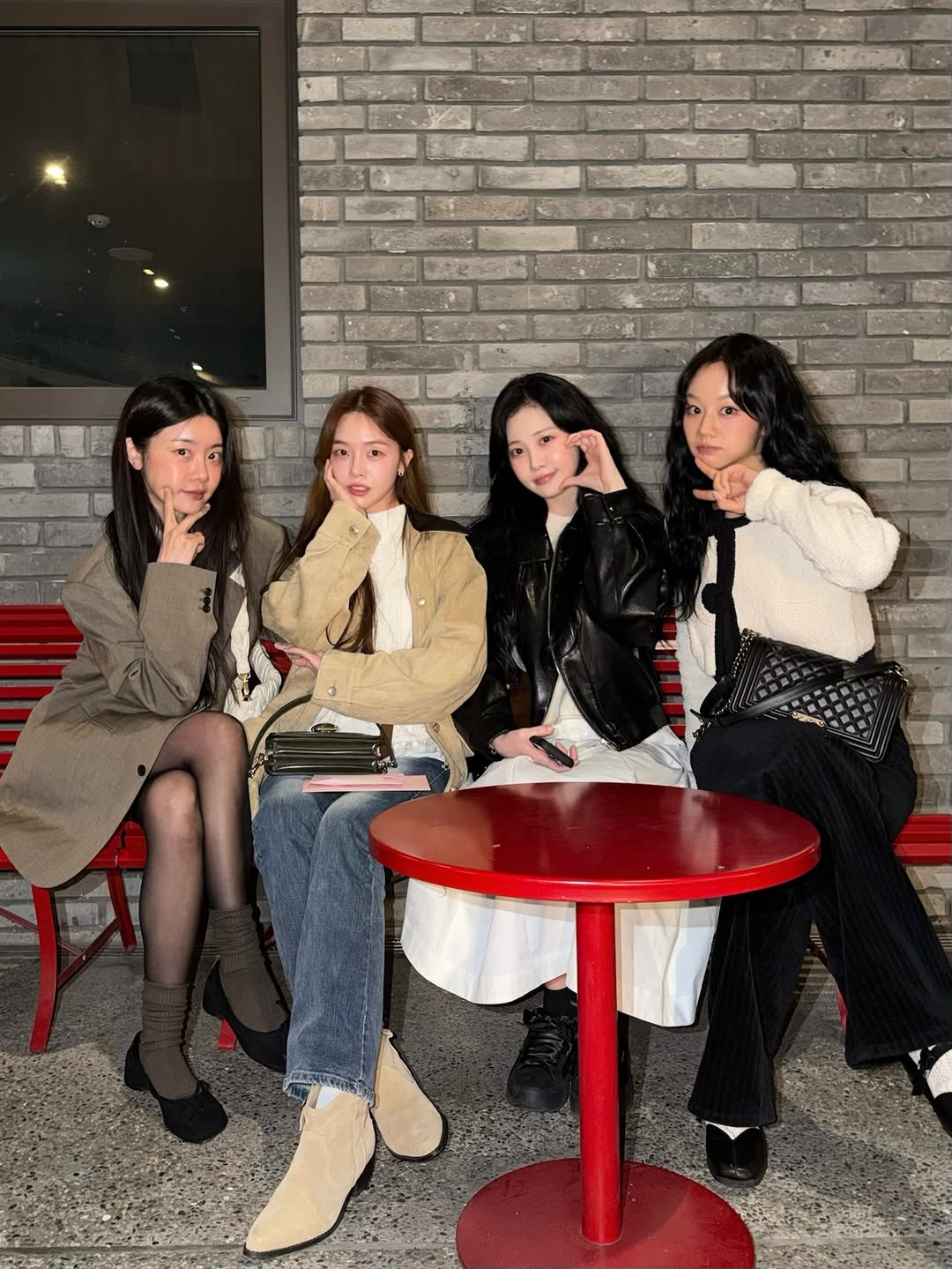

The Snapshots That Stopped the K-Pop Timeline
In an industry perpetually sprinting towards the next comeback, the next viral moment, the next generation, a simple series of photos can sometimes act like a temporal anchor. On March 24, that anchor was dropped by Girl’s Day’s Minah. Four women, four familiar smiles, gathered around a table laden with soju bottles and half-empty plates. The caption was breezy: “Us.” The impact, however, was seismic for a dedicated corner of the K-Pop universe. For the first time in what felt like an eternity to fans, all four members of the iconic 2nd-generation group—Sojin, Yura, Hyeri, and Minah—were together again, not for a scheduled broadcast, but for themselves. This wasn't a staged anniversary photoshoot or a company-mandated appearance. This was life, shared freely, and in that authenticity lay a powerful resonance that cut through the meticulously curated feeds of the current idol landscape.
The images, bathed in the warm glow of restaurant lighting, immediately flooded K-Pop social media timelines. They were a visual reprieve, a reminder of an era defined by both explosive hits and a palpable, sisterly camaraderie that fans, known as Dai5y, had clung to throughout the group’s unofficial hiatus. In a climate where idol interactions are often parsed for hidden meaning and “media friendships” are scrutinized, Girl’s Day’s effortless togetherness presented a compelling narrative of genuine, lasting bond. This reunion does more than merely satisfy nostalgic cravings; it prompts a deeper examination of legacy, the evolution of artist-fan relationships post-peak activity, and the unique space 2nd-generation groups hold in the rapidly expanding K-Pop ecosystem.
A Legacy Forged in Resilience and Reinvention
To understand the weight of this casual meet-up, one must revisit the journey of Girl’s Day. Debuted in 2010 under Dream Tea Entertainment, their path was not one of instant, meteoric fame. The group underwent early member changes before solidifying as the beloved quartet, a period of instability that forged an intense loyalty both within the team and from their nascent fandom. Their early concepts leaned into bright, innocent aesthetics, but it was a series of daring reinventions that catapulted them into the national spotlight.
The year 2013 marked a pivotal turn with “Expectation”, a song that introduced a more mature, playful, and confident image. Its iconic “leg move” dance became a nationwide sensation. But it was 2014 that cemented their status as powerhouses. The one-two punch of “Something” and “Darling” showcased the group’s full range. “Something,” with its sultry jazz-inspired choreography and elegant concept, demonstrated a sophistication rarely seen at the time, winning critical acclaim and multiple music show trophies. “Darling,” a bright, synth-pop earworm, proved their versatility. These hits didn’t just chart; they defined a summer and became timeless staples of the genre.
The Members as Individual Pillars
A key to Girl’s Day’s enduring appeal was the distinct, strong identity of each member, a blueprint many subsequent groups would follow. Leader Sojin was the vocal anchor and graceful “older sister” figure with a surprising quirky side. Yura, the visual center, captivated with her model-esque stature and vibrant energy. Hyeri blossomed from a cheerful maknae into a formidable variety star and later, a celebrated actress, her success with the drama Reply 1988 making her a household name. Minah, the main vocalist, stunned with powerful, emotive runs and pursued a successful solo singing and acting career. Their individual activities, rather than pulling the group apart, seemed to strengthen their collective brand, each success reflecting well on the Girl’s Day name.
After their last group release, “I’ll Be Yours”, in 2017, the members focused on their solo paths. Contracts expired, and while no official disbandment was announced, the group entered an indefinite hiatus—a common, yet always anxiety-inducing, phase for fans of legacy groups. In the intervening years, the K-Pop scene transformed. The 4th generation rose, dominated by immersive lore, global fan platforms, and a constant stream of content. Against this high-velocity backdrop, the occasional solo mention of “Girl’s Day” by a member in an interview or a fleeting two-member meet-up was a lifeline for Dai5ys. The longing for a full-group reunion grew into a quiet, persistent hope within the fandom.
Decoding the Reunion: More Than Just Drinks and Laughter
Minah’s Instagram post, comprised of several photos and a short video, was a masterclass in speaking volumes without saying much. The analysis began instantly. Fans became digital archaeologists, examining every pixel for clues about the group’s dynamic and future.
The setting was a private room in a Seoul restaurant, suggesting a desire for intimacy and genuine conversation away from public eyes. The attire was casual—sweaters, comfortable tops—a stark contrast to the glamorous stage outfits and red-carpet gowns of their idol years. This was a meeting of friends, not colleagues. The body language spoke loudly: heads leaned together, unrestricted laughter, Hyeri casually resting her head on Yura’s shoulder, Sojin’s wide, unmasked smile. The video snippet, with its muffled, overlapping chatter and laughter, provided the crucial audio evidence of the atmosphere: relaxed, joyful, and entirely unguarded.

“The fact that they chose to share this moment, but in such a raw, unfiltered way, is what makes it so special,” commented a long-time fan on an online forum. “It wasn't a polished ‘Hey, we’re still friends!’ VLOG. It was a peek into their actual lives. They gave us the proof we wanted without having to perform it.”
This authenticity stands in interesting contrast to the current idol culture of constant, yet often highly managed, connection. While fans of 4th and 5th-gen groups are spoiled with live streams and bubble messages, the content is frequently framed within an idol persona. Girl’s Day’s post felt like a artifact from a different era of fan interaction—one built on longer periods of anticipation and more meaningful, less frequent glimpses into an artist’s private world. It echoes the recent conversation sparked by The Unfiltered Upload, which discussed the public's hunger for genuine, unvarnished moments behind the idol facade.
Fandom Euphoria and the Nostalgia Economy
The reaction from Dai5ys and the wider K-Pop community was immediate and overwhelmingly emotional. The hashtag #GirlsDayReunion trended globally on Twitter/X, with fans from Latin America, Southeast Asia, and Europe sharing their memories. “This is the news that healed my inner 2014 self,” read one viral tweet. Old performance clips, variety show appearances, and iconic music videos began recirculating, introducing the group’s legacy to newer K-Pop fans.
On YouTube, reaction channels that typically focus on the latest MVs found themselves analyzing the “Expectation” and “Something” choreographies, leading to a measurable spike in the group’s streaming numbers—a testament to the potent “nostalgia stream.” Online communities like DC Inside and Reddit’s r/kpop saw lengthy threads reminiscing about the group’s impact, with many noting how Girl’s Day’s concepts paved the way for the confident, “girl crush” and elegant concepts that are commonplace today.
The reunion also ignited practical hope. Fan projects, such as trending song requests on music shows and coordinated streaming goals for their back catalog, spontaneously organized. This demonstrates a fandom that, while dormant in its group-focused activities, remained deeply organized and passionate, ready to mobilize at a moment’s notice—a powerful asset in today’s data-driven industry. Discussions about potential future activities, from a special anniversary single to a reality show, dominated conversations. The underlying sentiment was clear: the demand for Girl’s Day, as a unit, is not merely sentimental; it is active and commercially viable.
The Industry Ripple Effect: Legacy Groups in a 5th-Gen World
This spontaneous reunion arrives at a fascinating inflection point in K-Pop. The industry is more competitive and fast-paced than ever, with rookie groups debuting weekly and the pressure to constantly produce “content” and chart on global platforms like our Charts page being immense. In this environment, the narratives of established 2nd-gen groups like Girl’s Day, Sistar, and KARA (who recently had a successful comeback) provide a crucial counterpoint.
Their stories are no longer about breaking records or winning weekly music shows—though they certainly could. Their value lies in brand legacy, artistic credibility, and the deep, cross-generational fan loyalty they command. A Girl’s Day comeback in 2024 would be an event, cutting through the noise precisely because it is rare. It would be evaluated not on rookie metrics, but on its emotional resonance and quality, much like recent successful returns from groups like SHINHWA or TVXQ’s Yunho and Changmin.
Furthermore, the members’ successful solo careers in acting and variety give them a level of agency and financial stability that many active idols lack. This changes the power dynamic. Any potential group activity would be a choice made from a position of strength and mutual desire, not corporate obligation. This authenticity is a marketable commodity in itself. It also highlights a different model for sustainable careers, contrasting sharply with the intense pressures faced by current idols, a topic we explored in depth regarding The Emotional Avalanche surrounding 5th-gen idol pressures.
Their reunion also underscores the shifting definition of “group activity” in the modern era. It doesn’t have to be a high-stakes, year-long promotional cycle. It can be a special single, a YouTube reality series, a concert series celebrating their anniversary, or even just maintaining this public friendship that fuels the fandom. The model is flexible, and the success of other legacy acts proves there is a hungry audience for it.
Looking Forward: A Door Gently Opened
So, what does this reunion truly signify for the future of Girl’s Day? While it is premature to announce a comeback, it unequivocally signals that the bond—the essential ingredient—is not only intact but thriving. The members are in active, close communication. They enjoy each other’s company. They are proud of their shared history. In the high-stakes world of entertainment, these are not insignificant facts.
The most likely next step is not a sudden album, but a continuation of these shared moments. Perhaps more public interactions, joint appearances on each other’s YouTube channels, or a collaborative project for their upcoming 14th anniversary. The door to official group activities, once seemingly closed, has been gently nudged open. The power now lies with the four women to decide if, when, and how they wish to walk through it, on their own terms.
For the industry, Girl’s Day’s enduring appeal is a reminder that K-Pop’s foundation is built on groups that created indelible memories. For fans, it is a validation of years of loyalty. And for the members themselves, as seen in those glowing, relaxed photos, it is simply the joy of sisterhood, enduring far beyond the final encore of their promotions. In a landscape often obsessed with the future, Girl’s Day reminds us of the powerful, sustainable value of a legacy built on great music, genuine connection, and time-tested love. Whether this reunion remains a beautiful one-off or the first chapter of a new, unexpected act, its message is clear: some bonds, and some melodies, are truly timeless. To explore the careers of these artists and other iconic figures, visit our Artists page for in-depth profiles and career timelines.