
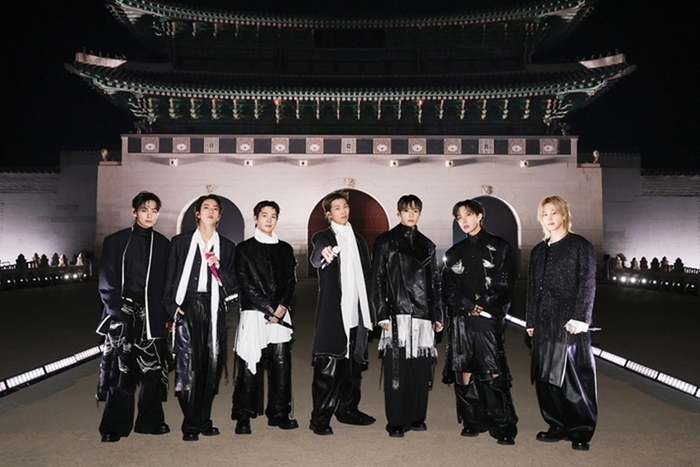

The air in central Seoul on June 13th was electric, thick with a collective anticipation that hadn't been felt on that scale in years. At the heart of Gwanghwamun Square, a stage stood not just as a concert platform, but as a symbol—a beacon marking the return of BTS's performance presence in South Korea after a significant hiatus. The event, a free public concert to celebrate the group's 11th anniversary and the release of their monumental ARIRANG album, was billed as a "gift" to ARMY. Yet, in the days that followed, the narrative subtly shifted from pure celebration to a complex mix of awe and logistical aftermath. On June 22nd, HYBE released an official statement that became a masterclass in corporate communication, threading a needle between profound gratitude and a formal, multifaceted apology.
This statement, addressed to fans, citizens, and authorities, did more than just address traffic jams and noise complaints. It opened a window into the immense, often unseen, pressures of managing a phenomenon like BTS in its current "Chapter 3" configuration. For industry watchers, the carefully parsed language served as a Rosetta Stone for decoding the new challenges facing HYBE as it navigates the dual identity of BTS as both a cohesive global icon and a collective of individual superstars with demanding solo schedules. The event and its aftermath have sparked a crucial conversation: In the quest to create historic, fan-first moments, where is the line between ambitious generosity and operational overreach?
The Weight of a Square: Gwanghwamun as Stage and Symbol
To understand the magnitude of the event and the consequent statement, one must first grasp the significance of the location. Gwanghwamun Square is not a concert venue; it is the ceremonial heart of South Korea, flanked by the Gyeongbokgung Palace, the Sejong Center, and major government offices. It is a space for national celebrations, political rallies, and public gatherings of historical import. Securing permission for a large-scale pop concert there is an unprecedented feat, a testament to BTS's unique status as cultural ambassadors. This was never going to be just another fan meeting—it was a statement event, designed to mark the group's comeback with the same national-cultural gravitas embedded in their ARIRANG album.
The choice of location tied directly to the thematic core of BTS's latest musical chapter. As explored in our analysis of "Sonic Fracture: Inside the Audio Uproar Surrounding BTS's Historic 'ARIRANG' Release," the album itself is a bold, traditional Korean music-influenced project that intentionally challenges mainstream pop sensibilities. A performance of such material in Gwanghwamun created a powerful synergy of sound and place, positioning BTS not merely as idols, but as cultural curators at a historic site. This elevated context, however, came with exponentially heightened stakes and scrutiny, setting the stage for the logistical tightrope walk that followed.
Chapter 3 and the New Concert Calculus
The Gwanghwamun concert was also the first full-group performance in Korea since the members began enlisting and launched their individual careers. This "Chapter 3" dynamic introduces new complexities. Coordinating the schedules of seven in-demand solo artists—each with their own albums, promotions, and international commitments—for a free, non-revenue-generating event is a staggering logistical puzzle. The commitment to do so speaks to HYBE and BTS's desire to prioritize the fan community, a gesture reminiscent of the heartfelt, sometimes unorthodox methods older groups have used to connect, as seen in our report on "From Legends to Pleaders." However, the scale here was magnitudes larger, transforming a loving gesture into a metropolitan event requiring military-grade coordination.
Deconstructing the Duality: HYBE's Statement of "Thanks" and "Sorry"
HYBE's official release, published on its Weverse community platform, was a study in balanced corporate rhetoric. It began not with an apology, but with "sincere gratitude" directed at three key entities: the fans (ARMY) for their "overwhelming love," the citizens of Seoul for their "understanding and cooperation," and the Seoul Metropolitan Government and relevant authorities for their "support and hard work." This order was deliberate, acknowledging the primary audience while recognizing the essential partnerships that made the event possible.
"We are sincerely grateful to ARMY for the overwhelming love you showed for BTS's comeback stage, and we also extend our deep thanks to the citizens of Seoul for your understanding and cooperation, and to the Seoul Metropolitan Government and related institutions for your great support and hard work."
The statement then pivoted, using the conjunction "but" to introduce the apology. This section was notably specific, addressing distinct issues: traffic congestion around the downtown area that "inconvenienced citizens," noise complaints from local residents and businesses, and general "inconveniences" caused by the sheer crowd size. By naming these issues explicitly, HYBE avoided a vague, blanket apology and demonstrated a clear understanding of the on-the-ground repercussions. The company promised to "make more thorough preparations" for future events to prevent recurrence, a nod toward internal process review.
The Unspoken Text: Between the Lines of Logistics and Expectation
Reading deeper, the statement also tacitly addressed the intense online discourse from some fans regarding viewing conditions, sound quality for those at the periphery, and the decision to host a free, first-come-first-serve event in an open, non-ticketed square. By thanking ARMY for their "passionate cheers despite the congested environment" (emphasis added), HYBE acknowledged the less-than-ideal experience for many while framing it through the lens of fan dedication. This subtle wording was a strategic move to validate fan feelings without legally admitting to a failure of duty of care—a nuance required when an event of this nature walks the line between a corporate production and a public gathering.

It also indirectly responded to criticisms of the ARIRANG rollout, which some felt was disjointed. The Gwanghwamun stage was a powerful, unifying physical anchor for the album's concept, an attempt to create a defining moment that would cut through digital noise. As noted in our piece on "The ARIRANG Anomaly," fan expectations for a BTS comeback are astronomically high, and HYBE's statement seemed to acknowledge the immense effort—and resulting friction—in trying to meet those expectations with a spectacle worthy of BTS's legacy.
A Mosaic of Reactions: ARMY, Citizens, and the Online Ecosystem
The reaction to both the concert and HYBE's statement was a fractal of modern fandom. On social media platforms like X (formerly Twitter) and Weverse, a significant portion of ARMY championed the event as a historic, generous success. Tweets and posts overflowed with videos of the massive, patient crowd singing along, highlighting the communal joy and the symbolic power of seeing BTS perform in such a location. For these fans, the logistical hiccups were a minor footnote to a once-in-a-lifetime experience. Many praised HYBE and BTS for the "free gift" and accepted the apology as a graceful, responsible gesture from a company that "did its best."
However, other corners of the fandom expressed frustration. Some international fans felt the event's physicality exacerbated the "digital divide" for those who couldn't travel to Seoul. Others who attended detailed experiences of extreme crowding, limited sightlines, and sound delays. "It was the happiest and most anxious I've ever been at a 'concert,'" one fan posted in a detailed thread that went viral. "The vibe was magical, but the planning felt like they expected 100,000 people and 500,000 showed up." This sentiment highlighted the core tension: the event's success as a cultural moment versus its flaws as a managed audience experience.
Outside the fandom, the reaction from Seoul residents and local businesses was mixed, as reflected in Korean news forums and community boards. While many expressed pride and excitement, others detailed genuine disruption—deliveries delayed for hours, noise levels affecting evening business, and significant personal inconvenience. HYBE's direct apology to citizens was a crucial step in managing public relations beyond the fan bubble, acknowledging that BTS's world exists within and impacts a wider societal context. It was a necessary move to preserve the group's and company's reputation with the general public, which is vital for maintaining the goodwill that allows such permissions to be granted in the first place.
Industry Ripples: The High-Stakes Game of "Free" Mega-Events
Within the K-pop industry, HYBE's statement was dissected as a case study. The Gwanghwamun concert represents the extreme end of a trend: using non-traditional, large-scale free events as strategic tools for brand building, fan loyalty, and comeback amplification. For a group at BTS's level, where traditional music show wins are a given and stadium tours sell out in minutes, the metrics of success shift from sales figures to cultural impact and media value. The global news coverage of the event, estimating crowd sizes and showcasing the spectacle, is arguably worth more than ticket revenue.
However, the aftermath reveals the immense risk and cost. The financial outlay for stage construction, security, city services, and production for a free event is enormous, with no direct return. The operational burden is staggering, requiring coordination with multiple government agencies, not just venue owners. The margin for error is razor-thin, as any problem becomes a public, not just a fan, issue. As one anonymous event planner for a major agency told K-Beats, "It makes a stadium concert look simple. You have control in a stadium. In a public square, you're at the mercy of geography, weather, and the sheer, unpredictable flow of human beings. HYBE just showed everyone the blueprint and the cautionary tale at the same time."
This event also casts a new light on HYBE's broader portfolio management. As the corporation expands with new groups like MAJESTEA, whose pre-debut strategy is already rewriting the K-pop playbook, the resource allocation for BTS's activities must be meticulously calculated. The Gwanghwamun concert was a statement that BTS remains the unparalleled centerpiece. Yet, the need for a public apology also underscores that even HYBE's vast infrastructure can be strained by the ambition of its flagship act. It raises questions about sustainable models for BTS's activities as a group moving forward, balancing iconic, nation-scale events with more manageable, yet still spectacular, productions.
Looking Forward: Reconciliation, Reflection, and the Road to 2025
So, what comes next? HYBE's statement is likely the final public word on the Gwanghwamun specifics, effectively drawing a line under the episode with a blend of grace and accountability. The real work will happen internally, in post-mortem meetings analyzing what went right and what went wrong. The lessons learned will inform future large-scale events, not just for BTS but potentially for other HYBE acts aiming for grand public gestures.
For BTS, the focus now sharply returns to the music and the individual member activities that define Chapter 3. The Gwanghwamun stage, for all its logistical complexities, served its ultimate purpose: it created an indelible image of BTS's return, powerfully anchoring the ARIRANG era in a real-world, culturally resonant moment. It reinforced their bond with ARMY through a shared, physical experience of scale and significance. The next logical step would be a full, ticketed world tour, where the lessons from Seoul can be applied in controlled environments to deliver the pristine experience fans expect. All eyes are now on 2025, when the final members complete their military service, and the possibility of a full-group tour becomes real.
Ultimately, this episode reinforces a fundamental truth about BTS and HYBE: their actions are never just about music. They are about history, culture, and community. The Gwanghwamun concert was an attempt to manifest that truth in its purest, most ambitious form. HYBE's subsequent statement is the necessary counterpart—the acknowledgment that even with the best intentions, translating that ambition into reality is a humbling, complex endeavor that requires thanking millions, apologizing to many, and vowing to bridge the gap between vision and execution next time. For the latest on all group and solo activities, fans can always check our Artists page for comprehensive profiles and updates. As the industry continues to evolve, such moments will be studied as pivotal points where ambition met reality, and the journey toward the next landmark began.