
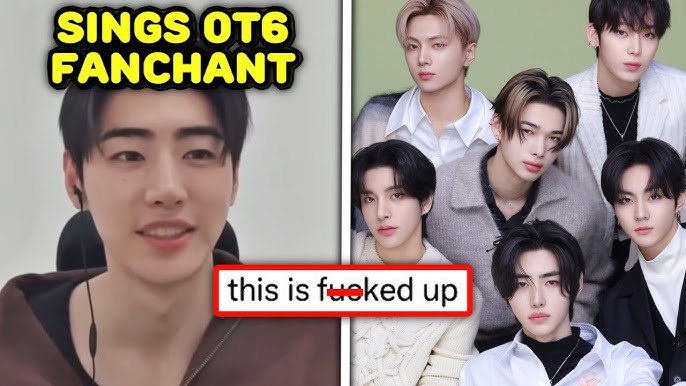

The digital curtain rises on a familiar scene: an idol, bathed in soft studio lighting, leans toward a screen, his expression a practiced blend of warmth and attentive grace. ENHYPEN's Sunghoon, known for his polished poise, is deep into a marathon of fan video calls, a now-standard pillar of idol-fan intimacy. The conversation flows through pleasantries, well-wishes, and shared memories. Then, a fan’s request, seemingly innocent, cuts through the routine. The specifics of the ask remain private, but Sunghoon’s response, captured and clipped for the relentless ecosystem of social media, was a simple, declarative phrase: "We are OT6 now."
In the vernacular of K-Pop fandom, "OT" stands for "One True," followed by a number denoting the preferred or accepted number of members in a group. "OT7" had been the sacred identifier for ENGENEs, ENHYPEN's fandom, since the group's formation under BELIFT LAB. That changed irrevocably in November of last year when the shocking announcement came: member Heeseung would be departing the group and the company, citing personal reasons and a need for a "new chapter." The departure was abrupt, clean, and devoid of the scandal that often colors such exits, leaving a Heeseung-shaped silence in ENHYPEN's music, choreography, and group dynamic.
Sunghoon’s utterance, a factual acknowledgment of the group's current reality, did not land as a simple statement of fact. Instead, it detonated across online communities, splitting the fandom into fractious debates about respect, closure, and the very heart of what it means to support a group in flux. This is not just a story about a fan call; it is a lens into the raw, unresolved symphony of a group navigating loss, the relentless pressure of public performativity, and the divergent paths of grief within a global fanbase.
The Foundation: From I-Land to an Unforeseen Crossroads
To understand the weight of Sunghoon’s words, one must first understand the bedrock from which ENHYPEN was formed. The group was born not from a traditional trainee system but from the intense, survival-program crucible of I-LAND, a joint venture between HYBE and CJ ENM. Viewers watched seven young men—Jungwon, Heeseung, Jay, Jake, Sunghoon, Sunoo, and Ni-ki—forge their bonds under extreme pressure, competition, and the glaring eye of the public vote. Their connection was narrativized as one of chosen brotherhood, a "family" built through shared struggle.
Their debut with Given-Taken was meteoric, establishing them as a fourth-generation powerhouse known for their vampire-themed lore, intricate synchronization, and a sound that blended dark pop with anthemic hooks. Heeseung, as the main vocalist and eldest, was often positioned as a musical and emotional pillar. His vocals were the anchor in tracks like Drunk-Dazed and Future Perfect (Pass the MIC), and his dynamic with the members, particularly the playful yet deep friendship with Jake, was a constant source of fan content and affection.
His departure, therefore, was not a minor roster change. It was an amputation of a core limb. BELIFT LAB's handling was clinical: statements wished him well, future activities would continue as six, and, notably, the group's existing discography and content would remain unchanged. This created a unique dissonance. ENHYPEN's present was a six-member configuration, but its immediate past—every music video, every performance, every variety show segment—was a living archive of seven. As we explored in the aftermath of another ENHYPEN communication controversy, "The Jake & Heeseung 'Shade' Storm", every word and omission from the remaining members is now subject to hyper-scrutiny, viewed as a clue to their true feelings about the void in their lineup.
The Incident: Deconstructing the "OT6" Moment
The fan call event was a routine promotional activity, yet it exists in the high-stakes arena of one-on-one idol interaction. These calls are paradoxically both intimate and profoundly public; any moment can be recorded, shared, and virally dissected. In this context, Sunghoon, the group's former figure skater turned meticulous idol, was engaging with fans.
Details from the full call are sparse, as is standard, but the clip that spread shows Sunghoon responding to a fan's comment or request. His tone, as described by multiple viewers, was not cold or celebratory, but matter-of-fact, perhaps even gently corrective. The fan, it is speculated, may have referenced an older, OT7-era concept or made a request that inherently acknowledged the past seven-member dynamic. Sunghoon’s "We are OT6 now" served as a polite but firm grounding of the conversation in the group's current reality.

"The member was likely trying to navigate a potentially awkward or emotionally charged fan request with professionalism. He was stating the operational truth of ENHYPEN's activities," commented a veteran K-Pop communications manager who wished to remain anonymous. "However, in fandom spaces, operational truth and emotional truth are often at war."
This incident echoes beyond ENHYPEN. It touches on the universal idol challenge of managing fan perception during transition. Similar debates over "ownership of narrative" arose around TWICE's Jeongyeon, as discussed in our piece on Jeongyeon's concert moment, where a personal choice sparked conversations about idol agency and fan expectation.
The Weight of the "Now"
The key word in Sunghoon’s sentence is "now." It is a temporal marker that simultaneously acknowledges the past ("we were") and defines the present. For some, this was a healthy, forward-looking assertion. For others, it felt like an erasure, a too-swift moving on from a member whose contributions were foundational. The debate hinges on whether this was a necessary act of boundary-setting or a painful dismissal of shared history.
A Fandom Divided: The Chorus of Reactions
The reaction online was instantaneous and polarized, illustrating the deep fissures within the ENGENE community post-Heeseung.
Side A: The Pragmatists. This faction applauded Sunghoon’s clarity. They argued that clinging to "OT7" is disrespectful to the six members actively carrying the group forward and creates a confusing narrative for new fans. They view the statement as a sign of strength and a necessary step for ENHYPEN's evolution. Comments in this vein included:
- "He's right. It's time to support the six who are here. Constantly bringing up the past hurts them and stalls the group's future."
- "Sunghoon was just being professional. The fan should respect the current lineup. Heeseung chose to leave."
- "This is the healthiest approach. Acknowledge the past, but live in the present. OT6 ENHYPEN is still amazing."
Side B: The Preservationists. This group, often comprising long-time fans from the I-LAND days, was wounded. They interpreted the comment as cold, an unnecessary verbal severing of a beloved member. For them, "OT7" is not just a number but a testament to the group's origin story, and to reject it is to reject a part of ENHYPEN's soul. Their reactions were filled with grief:
- "My heart sank. It feels like they're trying to delete Heeseung from history. I-LAND was OT7, their first awards were OT7."
- "There's a way to move forward without being so blunt. This feels disrespectful to all the memories and work Heeseung put in."
- "I support OT6 activities, but in my heart, they will always be seven. That doesn't mean I don't support the current members."
This hyper-analysis of idol speech is a pervasive industry trend, as seen when Winter's playlist choice was misconstrued as "shade," demonstrating how innocent actions are often weaponized in fan wars.
The Silent Third Party: Heeseung's Absence
Complicating the reaction is the complete radio silence from Heeseung himself since his departure. Unlike departures fraught with public conflict, his exit offered no narrative closure. This vacuum is filled by projection. Every action by the remaining members is read as a response to an unseen text, a reaction to a silence. Sunghoon’s statement became a Rorschach test onto which fans projected their own feelings about Heeseung's departure—anger, sadness, acceptance, or frustration.
Industry Analysis: The Delicate Art of Rebranding and Fan Management
From an industry perspective, Sunghoon’s comment, whether pre-meditated or spontaneous, touches on several critical post-departure protocols.
1. The Narrative Recalibration: After a member leaves, a group must undergo a subtle but total rebranding. Choreographies are reworked, vocal distributions are recalibrated, and group photos are retaken. The verbal narrative must align with this visual and sonic shift. Consistently referring to the group as six is a crucial part of cementing the new identity. Sunghoon, often a spokesperson for the group, may have been adhering to this unspoken directive.
2. The "Clean Break" vs. "Honored Legacy" Dilemma: Companies and groups must walk a tightrope. A "clean break" (minimal mention of the former member) is often seen as the least messy path forward, avoiding constant painful reminders. However, it risks alienating sentimentally invested fans. An "honored legacy" approach (occasional respectful acknowledgment) maintains goodwill but can keep the group perpetually tied to its past. BELIFT LAB seems to have chosen the "clean break" model, and Sunghoon's remark is its logical, on-the-ground execution.
3. The Pressure on the Remaining Members: The burden of navigating this falls disproportionately on the idols. They are expected to perform unwavering group unity and excitement for the future while internally processing the loss of a colleague and friend. Their every word is parsed for hints of strain or insincerity. This creates an impossible acting challenge, reminiscent of the scrutiny faced by artists like RM, whose every visual presentation becomes a battleground, as noted in our analysis of RM's '2.0' teaser backlash.
This incident also reflects a broader, more mature K-Pop landscape where groups like Dignity prove that evolution and defiance of expectation can be a strength, a theme central to our review of Dignity's 'Slipshot'. ENHYPEN is now in a similar, if more traumatic, process of redefinition.
What's Next: The Unwritten Chapters of ENHYPEN
The "OT6" echo will fade from mainstream headlines, but its resonance will linger within the fandom, shaping the atmosphere for ENHYPEN's next crucial steps. The group is reportedly deep in preparations for a new album cycle, their first full-length project as a sextet. This comeback will be the true test.
All eyes will be on the charts and the content: How will the new music address, or avoid, the changed dynamic? How will the chemistry be framed in variety shows? Will the lore, once deeply tied to seven, be adapted? The comeback must be strong enough to convincingly argue for the viability and brilliance of ENHYPEN as six, potentially winning over wavering fans and cementing the new era.
For Sunghoon and his members, the path forward requires a continued, delicate balance. They must embody the confident "OT6" present without seeming to forget the past that brought them to global stages. They will continue to be analyzed, their smiles and interactions scanned for subtext. The true healing for the fandom will likely come not from a single phrase in a fan call, but from the power of new music, compelling performances, and the slow, organic re-forging of the idol-fan bond around a renewed identity.
The story of ENHYPEN is now a bifurcated tale: the celebrated seven of I-LAND and the determined six of the future. Sunghoon’s statement was a stark punctuation mark between those chapters. Whether it is seen as a period, a harsh but necessary full stop, or merely a comma, a pause in a longer, more complex sentence of growth and memory, depends entirely on which side of the fandom divide one stands. One thing is certain: as ENHYPEN moves forward, they carry not only the hopes of their current fans but the ghost of a seventh melody, a reminder that in K-Pop, the narrative is never just about the members on the stage, but also about the echoes of those who once stood there with them. For more on the evolving stories of groups across the industry, follow our ongoing coverage on the K-Beats News page.