
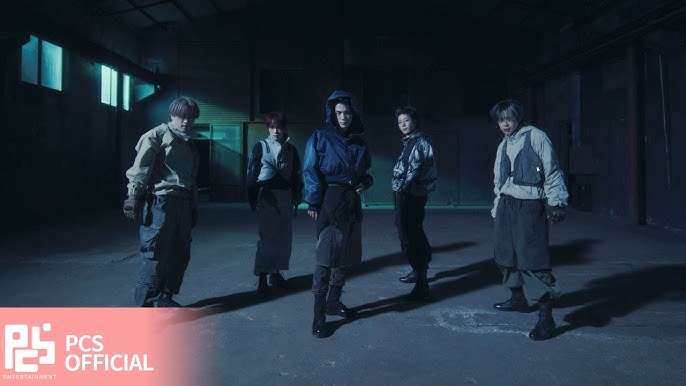

The K-Pop landscape in 2025 is a fascinating battlefield, defined by the meteoric rise of polished fifth-generation super-groups and the enduring legacy of established legends. In this high-stakes environment, a comeback from a group whose trajectory has been anything but linear is often met with a mix of nostalgia and cautious skepticism. Enter Dignity. The five-member group, who once stood on the precipice of trend-setting fame only to see their commercial momentum slip through their fingers, has just dropped their latest single, "Slipshot." The song is not merely a new release; it is a statement, a sonic manifesto that feels like the culmination of a seven-year journey of artistic struggle, public recalibration, and unyielding self-belief.
The initial critical whisperings, led by early reviews from outlets like The Bias List, have painted a picture of a challenging, unconventional track. But for the dedicated DIGNFIED fandom and industry watchers, "Slipshot" represents something far more significant: the moment Dignity finally, unapologetically, became the artists they were always meant to be. This isn't just a song review; it's an investigation into resilience, the price of artistic integrity, and a comeback that may well redefine a group's entire legacy.
The Winding Road: Dignity's Journey from Debut Promise to Cult Status
To understand the weight of "Slipshot," one must first traverse the rocky path Dignity has walked since their 2018 debut. Formed under the now-defunct Luxe Entertainment, the group—consisting of leader and main rapper Jae, main vocalist Soo-ri, lead vocalist Min-kyu, sub-vocalist and visual Hyun, and maknae dancer Taemin—burst onto the scene with "Neon Paradox." The track was a critical darling, lauded for its sophisticated blend of synth-wave and sharp hip-hop beats, a sound that felt fresh amidst the dominant tropical house and future bass trends of the time.
A Meteoric Rise, Followed by a Sudden Stall
Their follow-up, "Glass Horizon," cracked the top 10 on major domestic charts, and for a fleeting moment, Dignity were hailed as the next leaders of the "thinking fan's idol group." However, internal conflicts at Luxe Entertainment, coupled with a controversial and poorly received concept shift for their third EP, sent their momentum into a tailspin. The company's sudden bankruptcy in 2021 left the group in limbo for 18 agonizing months, a period during which members took on sporadic solo work, from musical theatre to minor acting roles, while their core fandom held its breath.
Their survival itself became their narrative. They weren't just selling music; they were selling proof that you could endure the industry's worst and still come back to fight.
Their salvation came in 2023 with a highly unusual move: the five members, led by Jae, collectively bought the rights to their group name and masters through a crowd-funded initiative supported by their fans, and signed a unique, artist-focused partnership with the mid-sized agency, Pivot Media. This bold move, detailed at the time on our News page, reframed their entire story. They were no longer just a musical act; they were artist-owners, underdogs who had seized control of their destiny. This context is the essential bedrock for "Slipshot." Every note is infused with the autonomy they fought so hard to win.
Deconstructing "Slipshot": A Masterclass in Tension and Release
From its first seconds, "Slipshot" announces its refusal to conform. It discards the now-ubiquitous cinematic intro for a sparse, ticking hi-hat and a distorted, warbling bass synth that feels unsettling and immediate. Soo-ri's opening line is delivered not with power, but with a hushed, almost conspiratorial weariness: "The trigger’s clean, the aim is straight / So why’s the target always feeling like a mistake?" It’s a far cry from the anthemic, confidence-heavy openings typical of boy group comebacks.
The Sonic Architecture of Anxiety
The song's genius lies in its construction of pervasive tension. The verse builds with layers of glitchy electronic pulses and Jae's rapid-fire, rhythmically complex rap, which feels less like boasting and more like an internal monologue spiraling. The pre-chorus, led by Min-kyu's airy falsetto, offers a fleeting moment of melodic relief before the track snaps.
And then comes the drop. Instead of a explosive, melodic EDM chorus, "Slipshot" delivers a minimalist, grinding breakdown. The bass becomes a physical presence, a sawtooth wave that grates against a skittering, almost broken drum pattern. The vocals are fragmented, processed, and layered into a haunting chant: "Slipshot, mind-locked / Tick-tock, the clock’s stopped." It’s disorienting, intentionally abrasive, and incredibly bold. This is the musical embodiment of a panic attack or the moment before a catastrophic mistake—the "slip shot" of the title.

The bridge offers the song's only true moment of catharsis. Stripped down to a simple piano chord progression and Soo-ri's raw, unfiltered vocals, he sings, "The noise in my head, it finally makes a sound / And in the chaos, my footing is found." It’s a powerful admission that the path forward isn't about silencing inner turmoil, but about learning to create from within it. This thematic resonance is reminiscent of the journey explored in our feature on soloist From Studio Mockery to Stadium Anthems: The Unlikely Triumph of Soloist K, where artistic redemption was born from embracing one's unique voice against all odds.
The Fandom's Verdict: DIGNFIEDs Decode the Chaos
Upon release, the fan reaction was immediately polarized, yet intensely passionate. Social media platforms became a live forum for dissection.
- The "Acquired Taste" Camp: Many longtime DIGNFIEDs on platforms like X (formerly Twitter) and fan cafe forums expressed initial shock. "I've listened five times and my brain is still rearranging itself," one fan wrote. Another commented, "It's not what I expected, but that's why I love them. They're not following anyone's blueprint."
- The "Artistic Triumph" Analysis: Deep-dive threads quickly emerged, linking lyrics to the group's history. Fans pointed out that the "misfired aim" metaphor perfectly captured their early career setbacks, while the "noise becoming sound" in the bridge symbolized their takeover of their own careers. The music video, filled with visual references to their older MVs and imagery of breaking out of glass cages, was meticulously decoded frame-by-frame.
- The Streaming Strategy: Notably, the fandom organized under a unified hashtag, #DignityEmbraceTheNoise, framing the song's challenging nature as its very strength. This mirrored the savvy, narrative-driven fan mobilization seen with groups like EVNNE, where fans actively shape the comeback's story beyond just chart numbers.
"We didn't wait through a bankruptcy and a buyout for them to make safe music. 'Slipshot' is Dignity looking at the industry, looking at their past, and saying 'This is us, like it or not.' That's the most powerful thing an idol group can do." - @DIGNITY_ARCHIVE, fanbase moderator.
The conversation highlights a mature fandom that values artistic growth over guaranteed pop satisfaction. For a deeper look at how intense fan engagement shapes idol careers, from positive support to invasive pressure, one can examine the discourse around The Pre-Debut Shadow.
Industry Ripples: What Does "Slipshot" Mean for the K-Pop Ecosystem?
Beyond fan circles, "Slipshot" has sent subtle shockwaves through the industry. In a climate dominated by high-budget, algorithm-friendly maximalism, Dignity's choice is a stark counter-narrative.
Reclaiming the "Artist" Label in Idol Music
Critics and producers are noting that "Slipshot" moves the needle on what is permissible for a boy group, particularly one not from the "Big 4" agencies, to release as a title track. It challenges the notion that public-friendly melody is the sole king. A veteran music show PD, speaking on condition of anonymity, told K-Beats: "It's a risky track for broadcast, but its very existence is important. It reminds everyone that idol music can be a vehicle for challenging, avant-garde ideas. It expands the palette for everyone."
Furthermore, Dignity's ownership model, now fully realized in this self-directed music, is being closely watched. Smaller agencies and self-managed idols see it as a potential roadmap. The group’s ability to leverage their story of struggle and ownership into compelling art provides a new template for longevity that doesn't rely on constant chart domination, but on cultivating a dedicated, intellectually invested fanbase. You can explore the profiles of other artists navigating unique paths on our Artists page.
Chart Performance vs. Cultural Impact
On the our Charts page, "Slipshot's" performance tells its own story. It debuted moderately on real-time digital charts, typical for a song of its abrasive nature, but demonstrated remarkable stability rather than a steep drop-off. More tellingly, it soared to the top of the iTunes album charts in over 30 countries and trended highly on YouTube's music analysis and reaction video community. This disconnect between mainstream Korean charts and international/niche appeal underscores Dignity's solidified position as a "cult" group with global influence, a status that can be more sustainable and artistically freeing than chasing viral hits.
The Path Forward: Dignity's Reclaimed Future
So, where does "Slipshot" leave Dignity? This comeback is unlikely to see them challenging for music show wins against the current wave of chart-topping giants. But to measure its success in those terms would be to miss the point entirely.
"Slipshot" has accomplished something far more profound: it has irrevocably defined their identity. They are now the group of artistic defiance, of veteran resilience, of owning one's narrative both legally and musically. This clears the path for their future endeavors, from the upcoming *'Noise to Sound'* tour announced alongside the single, to promised solo projects from the members that will undoubtedly explore even wider genres.
The song is a line in the sand. It tells their fans, "This is the pure, uncompromised version of us you fought for." And it tells the industry, "There is room for this, too." In an era where the conversation often centers on breaking records and dominating algorithms, Dignity has quietly released a masterclass in breaking molds. Their "slip shot," rather than a misfire, may well be remembered as their most perfectly aimed strike yet—a defiant declaration that in the vast, diverse world of K-Pop, there is still immense power in the beautifully, brilliantly un-expected.