

Opening: The Sound of Breaking Barriers
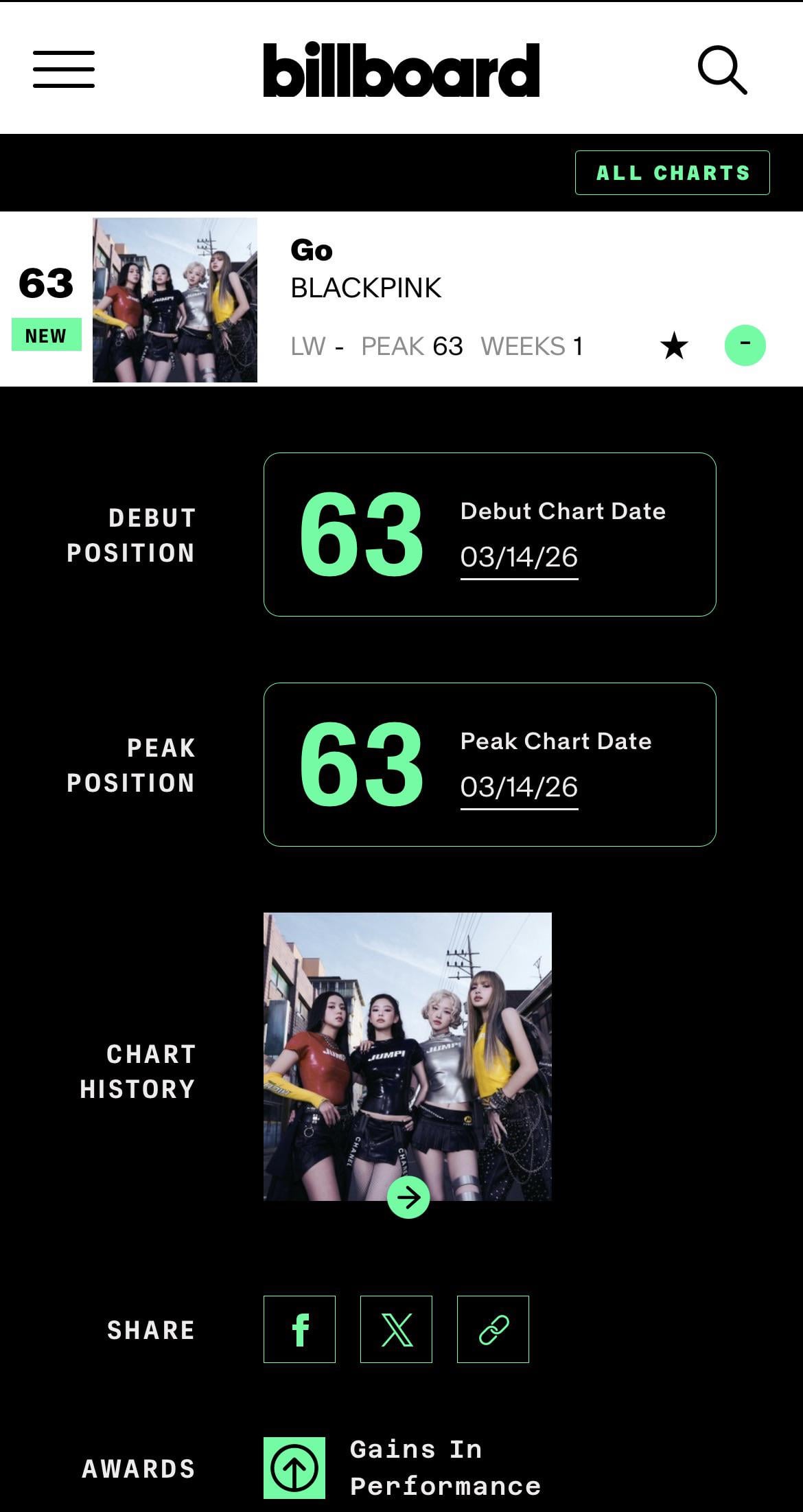
In the ever-evolving landscape of global pop music, a new benchmark has been set, and it pulses with the unmistakable energy of BLACKPINK. This week, the airwaves across the United States received a potent injection of K-Pop's finest, as the group's latest title track, "GO", made a stunning debut at No. 37 on Billboard's prestigious Pop Airplay chart. This isn't just another chart entry; it's a resonant declaration, a crack in the ceiling of mainstream American radio that signals a seismic shift. For a song entirely in Korean to secure a spot on this chart—a bastion of English-language pop dominance—is a historic moment that transcends numbers. It represents the culmination of years of strategic global expansion, fan-driven demand, and the undeniable quality of the music itself. As the news broke, the industry collectively leaned in, recognizing that BLACKPINK has once again rewritten the rules of engagement, proving that the distance between Seoul and Top 40 radio is shorter than ever.
Background: The Path to Global Resonance
To fully grasp the weight of this achievement, one must understand the journey of BLACKPINK. Formed by YG Entertainment in 2016, the quartet—Jisoo, Jennie, Rosé, and Lisa—burst onto the scene with a signature blend of fierce hip-hop swagger and catchy pop melodies. From their debut singles "Boombayah" and "Whistle," they were positioned as global players. Their path has been a masterclass in building international appeal, marked by strategic English-language collaborations with artists like Dua Lipa ("Kiss and Make Up"), Lady Gaga ("Sour Candy"), and Selena Gomez ("Ice Cream"). Each of these steps served as a bridge, introducing their sound and charisma to wider Western audiences.
Their previous forays onto the Billboard charts, including the historic No. 1 on the Billboard 200 with "THE ALBUM" in 2020 and top-tier Hot 100 entries, laid the groundwork. However, the Pop Airplay chart is a different beast. It measures spins on mainstream Top 40 radio stations across the U.S., a format historically resistant to non-English music. Breaking into this sphere requires not just fan power, but genuine adoption by program directors and radio DJs who shape public listening habits. BLACKPINK's consistent touring, colossal Coachella headline performance, and undeniable media presence have slowly but surely warmed this crucial platform to their sound. For more on the artists shaping the industry, visit our Artists page.
The "GO" Era: A Strategic Pivot
The single "GO" itself, released in early March, represents a subtle but significant evolution. While retaining the group's iconic "girl crush" energy and explosive choruses, the track incorporates more nuanced production and lyrical themes of self-empowerment and relentless forward motion. Industry insiders suggest the sonic palette was carefully crafted to appeal to the sensibilities of international pop radio without diluting their identity. The campaign was supported by a visually stunning music video that broke YouTube records, and a coordinated social media rollout that ensured global visibility from day one. This release occurred amidst a fiercely competitive K-Pop season, detailed in our recent roundup, "Soundtrack to Seoul's Spring: Ranking the Week's K-Pop Releases."
The News: Decoding the Chart Debut
For the week ending March 21, Billboard's Pop Airplay chart told a new story. BLACKPINK's "GO" entered at No. 37, garnering an estimated 6.8 million audience impressions from plays across dozens of reporting pop stations. This debut is monumental for several key reasons.
- Language Barrier Breached: "GO" is primarily performed in Korean, with only sparse English phrases. Its entry shatters the long-held, unspoken rule that only English-language songs can achieve recurrent play on mainstream pop radio.
- Organic vs. Forced Growth: Analysis of radio spin data shows the adds were not isolated to a few major markets. Stations from New York to Los Angeles to Chicago began incorporating the track, indicating a broad-based, organic interest from programmers responding to listener demand and the song's inherent catchiness.
- Historical Context: While other K-Pop acts like BTS have achieved significant radio play, often through high-profile collaborations or English-language singles, a Korean-language title track from a girl group debuting in the Top 40 of this chart is unprecedented. It builds on the foundation laid by BTS's "Dynamite" but proves the appeal is expanding beyond a single act.
"This isn't a fluke. It's a trajectory. When a song like 'GO' lands on pop radio playlists between Taylor Swift and Olivia Rodrigo, it normalizes K-Pop as a permanent, vital part of the mainstream pop conversation," stated a veteran radio programmer from a top-10 market, who spoke to K-Beats on condition of anonymity.
The chart's methodology, which prioritizes audience reach, means that BLACKPINK is now being heard by millions of casual listeners who may not actively seek out K-Pop. This passive exposure is invaluable for genre growth. For ongoing chart analysis, bookmark our Charts page.
The Data Behind the Spin
A closer look at the radio data reveals strategic wins. Satellite radio giants like SiriusXM's Hits 1 were early adopters, providing national exposure. Furthermore, several iHeartMedia and Cumulus Media stations, which dominate the U.S. radio landscape, added "GO" to their rotations in its first week. This top-down support is crucial for sustainability on the chart. The song's strong streaming numbers—consistently in the top 10 of global Spotify charts—undoubtedly gave radio programmers the confidence to take a chance, proving the demand was already there.
Fan & Community Reaction: A Blink Frenzy of Pride
The moment the chart was published, the global BLACKPINK fandom, known as BLINKs, erupted in a coordinated celebration of pride and vindication. Social media platforms became a sea of pink, with hashtags like #GOonBillboard and #BLACKPINKmakingHistory trending worldwide for over 24 hours.

"We've been requesting this song on local radio stations non-stop since it dropped. To see it actually work, to hear it on my drive to work... I cried," shared @JenniesBangs, a fan from Texas, on Twitter. This sentiment was echoed thousands of times over, highlighting the direct link between organized fan campaigns and tangible industry results.
On fan community platforms like Weverse and dedicated forums, the analysis was immediate and sophisticated. Fans compared spin counts, celebrated each new station add, and created easy-to-follow guides for requesting the song in different regions. This level of engagement mirrors the meticulous organization seen in other fandoms, but with a focus now squarely on conquering a traditionally tough frontier: terrestrial radio.
"This feels like our win too. Every stream, every request call—it mattered. It shows the industry that we're not just a streaming number; we're a listening audience that engages with all platforms," commented a moderator of a large BLACKPINK fan page on Discord.
The reaction also spilled over into the wider K-Pop community, with fans of other groups celebrating the milestone as a win for the entire genre. This collective spirit underscores a shared understanding that one group's breakthrough opens doors for others. However, as seen in instances like "The Shadow on the Shelf," such intense scrutiny and celebration exist alongside the relentless pressures of idol life, a duality the industry continues to navigate.
Industry Analysis: Ripples Across the Music World
The debut of "GO" on the Pop Airplay chart is a bellwether event with multifaceted implications for the music industry, both in South Korea and internationally.
For K-Pop: A New Playbook for Global Promotion
Labels are undoubtedly taking notes. YG Entertainment's strategy with BLACKPINK has long been one of premium, event-style releases. This chart success validates that approach while highlighting the increasing importance of traditional radio in global campaigns. It may lead to:
- Increased Investment in U.S. Radio Promotion Teams: More K-Pop companies are likely to establish or expand dedicated radio liaison teams in the U.S., building relationships with programmers.
- Strategic Sonic Adjustments: While not abandoning their core sound, producers may more consciously consider radio-friendly elements like song structure and hook placement in title tracks aimed for global consumption.
- Partnership Evolution: Collaborations may shift from being primarily for streaming playlists to also targeting radio compatibility.
This moment also reinforces that girl groups are powerful drivers of genre expansion. While boy groups often dominate fan-driven metrics, BLACKPINK has demonstrated cross-gender, cross-demographic appeal on a mass media platform.
For Global Music: The Blueprint is Clear
The success of "GO" is the latest and perhaps most convincing evidence of K-Pop's fully realized global blueprint. As analyzed in our feature on "Cross-Strait Crescendo: How J-Pop's Latest Wave Reveals K-Pop's Unmistakable Blueprint," the model of intense fan engagement, high-quality production, and strategic global rollout is now a studied formula worldwide. BLACKPINK has moved past being a "K-Pop act" in the Western consciousness and is now a bona fide "global pop act" that originates from Korea. This normalizes multilingual music on American radio, potentially paving the way for artists from other non-English speaking markets.
Furthermore, it challenges the very definition of "pop" music. Pop is no longer synonymous with "American or British." It is a global tapestry, and BLACKPINK is helping to weave a vibrant new thread into its fabric. The industry's gatekeepers—radio programmers, playlist curators, and awards shows—are being forced to adapt their criteria in real-time.
What's Next: The Road Ahead for BLACKPINK and Beyond
With the radio door now firmly ajar, the question becomes: what does BLACKPINK do next, and how does the industry respond?
For BLACKPINK: Sustaining Momentum
The immediate goal will be to climb higher on the Pop Airplay chart. A top 20 placement would be a game-changer, likely requiring sustained radio adds and perhaps strategic remixes or radio edits. All eyes will be on the group's upcoming activities. Rumors of a world tour in late 2024 are circulating, and nothing cements radio success like sold-out stadiums across the U.S. that local stations will want to promote. Additionally, the members' individual activities—from Rosé's potential solo music to Jisoo's acting ventures—will keep the brand in the public eye, feeding interest back to the group.
"This chart entry is the starting pistol, not the finish line. It proves the audience is there. Now, it's about showing that this isn't a one-hit wonder on radio, but that BLACKPINK, and K-Pop at large, have staying power in this arena," said a music analyst for a major investment firm covering the entertainment sector.
The group's next musical release will be under immense scrutiny to see if it can replicate or even surpass this radio success. The pressure is immense, but as seen with resilient groups like Hearts2Hearts, who recently celebrated a long-awaited first win, perseverance in the face of high stakes is a hallmark of K-Pop's most enduring acts.
For the Industry: A Wave of Opportunity
Other major K-Pop acts with global ambitions, from Stray Kids to NewJeans, will now have a clearer path to pursue mainstream radio play. This could lead to more diversified promotional strategies where albums are launched with specific radio targets in mind. It also raises the stakes for award shows like the Billboard Music Awards and Grammys, where recognition may need to evolve further.
In the long term, this moment could accelerate the integration of global music markets. We may see more U.S. artists seeking features on K-Pop tracks for radio appeal, a reversal of the previous dynamic. The flow of influence is becoming reciprocal. As one era culminates, like that foreshadowed for NCT WISH's 'Ode To Love,' new ones dawn, built on the foundations laid by pioneers.
Ultimately, the debut of BLACKPINK's "GO" on Billboard's Pop Airplay chart is more than a statistic. It is a cultural milestone. It signals that the global pop mainstream is not just tolerating K-Pop but actively embracing it on its own terms. The journey from niche to novelty to undeniable force is complete. As the song's title commands, the industry must now "GO" forward into a future where the charts, and the airwaves, sound wonderfully, unmistakably global. For all the latest on these evolving stories, stay tuned to our News page.