
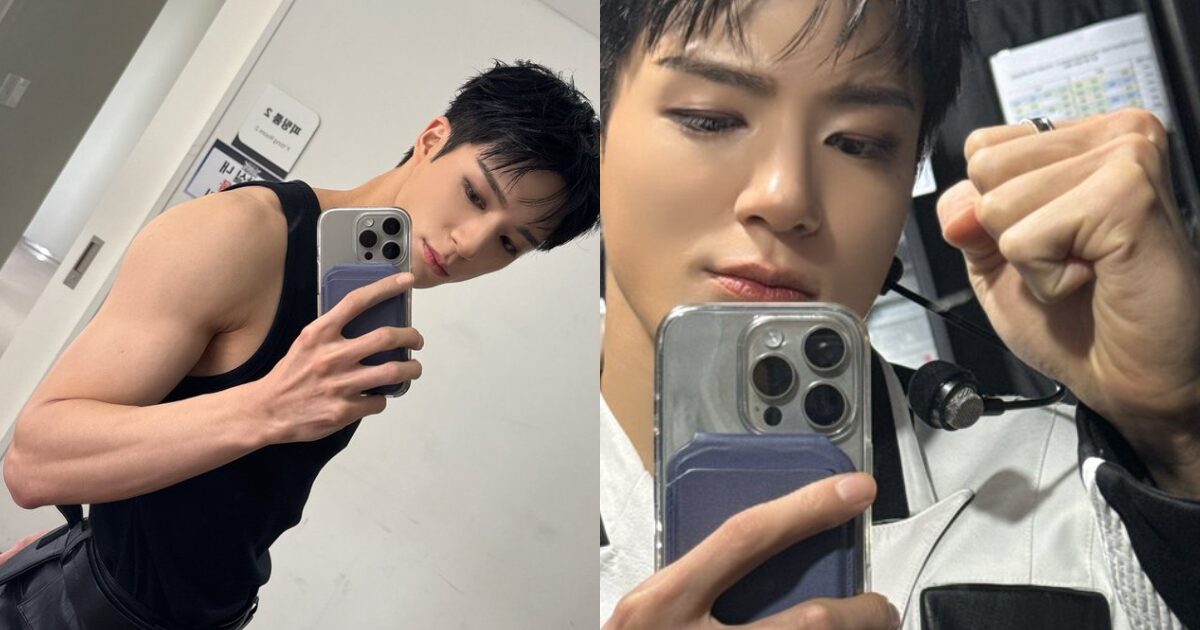

"The line between a personal moment and public content is now measured in pixels." – Industry PR Director, speaking anonymously to K-Beats.
In the high-velocity world of K-Pop, where news cycles are measured in minutes and controversies can ignite from a single emoji, the actions of an idol are rarely just their own. They are data points, signals, and fodder for endless discourse. This reality was thrown into stark, almost surreal relief this week when NCT's Jeno, a member of the powerhouse units NCT DREAM and the supergroup NCT 2023, posted and then abruptly deleted a casual selfie from what appeared to be a private residence. The reason? Eagle-eyed fans, engaging in a now-common practice known as "background investigation," spotted a detail that sent shockwaves through community forums: a luxury brand accessory that was not merely a personal item, but one linked to a brand currently embroiled in a subtle yet significant geopolitical sensitivity issue involving China. Within an hour, the image was gone, but the conversation had already escaped into the wild, evolving from a simple "whoopsie" into a complex case study on the modern idol's complete lack of a private sphere.
The Weight of the Spotlight: Jeno and NCT's Meteoric Ascent
To understand the magnitude of this micro-event, one must first appreciate the platform from which it fell. Lee Jeno, since his debut in 2016 as part of the then-teenaged NCT DREAM, has grown up in the public eye. His journey from a bright-eyed rookie to one of SM Entertainment's most reliable centerpieces—celebrated for his sharp dance skills, stable vocals, and now, his burgeoning acting career—mirrors the explosive growth of the NCT system itself. The group's concept, a limitless expansion of members and units, has created a fandom culture that is uniquely detail-oriented, cross-referential, and intensely protective. Fans of NCT don't just follow a group; they navigate a universe. This deep investment fosters a sense of intimacy, but also a culture of hyper-vigilance where every post, every wardrobe choice, and every off-hand comment is parsed for meaning.
Jeno, in particular, has cultivated an image of polished professionalism and thoughtful sincerity. His social media, while personal, has rarely been a source of controversy. This incident, therefore, stands out precisely because of its incongruity with his typical, carefully managed online presence. It was a crack in the facade, not of Jeno's character, but of the immense, often invisible, apparatus that manages an idol's public interface. As we explored in our analysis of leadership dynamics in "The Eldest's Labyrinth", the pressure on idols to be flawless proxies extends far beyond the stage, into their most mundane moments.
From Dream to Dominance: The SM Machinery
Operating under the SM Entertainment banner, NCT's global strategy is meticulously crafted. Every collaboration, brand ambassadorship, and even casual fashion choice is potentially part of a larger commercial or diplomatic puzzle. The Chinese market, with its specific sensitivities and massive economic potential, is a particularly delicate chessboard for K-Pop companies. Idols are often expected to navigate a minefield of unspoken rules regarding territorial sovereignty and brand affiliations. A misstep, however unintentional, can have repercussions ranging from fan backlash in key markets to more serious commercial exclusions.
The Incident: A Sixty-Minute Firestorm
The sequence of events was textbook digital age drama. At approximately 8:15 PM KST, Jeno posted a close-up selfie to his Instagram story. The image showed him in relaxed attire, with a faint smile, likely after a day off. The focus was squarely on his face, but as always, the internet's gaze wandered. In the blurred background, on a shelf, was a distinctive item: a designer figurine/trinket from a high-end French maison. This brand had, just weeks prior, been at the center of a quiet but intense controversy for issuing an apology statement perceived in some circles as indirectly affirming China's "One-China" policy regarding Taiwan—a political third rail that global celebrities are advised to avoid.
Fans on Twitter and Instagram zoomed in, screenshot, and began to circulate the image with alarming speed. The discourse fractured immediately. One camp, largely international fans, expressed concern: "He needs to be more careful!" and "His management is sleeping on the job!" Another segment, including some fanbases in sensitive regions, began posting pointed comments on NCT's official channels. Within the NCTzen fandom itself, arguments erupted between those defending the post as an innocent mistake in a private space and those criticizing the lack of awareness.
Exactly fifty-eight minutes after the original post, the story disappeared. No explanation was given by Jeno or by SM Entertainment. This silent deletion was the loudest statement of all, confirming that the detail had been flagged internally as a potential problem. The action shifted the narrative from "Is this an issue?" to "Why was this such an issue that it required immediate erasure?"
The Art of the Background Check: A New Fan Normal
This incident highlights the normalized yet extreme practice of "background hunting." Fans routinely scrutinize every inch of an idol's selfie—reflections in pupils, brands on clothing tags, book spines on shelves, and even the layout of rooms—to glean information about their lives, relationships, or beliefs. It's a double-edged sword. It can foster a sense of connection, as with fans decoding an idol's music tastes from their bookshelf, as seen in our weekly roundup "Soundtrack to Seoul's Spring." But it also transforms any shared moment into a forensic exercise, leaving no room for uncurated life.

Fandom in Fracture: The Community's Divided Pulse
The reaction across social media and fan communities was a prismatic reflection of modern K-Pop fandom's complexities. On platform X (formerly Twitter), the hashtag #JenoWeProtectYou trended globally within two hours, with fans flooding his feed with supportive messages and older selfies to "drown out the negativity." This tactic, common in idol defense playbooks, aims to algorithmically shield the artist from critical discourse.
However, on forums like Instiz and Pann, the tone was more analytical and often critical. Lengthy posts dissected the brand's controversy, questioned SM's training for idols on geopolitical sensitivities, and debated whether an idol's private possessions should be subject to public political litmus tests. A significant point of discussion was the burden placed on idols to be perpetual diplomats.
"He's a 24-year-old who posted a picture of his face. He didn't make a political statement. We are the ones making it political by dissecting his shelf,"wrote one popular forum translator. This sentiment echoes the emotional fatigue seen in other fandoms, reminiscent of the support for Heeseung in his quiet return, as covered in "A Shoulder to Lean On."
Meanwhile, on Chinese social media platform Weibo, the reaction was swift and severe. Several major Jeno fanclubs issued statements urging "respect for China's territorial integrity" and called for the idol to "show clearer judgment." This highlights the precarious tightrope walk idols must perform to maintain their global fanbase, where a single object can be interpreted through wildly different cultural and political lenses.
Industry Repercussions: More Than Just a Deleted Post
For industry insiders, this event is less about Jeno personally and more about a systemic vulnerability. "This is a weekly, if not daily, occurrence in every major agency's digital monitoring room," a social media manager for a mid-tier agency told K-Beats on condition of anonymity. "We have folders of 'sensitive brands' and 'sensitive visuals' that we update constantly. But idols are humans in their homes. We can't pre-approve a shelf."
The incident underscores several key trends in K-Pop management:
- The Erosion of the "Private" Social Media: What fans perceive as a personal window is, for agencies, an official extension of the idol's brand. This gap in perception is a constant source of risk.
- Geopolitical Brand Audits: Companies now must conduct political risk assessments not just on official partnerships, but on every item an idol might own that could appear in a photo. This is an unprecedented level of lifestyle management.
- The Speed of Crisis: The one-hour window between post and deletion is likely the new gold standard for response time. In the past, such a minor detail might have gone unnoticed or been addressed later. Today, the viral spread is nearly instantaneous.
This hyper-vigilance mirrors strategies seen in other East Asian pop cultures, where market sensitivities are paramount. As analyzed in our piece "Cross-Strait Crescendo," J-Pop agencies are adopting similar, K-Pop-inspired defensive protocols to navigate regional complexities.
The Veteran's Gambit: A Contrast in Control
This event also throws into sharp relief the different approaches taken by established veterans versus active idol group members. A veteran, like T-ARA's Hyomin recently, can make a bold, intentional fashion statement at an airport, as we reported in "Beyond the Terminal," and own the narrative. For a current top-tier idol like Jeno, however, even an unintentional, passive background detail can spiral into a potential career headache. The control exerted is of a different nature—one of omission and pre-emption, rather than assertion.
Looking Ahead: The Impenetrable Vault or Authentic Connection?
So, what comes next for Jeno, for NCT, and for the industry? The immediate aftermath will likely be a period of heightened caution. Jeno's future social media posts may feature even more neutral, studio-style backgrounds, further widening the gap between the curated "idol" and the private individual. SM Entertainment may implement even more stringent briefings for their artists, a move that could feel stifling to the very personalities fans adore.
In the broader sense, this incident adds fuel to an ongoing debate within the industry: Can the current model of ultra-accessible, yet ultra-scrutinized, idol-fan interaction be sustained? Or will the constant threat of microscopic backlash force idols into a digital witness protection program, where their feeds become nothing but sterile, agency-approved content? The charm of platforms like Instagram and Bubble has been their promise of authentic, off-duty glimpses. If those glimpses become legally and politically vetted performances, that core appeal diminishes.
For fans, the lesson is one of conscious consumption. Every time a pixel is zoomed in on for investigatory purposes, the walls of an idol's private life are chipped away. The community's own behavior directly shapes the level of access and authenticity they are granted. The path forward may require a new, unwritten contract—one where fans learn to appreciate the shared moment without conducting a background check, and where agencies allow for a slightly more human, and therefore imperfect, digital presence.
Ultimately, the shadow on Jeno's shelf was a reflection of the immense, often contradictory, expectations placed on today's idols. They must be globally marketable yet locally sensitive, perfectly authentic yet flawlessly polished, intimately accessible yet impenetrably private. As the industry continues to evolve, finding a sustainable balance will be one of its greatest challenges. For now, the artists we follow on our charts will continue to navigate this invisible labyrinth, where a simple selfie is never just a selfie.