
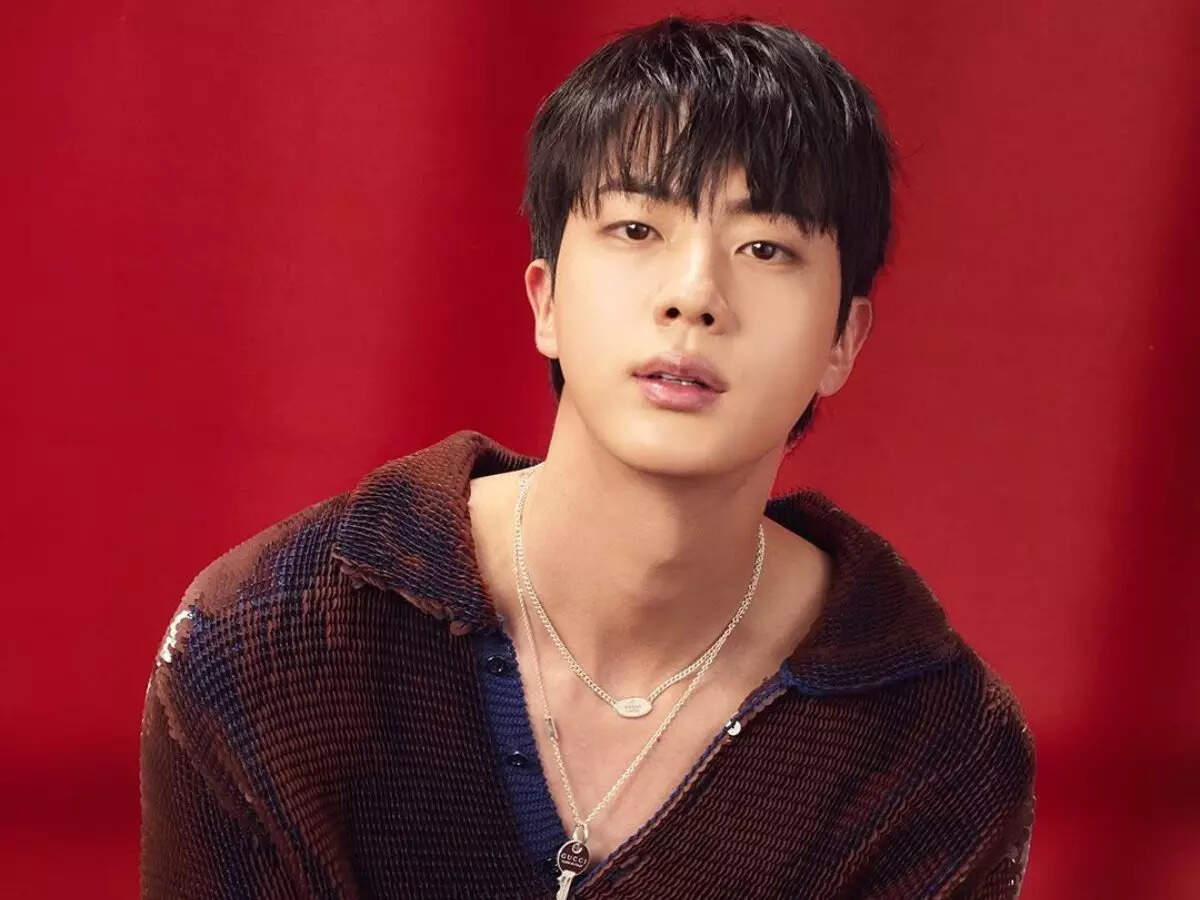

The world of BTS is often viewed through two primary lenses: the meticulously crafted universe of their music and lore, and the seemingly unfiltered chaos of their variety content. For years, these two streams have flowed together, creating a portrait of a group bound by unparalleled synergy and brotherly affection. However, a recent group interview, dissected frame by frame by a global audience, has suddenly cast a stark, questioning light on the space between those two streams, focusing intensely on the group's eldest member, Jin. What was dismissed by some as the group's typical, rambunctious dynamic has been labeled by others as "ridiculous" and dismissive treatment, sparking one of the most nuanced and heated debates about the group's internal dynamics in recent memory.
The Pillar and The Punchline: Jin's Evolving Persona
To understand the weight of the current conversation, one must first appreciate the complex role Kim Seokjin has carved within BTS. Debuted as the "visual" and a vocalist, Jin's early trajectory was, by his own admission, challenging. He joined Big Hit Entertainment with no background in dance or rap, facing a steep learning curve. Yet, his journey became one of the group's most resonant narratives of growth. He evolved into a stable, powerful vocalist known for his crystal-clear high notes in anthems like "Epiphany" and "The Astronaut." Off-stage, he cultivated the persona of "Worldwide Handsome" and the self-deprecating, often loud, and chaotic older brother—a source of constant comic relief.
This "comic relief" role, however, is a double-edged sword. It has made him incredibly relatable and beloved, a grounding force in the group's high-stakes world. Yet, it has also occasionally risked overshadowing his profound musical contributions and his unofficial, yet deeply felt, role as the group's emotional pillar. As the eldest, Jin carries a unique, culturally significant burden in the Korean context. He is expected to provide stability, set an example, and often, to sacrifice his own needs for the harmony of the group. This was visibly demonstrated during their enlistment period, where he was the first to enlist, shouldering the responsibility of leading the group into that challenging chapter. For a deeper look at how their on-stage dynamics play into public perception, our analysis in The Syncopated Symphony explores similar tensions.
The "Hyung" in a Hierarchy-Flattened Group
BTS famously operates with a flattened hierarchy compared to many traditional K-pop groups. The members are encouraged to speak freely, challenge each other, and participate in creative direction. This modern dynamic sometimes clashes with the deep-seated Confucian values of respect for elders (hyung). Jin, as the hyung, has consistently chosen to leverage his age for humor—making others pay for meals, jokingly demanding respect—rather than wielding it as authoritarian power. This choice has been pivotal to BTS's accessible, brotherly image. However, it creates a paradoxical space: when does the joking dismissal of the "eldest" title cross a line from affectionate ribbing into genuine disregard for his position and contributions?
The Interview That Ignited the Flame
The interview in question, conducted for a major international publication ahead of a new promotional cycle, was intended to be a light-hearted recap of their reunion and future plans. The tension arose not from any single explosive moment, but from a cumulative series of interactions. Throughout the session, Jin attempted on several occasions to offer thoughtful, serious answers about the group's post-enclosure mindset and their musical evolution.
"I think we've all returned with a deeper understanding of our individual colors, and that strength is what we're weaving into the BTS tapestry now. It's less about proving something and more about..."
Multiple times, these attempts were met with overlapping chatter, playful interruptions, or jokes from other members that diverted the conversation back to lighter, often chaotic, banter. In one particularly scrutinized sequence, Jin made a sincere comment about the weight of their legacy, only for another member to immediately crack a joke about his recent gaming marathon, causing the room to erupt in laughter and the thread of the conversation to be lost.
To a casual viewer, this was classic BTS "chimsil" (perfect chemistry) chaos. To a segment of the audience, however, it painted a pattern of Jin not being "heard" in a serious context. The term "ridiculous" emerged from fan forums, not to describe the behavior as morally wrong, but as exasperatingly disproportionate—a sense that the group's default mode of chaotic interaction was silencing one member's reflective voice at a moment where his perspective, as the eldest who steered the enlistment transition, was particularly valuable. This scrutiny is amplified in an era where every public appearance is a high-stakes narrative event, as seen in the aftermath of their Gwanghwamun concert.
Beyond the Screen: The Context of "Treatment Claims"
The interview did not exist in a vacuum. It surfaced amid simmering online discussions labeled broadly as "treatment claims." For months, a subsection of Jin's solo fandom, known as "Jin's Guards," had been compiling instances—from variety show edits to concert VCR allocations—where they felt he was sidelined or his efforts minimized by the group's narrative. These claims are often dismissed by the wider ARMY as "solo stan" behavior, designed to fracture the group's unity. However, the mainstream publication interview gave these nebulous claims a tangible, mainstream point of reference, forcing a broader segment of the fandom to engage with the critique.

A Fandom Divided: Protective ARMYs vs. Critical Analysts
The reaction across the ARMY ecosystem has been fiercely polarized, reflecting the complexity of stanning a group as analyzed as BTS.
- The Defensive Core: A large portion of the fandom vehemently defends the members' dynamic, asserting that what outsiders see as disrespect is the ultimate sign of comfort and true family-like bonds. They point to a decade of content showing Jin's own active participation in and instigation of this chaotic humor. "Jin himself has said he hates solemn moods and creates chaos on purpose," is a common refrain. They argue that interpreting a 20-minute interview as evidence of mistreatment ignores thousands of hours of evidence to the contrary and projects a seriousness onto Jin that he actively deflates.
- The Concerned Observers: Another segment, which includes many long-time fans, expresses a more nuanced concern. They don't accuse the members of malice but worry about ingrained patterns. "It's the fact that he's always the punchline," one fan wrote on a popular forum. "Even when he's being profound, the group's reflex is to turn it into a joke. It makes you wonder if they, and maybe even he himself, have become trapped in that role." This group seeks acknowledgment, not blame.
- The Solo Advocate Lens: Jin's dedicated solo stanners have used the interview as definitive proof of their long-held claims. This has led to increased friction within the fandom, with accusations of "poisoning the well" of group harmony flying from both sides.
The debate has spilled over to our Charts page, with some fans launching streaming initiatives for Jin's solo work as a statement of support, proving that fan reactions can directly impact measurable metrics.
Industry Analysis: The Pressure Cooker of Global Scrutiny
This incident is not merely a BTS-specific issue; it is a symptom of the immense pressure facing K-pop's top tier in the hyper-analytical social media age. Every gesture, glance, and interruption is subjected to forensic analysis. For BTS, whose every move is a cultural event, the pressure is magnified a thousandfold.
"What we are seeing is the collision of two narratives," says Park Min-ji, a cultural critic who focuses on K-pop. "The first is BTS's own cultivated narrative of seven equal brothers who transcend traditional hierarchy. The second is the audience's inherent, often subconscious, desire to see culturally coded respect for the eldest fulfilled. When Jin plays the jester, it resolves that tension. But when he tries to be the sage, and the group dynamic doesn't immediately pivot, it creates cognitive dissonance for viewers expecting both perfect equality and traditional respect."
Furthermore, this scrutiny highlights the near-impossible task for the members: to be both authentic and perfectly considerate at all times under a global microscope. Their chemistry, their greatest asset, is now being dissected for potential flaws. This phenomenon is not unique to BTS, but scales with fame. Compare this to the focused, unified image presented by a group like IVE, whose success is analyzed through a different lens, as discussed in our feature on IVE's "HEYA" milestone.
"The 'chaos' is a carefully balanced ecosystem. If one element changes—if one member becomes more subdued, more serious post-enlistment—the entire ecosystem has to recalibrate. The interview may have captured the group in the midst of that recalibration, and the audience is reacting to the growing pains."
The Role of Editing and Narrative Framing
It is also crucial to acknowledge the role of the interview's final edit. What viewers see is a curated product, designed to fit a timeframe and often a specific "fun, reunited boy band" angle favored by international media. Serious moments that may have been preserved and respected in a longer cut could end up on the editing room floor in favor of the more viral-ready chaotic moments. The choice of which interruptions to include fundamentally shapes the narrative.
Forward Path: Recalibration and the Chapter Ahead
So, where does BTS go from here? The group is famously self-aware and attuned to fan sentiment. It is highly unlikely they are oblivious to this discussion.
- Organic Evolution: The most probable outcome is an organic, subtle shift in their group dynamic. As the members move deeper into their late twenties and thirties, their interpersonal rhythms will naturally mature. Jin's post-enlistment persona may inherently demand a different kind of space, and the other members, as they have always done, will likely adapt. Their bond, forged over a lifetime of shared struggle and success, is more than capable of navigating this.
- The Power of Solo Work: Jin's solo career, particularly the success of "The Astronaut," has already established a powerful, distinct lane for him outside the group's comedic framework. Continued solo endeavors will further solidify his identity as a serious artist, alleviating the pressure for the group dynamic to carry the entirety of that narrative. Fans can explore more on such individual artist paths via our Artists page.
- Direct Address (Unlikely but Potent): While a direct, on-camera address of the "treatment claims" is improbable and could lend undue weight to toxic narratives, the members may choose to acknowledge the shift in more artistic ways—through lyrics in future songs, or in the thematic direction of their own variety content, consciously creating more moments that showcase Jin's reflective side within the group context.
The ultimate truth likely resides in the vast, unrecorded space between their public moments. The "ridiculous" behavior questioned by some is the same behavior that has showcased their genuine comfort for years. The challenge for BTS, and for ARMY, is to hold space for both the chaotic brothers and the profound artists they are, allowing each member—especially the eldest who has so often shouldered the burden of transition—the fluidity to be both, without having to fight for the room to be heard. This moment of questioning is not a sign of fracture, but perhaps a necessary, if uncomfortable, step in the evolution of a group that has never been afraid to grow up in front of the world. As they prepare their next collective musical statement, all eyes will be on how that hard-won growth is reflected not just in their sound, but in the symphony of their interaction. For continued coverage on their journey, stay tuned to our News page.