
Opening: A Departure from the Norm
The Incheon International Airport arrivals hall is more than a transit hub; it is a runway, a press line, and a cultural barometer all in one. For years, the "airport fashion" of K-Pop idols has been a curated spectacle, often a blend of accessible luxury, cozy-chic athleisure, and brand ambassadorship. It’s a genre where comfort meets commercial appeal, rarely deviating into overtly bold territory. This established norm makes it all the more electrifying when a veteran artist steps into the fluorescent glare and decisively breaks the mold. Recently, Hyomin, an original member of the legendary group T-ARA, did just that, posting a series of selfies that ignited a firestorm of admiration, debate, and introspection about an idol’s right to self-definition long after the peak of their group’s fame.
The images, captured not by paparazzi but through her own lens for Instagram, were a masterclass in confident, mature style. Gone were the oversized hoodies and bucket hats. In their place: sleek, form-fitting ensembles that spoke less of travel comfort and more of a personal manifesto. This was not a rookie seeking attention but a seasoned artist, now 35, making a deliberate statement about her identity in an industry that often sidelines women as they age. The reaction was immediate and multifaceted, slicing through the usual fanfare to touch on deeper issues of agency, evolution, and the complex relationship between female idols and the public gaze.
Background: The Phoenix Flight of T-ARA and Hyomin's Evolution
To understand the weight of Hyomin’s sartorial choice, one must first appreciate the monumental, yet turbulent, journey of T-ARA. Debuting in 2009 under MBK Entertainment, the group quickly ascended with a string of iconic, synth-driven hits that defined an era. Songs like "Bo Peep Bo Peep," "Roly-Poly," "Lovey-Dovey," and "Sugar Free" were not just chart-toppers; they were cultural phenomena, known for their intricate "story" music videos and addictive "point" dances. At their zenith, T-ARA were juggernauts, rivaling even Girls' Generation in digital dominance and variety show ubiquity.
Hyomin, alongside members like Jiyeon, Eunjung, and Qri, was at the heart of this machine. Known for her sharp, feline visuals and versatile talents—rapping, singing, and later, acting—she embodied the group’s chic and sometimes quirky concept. However, T-ARA’s legacy is inextricably linked with the devastating 2012 "bullying" controversy, a publicly aired internal conflict that led to a severe, and later proven unjust, public backlash. The group weathered years of "hate cafes" and boycotts before the truth emerged, a period that forged an unbreakable bond between the members and their loyal fanbase, QUEEN's.
This history is crucial. It means Hyomin and her members have already survived the worst the industry can throw at them: scandal, slander, and a precipitous fall from grace. Their subsequent resurgence and dignified closure of their original chapter in 2017, followed by triumphant reunions, have granted them a unique status: survivors with nothing left to prove to the establishment. This hard-won autonomy forms the bedrock upon which Hyomin’s current choices are built. As explored in our analysis of enduring success, VIEWS & VISION: How IVE’s “HEYA” 100 Million Milestone Cements a New Blueprint for 4th Gen Longevity, longevity in K-Pop is often about strategic evolution. For Hyomin, that evolution is deeply personal.
From Group Idol to Solo Multihyphenate
Post-T-ARA, Hyomin has carefully constructed a multifaceted career. She has released solo music, including the sultry "Mango" in 2021, acted in dramas and films, and become a savvy businesswoman with her own fashion interests. Her public persona has steadily shifted from a group idol adhering to a collective image to an independent artist and woman exploring her own aesthetic. This transition is a tightrope walk for any female idol, particularly in a society and industry with strict expectations about age-appropriate behavior and appearance. Hyomin’s airport fashion, therefore, is not a random outfit choice; it is a landmark in a long, deliberate journey of reclamation.
The News: Deconstructing the Declaration in Denim and Leather
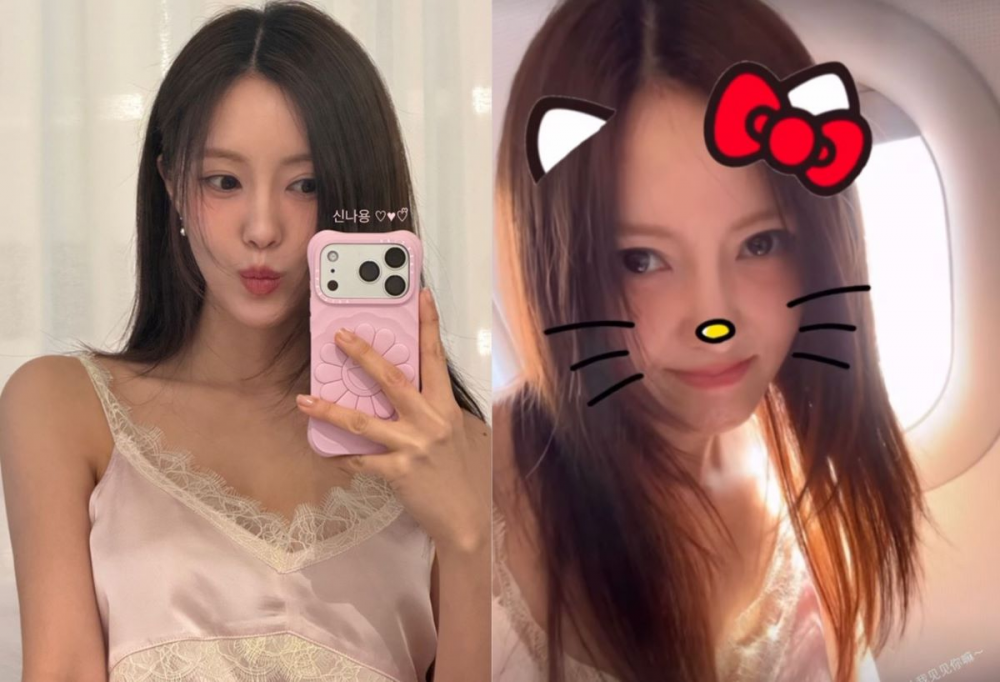
The images that sparked the conversation were a curated set of four selfies, posted with a simple, confident caption. They depicted Hyomin in two distinct, but equally bold, outfits from what appeared to be the same travel day.
"Seoul bound ✈️ #Airport #OOTD"
The first look was a study in monochromatic daring: a jet-black, off-shoulder top paired with high-waisted, tight-fitting black leather pants. The off-shoulder cut, revealing her collarbones and shoulders, framed her face with a subtle, classic sensuality. The leather pants added a rock-and-roll edge, a material often associated with power and rebellion. The accessories were minimal—a simple necklace, understated earrings—allowing the cut and silhouette of the clothing to speak volumes. Her makeup was flawless but sharp, with a focus on defined brows and a deep matte lip, completing a look that was polished, powerful, and intentionally mature.

The second ensemble showcased a different texture but equal boldness. Here, she wore a deep, slate-grey denim jumpsuit. The piece was cinched at the waist with a matching belt, accentuating her figure. The neckline, while not low, was open, and the legs were wide-legged but tailored, creating a fluid, elegant line from shoulder to ankle. This look blended utilitarian denim with a couture-like fit, transforming a casual fabric into a statement of sophisticated ease. Her hair, styled in loose waves, and a pair of large, subtle designer sunglasses added to the aura of a globe-trotting style icon rather than an idol on a schedule.
A Deliberate Shift in the Airport Fashion Paradigm
What sets these looks apart is their intentional departure from the “airport fashion” playbook. The standard formula involves:
- Comfort-First Layers: Oversized blazers, hoodies, or padded jackets.
- Discreet Branding: Logos from endorsed luxury houses, often in the form of bags or shoes.
- "No-Makeup" Makeup: A cultivated look of fresh-faced innocence.
- Practical Footwear: Sneakers, almost exclusively.
Hyomin flipped this script. Her outfits prioritized form and statement over overt comfort (though she has since stated the jumpsuit was surprisingly easy to travel in). The branding was subtle to non-existent; the focus was purely on her and the clothing's cut. The makeup was full and glamorous. This was not "I just happen to look good while traveling"; this was "I arrived looking like this, on purpose." It signaled a total control over her image, an assertion that her personal style does not go on hiatus for a flight. In an industry where every public moment is a performance, Hyomin chose to perform a narrative of uncompromising self-possession.
Fan & Community Reaction: A Symphony of Support Amidst Dissonant Notes
The response across social media and fan communities was swift and largely polarized, illuminating generational and cultural divides in K-Pop fandom. On her Instagram and on platforms like X (formerly Twitter), the overwhelming sentiment from her core fanbase and many neutral observers was one of rapturous support.
"This is what 15+ years in the industry looks like. She’s not a rookie trying to please everyone. She’s Hyomin, and this is her era." - @TARALegacyForever
Comments praised her confidence, her flawless physique, and her right to wear whatever she chooses. Many fans, especially long-time QUEEN's, framed it as a victorious moment, a visual representation of the freedom and strength the T-ARA members earned through their trials. "After everything they went through, she wears what she wants, when she wants," was a common refrain. Discussions on our Artists page forums highlighted how her style evolution mirrors her personal growth, resonating with fans who have also matured.
However, the discourse was not monolithic. On some Korean community boards and in the comments sections of reposting news sites, a predictable undercurrent of criticism emerged. Some comments questioned the "appropriateness" of the outfit for a public airport, labeling it "too revealing" or "attention-seeking." This critique often carried an unspoken ageist and sexist tone, hinting that such bold fashion should be the domain of younger, actively promoting idols, not veterans in their mid-thirties. This backlash, however, was notably drowned out by the wave of support, suggesting a shifting tolerance—or even celebration—for idols expressing mature sexuality on their own terms.
The incident sparked broader meta-discussions online about the "aging female idol" double standard. Fans pointed out that male veterans face no such scrutiny over their attire or public behavior. Hyomin’s fashion choice, therefore, became a tacit challenge to these ingrained industry norms, making her fans’ support not just about aesthetics, but about principle.
Industry Analysis: The Veteran Idol's Style as Strategic Personal Branding
Hyomin’s move is far from an isolated incident; it is a pointed example of a larger trend where veteran idols are leveraging their hard-earned agency to redefine their public identities. In the hyper-competitive landscape of K-Pop, where our Charts page are dominated by new faces, established artists must carve unique, sustainable niches. For many female idols who began their careers under strict "concepts," fashion becomes a potent tool for this reinvention.
We see parallels, though expressed differently, with other veterans. CL has long used avant-garde, powerful fashion to cement her "Alpha" persona. Hwasa of Mamamoo built a brand around body confidence and sensual, unapologetic style. What Hyomin adds to this narrative is the specific context of the second-generation idol—one who debuted in an era of even stricter control—publicly claiming a sophisticated, sexy aesthetic in her 30s. It’s a reclamation of narrative power.
This act of sartorial declaration also intersects with the changing economics of idol careers. With group activities often paused or concluded, solo endeavors in acting, variety, business, and influencer marketing become paramount. A strong, recognizable personal brand is currency. Hyomin’s fashion moment generates headlines, reinforces her image as a stylish, confident icon, and keeps her relevant in the media cycle without a new music release. It demonstrates an understanding of the modern media ecosystem, similar to how top-tier groups command attention through monumental performances. For instance, the scale and cultural impact of a group's concert can redefine a space, much as analyzed in Gwanghwamun's New Echo: How BTS Transformed a National Plaza Into a Stage of Collective Memory. While on a different scale, Hyomin’s action is similarly about claiming space—in her case, the right to a specific image in the public consciousness.
The Risk and Reward of Autonomy
This path is not without risk. The fragmented nature of modern K-Pop news means stories can be amplified or distorted. Yet, for artists like Hyomin, the potential reward—authentic connection with an adult audience, lucrative fashion partnerships, and sustained relevance—outweighs the risk of minor scandal. The controversy itself becomes a form of engagement, filtering out disapproving factions and strengthening her bond with a supportive, mature fanbase that values her autonomy. It is a calculated step away from the "public-friendly" idol mold and towards the respected "artist and celebrity" model.
What's Next: The Runway Beyond the Arrivals Gate
So, where does Hyomin, and by extension other idols navigating this path, go from here? This fashion statement is unlikely to be a one-off. It solidifies a new chapter in her public persona, one we can expect to see reflected in her future creative outputs. Upcoming solo music, if any, may well embrace this more mature, confident sonic and visual palette. Her acting roles could skew towards characters that embody similar strength and sophistication. She may also dive deeper into the fashion world itself, through collaborations, front-row appearances at Seoul Fashion Week, or expanding her own business ventures.
More importantly, her action paves a more visible path for her peers and the generations to come. It adds to a growing body of evidence that a female idol's career does not have an expiration date tied to youth, and that her expression can evolve as she does. It challenges agencies and the public to expand their narrow definitions of what an idol "should" look like at every stage of their life.
Hyomin’s journey through the airport was more than a trip from one city to another. It was a traversal from a past defined by collective triumph and trauma to a self-defined present of confidence. The leather pants and denim jumpsuit were not just garments; they were armor and a banner. In the flash of a smartphone camera, she demonstrated that for the veteran idol, true power lies not in fading quietly into the background, but in stepping into the light—on your own terms, in your own style, regardless of the destination. The conversation has left the terminal, and its echoes will likely be heard on runways, in boardrooms, and in the choices of idols for years to come.