
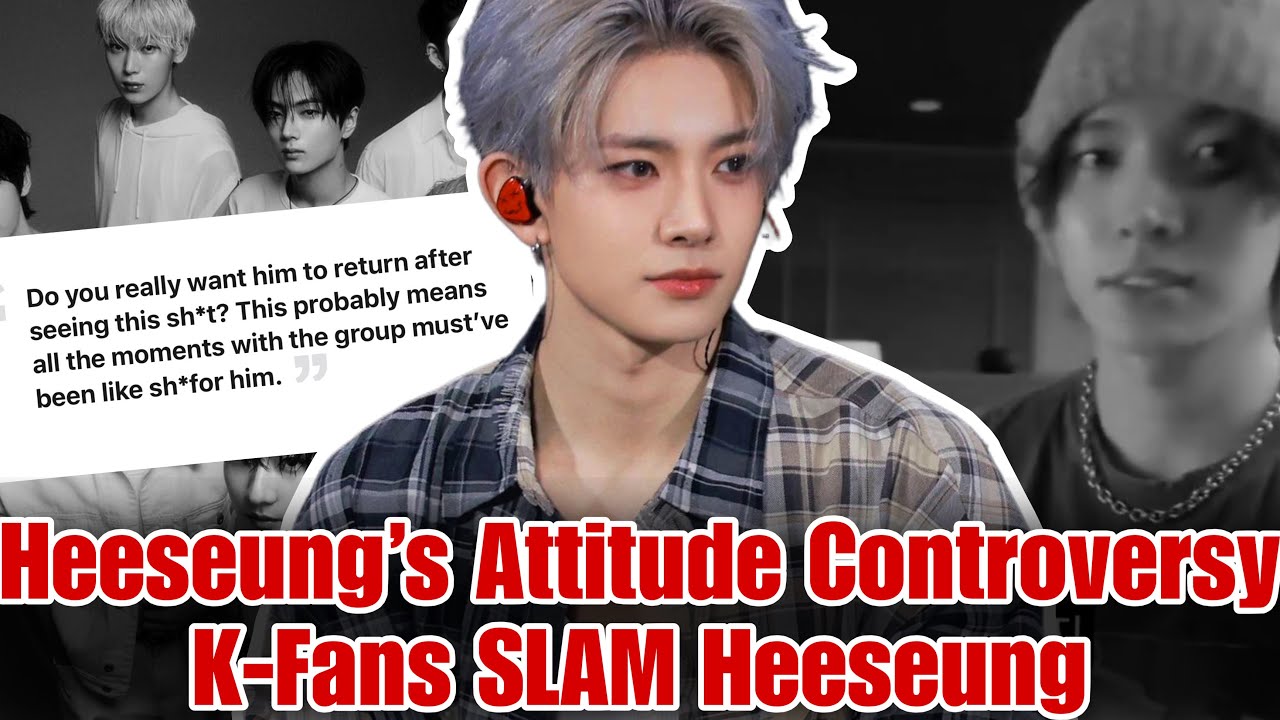

It was a scene familiar to any seasoned K-Pop fan: the bustling, flashbulb-lit chaos of an airport arrival hall. ENHYPEN, fresh off a successful overseas schedule, navigated the gauntlet of press and fans with practiced, weary smiles. For member Heeseung, the group's esteemed main vocalist and eldest, what happened next was likely a split-second decision in a high-pressure environment. For thousands of fans watching the footage online, it became a catalyst for outrage, grief, and a furious re-examination of the unspoken contract between idol and admirer. The incident, which saw Heeseung seemingly reject fan gifts and avoid interactions, has exploded beyond typical fan forum chatter, landing squarely at the feet of the group's agency, BeLift Lab, and igniting a fierce debate about the state of modern fan service.
A Fandom Built on Intimacy: ENHYPEN's Ascent and Connection
To understand the weight of this moment, one must first understand ENHYPEN's unique origin story and the culture of its fandom, ENGENE. Born from the hyper-exposed crucible of the survival show I-LAND, the seven members—Jungwon, Heeseung, Jay, Jake, Sunghoon, Sunoo, and Ni-ki—were essentially introduced to the world through their struggles, friendships, and raw emotions. Fans didn't just witness their debut; they voted for their very existence. This created a profound, almost familial bond, a sense of shared journey and investment that runs deeper than for many groups with more traditional debuts.
Heeseung, in particular, occupied a pivotal role from the start. As the most experienced trainee and a consistent top performer on I-LAND, he was positioned as a centerpiece—talented, reliable, and often a pillar for the younger members. His image was one of gentle diligence. Post-debut, ENHYPEN and BeLift Lab cultivated this connection through meticulous content: behind-the-scenes vlogs, heartfelt live streams, and a network of artist interactions that made ENGENEs feel privy to their genuine growth. The line between the polished idol and the perceived "real" person felt intentionally, and profitably, blurred. This cultivated intimacy is the bedrock upon which the current sense of betrayal for some fans is built.
The Incident: Decoding 90 Seconds of Airport Footage
The triggering event occurred at Incheon International Airport on a Tuesday evening. Fan-taken videos, later compiled and dissected across social media platforms, show the ENHYPEN members moving through a dense crowd. As Heeseung passes, several fans extend small gifts—letters, stuffed toys, what appear to be handmade crafts. The footage shows Heeseung glancing at the items, offering a slight shake of his head, and continuing to walk, his eyes downcast or looking ahead. At one point, he appears to tuck his hands further into his pockets as a fan reaches out. He does not stop to take any photos or acknowledge specific calls.
Objectively, it was a brief, quiet moment of non-engagement. Subjectively, and in the context of K-Pop's high-touch fan culture, it was a potent symbol. The narrative that quickly coalesced on platforms like Twitter and the Korean forum Pann was one of cold dismissal. Titles like "Heeseung ignores fans after overseas luxury shopping" and "Heeseung's arrogant attitude shocks ENGENEs" began to trend. The contrast was sharply drawn with other members who were seen accepting a few letters or offering slight bows.
"It wasn't about the gifts. It was about the wall that went up in that moment. We've seen him tired before, we've seen him quiet. This felt different—like we were an inconvenience to be managed, not people he was grateful to see," one fan wrote in a now-deleted but widely screenshot Twitter thread.
BeLift Lab did not issue an immediate statement, a silence that itself became fuel for the growing fire. Within hours, the criticism expanded from Heeseung's personal actions to the agency's broader protocols and history.
The Agency's Role: Protection or Disconnection?
Critics were quick to connect this incident to a perceived pattern under BeLift Lab's management. Fans cited stricter enforcement of no-gift policies at events, reduced spontaneous fan call opportunities, and a more regimented approach to airport security compared to some other agencies. The question shifted from "Why did Heeseung do that?" to "What environment has BeLift created that made this interaction so strained?"
Many argue that agencies have a paramount duty to protect their artists' physical and mental safety, especially in unpredictable, crowded environments like airports. A gift could conceal a tracking device or harmful substance; a crowded interaction could lead to a mobbing incident or an invasion of personal space. From this perspective, a uniform policy of non-engagement in such settings is a necessary, if disappointing, safety measure.

However, the opposing view, voiced loudly by disappointed ENGENEs, is that BeLift has failed to find a balance. They posit that the agency's approach has become so risk-averse and isolating that it severs the very lifeline of fan connection that fuels the industry. "They've professionalized the soul out of it," commented one fan. "We're treated as biometric hazards now, not supporters."
A Fandom Divided: The Spectrum of ENGENE Reaction
The reaction within the ENGENE community has been far from monolithic, revealing the complex, multifaceted nature of modern K-Pop fandoms. The outrage, while loud and trend-dominating, represents one segment.
The "Protect Him at All Costs" Camp
A significant portion of fans rushed to Heeseung's defense, framing the criticism as a brutal overreaction. They pointed to visible signs of exhaustion in his posture, the inherent stress of travel, and the oppressive nature of the airport scene itself. This group emphasizes an idol's right to personal boundaries and off-duty moments, arguing that constant performance expectations are dehumanizing.
"He is a singer, not a 24/7 customer service robot. The fact that he can't have a tired, private moment walking to his car without being called 'arrogant' is exactly why idols have mental health crises," a defender posted, linking to our previous report on Luna's candid livestream about her solitary struggle.
They see the agency's security measures as justified and blame the "toxic" segment of fans for creating an unsafe atmosphere that necessitates such walls.
The "Hurt and Seeking Accountability" Camp
The wounded faction, however, feels a deep sense of emotional whiplash. Their argument hinges on the perceived inconsistency between the intimate, access-driven image sold to them—through content, fan calls, and bubble messages—and this stark, in-person reality. For them, it's less about the gift itself and more about the symbolic rejection of a gesture of love and support. They direct their primary fury not at Heeseung, whom many believe was "just following orders," but at BeLift Lab for creating a system that fosters such disconnect. They demand better communication and more thoughtful, humane fan engagement strategies.
The Silent Majority and Industry Observers
Beyond the polarized vocal groups lies a likely silent majority, confused or saddened by the conflict but not participating in the online wars. Meanwhile, industry observers and fans of other groups watch with a sense of weary recognition. Similar dramas have played out for other top-tier groups, where the scaling of fame inevitably collides with the logistics of management and the psychology of parasocial relationships. Many see it as an inevitable growing pain for a group of ENHYPEN's stature, akin to the scrutiny faced by others on the upper reaches of the charts.
Broader Industry Echoes: This Is Not an Isolated Incident
The Heeseung airport controversy is a symptom of a much larger, industry-wide tension. As K-Pop's global reach expands, the pressure on idols to be perpetually "on" and accessible clashes violently with the logistical and safety demands of mega-fame. This incident echoes in the chambers of other recent controversies.
The uproar recalls the microscope placed on every interaction in the anatomy of the modern K-Pop "scandal," where simple proximity is weaponized. More critically, it touches on the same nerves exposed when a FLEUR member's emotional fan call revealed the unseen toll on staff—highlighting the immense, often invisible infrastructure and stress behind every "simple" fan interaction.
Psychologists and culture critics point to the unsustainable nature of the parasocial bargain. Agencies monetize intimacy through paid messaging apps and video calls, fostering a sense of one-on-one connection. Yet, in uncontrolled physical spaces, that fabricated intimacy hits the hard wall of reality, security, and human exhaustion. The cognitive dissonance for fans can be jarring and painful. BeLift Lab's current crisis is a case study in failing to manage that transition gracefully.
The Duty of Care vs. The Demand for Access
At its core, this is a crisis of expectation management. Agencies like BeLift are tasked with an almost impossible dual mandate: ensure the absolute physical and psychological well-being of their artists while simultaneously feeding the fan connection machine that drives revenue. In high-risk environments, these mandates directly conflict. The industry has not yet found a standardized, compassionate way to communicate these necessary boundaries without making fans feel penalized or rejected. The result is a reactive cycle of incident, outrage, apology, and temporary recalibration—until the next flashpoint.
Navigating the Crossroads: What Comes Next for ENHYPEN and BeLift Lab?
The path forward for BeLift Lab and ENHYPEN is fraught but clear. How they respond will set a tone for their artist-fan relationship for years to come. The agency's prolonged silence is likely a calculated move, assessing the true scale of the issue beyond the loud online echo chambers. Their eventual statement, if one comes, will be meticulously parsed.
Will they offer a corporate apology, validate fan feelings without assigning blame, and outline clearer communication on engagement policies? Or will they double down on security-first protocols, accepting a potential cooling of the most intense parasocial bonds in favor of artist protection? The ideal, yet most difficult, solution lies in transparent communication. A clear, pre-announced policy on airport interactions—explaining the "why" behind the rules—could mitigate future hurt. Encouraging alternative, safer channels for fan support (like designated charity donations or official fan mail periods) could redirect the impulse to give.
For Heeseung and ENHYPEN, the professional challenge is immense. They must continue their promotional activities, including upcoming music shows and potential global news cycles, carrying this invisible weight. Their future fan interactions, both in person and online, will be scrutinized like never before. The incident may push them toward a more carefully managed, slightly more distant public persona—a common maturation for idols navigating late-stage fame, but one that can alter the fundamental dynamic with a fandom built on perceived closeness.
In the end, the "Heeseung airport incident" is a painful milestone in ENHYPEN's career. It marks the moment the unavoidable complexities of superstardom crashed into the curated world of their fandom. The resolution won't be found in deciding who was "right"—the exhausted idol or the hurt fan. It will be found in whether the industry, starting with BeLift Lab, can develop a more honest, sustainable, and humane framework for the connection it so desperately cultivates and commodifies. The storm may eventually pass, but the landscape it leaves behind will be irrevocably changed.