
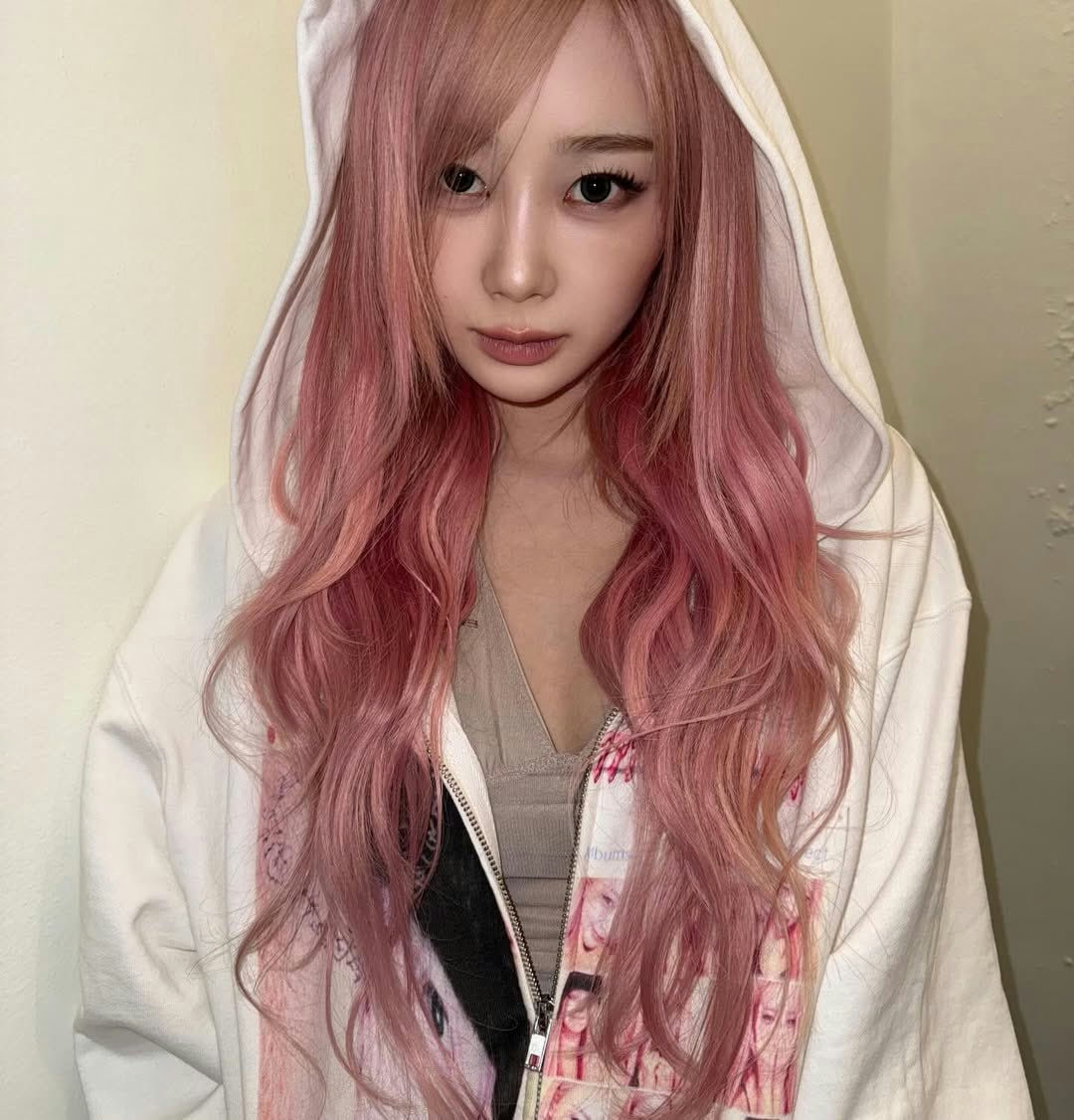
The live stream is a sacred, yet perilous, space in the K-Pop ecosystem. It's a digital confessional where idols offer glimpses of unscripted authenticity, and fans hang on every word, seeking connection. But what happens when that authenticity isn't a curated smile or a playful aegyo, but a flash of genuine, unfiltered human frustration? This past week, aespa's Giselle provided a stark, viral answer, transforming a routine Bubble live stream into a cultural flashpoint that has the industry, and its global audience, passionately debating the very rules of engagement between idol and fan.
The Incident: A Viral Spark in the Digital Arena
On a seemingly ordinary evening, Giselle logged on to connect with MYs (aespa's fandom) via the fan community platform Bubble. The stream began with the familiar, comforting cadence of idol-fan interaction: Giselle sharing casual thoughts, perhaps discussing daily life or upcoming schedules. However, the atmosphere shifted palpably when a viewer's comment, repeated and visible enough to catch her eye, crossed an invisible line.
While the exact wording of the original comment has been obscured by the rapid tide of online discourse, multiple fan-recorded clips and translations agree on its malicious essence: a direct, personal insult aimed at Giselle. It was not light-hearted teasing nor constructive criticism, but a targeted derogatory remark. In that moment, the protocol of graceful ignorance—often expected of female idols—was set aside. Giselle, looking directly into the camera, her expression a blend of disbelief and defiance, responded. According to numerous real-time translators and the ensuing avalanche of social media posts, her retort was blunt: "Who are you? Are you a bitch?" before swiftly moving to block the user.
"The look on her face wasn't anger, it was pure dismissal. It was the look of someone drawing a line in the sand and saying 'this stops here.'" – @MY_StreamLive, a fan account that captured the clip.
The clip, shorn of the preceding context for most viewers, exploded across Twitter, TikTok, and Instagram within hours. The headline was incendiary and simple: aespa's Giselle Calls Viewer A B*tch. The nuanced reality of a young woman standing up to a bully in her own digital space was immediately flattened into a sensationalist talking point, setting the stage for a fierce and multifaceted debate.
Giselle and aespa: Forged in the Digital Fire
To understand the weight of this moment, one must understand the unique position of both Giselle and aespa. Debuted in 2020 under SM Entertainment, aespa was conceived not just as a musical group but as pioneers of the "SMCU" (SM Culture Universe), a metaverse-narrative where each member has a digital avatar, or "ae." Their concept is intrinsically tied to themes of digital identity, virtual reality, and battling existential threats in a cyber landscape. From their debut track "Black Mamba" to the world-conquering "Next Level" and "Spicy," their lore tackles villains and "synk outs" in the digital realm.
This makes the incident profoundly meta. Giselle, an idol whose group's storyline involves protecting the "flatform" from malicious attacks, faced a very real, very human malicious attack on a digital platform. The member known for her fluency in multiple languages, her sharp rap delivery, and a notably grounded, "un-idol-like" demeanor in variety content, was suddenly living a fragment of her group's own mythology. Her role within aespa has often been that of the cool, collected polyglot, but this moment revealed the person behind the avatar—a person with limits.
As we've explored in pieces like "Beyond the Filter", the pressure on idols to maintain a flawless digital persona is immense. Giselle's response challenges the notion that this persona must be endlessly accommodating. It raises a critical question: in an era where groups like 82MAJOR are exploring tactile, sensory connections through concepts like "FEELM," how do we reconcile the desire for authentic human "feel" with the demand for robotic perfection in fan interactions?
The Precedent of Pushback
While shocking in its directness, Giselle's moment is not entirely without precedent in K-Pop's modern history. Senior idols have occasionally snapped back at malicious commenters during live streams, though often with more coded or sarcastic language. The rise of "doom scrolling" and the constant, accessible barrage of opinions on platforms like Bubble and Weverse has created a pressure cooker environment. Idols are encouraged to use these platforms for intimacy, yet they are given minimal tools, and often zero training, on how to handle the inevitable toxicity that anonymity breeds. This incident is perhaps the most stark and unvarnished example of that pressure valve being released.

The Great Divide: Fandom and Public Reaction
The reaction to the live stream clip was instantaneous and polarized, creating a clear rift between different segments of the audience and the general public.
MYs and Defenders: "She Did What We All Wish We Could Do"
Within the core fandom and among a significant portion of international K-Pop fans, the response was overwhelmingly supportive. The dominant sentiment was one of cathartic applause. Comment sections on fan forums and social media were flooded with messages praising Giselle for her "badass" stance and for setting a boundary.
- Boundary-Setting as Empowerment: Many fans, particularly women, framed her reaction as a powerful act of refusing to accept disrespect. They argued that the expectation for female idols to smile through abuse is outdated and harmful.
- Protective Fury: Long-time MYs expressed anger that Giselle was pushed to that point, directing their criticism towards the culture of anonymous hate rather than at her response. "She's human first, an idol second," became a common refrain.
- Context is King: Supporters vehemently stressed that the isolated clip was misleading without the provocation, arguing that her action was a justified defensive measure, not an unprovoked attack.
Critics and Traditionalists: "Unprofessionalism and Entitlement"
The counter-narrative, often found in more generalized online communities and from some corners of domestic netizen sites, condemned the response as unprofessional.
- The Service Industry Argument: Critics posited that as a public figure in the entertainment "service" industry, part of her job is to endure public scrutiny with grace. Direct confrontation, especially using harsh language, breaches an unwritten contract.
- Fear of Normalization: Some expressed concern that this could set a precedent for more hostile interactions, potentially escalating tensions between fandoms if idols begin directly clapping back at haters perceived to be from rival fan groups.
- Image Damage: A pragmatic view worried about the impact on aespa's brand, particularly with the general public and potential advertisers who might view the incident as a lapse in decorum.
This division mirrors other controversies where idol behavior clashes with traditional expectations, such as the discourse around friendship and public perception. It highlights the constant tension between an idol's personal humanity and their role as a consumable product.
Industry Analysis: A Watershed for Parasocial Contracts?
Beyond the fan debates, Giselle's retort has serious implications for the K-Pop industry's business model, which is increasingly built on monetized intimacy.
The Parasocial Paradox
Platforms like Bubble and Weverse are billion-won ideas because they sell the illusion of a direct, personal connection. Fans pay a monthly fee to receive "personal" messages and live streams from idols. This fosters deep emotional investment—the driving force behind album sales, streaming, and voting. However, this simulated closeness also breeds a sense of ownership and entitlement among a minority of fans. The incident exposes the dangerous flaw in this model: what happens when the "friend" on the other side of the screen acts like a real human being with boundaries, not a perpetually compliant AI?
As seen in the legal battles explored in "Legal Jujitsu", companies are fiercely protective of their intellectual property and brand ecosystems. An idol's persona is a core part of that IP. Giselle's moment was an unscripted deviation from the SM-produced aespa narrative, a reassertion of personal agency over corporate-controlled image.
SM Entertainment's Silent Calculus
SM Entertainment's response—or notable lack thereof—is telling. As of this writing, the company has issued no official statement, nor has there been any public "disciplinary" action or apology forced from Giselle. This silence is arguably a strategic position. A public rebuke could alienate the massive fanbase supporting her. Instead, by letting the incident simmer organically, SM allows it to be framed as a moment of girl-power defiance, potentially strengthening Giselle's and aespa's connection with their core demographic. It is a risky, but potentially savvy, calculation that acknowledges a shift in fan-idol power dynamics.
This contrasts with how agencies might handle a controversy during a critical comeback period, where stability is paramount, as discussed in our analysis of CRAVITY's high-stakes "ReDeFINE" era. For aespa, currently between major promotional cycles, SM may have the bandwidth to weather the storm.
What's Next: New Rules for a New Era?
The fallout from this single live stream is unlikely to dissipate quickly. It has cemented itself as a case study in modern K-Pop fandom culture.
In the immediate future, all eyes will be on Giselle's next public appearances and any subsequent live streams. Will she address it directly, or will it become an unspoken chapter? More importantly, will other idols feel emboldened to establish firmer boundaries, or will agencies tighten control over live interactions? Platforms themselves may face pressure to implement better real-time moderation tools to protect their star users, recognizing that the product they sell—idol access—is compromised if that access becomes a vector for abuse.
For fans, this is a moment of reflection. The incident forces a conversation about what we, as a collective consumer base, truly want from the artists we support. Do we want flawless avatars, or complex humans? The answer is likely a messy, contradictory "both." Navigating that contradiction will define the next era of K-Pop interactions.
Ultimately, Giselle’s retort was more than a viral slip; it was a stress test on the infrastructure of contemporary idol culture. It proved that the avatars have a breaking point, and that the line between the virtual and the real is perilously thin. As the industry continues to evolve, this moment will be referenced as a turning point—a raw, uncomfortable, and necessary reminder that behind every stage name listed on our Artists page and every chart-topping hit tracked on our Charts page, there is a person who, on some days, has simply had enough. The conversation has been sparked, and the industry will now have to decide how to respond to this new, unfiltered reality.