
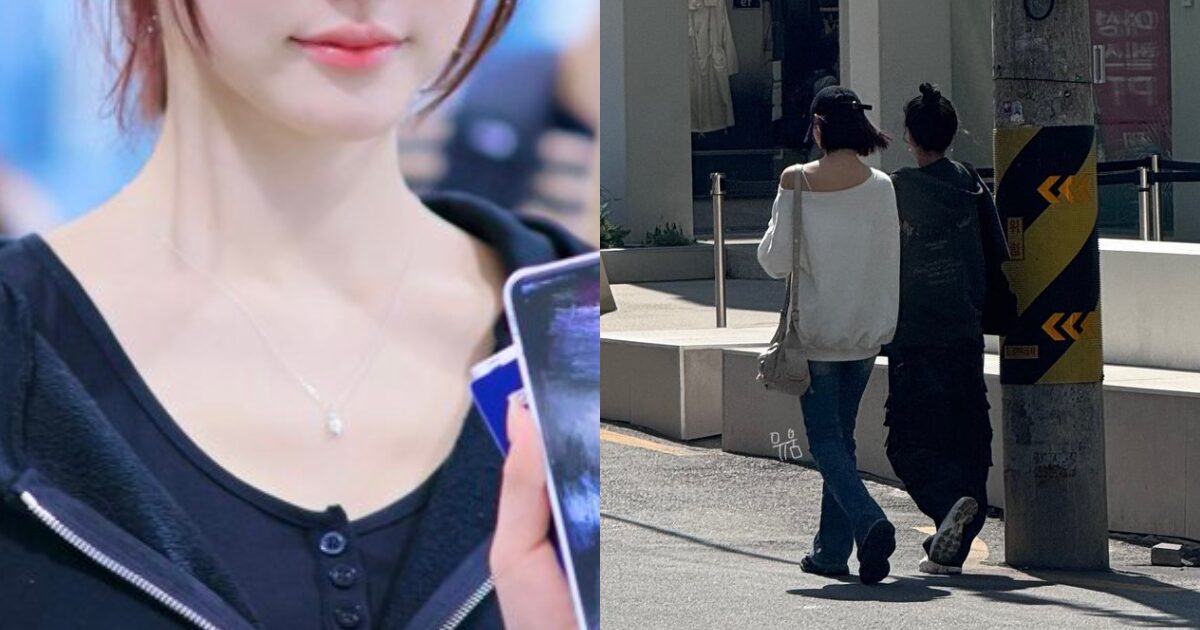

The world of K-Pop is built on a delicate, often unspoken contract between idol and fan. It's a relationship predicated on accessibility, fantasy, and a curated glimpse into a life that seems both dazzling and relatable. But what happens when an idol's display of real-world loyalty—a virtue celebrated in theory—clashes with the expectations of that very contract? This is the complex question at the heart of the latest controversy engulfing f(x) alumna and acclaimed actress-singer Krystal Jung, who finds herself facing unexpected backlash not for a scandal, but for the frequency with which she champions her non-celebrity best friend.
A Bond Forged Long Before the Spotlight
To understand the present friction, one must first appreciate the history. Krystal Jung is no rookie navigating unfamiliar waters; she is a veteran of the industry, debuting in 2009 under SM Entertainment as a member of the groundbreaking group f(x). Known for their experimental sound and strong, individualistic members, the group carved a unique niche. Following f(x)'s indefinite hiatus, Krystal successfully pivoted to a thriving acting career, starring in hit dramas like The Heirs and Search, while also releasing solo music. Her public image has long been one of cool, poised professionalism, with a reputation for being more reserved than many of her peers.
This makes the prominence of her friendship with her non-celebrity friend, identified publicly only as "J," all the more significant. The two have been friends since their school days, a bond that predates Krystal's fame. In an industry where childhood is often sacrificed for training, a connection to a pre-idol life is a rare and treasured anchor. For years, fans have known of J through sporadic mentions—a birthday post, a credited thank you in an album liner note, a rare appearance in the background of a casual vlog. J was a beloved, almost mythical figure in the "Jung Soo-jung (Krystal) lore," symbolizing the idol's normalcy and capacity for long-term loyalty.
"In the early days, seeing Krystal mention her school friend was heartwarming. It was proof that beneath the celebrity gloss was a person who valued the relationships she had before SM," comments Park Ji-min, a culture critic who has followed Krystal's career. "It was a point of authenticity in an industry often criticized for being manufactured."
This background is crucial. Unlike a suddenly introduced new acquaintance, J represents a consistent thread throughout Krystal's journey. For a deeper look at how pre-debut connections can shape an idol's public persona, explore our analysis on the intense scrutiny of BTS's Jungkook and aespa Winter's rumored connection, which also touches on the weight of long-standing personal histories.
The "Show-Off" Allegations: A Timeline of Growing Tension
The current backlash did not erupt from a single event, but from a perceived pattern that has intensified over the past year. Critics and a vocal segment of netizens argue that Krystal's mentions of J have shifted from occasional, heartfelt shout-outs to a constant, almost performative showcase, which they label as "showing off" or "flexing" the friendship.
From Subtle Shout-Outs to Center Stage
The incidents cited by critics are multifaceted. It began with more frequent appearances of J on Krystal's private Instagram account (which she maintains separately from her official one). These weren't just group photos, but dedicated posts celebrating J's career achievements in the corporate world, lavish birthday gifts Krystal gave her, and detailed captions praising her friend's character. During a recent video call fan sign event for her solo album promotion, Krystal reportedly spent a notable portion of time answering a question about her inspiration by attributing her emotional resilience to J's support, diverting the conversation from her music. Furthermore, in an interview with a fashion magazine, when asked about her personal style influences, she credited J's taste extensively, leading some to comment that she was "using interview space to promote her friend instead of her own work."
The tipping point for many was a lengthy story Krystal shared on a variety show appearance. While discussing the challenges of adulthood, she recounted a detailed anecdote about how J had helped her through a period of self-doubt, concluding with, "I really don't know where I'd be without her. She's the real star." While intended as a tribute, the effusiveness and placement of the story struck critics as excessive.
"It feels less like she's sharing her life and more like she's building a brand for her friend," one critical netizen posted on an online forum. "We support Krystal because of her talents and work. We didn't sign up to constantly hear about someone else's virtues, no matter how great she is."
The "Parasocial Displacement" Theory
Industry observers have coined a term for this phenomenon: "parasocial displacement." The theory suggests that when an idol consistently elevates a specific, real-person relationship to such a visible degree, it can subconsciously disrupt the one-sided parasocial relationship fans have with the idol. The non-celebrity friend becomes a tangible, third-party "intruder" in the fantasy, making the idol's private life feel less like an abstract concept and more like a specific club to which fans are explicitly not invited. For more on the extreme end of fan expectations, the incident detailed in our coverage of the protest truck targeting ECLIPSE's Lee Ara showcases how volatile this dynamic can become.

The Fandom Fracture: A House Divided
The reaction within Krystal's fanbase, and the wider K-Pop community, has been starkly divided, creating a rift that plays out daily on social media platforms and fan cafes.
The Defense: Authenticity Above All
One camp, which includes many long-time fans, is fiercely defensive. They argue that Krystal's behavior is a refreshing act of authenticity in a hypersensitive industry. They see the criticism as misogynistic (suggesting a male idol would be praised for the same loyalty) and rooted in jealousy.
"She's showing us what real loyalty looks like. In a business full of fair-weather friends, she's holding onto someone who knew her before the fame. That's admirable, not something to attack," writes a fan on Twitter. This group actively promotes the friendship, creating fan art of Krystal and J and using hashtags like #SupportRealFriendship.
The Critics: Professionalism and Boundary Issues
The critical faction, however, frames the issue around professionalism and audience consideration. Their argument isn't that Krystal shouldn't have friends, but that her platform—built by fan support—should primarily focus on her artistic output and appropriate fan interaction.
- Diversion of Focus: They feel mentions of J are encroaching on content meant for her career and fans.
- Creating Unnecessary Exposure: They worry that the constant spotlight could backfire on J, subjecting a private citizen to public scrutiny and potential harassment.
- Perceived Boastfulness: The detailed stories about expensive gifts and lavish praise are read by some as a boastful display of wealth and social connection, which feels tone-deaf in the current economic climate.
This schism highlights a core tension in modern fandom. Explore the diverse spectrum of fan engagement with our feature on the idols and artists who navigate these complex relationships daily.
Industry Implications: Beyond a Single Idol's Feud
The backlash against Krystal is not an isolated incident but a symptom of a larger, evolving negotiation within the K-Pop ecosystem.
The Erosion of the "Private Persona"
For years, idols maintained a stark separation between their polished, public "idol persona" and a carefully guarded private life. Social media, particularly "bubble" messaging services and private Instagram accounts, has blurred this line. Idols now offer more "real" glimpses, but this comes with the burden of fan expectations about what that reality should look like. Krystal's case shows that even shared authenticity can be judged if it doesn't align with the audience's preferences.
Marketing Loyalty vs. Living It
The industry often markets the concept of friendship within groups—"brotherhood," "sisterhood"—as a core selling point. Krystal's situation exposes a double standard: friendship within the idol sphere is a consumable product, but deep friendship outside of it can be viewed as a distraction. It raises questions about whether fans truly want idols to have rich, independent lives, or merely the illusion of them.
This scrutiny of personal connections is not new. For a look at how reality TV dissects relationships, see our preview of the experts analyzing chemistry on Heart Signal 5.
A Warning to Agencies and Idols Alike
SM Entertainment has remained characteristically silent on the issue, likely treating it as a personal matter rather than a PR crisis. However, other agencies are undoubtedly taking notes. This incident serves as a case study in the risks of "over-sharing" specific relationships. It may lead to more guidance from agencies on how to mention non-celebrity connections—advising vagueness ("a friend") over specificity, and moderation over frequency. For artists like Super Junior's Donghae, who collaborates with well-known artists, the dynamic is different, as those relationships are framed within a professional, creative context.
Looking Ahead: Navigating the New Normal
So, where does Krystal Jung go from here? The path forward is fraught with nuance.
The most likely immediate outcome is a strategic pullback. Krystal may quietly reduce her public mentions of J, not out of shame, but as a pragmatic step to protect both her friend from scrutiny and to recalibrate her public narrative back to her artistry. Her next public appearances, whether for a drama promotion or a music release on the charts, will be closely watched for tone and content.
Long-term, this controversy signals a necessary, if painful, industry-wide conversation. Idols, especially veterans like Krystal who have earned a measure of control over their image, are increasingly asserting their right to a multidimensional identity. Fans, in turn, are grappling with the cognitive dissonance of wanting an "authentic" idol while also wanting to control the terms of that authenticity.
"The ultimate lesson here is about balance," says critic Park Ji-min. "An idol's platform is a powerful tool. Using it to support a loved one is a human impulse. But when that support becomes a dominant narrative, it can inadvertently alienate the very audience that provides the platform. The sweet spot lies in sharing enough to be human, but not so much that the humanity itself becomes a point of contention."
Ultimately, the saga of Krystal and her friend is a modern parable. It’s about the price of real connection in a virtual world, the loneliness that can persist even at the center of adoration, and the complicated truth that sometimes, even showing your most genuine self can become the very thing that draws the loudest criticism. As the industry continues to evolve, finding a sustainable equilibrium between an idol's personhood and their persona will remain its greatest challenge. For the latest on how idols are pushing creative and personal boundaries, stay tuned to K-Beats News for ongoing analysis.