
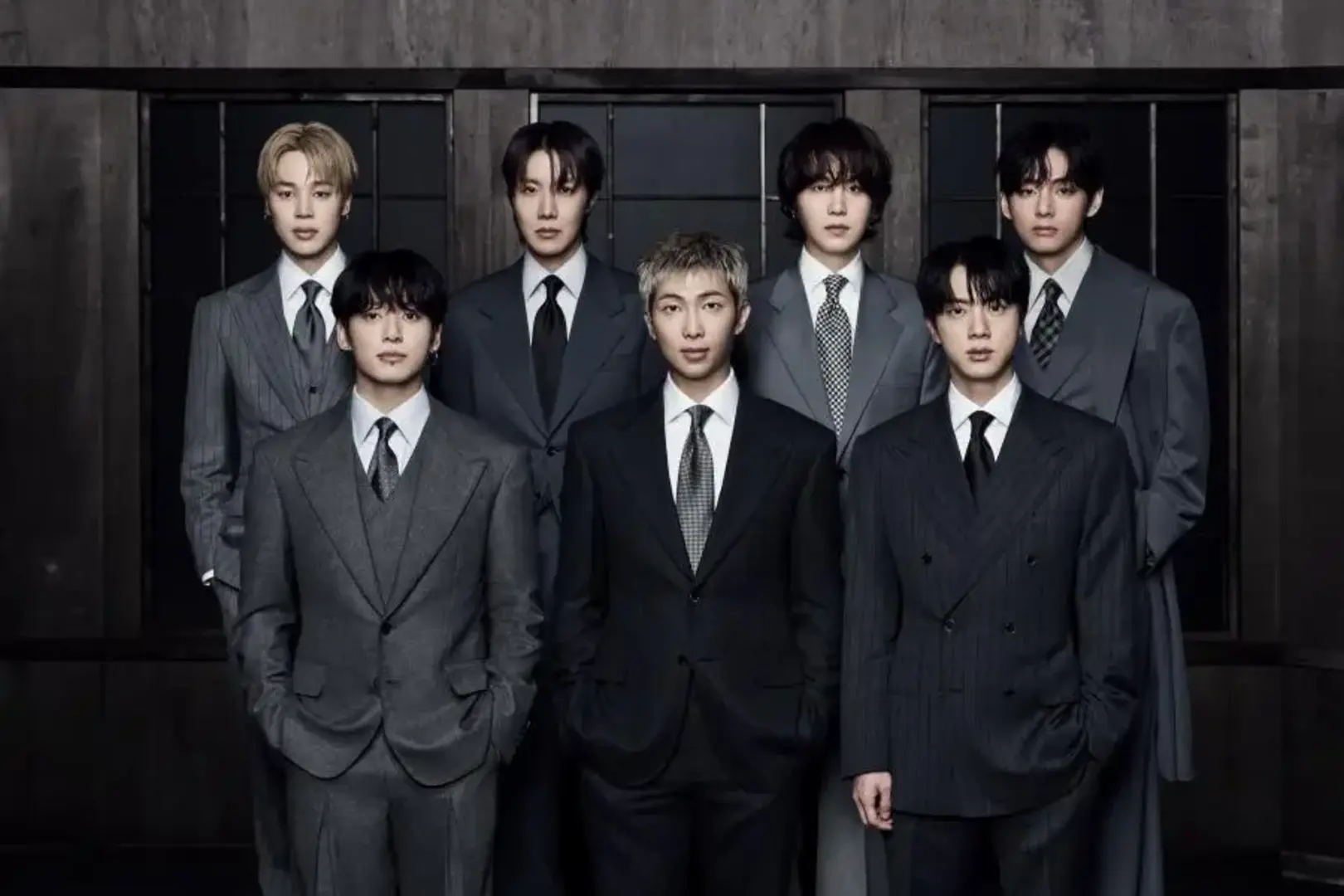

The air is thick with a familiar, electric anticipation. Teasers are being dissected, theories are multiplying, and the global music scene holds its breath. BTS is returning. Their forthcoming album, "Arirang," promises not just music, but a cultural event—a new chapter in a story that has, for over a decade, been written in a language far surpassing simple pop songwriting. Long before the choreography is perfected or the final mixes are mastered, ARMYs worldwide await one element with a scholar's zeal: the lyrics. For this group, words are not merely accessories to melody; they are the foundational pillars of their empire. They are, as a growing consensus from critics to literary circles suggests, pure poetry.
In an industry often scrutinized for manufacturing catchy, yet sometimes hollow, hooks, BTS has consistently weaponized vulnerability and narrative depth. Their discography is a sprawling novel, each album a chapter, each song a poignant verse. As we stand on the precipice of "Arirang," an album whose very title evokes a deep, folkloric Korean sorrow and resilience, it is the perfect moment to look back. Not just at hits, but at the specific, crystalline lines that have cemented their reputation as the architects of modern emotional lyricism. This is an examination of the craft behind the phenomenon.
The Pen as Their Sword: Establishing a Lyrical Ethos
To understand the weight of a BTS lyric is to understand their origin story. Debuting in 2013 under Big Hit Music, they entered a crowded field not as polished princes of pop, but as self-proclaimed "bulletproof boy scouts" with a chip on their shoulder and stories burning to be told. From the outset, primary songwriters RM, Suga, and j-hope, alongside contributions from all members, wielded their pens with a purpose that transcended their rookie status. Their early "School Trilogy" and "The Most Beautiful Moment in Life" series tackled the anxieties of youth, societal pressure, and the struggle for dreams with a raw, confessional style rarely heard in the mainstream idol sphere.
"My heart stopped when I was 9 or 10. The world didn’t give a damn about a kid who stopped growing, my height and my dreams were too small." – Suga, "Intro: Never Mind"
This line, from Suga's 2015 intro, is not a pop lyric; it's a memoir fragment. It eschews metaphor for stark, painful recollection, immediately establishing a contract of brutal honesty with the listener. This ethos became their signature. They wrote about mental health ("Tomorrow," "The Last"), systemic disillusionment ("Baepsae," "Silver Spoon"), and self-love ("Answer: Love Myself") with a specificity that transformed universal themes into intimate conversations. They didn't just sing about being lost; they mapped the exact coordinates of their confusion, making their eventual messages of hope earned, not manufactured.
Deconstructing the Verse: A Tapestry of Poetic Devices
The literary merit of BTS's work lies in their masterful, often subconscious, use of poetic devices. Their lyrics are dense with metaphor, allegory, and intertextuality, rewarding deep, repeated listening.
Metaphor and Symbolism as Narrative Engines
BTS’s entire conceptual universe is built on sustained metaphors. The "Sea" from 2017’s hidden track represents the vast, terrifying gap between dreams and reality for idols. The "Magic Shop" is a psychological sanctuary built from fan love. In "Black Swan," the titular bird symbolizes the artist's deepest fear: the death of passion for their art. The lyric "If this no longer aches, if this no longer weights at all, if my flutter is gone, it's my first death" is a haunting personification of artistic mortality. This layered symbolism invites analysis, turning song breakdowns into literary criticism sessions on fan forums and academic panels alike.
The Brutal Beauty of Direct Address and Confession
When not cloaked in metaphor, their most powerful lines often come from devastating directness. Take RM’s verse in "The Last" from his mixtape: "Depression, obsession, they’re both my close friends / Anxiety, huh, yeah, you come too." Here, mental struggles are named, personified, and addressed with a weary familiarity that dismantles stigma. Similarly, in "Spring Day," the longing for a lost friend is rendered with aching simplicity: "I miss you / Saying this makes me miss you more." This circular, self-aware grief captures a paradoxical human truth that pure poetry aims to unveil.
This lyrical approach has not only defined their career but has also influenced the industry's conversation around idol artistry, much like T.O.P's own enigmatic and deeply personal writing for BIGBANG and his solo work paved the way. His upcoming project, "ANOTHER DIMENSION," promises a similarly introspective and artistically dense journey, proving the lasting demand for idols who are, first and foremost, auteurs.

The "Arirang" Prelude: Anticipating a Lyrical Magnum Opus
The announcement of "Arirang" sent seismic waves for this precise reason. The title itself is a loaded signifier. "Arirang" is a centuries-old Korean folk song, of which there are thousands of variations, but all center on themes of sorrow, separation, endurance, and ultimately, a shared cultural identity. By invoking this name, BTS is telegraphing a work of profound gravity and roots. It suggests a return to, or a reimagining of, core Korean sentiment (han and heung) at a scale befitting their current global stature.
What can ARMYs and critics expect lyrically? The pre-release single, "청춘 (Chungchun)," already offers clues. Translating to "Youth" or "Spring," the track reportedly weaves traditional Korean poetic imagery with the group's reflections on their journey. Will it feature the biting social commentary of their "HYLH" era? The layered mythology of the "BU"? Or the mature, existential introspection of "BE" and the members' solo works? The anticipation lies in knowing that whatever direction they choose, the lyrics will be the compass. Industry insiders whisper that the album sees the members, particularly the rapline, reaching new heights of narrative cohesion, potentially crafting a single, poetic narrative across the tracklist.
ARMY as Literary Community: Unpacking the Lines Together
The relationship between BTS's lyrics and ARMY is uniquely symbiotic. Fans don't just stream; they annotate. Online platforms become digital salons where lines are translated, historical references are unearthed, literary devices are charted, and personal connections are shared. A single, cryptic line from a Weverse live can spawn days of thoughtful discourse. This transforms the fan experience from passive consumption to active participation in meaning-making.
Following the "Arirang" announcement, this community machinery shifted into its highest gear. On Twitter, fan-translators are already analyzing the etymological roots of "Arirang." On Reddit, threads speculate on potential thematic arcs, linking past lyrics to predict future ones. On TikTok, users create "lyric explainer" videos that garner millions of views. This collective intellectual engagement is a testament to the substance they are engaging with. As one fan tweeted, "Waiting for a BTS comeback isn't just waiting for music; it's waiting for new words to live by."
This deep connection also fosters a protective spirit, as seen when the intense scrutiny of an idol's personal life crosses a line. The fervent discourse around Jungkook's personal choices highlighted how ARMYs fiercely defend the artists' right to a private narrative, especially when the public narrative so often overlooks the profound artistry they consistently offer.
Industry Impact: Raising the Bar for Narrative in Pop
The "BTS effect" on lyrics is palpable across the K-Pop industry. While catchy, light-hearted pop will always have its place, there is now a measurable demand for depth. Newer groups debut with "concepts" that are increasingly narrative-driven. Companies highlight member participation in songwriting as a key selling point. The success of BTS has proven that audiences, especially a globally connected, digitally-native one, crave authenticity and story.
This has created space for a wider range of artistic expression. It has encouraged idols to share their own stories, leading to more personal and sometimes riskier music. Charts now regularly feature songs that tackle complex themes, a trend undeniably bolstered by BTS's commercial proof-of-concept. They demonstrated that songs about self-doubt, societal critique, and mental health can not only top the Billboard charts but can also forge an unbreakable bond with a audience. They shifted the metric of success from mere popularity to cultural and emotional resonance.
What's Next: The Legacy in the Lines
As the countdown to "Arirang" continues, one thing is certain: the lyrics will be the cornerstone. They will be translated into hundreds of languages, painted on murals, tattooed on skin, and cited in university essays. Each line will be a piece of a larger puzzle that fans will spend months, if not years, assembling. BTS has already gifted the world a lexicon for modern struggle and joy—terms like "보라해 (Borahae)," "Love Myself," and the "Magic Shop" are now embedded in global pop culture.
"Arirang" represents the next evolution. It is the moment where their role as global icons meets their roots as Korean storytellers. It is a promise of poetry that confronts history, personal legacy, and the weight of existence itself. When the album finally drops, the world won't just be listening to music. It will be reading the newest, most anticipated volume of a poetic saga written by seven artists who taught a generation that pop music can be a mirror, a shelter, and a masterpiece of words. Their legacy is not merely in records broken or stages conquered, but in the indelible lines they've etched onto the hearts of millions—a literary legacy that "Arirang" is poised to deepen and define for years to come.
For all the latest on BTS and other artists pushing creative boundaries, from established legends to genre-bending rookies like AMPERS&ONE, stay tuned to K-Beats News.