
The relationship between a global superstar and their audience is a complex, ever-evolving dance of artistry, access, and intense scrutiny. For BTS's Jungkook, every smile, every note, and every casual appearance is documented, analyzed, and magnified on a planetary scale. This reality was thrust into the harsh light of social media discourse once again this week, when a routine live broadcast on the Weverse platform transformed into an unexpected flashpoint. During the relaxed session, a particular camera angle and lighting condition led some viewers to fixate on faint, linear marks near Jungkook's temples. Within hours, the phrase "Visible Plastic Surgery Scars" was trending globally, not as a statement of fact from any medical professional, but as a viral speculation that split the online community into defensive fans, curious onlookers, and critical commentators.
From Golden Maknae to Global Icon: Jungkook's Journey Under the Lens
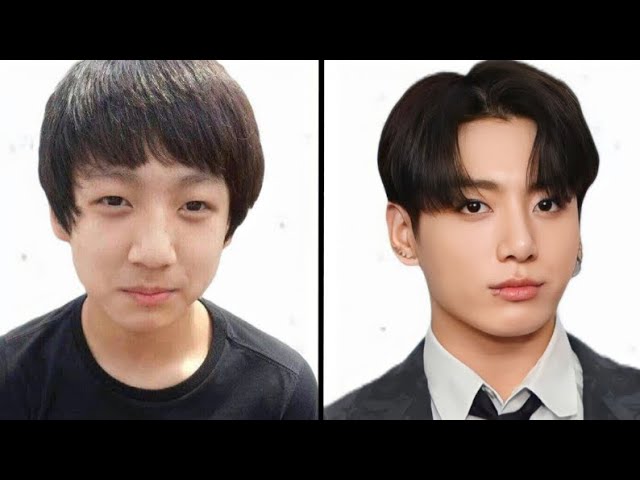
To understand the weight of this moment, one must first appreciate the trajectory of Jungkook's public life. Debuted in 2013 as the 15-year-old "Golden Maknae" of BTS, he has literally grown up in front of millions. His evolution from a talented teenager into a supremely confident, world-renowned performer and vocal powerhouse has been a central narrative of the group's historic rise. Each phase of his appearance—from his softer early looks to his more muscular, tattooed present-day aesthetic—has been cataloged and discussed with an intensity reserved for few public figures on earth.
This is not the first time Jungkook's appearance has been a topic of intense, and often invasive, conversation. As detailed in our previous analysis, Metamorphosis Under the Spotlight: Decoding Jungkook’s Transformative Visuals and Their Role in BTS’s Pivotal Comeback Narrative, changes in an idol's styling, physique, or facial features are frequently dissected as part of a larger artistic or narrative arc, especially ahead of major comebacks. Furthermore, the group has faced coordinated malicious campaigns, as explored in "Digital Dystopia: How BTS's Pre-Comeback Imagery Ignited a Malicious Firestorm", highlighting a toxic underbelly of online behavior. Jungkook himself has navigated this for over a decade, maintaining a generally private stance on personal matters while sharing his artistic process openly with fans.
The Constant Negotiation of Privacy
This incident underscores the near-impossible negotiation of privacy for idols of BTS's stature. Every live broadcast is a gift of access to ARMY, a direct line that bypasses traditional media. Yet, this very intimacy can become a double-edged sword, turning a moment of genuine connection into a forensic examination. The expectation of flawless, poreless perfection is relentlessly enforced by both industry standards and fan culture, creating an environment where any perceived deviation—be it a scar, a blemish, or a sign of aging—is treated as breaking news.
Deconstructing the Viral Flashpoint: Anatomy of a Trend
The event itself was remarkably mundane in its origin. Jungkook, currently fulfilling his mandatory military service, went live on Weverse, a platform where idols often interact with fans in a more unfiltered setting. He was casual, engaged, and seemingly at ease. At one point, as he moved or tilted his head, the lighting caught what some viewers described as "thin, vertical lines" near his hairline. Screenshots and short, zoomed-in clips were rapidly isolated from the hours-long stream.
These fragments then flooded social media platforms, primarily Twitter (now X) and TikTok, with hashtags explicitly labeling them as evidence of plastic surgery scars. The conversation immediately bifurcated. One camp insisted the marks were clear proof of recent cosmetic procedures, often citing unverified "expert" analysis from anonymous accounts. The other, vastly larger camp comprised fans and neutral observers who argued the "scars" could be anything: shadows from his headphones, creases from a hat worn earlier, natural skin texture, lighting artifacts, or even remnants of childhood acne scars.
"We are watching a human being live his life, not a CGI character. To freeze a frame, zoom in 500%, and diagnose someone you've never met is the pinnacle of delusion and disrespect. ARMY sees Jungkook, the artist and person, not a collection of pixels to be autopsied." - @JJK_Guard, a fanbase moderator with over 500k followers.
The Role of Ambiguity and Confirmation Bias
The power of the viral trend lay in its ambiguity. The images were not clinically clear, allowing viewers to project their own narratives onto them. Those predisposed to scrutinize idol appearances for signs of cosmetic work saw confirmation. Those predisposed to defend Jungkook saw a malicious misinterpretation of an innocent moment. This digital Rorschach test revealed less about Jungkook's face and more about the complex, often toxic, dynamics of online K-Pop discourse. No official statement was released by Big Hit Music or Jungkook regarding the speculation, a common industry practice that avoids legitimizing baseless rumors with a direct response.
The ARMY Mobilizes: A Case Study in Modern Fandom Defense
The reaction from the global ARMY fandom was swift, coordinated, and multifaceted, serving as a powerful case study in how modern, digitally-native fandoms operate in crisis communication mode. This was not a disorganized outburst of anger, but a layered response strategy.

1. Flooding with Positive Counter-Content: Fans immediately began re-posting and re-sharing clips from the same live broadcast that highlighted Jungkook's joyful expressions, his singing, and his warm interactions, using the same trending hashtags to drown out the negative speculation.
2. Forensic Debunking: Technically savvy fans created side-by-side comparison videos, frame-by-frame analyses, and lighting tutorials to demonstrate how the "scars" could easily be optical illusions. Some even posted photos of themselves in similar lighting, showing identical lines on their own skin.
3. Advocacy for Privacy and Respect: The dominant narrative pushed by fan leaders was one of ethical consumption. Thousands of tweets and posts emphasized the core message: "He is a person, not public property. His medical history is irrelevant to his art. This scrutiny is dehumanizing."
4. Highlighting Absurdity: Many used humor and sarcasm to deflate the seriousness of the claims, creating memes about finding "scars" from headphone shadows on other celebrities or joking about the "crime" of having skin texture.
This defensive mobilization highlights the intense parasocial relationships at play, but also a genuine, collective desire to protect an artist from what is perceived as invasive harassment. It reflects a fandom culture deeply aware of its own power and responsibility in shaping online narratives, a theme echoed in our coverage of extreme fan behavior in "When Fandom Crosses the Line: Heechul's Bizarre Sasaeng Tale."
Industry Echoes: Scrutiny, Aesthetics, and the Unwritten Rules
This incident with Jungkook is not an isolated one; it is a magnified version of a constant, low-grade pressure faced by virtually all idols, particularly those atop the industry. An industry insider, speaking to K-Beats on condition of anonymity, framed it within a broader context.
"The conversation around appearance is omnipresent and institutionalized. From trainee days, every aspect of an idol's look is managed—skincare, diet, styling, and yes, sometimes procedures. The unspoken rule is that it's a part of the 'improvement' and 'presentation' expected for the job. The public, however, participates in a strange charade: they demand flawless beauty, engage in endless discussion about who has had work done, yet treat the actual evidence or speculation as a scandal. It's a no-win situation for the artist. What happened with Jungkook is that extreme scale meets this ingrained cultural hypocrisy."
The fallout also touches on the fragile nature of brand reputation in K-Pop. An idol's visual identity is a core component of their brand equity. While Jungkook's position is unshakable, for rising or mid-tier idols, such viral speculation could potentially impact public perception and, by extension, commercial opportunities like endorsements. This relentless focus on visuals is tracked in metrics like the Individual Idol Brand Reputation Rankings, where public conversation volume—positive and negative—directly influences standings.
The Double Standard of "Natural" Beauty
The discourse also exposes a pervasive double standard. Male and female idols alike are expected to adhere to strict beauty standards, yet open discussion of the efforts to maintain those standards remains largely taboo. The industry promotes an ideal of "effortless" perfection, making any hint of the "effort"—whether it's a cosmetic procedure, a strict diet, or extensive skincare—a subject of fascination and critique. This creates an environment where idols are scrutinized for both achieving the standard and for potentially taking steps to achieve it.
Looking Forward: The Unseen Scars and Shifting Conversations
As the initial viral storm around Jungkook's live broadcast subsides, it leaves behind residue that will inform future interactions. For the artist, it's another data point in the calculus of public exposure. Will it make him more cautious during informal, "off-duty" moments like Weverse lives? The hope among fans is that it will not, that his trademark authenticity will prevail.
For the industry, the incident is a stark reminder of the psychological toll exacted by the microscope of fame. The real "scars" in question may not be physical, but the cumulative impact on mental health from knowing that any moment of unguarded normalcy can be weaponized. It reinforces the urgent need for continued conversations about healthy fan-idol boundaries and media literacy, teaching newer fans to consume content responsibly.
For the fandom, the event has served as both a unifying rallying cry and a sobering lesson in the limits of their protective reach. They can control the narrative on social platforms, but they cannot control the initial impulse to scrutinize. The long-term effect may be a more conscious effort from within fan communities to self-police and call out invasive behavior before it trends, applying the same organizational skill used for streaming and voting to foster a more respectful digital environment.
Ultimately, this episode transcends Jungkook. It is a chapter in the ongoing story of K-Pop's globalization, where the intense, intimate fan culture of Korea collides with the boundless, often boundary-less arena of global social media. It questions what fans feel entitled to know and exposes the uncomfortable truth that the pursuit of perfection, whether by the industry or demanded by the public, has human costs. As the genre continues to dominate global charts and its artists, including the members of BTS featured on our Artists page, reach unprecedented heights of fame, the industry must grapple with how to safeguard the humanity of the individuals at its center. The conversation has moved from "What are those marks?" to "Why do we feel we have the right to ask?"—and that may be the most significant viral shift of all.